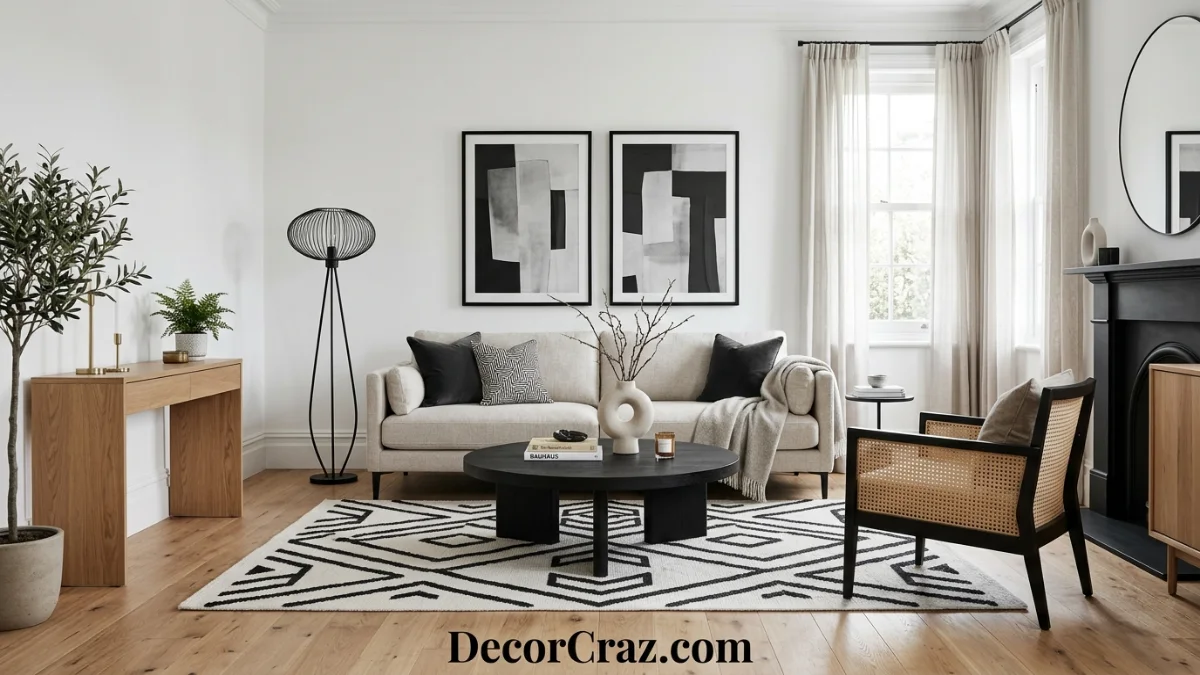
Black and white living room decor can look striking without requiring a complicated color scheme. The real challenge is deciding where the black should go, how much white to keep, and how to prevent the room from feeling either too harsh or too plain.
The easiest approach is usually to make one color the visual base and use the other as structure. For example, white walls and upholstery can create an open foundation, while black furniture, lighting, frames, and smaller accessories provide definition.
In a darker room, the balance may need to be even more careful.You also do not have to use pure black and pure white everywhere. Soft white, cream, charcoal, gray, natural wood, and textured fabrics can sit between the two extremes.
Designers and current decorating guides frequently use texture, varied tones, artwork, and warm materials to keep monochrome rooms from looking flat.
Quick Answer: How Do You Decorate a Black and White Living Room?
Start with a light or neutral base, then use black to create visual anchors.
A practical starting point is:
- White, off white, or soft cream for larger surfaces
- Black for one or two major furniture pieces or architectural accents
- Black and white patterns for rugs or cushions
- Wood or other warm materials to soften the contrast
- Different textures instead of adding many more colors
- Layered lighting so the room does not look flat at night
- One clear focal point rather than many competing statement pieces
The exact balance should change according to the room. A bright, spacious living room can handle more black. A small room with limited daylight usually benefits from keeping larger surfaces lighter.
The goal is not to make every object black or white. The goal is to make the two colors work together through contrast, proportion, texture, and placement.
Choose the Right Black and White Balance
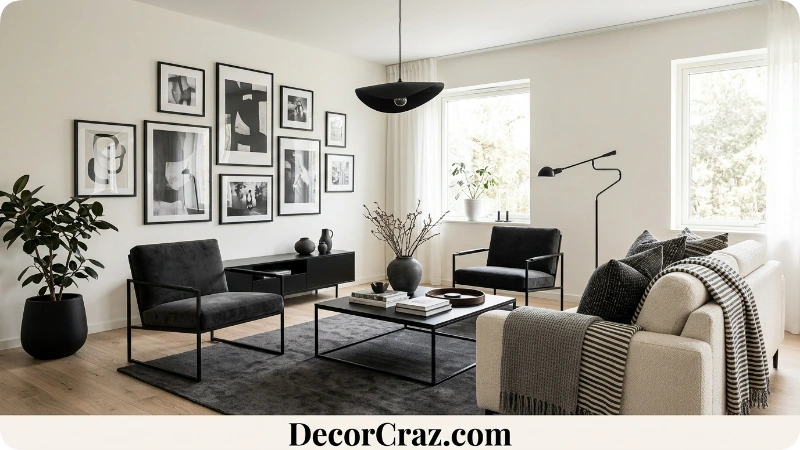
The most important decision is deciding which color will dominate.
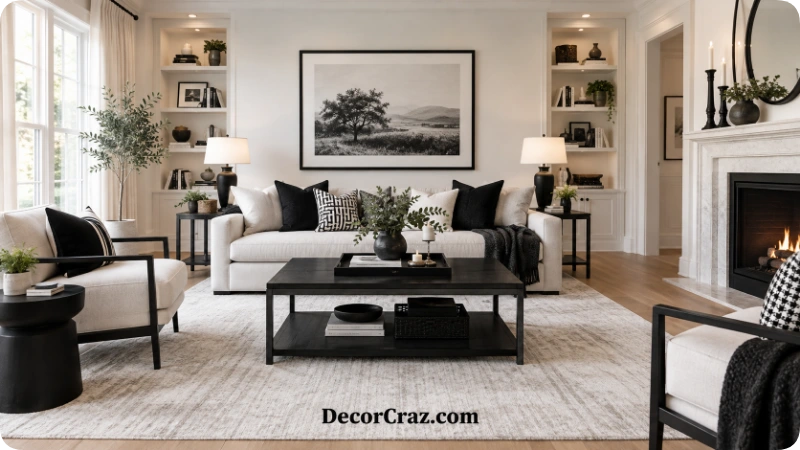
A mostly white room with black accents is usually easier to control because the lighter background leaves more visual breathing room. Black can then define the sofa, coffee table, lighting, picture frames, or artwork.
A mostly black room creates a stronger visual statement. It can work particularly well when the room has good natural light and enough lighter elements to prevent the space from becoming visually heavy.
A softer middle ground uses warm white, gray, charcoal, and cream instead of relying on only two extreme tones. Homes & Gardens specifically notes that introducing off white, gray, and charcoal can create different levels of monochrome rather than forcing a pure black and white contrast.
Mostly White With Black Accents
Use white or warm white for walls and larger surfaces, then introduce black through:
- A coffee table
- Sofa legs
- Window frames
- Lighting
- Picture frames
- Cushions
- A rug
- Small tables
This is a useful option when you want the room to feel visually open.
Mostly Black With White Contrast
A black sofa, dark accent wall, or black cabinetry can become the main anchor.
Balance it with:
- White cushions
- Light curtains
- Pale artwork
- A lighter rug
- White or cream walls on surrounding surfaces
This approach needs more attention to lighting and proportion because dark elements occupy more visual weight.
Soft Monochrome
Instead of pure white and black, combine:
Warm white + cream + gray + charcoal + black
This keeps the monochrome idea while reducing the sharpness of the contrast.
Start With the Sofa and Main Furniture
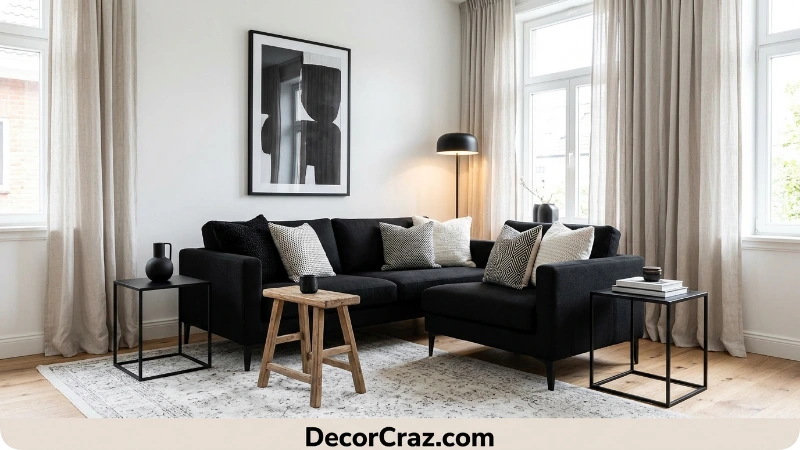
Furniture usually determines the visual direction of the room more strongly than small accessories.
If you already own a black sofa, do not assume you need to buy several more black pieces. Instead, use the sofa as the dark anchor and build lighter elements around it.
For example:
Black sofa → white or cream rug → light coffee table → black lamp → white artwork
This creates repetition without making every object identical.
A white sofa works differently. It can keep the room visually light while black side tables, lamps, frames, and cushions create structure.
Black Sofa With Light Surroundings
A black sofa can become the strongest object in the room.
Keep the surrounding pieces relatively restrained:
- Light rug
- White or cream walls
- Pale curtains
- Natural wood
- Small black accessories
This works particularly well when the sofa is already visually dominant.
White Sofa With Black Anchors
A white sofa gives you more freedom to introduce black elsewhere.
Try:
- Black coffee table
- Black floor lamp
- Black picture frames
- Black and white rug
- Dark side tables
The repeated black elements visually connect the room.
Mixed Furniture
You do not need every furniture piece to come from the same set.
A black sofa can sit with a light wood coffee table, cream chair, and black metal side table. The repeated black details provide cohesion while the different materials prevent the room from looking overly matched.
Use Rugs to Connect Black and White Decor
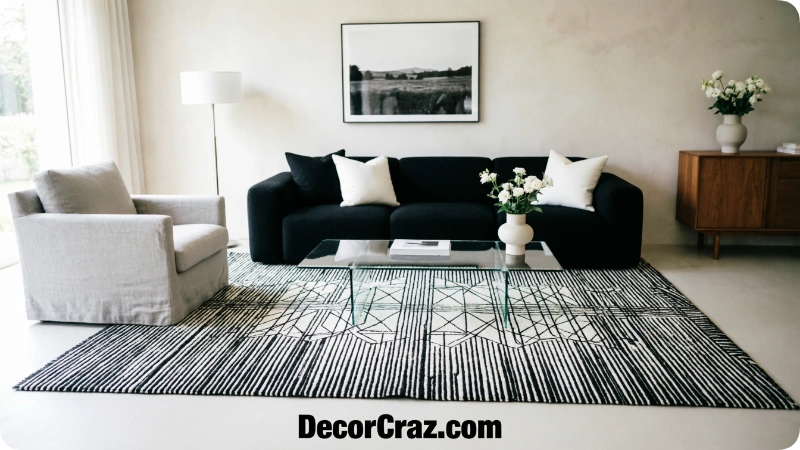
A rug can act as the bridge between black furniture and a light room.
Instead of choosing a completely black rug or completely white rug, consider a design that contains both tones.
Useful patterns include:
- Geometric
- Striped
- Abstract
- Checkerboard
- Subtle linear patterns
- Black and white traditional motifs
The important question is not simply if the rug matches the colors. Ask how much visual attention the pattern demands.
A strong geometric rug already has a lot happening. In that situation, solid cushions and simpler artwork can keep the room controlled.
A quiet rug gives you more freedom to use patterned curtains, artwork, or cushions.
For Small Living Rooms
A very busy, high contrast rug can visually dominate a small room.
If the room is compact, consider a lighter rug with a restrained pattern. Let black appear in smaller repeated elements instead.
For Large Living Rooms
A larger room can usually accommodate a stronger rug pattern because there is more surrounding space to separate the visual elements.
The rug should also be large enough to visually connect the seating arrangement rather than appearing like a small island under the coffee table.
Add Texture Before Adding More Color
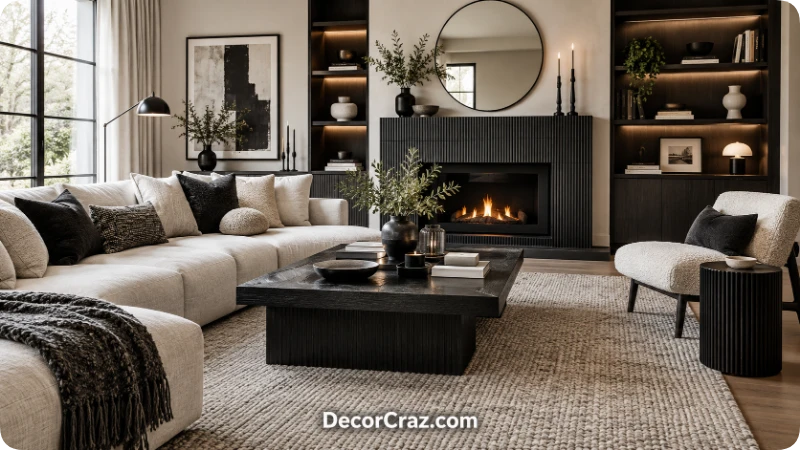
Black and white can look flat when every surface has the same visual finish.
Instead of immediately introducing another strong color, change the texture.
Try combining:
- Linen
- Wool
- Cotton
- Bouclé
- Velvet
- Wood
- Glass
- Metal
- Woven materials
- Ribbed or fluted surfaces
Livingetc similarly highlights plush materials and layered textures as ways to soften the sharper side of a black and white palette.
Why Texture Matters
Imagine a room containing:
- White walls
- White sofa
- White curtains
- Black table
- Black frames
The colors are correct, but the surfaces may still feel visually similar.
Now add a textured rug, woven basket, linen cushions, wood table, and a soft throw.
The palette remains black and white, but the room has more visual variation.
Texture Is Especially Useful When You Want No Accent Color
If you prefer a strict monochrome scheme, texture becomes even more important.
You can create variation without introducing blue, green, red, or another strong hue.
Bring in Wood to Warm the Scheme
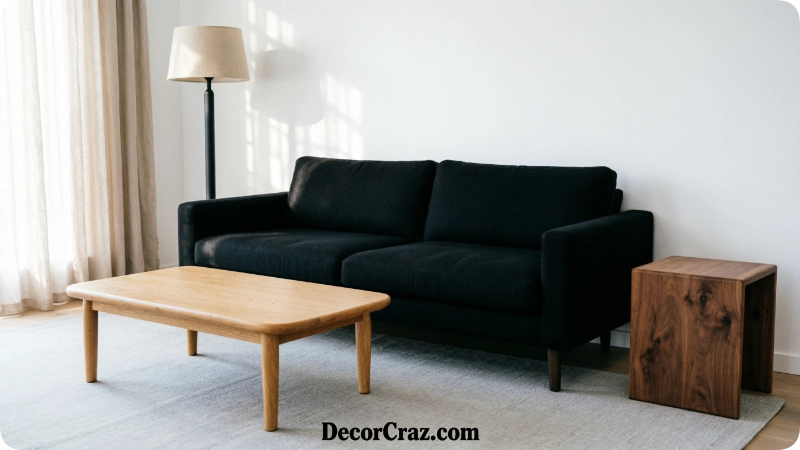
Wood is useful when black and white feel too severe.
Light oak, medium wood, walnut, and other natural finishes can sit between the two extremes and add warmth without requiring a bright accent color.
For example:
White walls + black sofa + natural wood coffee table + black lamp
The wood interrupts the hard black white contrast while keeping the overall palette controlled.
Current decorating guidance also commonly uses wood and other natural materials alongside black and white to introduce warmth and material contrast.
Light Wood
Light wood works well when you want to keep the room bright.
Use it for:
- Coffee tables
- Side tables
- Shelving
- Console tables
- Chair legs
Dark Wood
Dark walnut or similar finishes create a richer appearance.
Because dark wood adds visual weight, pair it with enough lighter surfaces so the room does not become overly dark.
Renter Friendly Wood Accents
You do not need built in woodwork.
A wood tray, side table, picture frame, or freestanding shelf can introduce the same material contrast with little commitment.
Style the Walls With out Overloading Them
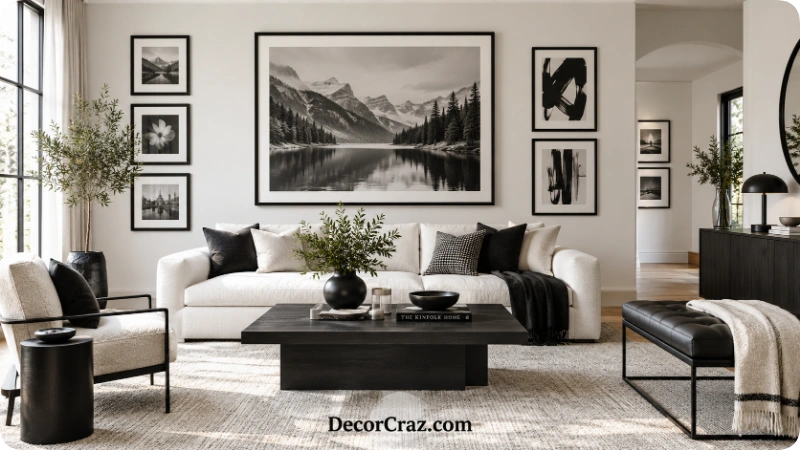
Black and white wall decor can become one of the strongest visual features in the room.
Good options include:
- Black frames with white mats
- Black and white photography
- Abstract monochrome art
- Graphic prints
- Simple line art
- A large statement artwork
- A gallery wall with consistent framing
The biggest mistake is treating every empty wall as a reason to add another piece.
If the sofa already creates a strong focal point, a large artwork above it may be enough.
One Large Artwork
A large piece can create a clear focal point.
This is useful when you want the wall to look intentional without filling it with many small objects.
Gallery Wall
A gallery wall gives you more flexibility.
Keep some visual connection between the pieces through:
- Matching frames
- Similar colors
- Repeated subject matter
- Consistent spacing
Black Frames on White Walls
This is one of the simplest ways to establish the color scheme.
The frames provide dark lines against the light wall and can visually connect with black furniture elsewhere.
Use Lighting to Control the Contrast
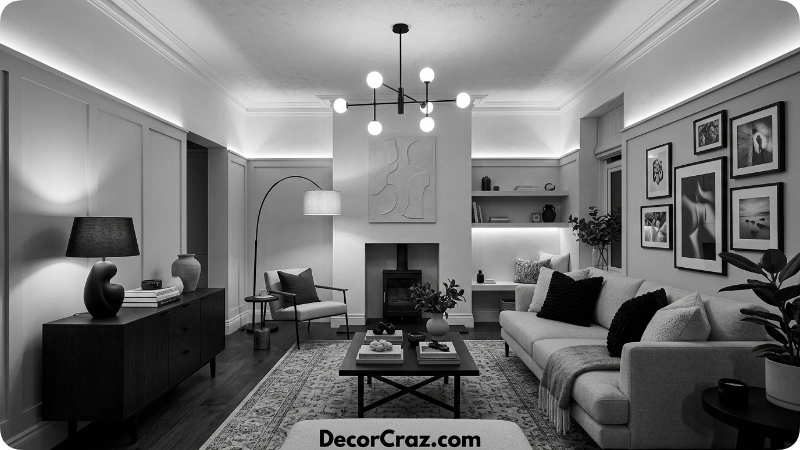
Lighting changes how black and white surfaces appear.
During the day, natural light can make white surfaces look brighter and black elements more defined. At night, artificial lighting becomes much more important because the contrast can otherwise become visually flat.
Use more than one light source where possible.
For example:
Ceiling light + floor lamp + table lamp + accent lighting
This allows different parts of the room to be illuminated rather than depending on one central light.
Black Lighting Fixtures
Black lamps can work as functional decor.
A black floor lamp beside a light sofa can repeat the dark color without requiring another large black furniture piece.
White Lighting Fixtures
White or light fixtures visually disappear more easily into a light ceiling or wall.
They are useful when you want furniture and artwork to receive more attention.
Layer the Light
Instead of making every light equally bright, give the room different lighting levels.
This helps separate the seating area, reading corner, artwork, and other functional zones.
Make Small Living Rooms Feel Balanced
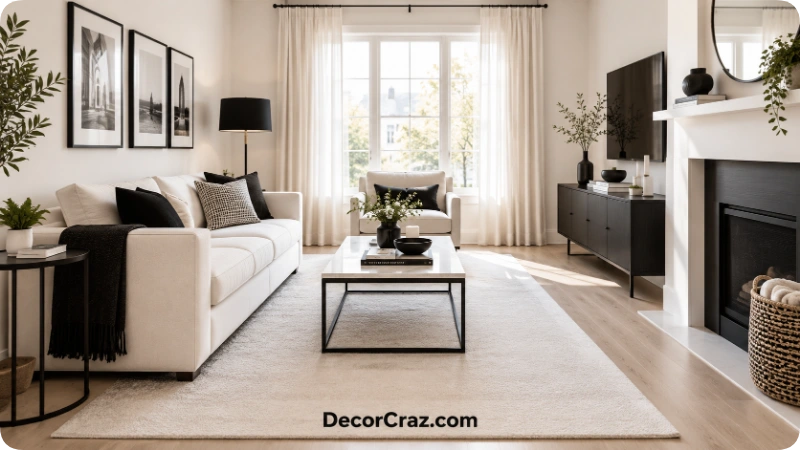
Small rooms require more careful control of visual weight.
A black and white palette can work particularly well in a compact space, but too many dark surfaces can make the room feel visually crowded. Current small room guidance emphasizes keeping larger areas lighter while using black as controlled accents.
Keep Larger Surfaces Lighter
Consider:
- White or warm white walls
- Light curtains
- Light rug
- Compact sofa
- Slim furniture
Then introduce black through smaller or medium sized elements.
Avoid Too Many Heavy Pieces
A large black sofa combined with a black cabinet, black curtains, black rug, and dark coffee table may consume too much visual space.
If you already have one large dark piece, let other major surfaces breathe.
Use Furniture With Visible Floor Space
Furniture that allows more of the floor to remain visible can make a compact room feel less crowded.
For example, a coffee table with a visually lighter base can feel less heavy than a completely solid block.
Keep the Path Clear
Decor should never interfere with movement through the room.
Before adding another chair, table, or floor accessory, consider if it improves the room enough to justify the space it occupies.
Try These Black and White Living Room Decor Combinations
Different combinations create different visual effects. Choose the one that matches the room rather than copying every element.
| Style Direction | Main Base | Black Elements | Warmth / Softness |
|---|---|---|---|
| Light monochrome | White | Frames, lamps, tables | Wood and textiles |
| Bold contrast | White | Sofa, rug, artwork | Cream and soft fabrics |
| Dark dramatic | Charcoal/black | Furniture and walls | White, wood, layered lighting |
| Soft monochrome | Cream | Charcoal and black | Linen, wool, wood |
| Graphic modern | White | Geometric patterns | Simple textures |
| Natural monochrome | Warm white | Black furniture | Oak, plants, woven materials |
The important difference is not the name of the style. It is how much visual weight each material and color carries.
Add Patterns Carefully
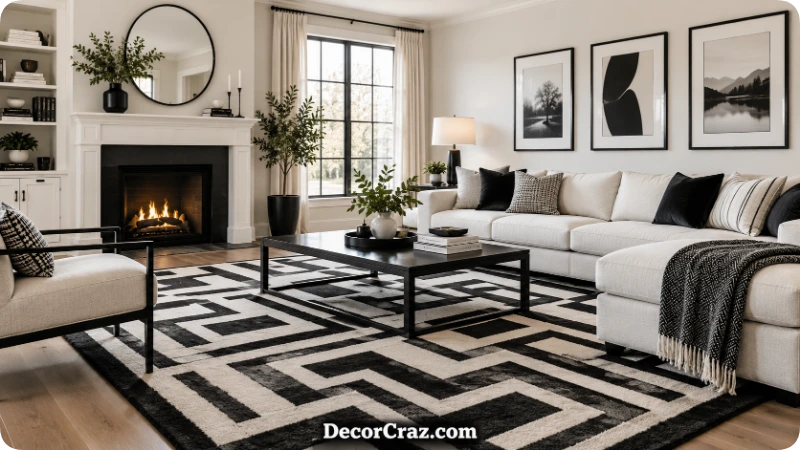
Pattern is useful because black and white can otherwise become visually repetitive.
But multiple high contrast patterns can compete.
For example, if you use a bold geometric rug, consider keeping the cushions simpler.
If the curtains have a strong pattern, choose quieter artwork.
If the artwork is extremely graphic, a plain rug may create a better balance.
Good Places for Black and White Patterns
Patterns can work particularly well on:
- Rugs
- Cushions
- Curtains
- Throws
- Artwork
- Accent chairs
Mixing Patterns
When mixing patterns, vary their scale.
A large geometric pattern and a smaller, quieter pattern can coexist more easily than two equally strong patterns competing for attention.
Decorate With Plants Without Breaking the Palette
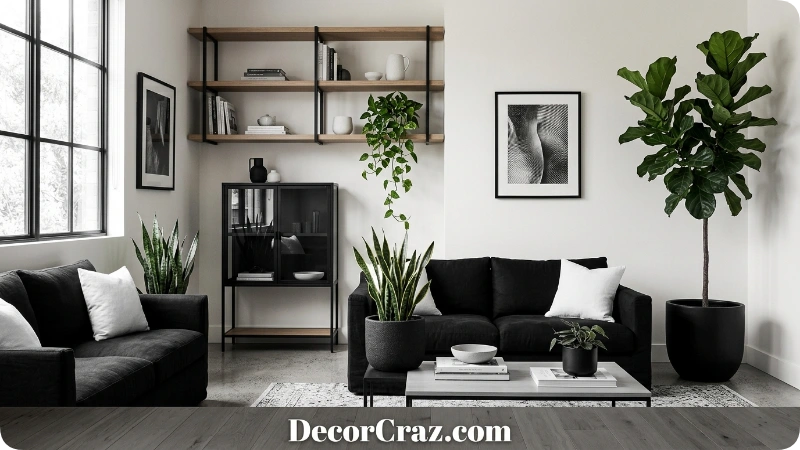
Plants introduce green, but that does not necessarily undermine a black and white scheme.
Instead, greenery can provide a natural visual break between hard surfaces and monochrome furniture.
Use plants where they also serve a spatial purpose.
For example:
- A tall plant can fill an empty vertical corner.
- A smaller plant can soften a shelf.
- A plant beside a black cabinet can interrupt a large dark block.
- A simple planter can repeat the room’s black or white color.
If you want a stricter monochrome appearance, choose a simple black, white, stone, or natural planter.
The plant becomes the organic element while the container stays connected to the palette.
Common Black and White Living Room Decor Mistakes
Making Everything 50/50
Black and white do not need to occupy equal amounts of space.
A strict 50/50 approach can sometimes create a visually divided room.
Instead, decide which color is the base and which one provides contrast.
Using Too Much Pure Black
Several large black surfaces can quickly dominate a small or poorly lit room.
If you already have a black sofa, you may not need black walls and a black rug as well.
Making Everything White
The opposite problem can also happen.
A room with white walls, white furniture, white curtains, and a few tiny black accessories may lack enough contrast.
Use black strategically to create visual anchors.
Using Only Hard Surfaces
Black metal, glass, glossy finishes, and smooth white surfaces can make the room feel visually cold.
Add fabric, wood, woven materials, and other tactile surfaces.
Adding Too Many Patterns
A monochrome palette does not automatically make every pattern compatible.
Choose a focal pattern and let supporting pieces remain quieter.
Ignoring the Lighting
A room that looks balanced during the day can look very different at night.
Check how the black and white elements appear under your actual room lighting before committing to large changes.
Black and White Decor for Renters and Low Commitment Updates
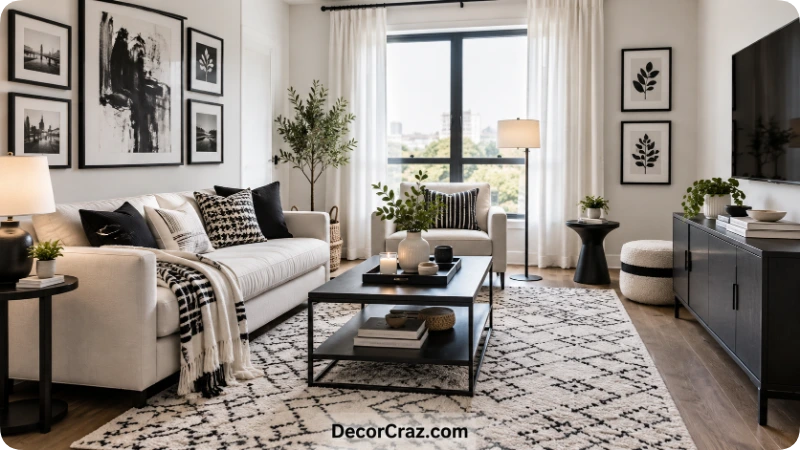
You do not need to repaint the room or replace your sofa to create the look.
Start with reversible changes.
Low Commitment Options
- Black picture frames
- Black cushions
- A monochrome rug
- Throw blankets
- Lamps
- Removable artwork
- Decorative trays
- Side tables
- Curtains
- Planters
This approach lets you test the palette before making expensive changes.
Medium Commitment Options
If you own the home or are comfortable changing larger pieces, consider:
- A new sofa
- Accent chair
- Coffee table
- Curtains
- Large rug
- Wall paint
Make the largest purchase only after deciding which color should dominate.
A Simple Formula for Styling Your Room
If you are starting from an empty room, use this sequence.
Step 1: Choose the Base
Decide if the room will be primarily white, primarily dark, or soft monochrome.
Step 2: Choose the Main Furniture
Select the sofa and other large pieces before buying small decorations.
Step 3: Add the Opposite Color
If the room is mostly white, introduce black through furniture and accessories.
If the room is mostly black, introduce white through walls, upholstery, rugs, curtains, or artwork.
Step 4: Add Texture
Use fabric, wood, woven materials, or other finishes to avoid a flat appearance.
Step 5: Add One Strong Pattern
Choose a rug, artwork, or textile as the main graphic element.
Step 6: Repeat the Dark Color
Repeat black in several locations rather than putting all of it in one corner.
Step 7: Edit
Stand back and remove anything that does not serve a visual or functional purpose.
A successful monochrome room is often created as much by editing as by adding decor.
Frequently Asked Questions
What wall color works best with black and white living room decor?
Pure white is one option, but warm white, soft cream, light gray, or greige can create a softer transition between black and white. The best choice depends on the room’s natural light and the amount of black already present. This question reflects a recurring information gap in current black and white decor content.
Can you add wood to a black and white living room?
Yes. Wood can add warmth and material contrast without requiring another strong accent color. Light oak can keep the room bright, while darker wood creates a richer look.
Can plants work with black and white living room decor?
Yes. Greenery introduces an organic element while black, white, stone, or natural planters can keep the decor visually connected. Use plants where they also help fill a corner, soften furniture, or add vertical interest.
Is a black and white patterned rug too bold?
Not necessarily. A strong patterned rug can work when the surrounding furniture and accessories are relatively quiet. If several other elements already have strong patterns, choose a simpler rug instead. This is a useful choice point identified in existing black and white living room guidance.
Conclusion
Black and white living room decor can create a stylish and well organized space when the two colors are balanced thoughtfully. Start with a clear base color, then use the opposite shade through furniture, artwork, rugs, lighting, cushions, and smaller accents. Add natural wood, soft fabrics, greenery, and different textures when the room feels too cold or flat.
The most important thing is to consider your room size, natural light, furniture scale, and everyday needs before adding more decor. Small rooms usually benefit from lighter surfaces and carefully placed black accents, while larger rooms can handle stronger dark elements.

I am Claudia Winkle, a passionate Name Researcher and Content Writer at decorcraz.com. I enjoy exploring the meanings, origins, history, and cultural significance behind names from around the world. Through carefully researched and engaging articles, I help readers discover unique names, understand their stories, and find meaningful naming inspiration for every occasion. My goal is to make name research simple, interesting, and useful for readers looking for the perfect name.