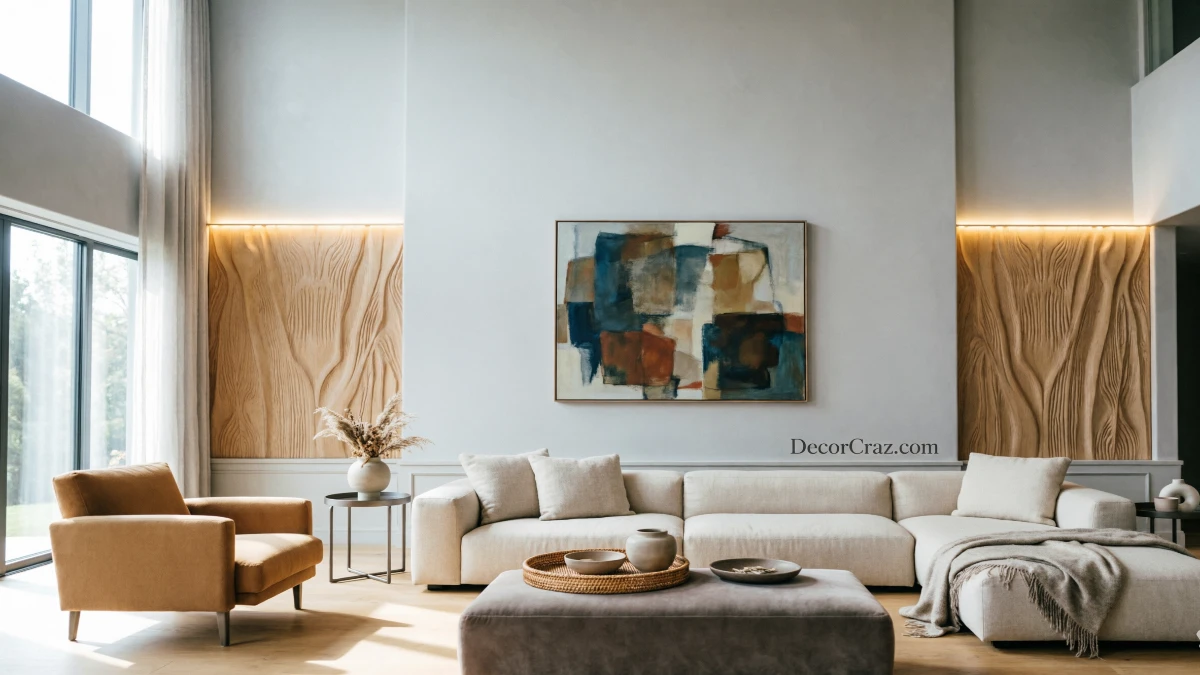
A high ceiling gives a living room more vertical presence, but it also creates a common decorating problem: the furniture occupies the lower part of the room while a large area of wall sits visually empty above it.
The best living room high ceiling wall decor ideas do not try to fill every inch. They create a clear relationship between the seating area, the wall, and the ceiling.
In most rooms, that means choosing fewer pieces with enough scale to be seen from across the room, then using paint, lighting, shelving, or architectural detail when the wall needs more structure.
The right choice depends mainly on four things: wall height, wall width, furniture placement, and whether you want to emphasize or visually reduce the height.
Start With One Strong Focal Point
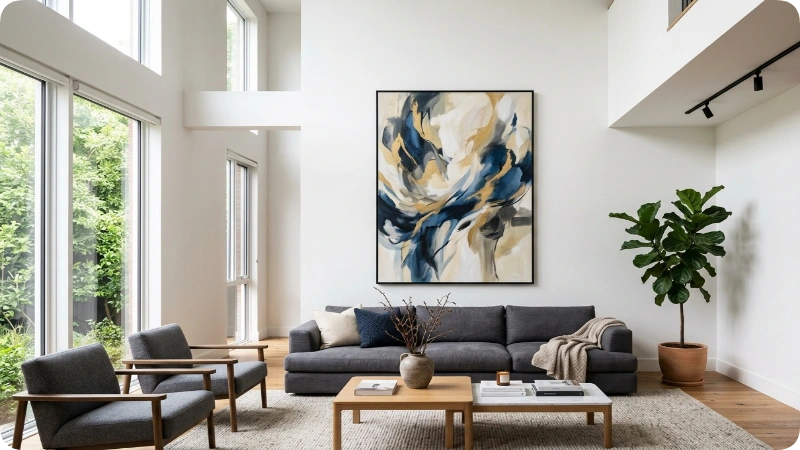
Before adding several decorative objects, decide where you want the eye to land.
For a large living room wall, the most reliable starting point is usually one substantial focal element positioned in relation to the furniture below it. A large painting, oversized photograph, sculptural wall piece, or fireplace can give the wall a visual center without making it look crowded.
The important distinction is between decorating a wall and connecting a wall to the room.
If a sofa sits against the wall, the main artwork should relate to the sofa rather than being centered according to the entire architectural wall alone. This keeps the upper wall connected to the seating zone.
Why this works
A tall wall already has visual impact. Adding many unrelated small objects can make the eye jump between competing points. One dominant element establishes hierarchy.
Best for
- Wide walls behind a sofa
- Double height rooms
- Minimal or contemporary interiors
- Rooms where you want the architecture to remain visible
When to choose something else
If the wall is extremely tall and narrow, one ordinary sized artwork may still look undersized. In that situation, use a vertical composition, architectural treatment, or layered arrangement.
Use Oversized Art Instead of Several Small Frames
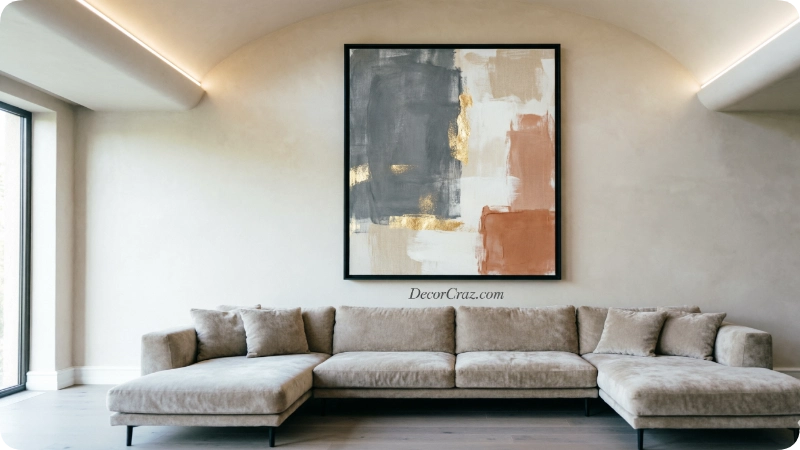
Oversized artwork is one of the simplest ways to give a high wall enough visual weight.
Large scale art works particularly well above a substantial sofa, fireplace, or long console because the artwork can visually connect the upper wall to the furniture below. Current high ceiling design guidance repeatedly emphasizes scale rather than simply adding more objects.
Choose a piece according to the furniture grouping, not just the ceiling height.
For example, a large horizontal painting can work well above a long sectional, while a tall vertical artwork may make more sense on a narrow wall between architectural features.
Placement matters more than maximum size
Do not automatically push artwork toward the ceiling because the wall is tall. The lower portion should remain connected to the room’s main activity.
A useful approach is to stand at the normal viewing position and assess whether the artwork feels connected to the sofa, chairs, fireplace, or console. If the artwork appears to float far above the furniture, lower it rather than trying to “use” more wall.
Avoid this mistake
A tiny picture placed extremely high does not necessarily solve an empty tall wall. It can actually make the wall appear larger because the small object emphasizes the amount of unused space around it.
Build a Vertical Gallery Wall
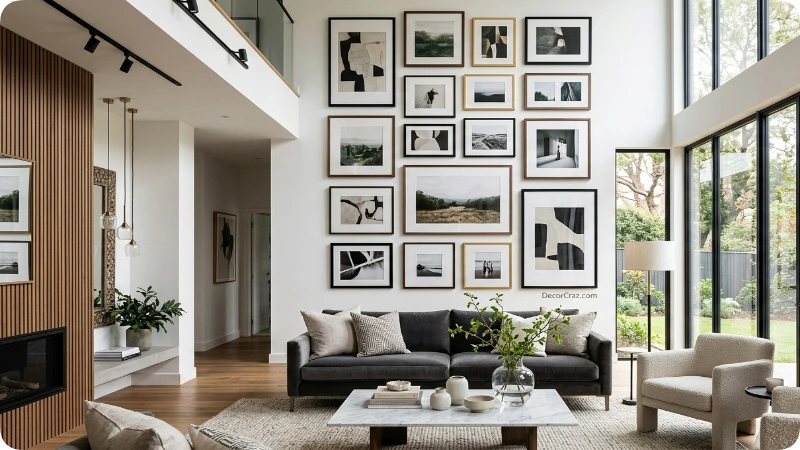
A gallery wall gives you more flexibility when one oversized artwork is not your style.
Instead of spreading small frames randomly across the entire wall, create a deliberate composition with a strong center and extend it upward.
You can use:
- Family photographs
- Artwork
- Illustrations
- Architectural prints
- Mirrors
- Textured pieces
- Objects with similar framing
The key is to make the collection read as one visual arrangement, rather than many independent decorations.
How to make a tall gallery feel intentional
Start with the largest or most important piece. Then build around it while maintaining a consistent visual relationship between the frames.
A grid creates a controlled appearance. A salon style arrangement feels more collected. A vertically oriented composition emphasizes the wall’s height.
Keep the lower portion visually connected to the furniture instead of beginning the gallery too high.
Divide the Wall With Paneling or Trim
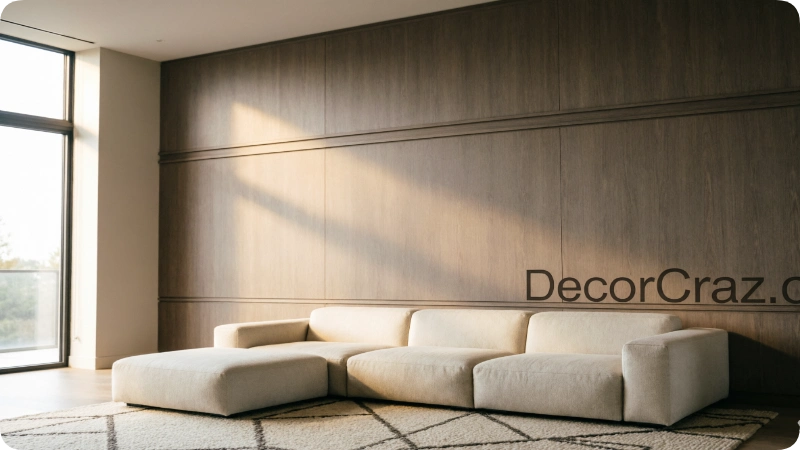
Sometimes the problem is not a lack of decoration. The wall itself needs structure.
Picture frame molding, board and batten, vertical paneling, wainscoting, or a picture rail can divide a tall wall into more manageable visual zones. Designers commonly recommend architectural details such as wainscoting and picture rails for breaking up large expanses of wall.
Use horizontal detail when the room feels too tall
Horizontal lines can visually interrupt a tall vertical plane. A picture rail or lower wall treatment can establish a visual stopping point.
This is especially useful when you like the openness of a high ceiling but do not want the room to feel cavernous.
Use vertical paneling when you want to emphasize height
Vertical lines do the opposite. They reinforce the architecture and make the ceiling height feel intentional.
Choose this approach when the room already has enough horizontal furniture and you want the wall to become a strong architectural feature.
Best for
- Homeowners comfortable with permanent changes
- Formal living rooms
- Traditional, transitional, or contemporary interiors
- Large blank walls that need structure rather than additional objects
For renters, removable molding style products or paint based divisions can provide a lower commitment alternative.
Create a Tall Feature Wall With Paint
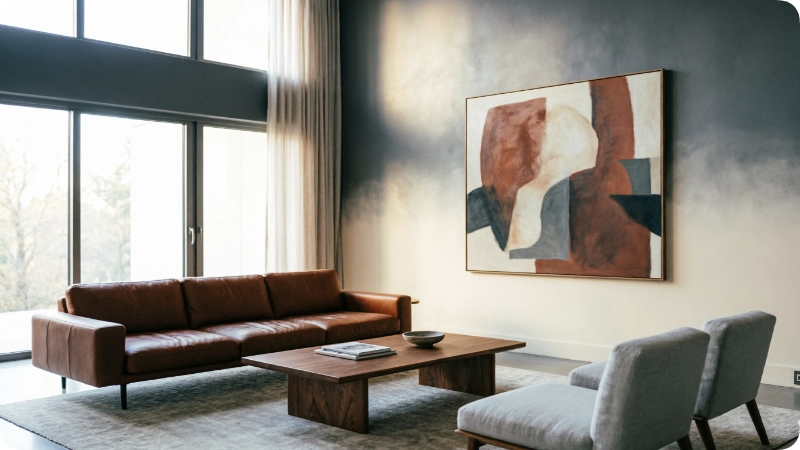
Paint can change how the height of a room is perceived without adding physical objects.
One option is to carry a feature color across the main wall and allow it to extend toward the highest point. This can make the tall wall feel like an intentional architectural backdrop rather than an unfinished surface. High ceiling design guidance also recommends using contrasting wall treatments to establish a focal wall.
Another approach is to use a lighter, quieter upper area when you want the wall to feel less imposing.
For a stronger architectural effect
Use one color from the lower wall to the upper wall and let artwork or furniture provide the contrast.
For a softer visual transition
Use related tones rather than an abrupt contrast. A subtle tonal relationship can make the wall feel more continuous.
The best choice depends on whether you want the ceiling height to become a feature or simply want the room to feel more balanced.
Install Floor to Ceiling Shelving
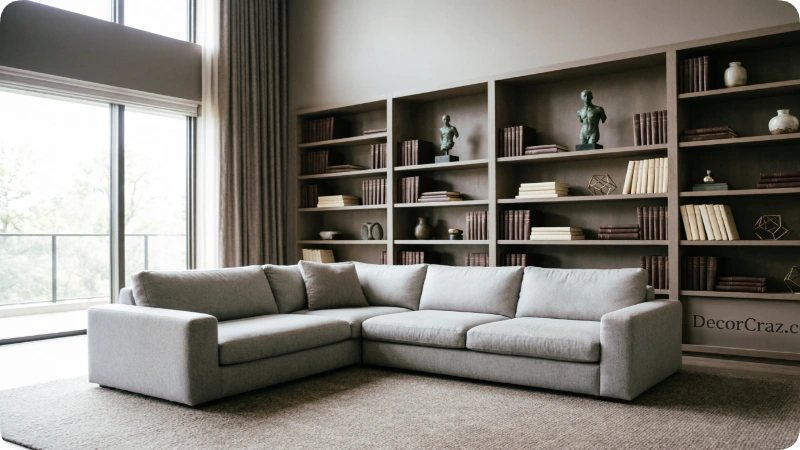
Shelving is useful when the tall wall needs both decoration and function.
A floor to ceiling bookcase can occupy the vertical space without requiring a large collection of individual wall decorations. It also allows the wall to evolve because books, artwork, plants, ceramics, and other objects can be rearranged.
Built in shelving is particularly effective on a large wall because it creates a continuous visual element from floor to ceiling.
Keep tall shelving from becoming visually heavy
Leave some open areas rather than filling every shelf.
Mix useful items with decorative objects, but maintain enough negative space that the shelving still reads as one structure.
Best for
- Readers who need storage
- Large family rooms
- Walls without large windows
- Homeowners planning permanent improvements
Lower commitment alternative
Use several matching tall bookcases instead of commissioning a built in. The result is easier to change later and can cost less.
Use a Large Mirror When Light and Openness Matter
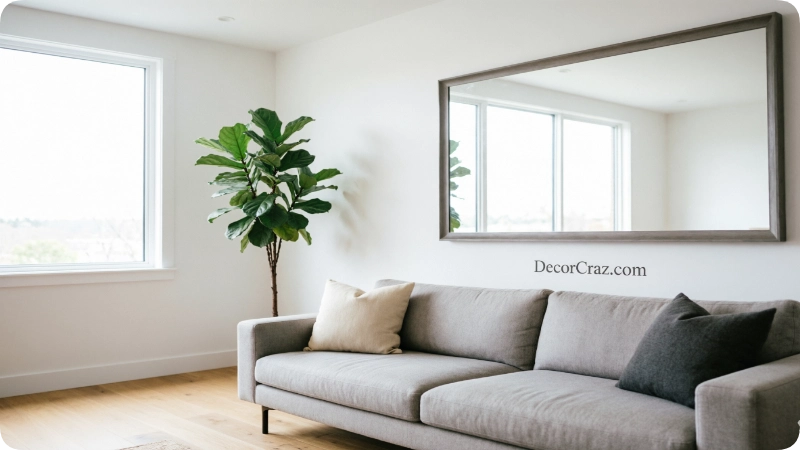
A large mirror can work particularly well when a high ceiling living room also feels dark or visually heavy.
Instead of using a small decorative mirror, consider a substantial piece that relates to the size of the furniture beneath it.
The mirror does not need to occupy the entire wall. Its purpose is to create another visual plane and reflect light or architectural features.
Where it works best
Place a mirror where the reflection adds something useful. It can reflect a window, light source, artwork, or another attractive part of the room.
Avoid positioning it where it simply reflects a cluttered area. In that case, the mirror may amplify the problem rather than solve it.
Add Wall Lighting to Use the Vertical Space After Dark
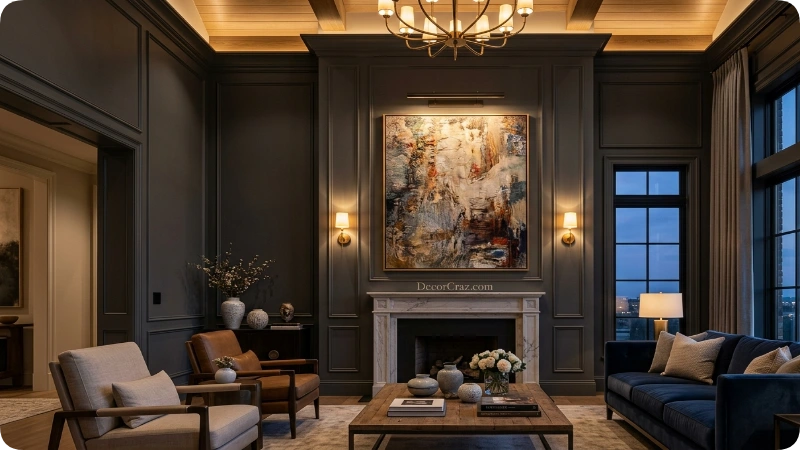
A tall wall can look balanced during daylight but disappear visually at night.
Wall sconces, picture lights, or carefully positioned accent lighting can help maintain a focal point after natural light fades.
Lighting is particularly useful around:
- Large artwork
- Fireplace walls
- Shelving
- Architectural paneling
- Gallery walls
The goal is not to illuminate every square foot. Instead, use light to reinforce the important elements of the wall.
For artwork
A picture light can make one large piece feel intentional.
For architectural walls
Sconces can emphasize paneling or texture.
For shelving
Integrated lighting can turn storage into a vertical architectural feature.
When installing new electrical fixtures, follow local electrical requirements and use a qualified professional where the work requires wiring changes.
Hang a Large Textile or Tapestry
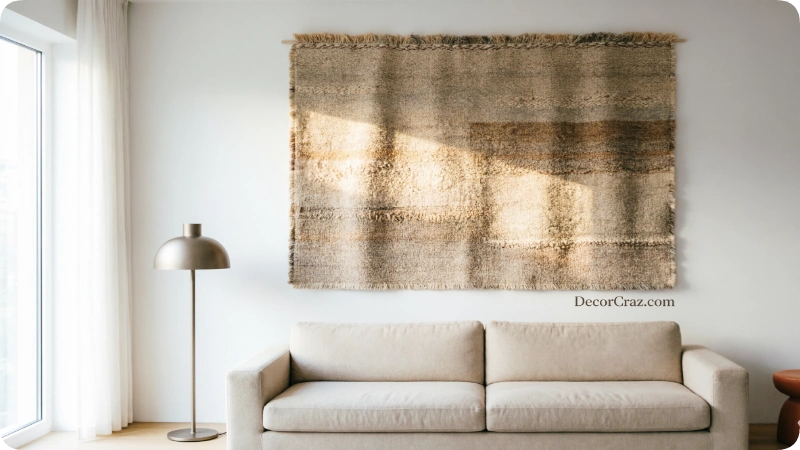
A textile can soften a tall wall without making it feel like a conventional art gallery.
Large woven pieces, tapestries, fabric panels, and other wall textiles introduce texture while occupying more visual area than many small decorations.
This can be especially effective in living rooms with:
- Hard flooring
- Minimal furniture
- Large open volumes
- Neutral walls
- Contemporary or eclectic interiors
Why choose textile instead of framed art?
A textile has a different visual character. Its surface can introduce softness and texture where a framed painting would add a harder rectangular shape.
It is also useful when you want the wall to feel less formal.
For renters, lightweight hanging systems can offer a more reversible solution than permanent wall treatments.
Use a Diptych or Triptych for a Wide Wall
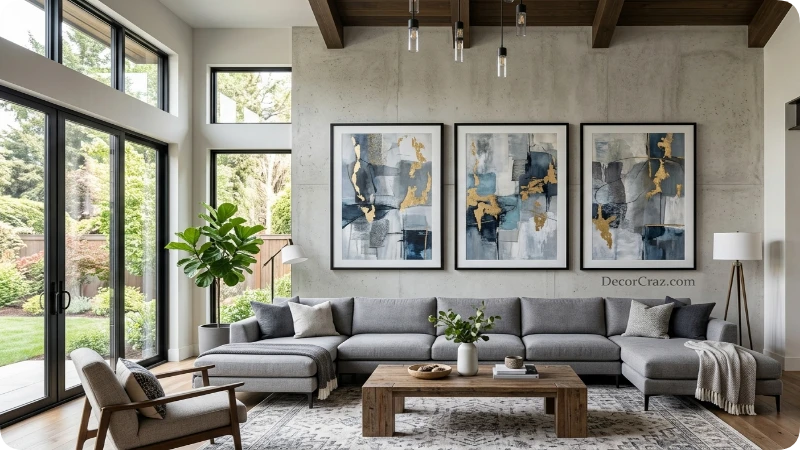
One oversized artwork is not the only way to create scale.
A diptych or triptych can provide the visual mass of a large artwork while introducing intentional separation.
This works particularly well above a long sofa because the combined composition can follow the furniture’s horizontal proportions.
Keep the pieces visually related through one or more shared characteristics such as:
- Color palette
- Subject
- Frame style
- Material
- Visual weight
Do not assume three pieces are automatically better than one. If the wall already has strong architectural features, a single artwork may create a cleaner result.
Anchor the Wall With a Console or Low Cabinet
A tall wall can feel disconnected from the living area when all the visual weight sits high.
A long console, sideboard, or low cabinet creates a horizontal base for artwork and accessories.
This is particularly useful when the wall is wide rather than extremely tall.
Place the main wall decoration above the furniture so the two elements read as one composition.
Keep the surface controlled
You do not need to fill the console with small objects. A few carefully selected pieces can provide enough visual connection between the furniture and wall.
The cabinet also adds practical storage, which makes this option more useful than decoration alone.
Add a Tall Plant or Tree Near the Wall
A tall plant can help connect the lower living area with the vertical volume above it.
Rather than placing a plant directly in front of artwork, use it at the edge of a furniture grouping or near an otherwise empty corner.
Its height should relate to the surrounding furniture and available floor area.
Use this option when
- You want a softer transition between furniture and wall
- The wall already has enough artwork
- You have natural light appropriate for the plant
- You want a temporary decorating solution
A plant should support the composition rather than become another competing focal point.
Use Curtains to Add Another Vertical Layer
If the high ceiling living room contains large windows or glass doors, window treatments can become part of the wall composition.
Full height curtains can connect the upper and lower portions of the room and make the window area feel intentional.
The treatment should be coordinated with the wall and furniture rather than treated as an unrelated accessory.
Best approach
Use curtains to frame the window and reinforce the room’s vertical architecture.
Avoid adding heavy visual weight to a window that already dominates the wall. In that case, a simpler treatment may work better.
Choose the Right Strategy for Your Ceiling Height and Wall Shape
There is no single best solution for every high ceiling room.
If the wall is tall and wide
Start with oversized artwork, a large gallery, paneling, or a feature wall.
If the wall is tall and narrow
A vertical artwork, tall shelving, vertical paneling, or a narrow textile usually makes more sense than a wide collection of small frames.
If the wall is two stories high
Think in terms of a major visual composition rather than ordinary wall art simply hung higher. Large scale art, architectural features, tall shelving, and carefully planned gallery arrangements are better suited to the increased volume.
If the room feels too cavernous
Use horizontal visual breaks, substantial furniture, layered lighting, and a controlled focal wall.
If you want to celebrate the height
Use vertical artwork, tall shelving, vertical paneling, or lighting that leads the eye upward.
Match the Decor to Your Commitment Level
The best solution also depends on how permanent you want the change to be.
| Commitment | Good options | Best when |
|---|---|---|
| Low | Artwork, textile, mirror, plant | You want an easy update |
| Moderate | Gallery wall, console, large shelving | You want more visual structure |
| Higher | Paneling, built-ins, permanent lighting | The wall needs architectural change |
| Rental friendly | Removable art systems, lightweight decor, paint where permitted | You cannot make major alterations |
This prevents a common mistake: using a permanent solution for a temporary decorating problem.
Avoid These High Ceiling Wall Decor Mistakes
Hanging small artwork too high
Moving a small frame closer to the ceiling does not make it large enough for the wall.
Filling every inch
A tall wall does not need decoration from floor to ceiling. Negative space can make a strong focal piece more effective.
Ignoring the furniture below
Wall decor should usually relate to the seating or storage arrangement beneath it.
Mixing too many focal points
A large painting, dramatic gallery wall, bold paneling, oversized mirror, and statement shelving may compete rather than complement one another.
Choosing scale without considering wall width
A tall room can still have a relatively narrow wall. Ceiling height alone should not determine the size or orientation of the decoration.
Decorating only for daytime
If the room is used in the evening, consider how the wall will look under artificial lighting before finalizing the arrangement.
How to Choose the Best High Ceiling Wall Decor
If you are unsure which direction to take, start with the problem rather than the decoration.
Want one strong focal point? Choose oversized art.
Have many personal pictures or prints? Build a structured gallery wall.
Want the wall itself to become architectural? Use paneling, trim, or paint.
Need storage? Choose tall shelving or cabinetry.
Need more reflected light? Consider a large mirror.
Want texture and softness? Try a textile wall hanging.
Need a connection between furniture and ceiling height? Combine a strong wall feature with appropriately scaled furniture and lighting.
Renting? Favor reversible artwork, textiles, mirrors, plants, and removable display systems.
The goal is not to make the wall look busy. It is to make the wall and the room feel like they belong to the same composition.
FAQ
How do you decorate a very tall living room wall without making it look empty?
Use one or two appropriately scaled visual anchors rather than many small decorations. Oversized artwork, a structured gallery, tall shelving, paneling, or a feature wall can give the space enough visual weight while preserving intentional negative space. This directly addresses a recurring information gap in current tall wall guidance: scale and placement matter more than simply adding more objects.
Should artwork in a high ceiling living room go near the ceiling?
Usually, no. Artwork should remain visually connected to the furniture or architectural focal point below it. If the artwork is placed excessively high just to occupy upper wall space, it can become disconnected from the room. Current guidance commonly recommends keeping tall wall compositions anchored around the normal viewing zone and extending upward deliberately rather than simply pushing individual pieces toward the ceiling.
How can you make a high ceiling living room feel less cavernous?
Create visual anchors at the level where people use the room, then add horizontal or layered elements that reduce the feeling of one uninterrupted vertical surface. Paneling, picture rails, substantial furniture, controlled color changes, artwork, and layered lighting can all help organize the height.
Conclusion
High ceilings can make a living room feel spacious and impressive, but decorating a tall wall is mainly about choosing the right scale and balance. Instead of filling every empty area, focus on creating one strong visual connection between the wall and the furniture below.
Oversized artwork, vertical gallery walls, paneling, feature paint, floor to ceiling shelving, large mirrors, wall lighting, textiles, and tall plants can all work beautifully when chosen according to the wall’s height, width, and overall room style.
Think about whether you want to emphasize the ceiling height or make the room feel more grounded and comfortable. Most importantly, avoid placing small artwork too high or using too many competing focal points.
The best high ceiling wall decor ideas create structure, maintain negative space, and make the entire living room feel cohesive, comfortable, and intentionally designed.

I am Claudia Winkle, a passionate Name Researcher and Content Writer at decorcraz.com. I enjoy exploring the meanings, origins, history, and cultural significance behind names from around the world. Through carefully researched and engaging articles, I help readers discover unique names, understand their stories, and find meaningful naming inspiration for every occasion. My goal is to make name research simple, interesting, and useful for readers looking for the perfect name.