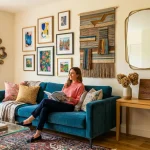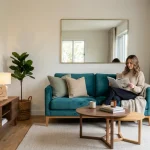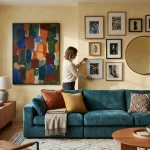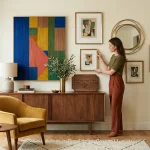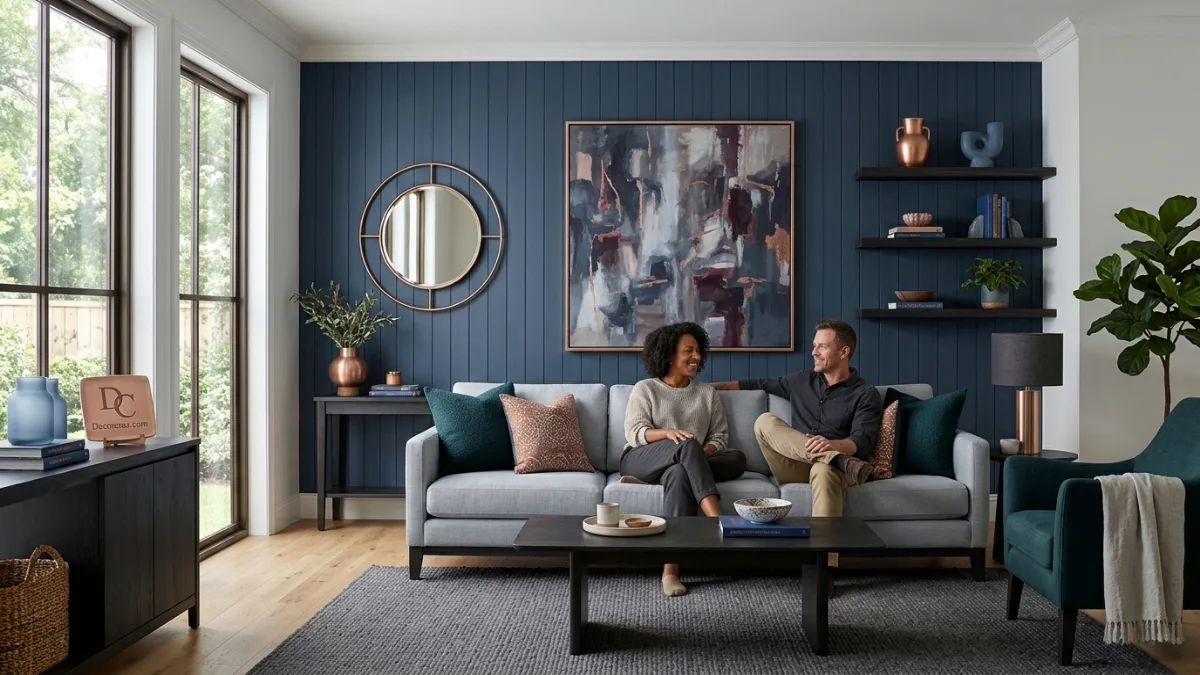
A large living room wall can make a room feel unfinished when the furniture is arranged but the space above it remains empty. The solution is not always to add more decorations. It is to choose a wall treatment that fits the wall’s size, the furniture beneath it, the room’s lighting, and the way you use the space.
The best large living room wall decor usually starts with one clear decision: do you want the wall to feel artistic, functional, architectural, or personal? A single oversized artwork can create a strong focal point, while a gallery wall adds variety. Mirrors help reflect light, shelves provide display space, and paint or wall paneling can add character without relying on framed art.
Before buying anything, look at the whole wall rather than one small section. Consider the sofa, fireplace, television, windows, ceiling height, and available walking space. These details help you choose decor that looks connected to the room instead of floating awkwardly on a large surface.
How to Choose the Right Decor for a Large Living Room Wall
Start by identifying the wall’s main purpose. A wall behind a sofa often benefits from artwork or a gallery arrangement. A wall opposite windows may work well with a carefully placed mirror. A wall with no furniture beneath it may need a taller composition, shelving, or an architectural treatment.
Use this quick guide to narrow your options:
| Your wall or room situation | Decor that may fit best | Why it works |
|---|---|---|
| A wide wall behind a sofa | Oversized art or a gallery wall | Connects the wall visually to the seating area |
| A tall wall with high ceilings | Vertical artwork, tall shelving, or paneling | Uses more of the wall’s height |
| A room that feels dark | A well positioned mirror or lighter artwork | Can reflect available light or add visual brightness |
| A minimalist living room | One large artwork or a simple textured feature wall | Keeps the overall composition uncluttered |
| A wall needing storage | Built in or floating shelves | Combines display space with practical use |
| A rented home | Lightweight art, removable decor, or freestanding shelving | Reduces the need for permanent changes |
| A room with a television or fireplace | A balanced arrangement around the main feature | Prevents competing focal points |
You do not need to decorate every wall. Leaving some areas relatively clear can help the main feature stand out and prevent a large room from feeling visually crowded.
Use Oversized Wall Art as a Focal Point
Oversized artwork is one of the simplest ways to fill a broad wall without creating a complicated arrangement. A large landscape, abstract painting, botanical print, or textured canvas can give the room a clear visual center.
Choose artwork that connects with colors already present in your sofa, rug, curtains, cushions, or other furnishings. It does not have to match everything. Repeating one or two colors is often enough to make the artwork feel intentional.
How to choose the right size
When hanging art above a sofa or console, judge the artwork in relation to the furniture rather than the entire wall alone. As a starting guideline, the artwork or complete arrangement can span roughly two thirds to three quarters of the furniture’s width. Treat this as a flexible design guideline, not a strict rule.
For example, if your sofa is 90 inches wide, a composition around 60 to 68 inches wide may be a useful starting point. A particularly large room, a wide sofa, or a tall ceiling may call for a different proportion.
When oversized art works best
- In a modern or minimalist room where one strong feature is enough.
- Above a long sofa that needs a clear visual anchor.
- In a room where a gallery wall would feel too busy.
- When you want to change the room’s mood without renovating the wall.
Watch out for: Choosing a piece that is too small for the furniture beneath it. A small frame can look disconnected from a large sofa and leave the wall feeling just as empty as before.
Create a Gallery Wall That Feels Organized
A gallery wall combines several framed prints, paintings, photographs, or illustrations into one larger display. It is a useful choice when you have multiple pieces you want to show rather than one artwork large enough to fill the space.
The key is to plan the arrangement as a single composition. Frames can vary in size, but the overall display should have a recognizable shape and a relationship to the furniture below it.
Choose a layout before hanging anything
A symmetrical grid creates a clean, orderly appearance. It works well in contemporary, traditional, and formal living rooms. A looser gallery layout feels more personal and collected, particularly when it includes different artwork styles or family photographs.
For a balanced result:
- Pick one larger piece to act as the visual anchor.
- Repeat a frame finish, color, subject, or mat style to connect the pieces.
- Keep the gaps between frames reasonably consistent.
- Lay the arrangement on the floor first or make paper templates before drilling holes.
- View the complete layout from the main seating area before fixing it to the wall.
A large gallery wall does not need dozens of frames. A smaller number of appropriately sized pieces can fill a wide area more effectively than many tiny frames scattered across it.
When to choose a gallery wall
Choose this approach if you enjoy displaying personal photographs, collected art, travel prints, or illustrations. If you prefer a quiet interior with few visual details, one oversized artwork may be easier to live with.
Hang a Large Mirror to Reflect Light
A mirror can serve as both wall decor and a functional feature. On a large living room wall, it can break up an empty surface and reflect a window, a light source, or an attractive part of the room.
A wide horizontal mirror may work above a console or sofa, while a tall mirror can complement a vertical wall or a narrow section between windows. A decorative frame can become part of the design, especially in traditional, vintage, or eclectic interiors.
Where to place a living room mirror
Position the mirror so that it reflects something you want to see, such as natural light, greenery, or an appealing part of the room. Reflecting a cluttered corner or a television screen may create more distraction than benefit.
A mirror does not automatically make every living room appear larger. Its effect depends on what it reflects, its size, its placement, and the room’s existing light.
Installation note: Large mirrors can be heavy. Use mounting hardware suitable for the mirror’s weight and the wall construction. For a heavy mirror, confirm that the fixing method is appropriate for the wall rather than relying on an ordinary picture hook.
Add Floating Shelves for Display and Storage
Floating shelves are a practical option when a large living room wall needs both decoration and usable storage. They can display books, small framed prints, ceramics, plants, and meaningful objects without requiring a full built in bookcase.
Shelves are particularly useful when the wall feels empty but you do not want to cover it entirely with artwork.
How to style shelves without creating clutter
Begin with the shelf arrangement, then choose a limited selection of items to display. Combine objects of different heights, and leave some sections open so the wall remains visible. A few books placed horizontally can support a small object, while a framed print can add height and visual interest.
If the shelves sit above a sofa or seating area, avoid placing heavy or fragile objects where they could fall onto people. Keep the display stable and use suitable mounting hardware for the shelf and its load.
Floating shelves or a bookcase?
Floating shelves suit a lighter, more open look and can be arranged around an existing focal point. A full height bookcase offers more storage and can fill a very tall wall, but it occupies more visual space and may require more installation work.
Renters should check their lease and consider whether drilling is permitted. Removable adhesive products should only be used within their stated weight limits and on compatible surfaces.
Add Wall Paneling for Texture and Structure
Wall paneling changes the surface itself rather than simply adding objects to it. Options include picture frame molding, vertical slats, beadboard, board and batten details, or broad decorative panels.
This approach can be especially effective when a living room has a large, uninterrupted wall that needs more structure. Paneling introduces lines and shadows that help define the space, even when the color stays close to the existing wall paint.
Choose a paneling style that suits the room
- Picture frame molding: Works well in traditional, transitional, and formal interiors.
- Vertical slats: Can emphasize height and suit contemporary or natural material schemes.
- Board and batten: Creates a clear pattern with a relatively simple visual rhythm.
- Large flat panels: Offer a restrained architectural look without many small details.
Paneling does not have to cover every wall. Applying it to one main wall can create a focal point while keeping the rest of the room visually calm.
Before installing permanent paneling, consider the cost, wall condition, existing trim, and whether the finish will suit the room if you change the furniture later. In a rental, removable wall treatments or painted details may be more practical.
Use Paint or Wallpaper to Make a Feature Wall
A feature wall adds color or pattern to a large living room wall without requiring a collection of decorative objects. It can also define a particular zone in an open plan room.
A deep paint color can create contrast behind light furniture, while a lighter shade may help a room feel more open. Wallpaper can introduce a botanical pattern, geometric design, subtle texture, or a mural like effect.
How to avoid overwhelming the room
Think about the wall’s relationship to the other large surfaces. If the sofa, rug, curtains, and artwork already contain bold patterns, a simple paint treatment may be the better choice. If the furniture is restrained, wallpaper can supply the visual detail the room is missing.
Test paint samples in the actual room and observe them at different times of day. Natural light, lamps, and nearby colors can change how a shade appears.
For renters, removable wallpaper may be an option, but compatibility depends on the wall finish, paint condition, product instructions, and how long it remains installed. Test a small, inconspicuous area first when permitted.
Decorate a Tall Wall With Vertical Elements
A wall that rises well above the furniture can feel unbalanced when all the decor sits in one narrow horizontal strip. In this situation, consider how the arrangement uses height as well as width.
Tall artwork, vertically arranged frames, floor to ceiling shelving, long curtains, or vertical panel details can help connect the lower furniture to the upper part of the wall.
Avoid hanging everything near the ceiling
A tall wall does not mean every picture should be placed high. Keep the arrangement connected to the seating or furniture beneath it, then use a taller composition to address the extra height.
For example, a pair of vertical artworks can frame a console, while a tall bookcase can fill a wall that needs storage. If you want a gallery wall, expand its overall shape upward rather than leaving a small cluster at the center of a vast surface.
Where ceilings are unusually high, a floor to ceiling treatment may require professional installation or equipment. Do not attempt to hang heavy items from an unstable ladder or use fixings that are not rated for the load.
Use Wall Sconces and Picture Lighting
Lighting can make wall decor easier to see and help establish a focal point after daylight fades. Wall sconces can flank a large artwork, fireplace, or mirror. A picture light can draw attention to a painting or a gallery arrangement.
Choose lighting based on the wall’s purpose. If you need general room illumination, decorative sconces alone may not provide enough light. If the goal is to highlight artwork, a focused picture light may be more appropriate.
Plan the lighting before hanging the decor
Check where electrical connections are located and whether the chosen fixture needs hardwiring. Plug in sconces can offer an alternative where permitted, while battery powered picture lights may suit a smaller display.
Avoid placing lights where they create distracting glare on glass or mirrors. For valuable artwork, check that the light source and exposure are appropriate for the materials.
If electrical work is needed, use a qualified professional in accordance with local requirements.
Create a Personal Display With Textiles and Collected Objects
Framed art is not the only way to decorate a large wall. A textile wall hanging, woven panel, decorative plate arrangement, or carefully grouped collection can introduce texture and a more personal feel.
Textiles can soften a room filled with hard surfaces, while a collection of plates or sculptural objects can add depth. The choice should connect with the room’s existing materials rather than compete with them.
How to keep a collected display cohesive
Choose a common thread, such as color, material, subject, shape, or origin. The pieces do not need to match exactly, but they should relate to one another when viewed as a group.
A textile hanging can work well in a relaxed living room, while a structured arrangement of plates may suit a traditional or eclectic interior. If you have a valuable or delicate object, choose a mounting system designed for its weight and shape.
Do not use heavy objects or unsecured collections above seating areas where a fall could cause injury.
Combine Decor With a Fireplace or Television
Some large living room walls already have a dominant feature, such as a fireplace, television, or built in media unit. In these cases, the wall decor should support that feature instead of competing with it.
Above a fireplace, artwork or a mirror can create a clear focal point if the size, heat exposure, and installation method are appropriate. On a television wall, a restrained arrangement, cabinetry, or paneling may make the screen feel more integrated into the room.
If your wall includes a television
Avoid adding so many frames or decorative objects that the screen becomes one of several competing focal points. Consider the viewing position, glare, cable management, and access to devices before installing shelves or panels.
If you prefer to display art, choose a layout that can coexist with the screen rather than forcing an unrelated gallery around it.
If your wall includes a fireplace
Check the fireplace manufacturer’s instructions and applicable local requirements before placing combustible materials, electronics, mirrors, or other objects near a heat source. Safe clearances depend on the specific fireplace and materials, so there is no single distance that applies to every installation.
How to Decorate a Large Living Room Wall on a Budget
You do not need custom cabinetry or expensive original art to make a large wall feel complete. Start with the elements you already own, then decide what the wall is missing.
| Budget approach | What to try | Main advantage |
|---|---|---|
| Very low budget | Rearrange existing frames or create a simple print display | Uses decor you already have |
| Low to moderate budget | Add a large poster, textile hanging, or a few coordinated frames | Creates a larger visual arrangement without custom work |
| Moderate budget | Install floating shelves, a substantial mirror, or ready made panel details | Adds function or surface texture |
| Higher budget | Commission large artwork, add built in shelving, or install custom wall paneling | Allows closer control over scale and finish |
Costs vary by material, size, location, installation, and whether you already own the necessary items. Compare the complete costincluding frames, mounting hardware, paint, tools, and installationrather than looking only at the price of the main decor piece.
A useful first step is to rearrange the room and temporarily mock up the proposed layout with paper templates. This helps you judge the size and placement before spending money or making permanent holes.
Common Large Living Room Wall Decor Mistakes to Avoid
Choosing decor that is too small
A small picture can disappear on a wide wall, especially above a long sofa. Measure the furniture and plan the full arrangement before buying anything.
Hanging artwork too high
Decor should relate to the furniture and the viewer’s sightline. Moving every item toward the ceiling does not necessarily make a tall wall feel more balanced.
Filling every empty section
A large wall does not need to be covered from edge to edge. Empty space can separate the main focal point from windows, furniture, and other visual features.
Mixing too many unrelated styles
Different art styles can work together, but a shared color palette, frame finish, material, or subject can help the collection feel connected.
Ignoring lighting and reflections
A mirror placed opposite a cluttered area can reflect the mess, while artwork behind glass may catch glare. Check the wall from the main seating position at different times of day.
Installing shelves or mirrors with unsuitable fixings
The correct hardware depends on the object’s weight and the wall construction. Check the product instructions and use a suitable fixing method, especially for heavy items or decor above seating.
Buying before measuring
A piece may look large in a shop or online but appear small in a spacious living room. Measure the wall and the furniture, and mock up the arrangement before committing.
A Simple Plan Before You Decorate
Use this checklist to turn an empty wall into a planned part of the room:
- Measure the wall’s width and height.
- Measure the sofa, console, fireplace, or other feature below or beside it.
- Decide whether the wall needs art, storage, light reflection, texture, or a personal display.
- Choose one main focal point before adding smaller details.
- Check the colors and materials already present in the room.
- Test the layout with paper templates or a floor arrangement.
- Confirm wall fixings, weight limits, electrical needs, and any heat related restrictions.
- Leave enough visual space around the main feature.
The goal is not to fill every inch. It is to make the wall feel connected to the room and useful for the way you live.
FAQs
What should I put on a large living room wall behind a sofa?
Oversized artwork, a coordinated gallery wall, a large mirror, or a pair of vertical pieces can work well. Choose an arrangement that relates to the sofa’s width and the room’s style. If you prefer a simple look, one substantial piece may be enough.
How do I decorate a large living room wall with high ceilings?
Use decor that addresses the wall’s height as well as its width, such as tall artwork, vertical paneling, long curtains, or full height shelving. Keep the arrangement visually connected to the furniture below it rather than hanging everything close to the ceiling.
How can I decorate a large wall in a rental?
Consider framed prints, lightweight textile hangings, freestanding bookcases, and removable wall treatments where the surface and lease permit them. Check the product’s installation limits and test removable products carefully, since some adhesives can damage paint or wallpaper.
Can I mix different styles of artwork on one wall?
Yes. A gallery can combine photographs, abstract art, illustrations, and collected pieces. Use a connecting featuresuch as color, frame finish, subject, or spacingto help the different works read as one arrangement.
How do I decorate a large living room wall without making the room look cluttered?
Choose one main feature and let it do most of the work. Keep nearby decor limited, repeat a few colors or materials, and leave some wall space clear. Shelves should hold selected objects rather than every decorative item you own.
Is a mirror a good choice for a large living room wall?
It can be, especially when it reflects a window or an attractive part of the room. Consider the mirror’s size, frame, placement, and weight. If the reflection would show clutter or create glare, artwork or a textured wall treatment may be a better choice.
Conclusion
Large living room wall decor can transform an empty wall into an attractive focal point and give your space a more complete, welcoming look. Whether you choose oversized artwork, a large mirror, decorative wall panels, a gallery arrangement, or a statement clock, the right piece can add personality and visual interest to your living room.
The key is to select a design that complements your furniture, matches your interior style, and fits the available wall space without making the room feel crowded.Before choosing your wall decor, consider the size of your sofa, the height of your ceiling, your color scheme, and the overall layout of the room.

I am Claudia Winkle, a passionate Name Researcher and Content Writer at decorcraz.com. I enjoy exploring the meanings, origins, history, and cultural significance behind names from around the world. Through carefully researched and engaging articles, I help readers discover unique names, understand their stories, and find meaningful naming inspiration for every occasion. My goal is to make name research simple, interesting, and useful for readers looking for the perfect name.