Quick Answer:
How Do You Decorate Living Room Walls?
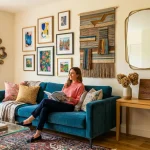
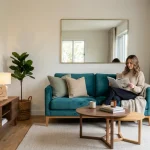
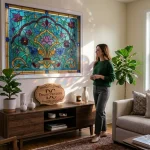
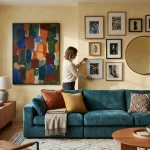
The best way to decorate living room walls is to choose wall decor that complements your furniture, room size, lighting, and personal style. Popular options include large statement artwork, gallery walls, decorative mirrors, floating shelves, accent paint, textured wallpaper, and wall paneling. For small living rooms, mirrors and compact artwork can help create a balanced look without taking up floor space. If you rent, consider lightweight frames, picture ledges, and removable wall decorations. Start by measuring the wall, selecting one main focal point, and arranging other decorative elements around it. You do not need to fill every wall; a few carefully chosen pieces can make your living room feel stylish, welcoming, and complete.
Living room wall decor can transform an ordinary space into a stylish and inviting part of your home without requiring a complete renovation. Whether you have a large blank wall above the sofa, a small living room that needs a visual lift, or an outdated feature wall, the right decorations can bring color, texture, personality, and balance to the room.
From statement artwork and gallery walls to decorative mirrors, floating shelves, accent paint, and modern wall panels, there are plenty of ways to create a look that suits your home.
The key is to choose decorations that work with your existing furniture, lighting, wall dimensions, and budget. In this guide, you’ll discover practical living room wall decor ideas for different styles and spaces, along with helpful tips for choosing artwork, arranging shelves, decorating small rooms, and creating a polished look without unnecessary clutter.
Choose Wall Decor That Fits Your Living Room
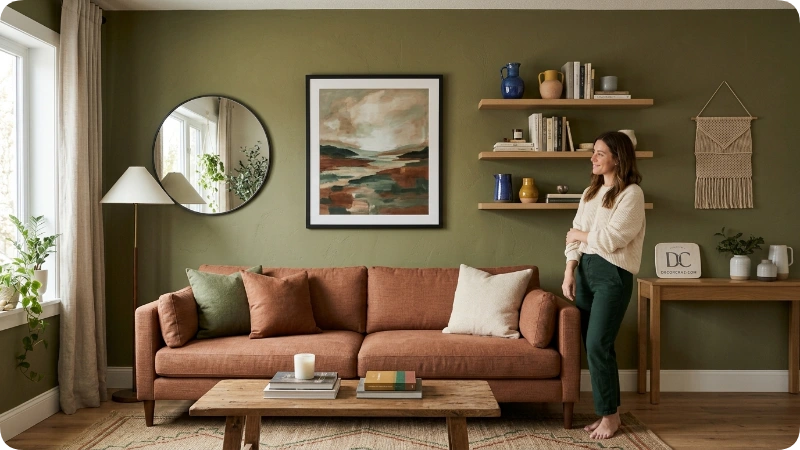
Before choosing individual decorations, identify what the wall needs to accomplish. Some walls need a focal point, others need storage, and some simply need a small detail to connect the furniture and colors in the room.
A useful starting point is to consider three things: the wall’s dimensions, the furniture nearby, and the visual weight of the decoration.
Decorate a Large, Empty Wall
A large, uninterrupted wall can make a living room feel unfinished when the furniture occupies only a small part of the space. However, covering the entire wall with small decorations is not always the answer.
One substantial painting, a carefully arranged gallery wall, or a broad decorative treatment can give the area a clear purpose.
For example:
A wide wall behind a long sofa could accommodate a landscape painting or a grouping of framed artwork. If the room has high ceilings, a vertical composition or a tall sculptural piece may help connect the lower furniture with the upper part of the room.
Why it works:
A substantial focal point gives the eye somewhere to settle and establishes a relationship between the wall and the furniture.
When to avoid it:
If the wall already contains windows, built in shelving, a fireplace, or several architectural features, another large statement may create unnecessary competition.
Lower commitment alternative:
Arrange several lightweight prints on a picture ledge before deciding whether you want to invest in a larger piece.
Make a Small Wall Feel Intentional
A narrow section of wall does not need an oversized decoration. A small framed print, compact mirror, vertical artwork, or single decorative object may be sufficient.
Pay attention to what surrounds the wall. A small piece above a narrow console can look balanced, while the same piece may appear lost above a large sectional sofa.
If you want to display several items, keep the arrangement compact enough to read as one composition. Avoid scattering tiny decorations across the wall without a clear relationship between them.
Work With the Wall’s Existing Features
Windows, doorways, fireplaces, alcoves, and built in cabinets already influence how a living room is organized. Your wall decor should work with these features rather than compete with them.
For example:
Artwork can sit beside a fireplace instead of directly above it if the mantel is already visually busy. A narrow wall beside a window may suit a vertical print, while an alcove can accommodate a small gallery or a fitted shelf.
The goal is not to fill every available surface. It is to make the existing architecture feel connected to the furniture and decorative elements.
Hang a Large Statement Artwork Above the Sofa
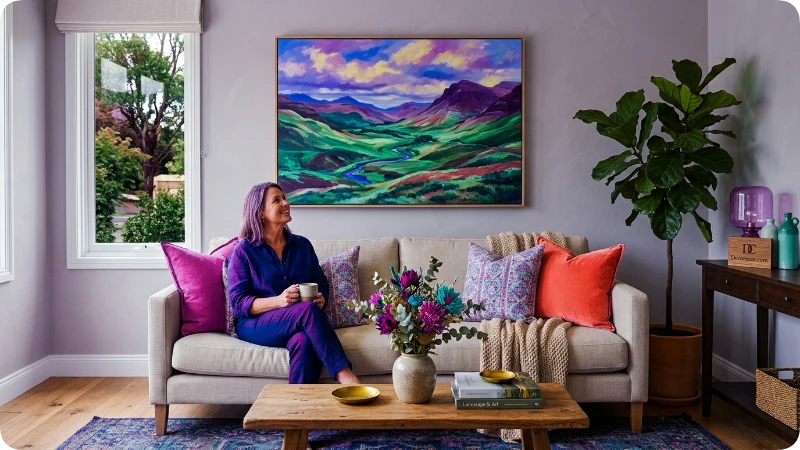
A large artwork is one of the simplest ways to create a focal point in a living room. It works particularly well above a sofa because the furniture provides a natural visual base for the piece.
You can choose a landscape, abstract painting, botanical print, architectural photograph, or another image that complements the room’s character.
Choose the Right Artwork Size
Scale matters more than the subject alone.
A tiny picture above a wide sofa may look disconnected from the furniture, while an oversized frame can dominate the seating area. As a starting guideline, consider artwork or a combined arrangement occupying roughly two thirds to three quarters of the sofa’s width.
This is a design guideline, not a strict rule. A narrow vertical artwork, a particularly tall wall, or an intentionally asymmetrical composition may call for a different proportion.
For example:
If your sofa is 240 cm wide, an artwork or grouping around 160 to 180 cm wide could be a reasonable starting point. Measure the actual wall and consider nearby lamps, side tables, and windows before deciding.
Select Colors That Connect With the Room
Your artwork does not need to match every cushion or curtain. Instead, look for a relationship between its colors and the room’s existing palette.
A neutral living room might benefit from a painting with deep green, rust, blue, or terracotta. A colorful room may need artwork with a quieter background to prevent visual overload.
You can also use contrast intentionally. A light artwork against a dark wall stands out clearly, while a dark frame against a pale wall creates a defined border.
Decide Whether to Use a Frame
Frames affect how artwork relates to the room.
Natural wood can connect with wooden furniture and floors. Black frames provide definition in contemporary spaces. Thin metallic frames may suit a room with similar hardware or lighting details.
Unframed canvas can feel more relaxed, while a framed print with a wide mat creates a more structured appearance.
Best choice:
Use one large piece when you want a clear focal point without the complexity of arranging several frames.
Trade off:
Large artwork can be expensive, difficult to transport, and awkward to install alone. A coordinated pair of prints or a group of smaller pieces can achieve a similar overall width with greater flexibility.
Create a Gallery Wall With Art and Photographs
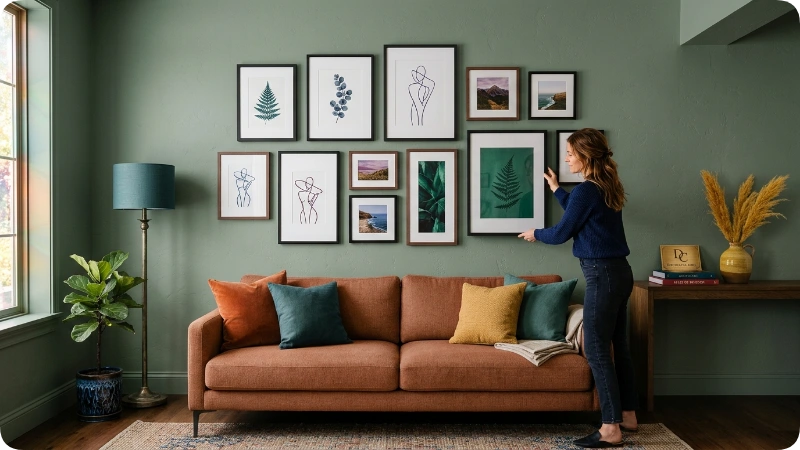
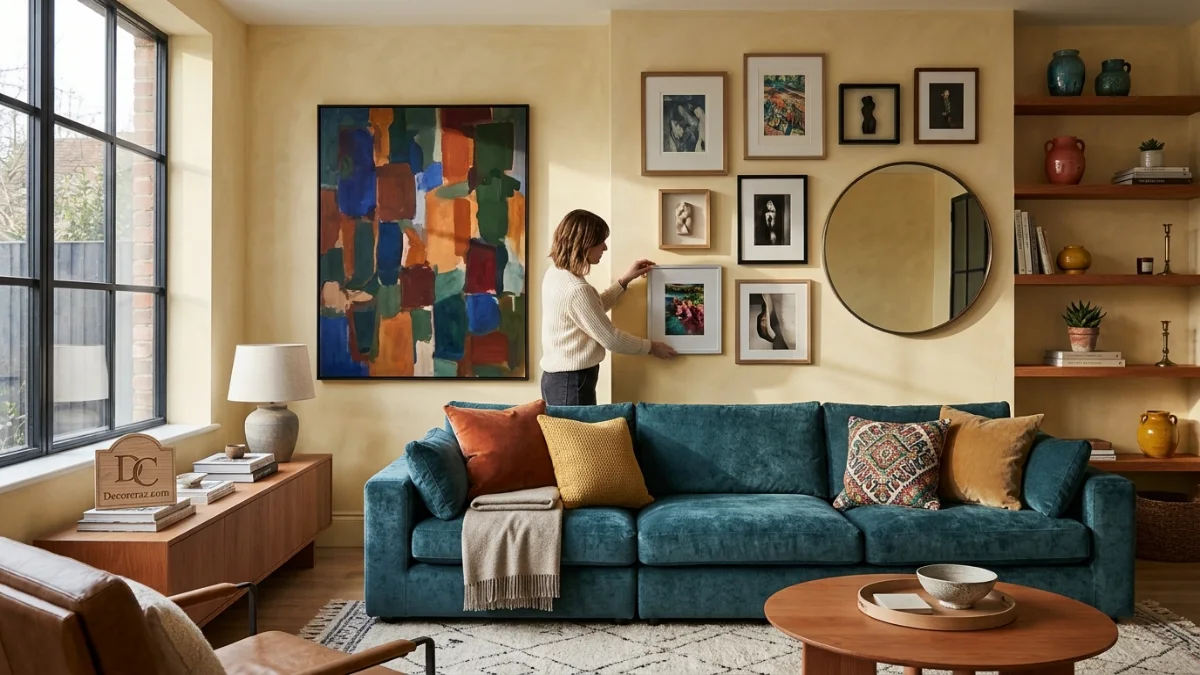
A gallery wall combines multiple framed pieces into one larger composition. It is useful when you have several photographs, illustrations, prints, or personal mementos that you want to display together.
The arrangement can be formal and symmetrical or more relaxed and varied. What matters is that the pieces relate to one another and occupy the wall as a deliberate group.
Choose a Theme Before Arranging the Frames
A gallery wall does not need to follow one subject, but some connection helps it feel cohesive.
You might combine:
- Family photographs in different sizes.
- Botanical prints and landscape illustrations.
- Architectural drawings and travel photographs.
- Abstract artwork with a shared color palette.
- Personal photographs, small paintings, and meaningful keepsakes.
If the subject matter varies considerably, use similar frames or mat colors to establish consistency. If the frames are different, a shared subject or related color palette can provide the connection.
Choose a Layout That Suits the Furniture
A symmetrical gallery wall works well in a traditional living room or above a centered sofa. Matching frames arranged in a grid give the wall a structured appearance.
An asymmetrical gallery offers more freedom. You can combine horizontal and vertical frames, vary the sizes, and place a larger piece slightly off center.
However, asymmetrical does not mean random. The arrangement should still have a recognizable outer shape and a reasonable balance of visual weight.
Before hanging anything, place the frames on the floor or create paper templates and attach them temporarily to the wall. Adjust the arrangement until the spacing and overall shape look right.
Keep the Spacing Consistent
Frames do not need identical dimensions, but their spacing should look intentional.
A gap of approximately 5-8 cm is a useful starting point for many gallery walls. Smaller frames may work with narrower gaps, while large pieces may need more space.
Measure the distance between frames rather than estimating each gap separately. Even spacing helps the collection read as one display instead of several unrelated pictures.
Include Personal Items Without Overcrowding
Gallery walls can contain more than conventional artwork. A framed letter, small textile, decorative plate, or travel memento can add personal meaning.
Use these items selectively. If every piece has a different shape, color, subject, and frame, the arrangement may become visually confusing.
Best choice:
A gallery wall is particularly useful when you want to display several meaningful objects or need to cover a broad area with pieces you already own.
Trade off:
Planning takes longer than hanging one picture, and adding new frames can disrupt the arrangement. A picture ledge provides an easier way to rotate artwork without redesigning the entire wall.
Use Mirrors to Reflect Light and Create Depth
Mirrors can serve as decorative focal points while reflecting parts of the room. They are especially useful in living rooms that receive limited daylight or have a narrow layout.
However, the effect depends on what the mirror reflects. A mirror facing a window may bring more of the outdoor view into the room, while one reflecting a dark corner may not make the space feel brighter.
Place the Mirror Where It Reflects Something Useful
Before hanging a mirror, stand where it will be positioned and examine what appears in its reflection.
A mirror opposite or near a window may reflect daylight and greenery. One above a console can reflect a decorative arrangement. A mirror on a side wall may help create a sense of depth in a narrow room.
Avoid placing it where it repeatedly reflects clutter, exposed cables, or an unattractive storage area.
Choose a Shape That Complements the Room
A round mirror can soften a room dominated by rectangular windows, shelves, and furniture. A rectangular mirror can reinforce clean lines and work well above a console or mantel.
Arched mirrors can introduce a curved architectural shape, while ornate frames can suit traditional interiors.
The frame should relate to the rest of the room without needing to match everything exactly.
Make Sure the Mirror Is Properly Supported
A mirror can be heavier than it appears, particularly when it has a substantial frame.
Check its weight, the wall material, and the mounting hardware before installation. Use suitable fixings for the wall type, and follow the manufacturer’s instructions. If the mirror is large or unusually heavy, professional installation may be appropriate.
In homes with children or pets, a securely anchored mirror is generally preferable to leaving a heavy mirror leaning unsecured.
Best choice:
Choose a mirror when reflection, depth, or a decorative focal point is more useful than adding another image.
Trade off:
Mirrors do not automatically brighten every room, and large framed versions can be heavy. A smaller mirror placed strategically may work better than covering a large area with reflective surfaces.
Add Floating Shelves for Display and Storage
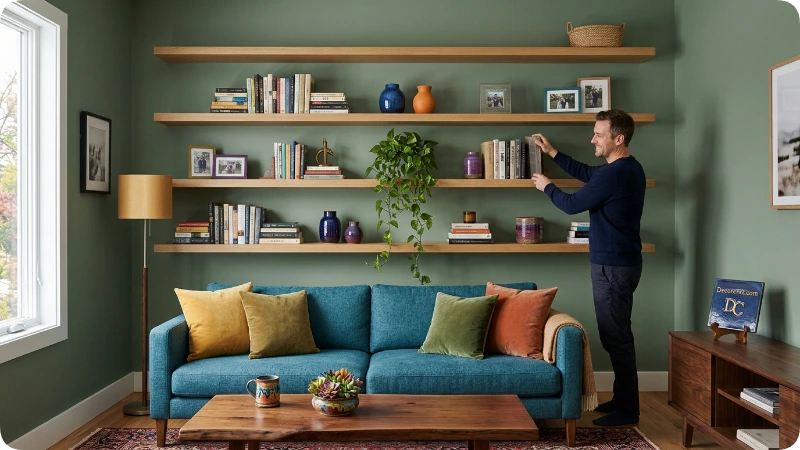
Floating shelves provide a practical alternative to wall art when you want to display books, small plants, ceramics, framed photographs, or collected objects.
They are especially useful in living rooms where decorative display and storage need to share the same space.
Decide What the Shelves Need to Hold
Before purchasing shelves, consider the weight and dimensions of the items you plan to display.
Light decorative objects may work on a narrow shelf, while books and substantial ceramics require a shelf and mounting system designed for their combined weight.
Avoid assuming that a shelf is safe simply because it feels solid. The wall material, fixing method, bracket design, and installation quality all affect how much weight it can support.
Arrange Objects With Space Between Them
Shelves often look better when they contain a mixture of heights, shapes, and textures rather than a continuous row of objects.
For example:
A stack of books can create a low horizontal shape, while a taller ceramic vase provides vertical contrast. A small framed print can introduce another layer without requiring a separate wall hook.
Leave some empty space between groups. If every inch is occupied, individual objects become harder to see and the shelf begins to look like overflow storage.
Use Shelves to Connect Decor With Furniture
Shelves above a low cabinet or console can create a coordinated display. In a larger living room, a long shelf may help connect two areas of the wall.
If shelves sit above a sofa, consider the seating position and the risk of objects falling. Keep heavy, fragile, or sharp edged items away from positions where they could injure someone.
Choose Open Shelves or Closed Storage
Open shelves make displayed items visible and accessible. Closed cabinets hide everyday objects and reduce visual clutter.
If the living room needs both display space and concealed storage, a combination of open and closed storage may be more useful than filling an entire wall with open shelving.
Best choice:
Floating shelves are ideal when the wall needs to provide both decoration and a practical function.
Trade off:
They require suitable installation and ongoing organization. If you dislike regularly arranging objects or dusting exposed surfaces, a large artwork or closed cabinet may be a better fit.
Paint an Accent Wall for a Clear Change
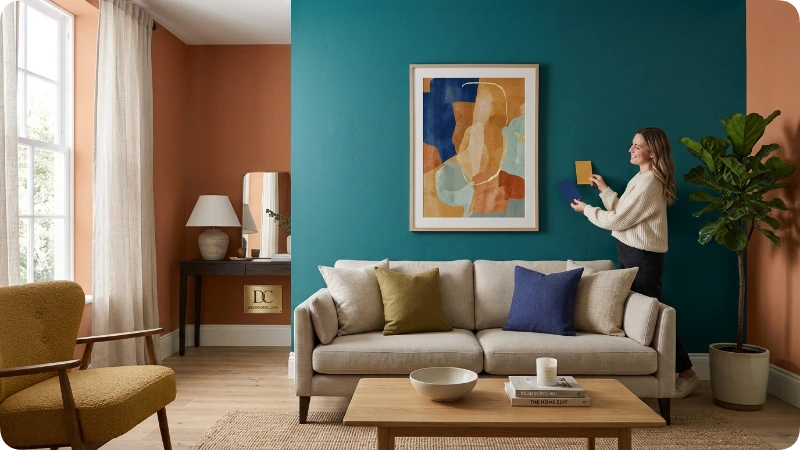
Painting one wall a different color can change the visual balance of a living room without adding objects or taking up floor space.
An accent wall is particularly useful when the room feels plain, the furniture needs a stronger backdrop, or you want to distinguish a seating area within an open plan layout.
Choose the Wall That Deserves Attention
The wall behind a sofa is a common choice because the furniture already establishes a natural focal area. A fireplace wall can also work, especially when the surrounding furniture faces it.
However, the most prominent wall is not always the largest one. A wall containing several windows or doorways may be less suitable for a strong color than a simpler wall with fewer interruptions.
In an open plan room, a painted section can help define the living area without installing a physical divider.
Select a Color That Works With Existing Materials
Look at the sofa, rug, flooring, curtains, and larger pieces of furniture before choosing paint.
Deep green, muted blue, warm terracotta, charcoal, and other stronger colors can provide contrast against pale furniture. Soft beige, muted sage, or a gentle off white may be more appropriate when the room already contains several competing colors.
The result also depends on natural and artificial light. A color that appears warm in daylight may look different under evening lighting.
Test paint samples on the actual wall and view them at different times of day before committing.
Decide Whether the Wall Needs Additional Decoration
A painted accent wall can stand on its own. You do not necessarily need to add artwork, decorative objects, and shelves to make it look finished.
If you do add decorations, consider how they contrast with the paint. A light frame may stand out against a darker surface, while a similar toned frame can create a quieter effect.
Best choice:
Paint is useful when you want a visible change without adding bulky objects.
Trade off:
Repainting takes preparation and may require restoring the original color when moving out of a rental property. A removable wall treatment may be more practical when permanent changes are restricted.
Introduce Texture With Wallpaper and Wall Panels
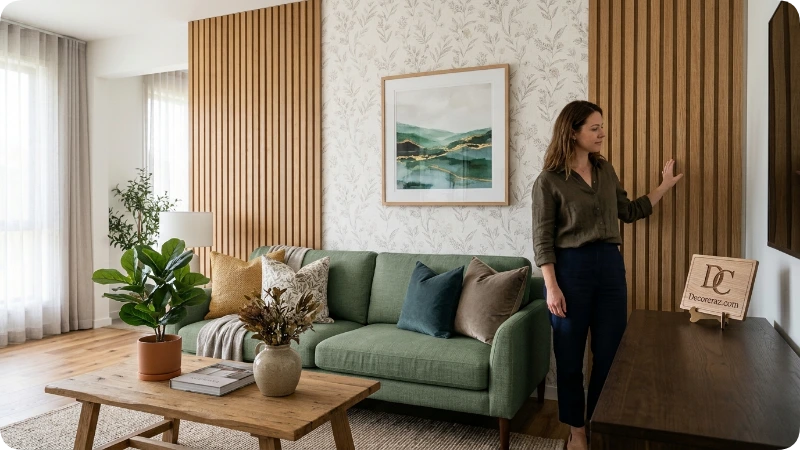
Not every living room wall needs artwork. Sometimes the wall itself can provide the main decorative feature.
Wallpaper, wood paneling, decorative molding, and textured finishes change the appearance of a surface while creating a backdrop for the rest of the room.
Use Wallpaper to Establish a Visual Theme
Wallpaper can introduce botanical patterns, geometric shapes, landscape scenes, subtle textures, or more traditional designs.
A large pattern can become the main feature of the room, while a small scale pattern may provide detail without dominating the furniture.
If you choose a bold design, consider keeping nearby surfaces relatively restrained. This gives the pattern room to work without competing with several other strong elements.
Before purchasing wallpaper, measure the wall and account for pattern matching, installation requirements, and waste. The amount needed depends on the roll dimensions, wall height, and pattern repeat.
Consider Wood Slats or Decorative Paneling
Wood slats and wall panels can add structure and create a stronger relationship between the wall and the furniture.
Vertical slats may emphasize ceiling height, while horizontal paneling can reinforce the width of a wall. Decorative molding can create framed sections that suit traditional, transitional, or contemporary rooms.
The finish matters. Pale wood may connect with natural flooring, while darker wood can create contrast against light upholstery.
Avoid adding heavy paneling simply because a wall is empty. If the room already contains strong wood grain, patterned flooring, and textured furniture, another prominent surface may make the space feel busy.
Understand the Installation Commitment
Wallpaper and paneling require different levels of preparation and expense.
Peel and stick wallpaper may be easier to remove than conventional wallpaper, but removal depends on the product, wall preparation, paint condition, and adhesive. Test a small, inconspicuous area first.
Wood panels may require cutting, drilling, adhesive, or additional support. Check whether the installation affects electrical outlets, switches, ventilation, or access to existing fixtures.
If you rent, review the property agreement before making permanent changes.
Best choice:
Textured wall treatments are useful when the surface itself should become a major part of the room’s design.
Trade off:
They involve more commitment than movable decorations and can be harder to update when furniture or color preferences change.
Decorate With Textiles, Woven Pieces, and Wall Sculpture
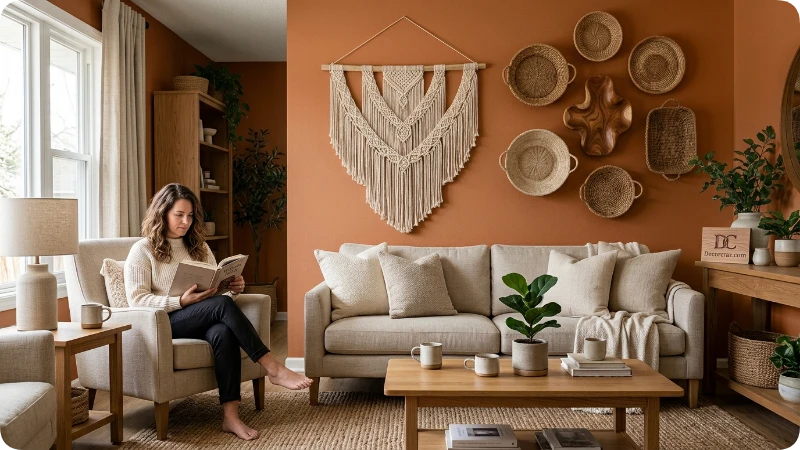
Framed pictures are not the only option for living room walls. Textiles, woven decorations, and three dimensional objects can introduce materials and shapes that conventional prints do not provide.
These choices work particularly well when a room contains many hard surfaces or when you want a more tactile, handcrafted appearance.
Hang a Textile or Tapestry
A textile wall hanging can introduce pattern, color, and visual softness.
A woven piece may complement natural wood furniture, textured upholstery, or a relaxed interior. A patterned tapestry can also serve as a focal point on a large wall where several small frames would feel disconnected.
Choose a size that relates to the furniture below it. A narrow textile may work above a compact console, while a wider piece may suit a long sofa.
Use a suitable hanging method that supports the textile without damaging it. Valuable or delicate fabrics may need specialist mounting to prevent stretching, fading, or other damage.
Try Woven Wall Baskets
Decorative baskets can create an arrangement with more depth than flat artwork.
They work particularly well when their shapes, sizes, or natural materials connect with other elements in the room. A group of shallow woven pieces can form a broad composition above a sofa or along a large blank wall.
Arrange the pieces on the floor first and check the overall outline before installation.
Because baskets project from the wall, account for nearby walkways and furniture. Avoid placing protruding objects where people might bump into them.
Add Three Dimensional Wall Art
Metal, ceramic, carved wood, and sculptural wall pieces create shadows and change appearance as the lighting shifts.
A single sculptural object can provide a focal point in a minimalist room. A small group can add interest to a larger surface, provided the shapes and spacing remain balanced.
Check the mounting requirements carefully. Three dimensional decorations can place more stress on their fixings than similarly sized flat prints.
Best choice:
Textiles and wall sculpture are useful when you want texture or depth that a conventional framed picture cannot provide.
Trade off:
Textiles may collect dust, and sculptural objects can protrude into the room. Choose them according to the space available and the maintenance you are willing to handle.
Use Decorative Lighting to Highlight the Wall
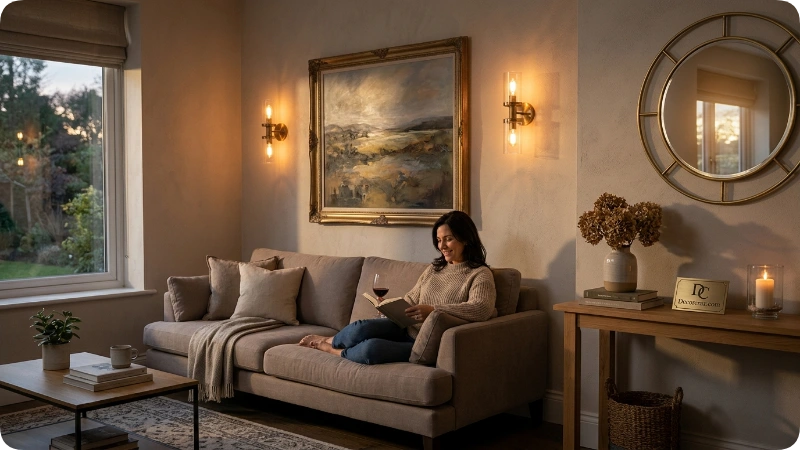
Lighting can make wall decor easier to appreciate after daylight fades. It can also introduce a decorative feature when a wall needs more than artwork alone.
Wall sconces, picture lights, and carefully positioned lamps can highlight paintings, textured surfaces, shelves, or architectural details.
Highlight One Important Feature
Picture lights can draw attention to a painting or framed collection. Wall sconces can frame a fireplace or create a balanced arrangement on either side of a mirror.
You do not need to illuminate every decoration. Concentrating light on one area creates a clearer focal point and avoids making the entire wall compete for attention.
Consider how the light falls on the artwork. Strong glare may make glass covered pictures difficult to view, while uneven illumination can create unwanted shadows.
Choose Light That Suits the Room
The purpose of the lighting matters.
A decorative wall light may provide gentle background illumination, while a more directed light can highlight artwork or a particular surface.
Consider the brightness, color appearance, beam direction, and existing room lighting before choosing a fixture.
If you use adjustable lighting, test the position in the evening. A light that looks balanced during daylight may create harsh shadows after dark.
Install Fixtures Safely
Permanent wall lights may require electrical work. Follow applicable local requirements and use a qualified electrician when installation involves fixed wiring or work beyond your competence.
Do not run exposed electrical cables through unsuitable routes or cover electrical components with decorative materials. Keep fixtures and wiring clear of heat sources and follow the manufacturer’s installation instructions.
If permanent installation is not suitable, a portable lamp or appropriately designed battery powered light may provide a simpler alternative.
Best choice:
Lighting is useful when the wall already has an attractive feature that deserves attention or when the room needs additional illumination.
Trade off:
Fixtures require careful placement, and wired options may involve installation costs. Decorative lighting should complement the room’s practical lighting rather than replace it.
Bring Plants Into Your Living Room Wall Decor
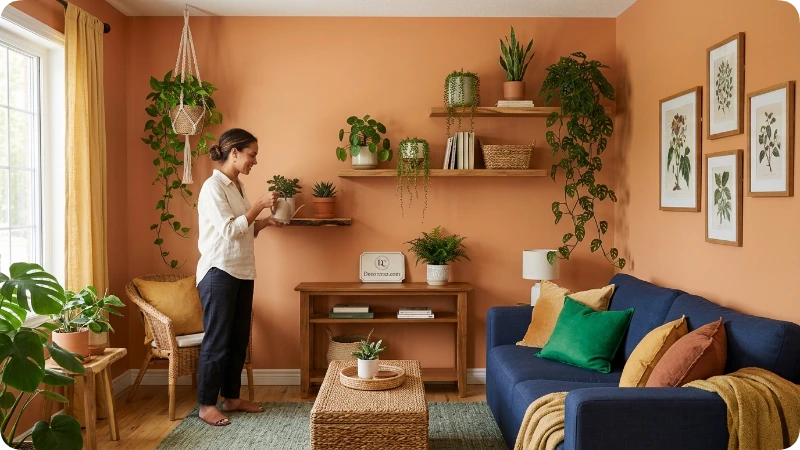
Plants can introduce natural shapes and color to a wall, particularly in rooms with neutral furniture or limited decorative variety.
The right arrangement depends on available daylight, the plant’s mature size, watering requirements, and whether the wall can safely support the installation.
Use Shelves for Small Plants
A shelf can display small potted plants alongside books or framed artwork.
This arrangement is generally easier to adjust than a permanent vertical garden. You can move the plants as their light requirements change and replace them without redesigning the wall.
However, protect the shelf and wall from water damage. Use suitable pots or trays and avoid allowing standing water to reach wooden surfaces.
Consider Hanging Planters
Hanging plants can use vertical space without occupying a console or side table.
Choose plants according to the actual light conditions rather than appearance alone. A plant that needs strong daylight may struggle on a shaded wall, even if its position looks attractive.
Secure the mounting point appropriately. The support must accommodate the planter, growing medium, water, and mature plant, not just the weight of the empty pot.
Keep hanging plants away from walkways and areas where trailing foliage may obstruct movement.
Decide Whether a Living Wall Is Practical
A full living wall can create a substantial visual feature, but it involves more maintenance than a few potted plants.
Consider irrigation, drainage, moisture control, lighting, access for pruning, and the suitability of the wall. Some systems are designed for simpler home use, while others need specialist installation.
If the goal is mainly visual, a collection of plants on a well designed shelf may deliver a similar natural effect with less complexity.
Best choice:
Plants are useful when you want organic shapes, natural color, or a connection between indoor and outdoor spaces.
Trade off:
They need appropriate light and regular care. Choose another decorative option if the wall is too dark, maintenance is impractical, or the installation could damage the property.
Choose Living Room Wall Decor for a Modern Interior
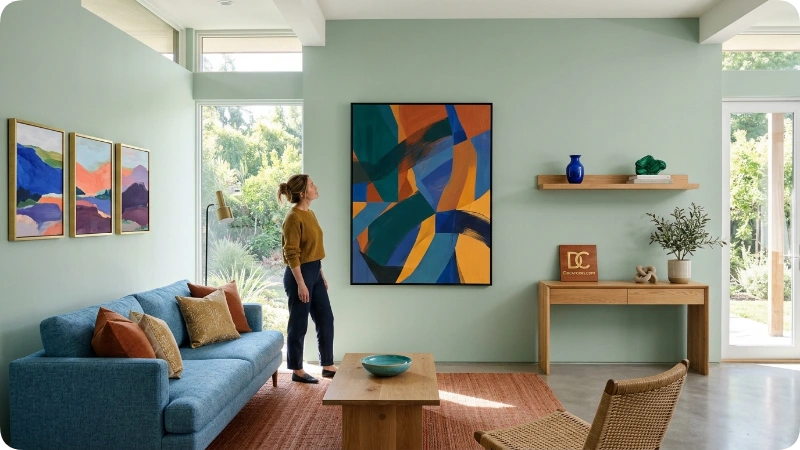
Modern living room wall decor often benefits from clear shapes, deliberate spacing, and a limited number of strong focal points.
This does not mean every modern room must be white, minimalist, or undecorated. Color, texture, artwork, and personal collections can all work when their placement feels intentional.
Choose Abstract or Graphic Artwork
Abstract artwork can introduce color without requiring a literal subject.
Look for shapes and colors that relate to the room’s furniture, lighting, or architectural lines. A large abstract painting can stand alone above a sofa, while a coordinated pair can provide structure on a wider wall.
Graphic prints can also work well in rooms with clean lined furniture. Consider the contrast between the artwork and the wall so the piece remains visible.
Use Simple Frames and Defined Spacing
A group of similarly framed prints can create a neat, coordinated display.
Black, white, and natural wood frames are useful starting points, but the best choice depends on the room’s materials and colors.
Avoid matching every decorative item automatically. Some contrast can help distinguish the artwork from the furniture and prevent the room from feeling overly uniform.
Add Texture Without Filling Every Surface
Modern interiors can include textured plaster, subtle wallpaper, wood panels, or sculptural wall pieces.
Choose one treatment that solves a clear design problem. For example, paneling may provide architectural structure to a plain wall, while a large painting may provide enough interest without any additional treatment.
Best choice:
Modern wall decor works well when you want a clear visual arrangement with defined focal points.
Trade off:
An overly sparse approach can feel unfinished if the room lacks enough contrast, texture, or personal detail. Add elements where they improve the composition, not simply to follow a style label.
Decorate Traditional and Classic Living Room Walls
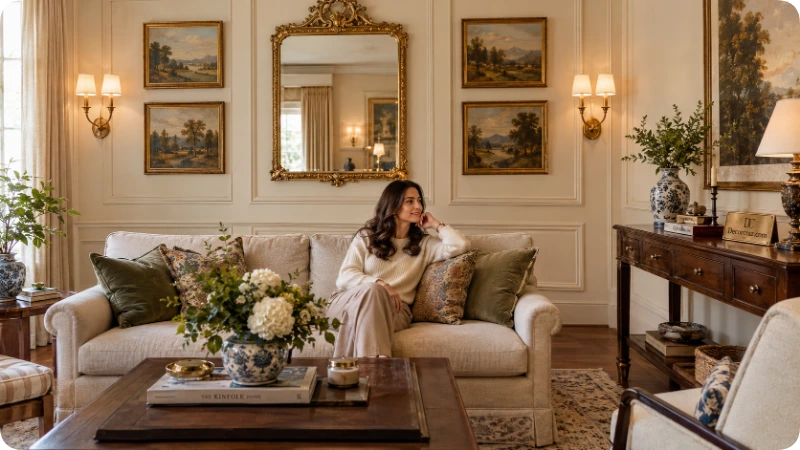
Traditional living room wall decor often works well with framed paintings, decorative mirrors, symmetrical layouts, and architectural details.
The aim is not necessarily to recreate a historical interior. Instead, choose elements that complement the room’s furniture, materials, and existing character.
Use Framed Art and Landscapes
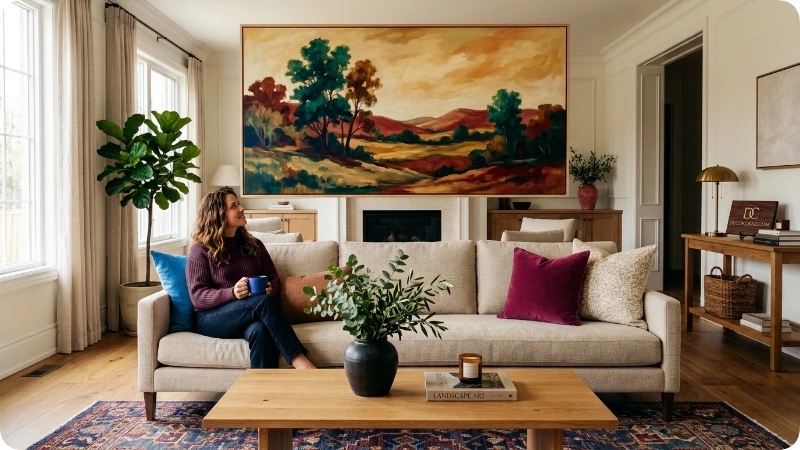
Landscape paintings, botanical illustrations, portraits, and other traditional subjects can work above sofas, fireplaces, or console tables.
A substantial frame can help distinguish the artwork from the wall. Choose the frame according to the scale of the piece and the surrounding furniture.
If you have several artworks, consider their visual weight and color before arranging them together.
Try a Symmetrical Arrangement
A centered painting with matching sconces or a pair of coordinated prints can create a structured composition.
Symmetry is particularly useful around fireplaces, centered sofas, and other architectural features that already establish a central axis.
However, perfect symmetry is not necessary for every traditional room. A collection of varied frames can still work if the overall balance is maintained.
Use Molding to Add Structure
Decorative molding can create framed sections across a wall, adding depth and architectural detail.
It can be painted to match the wall for a subtle effect or contrasted with the wall color for stronger definition.
Before installation, map the proposed sections around doors, windows, furniture, and electrical fittings. Poorly positioned molding can make the wall look crowded or interfere with existing features.
Best choice:
Traditional wall decor suits rooms with classic furniture, established architectural details, or a preference for structured arrangements.
Trade off:
Ornate frames and decorative molding can add visual weight. In a small room, simpler frames or fewer decorative elements may create a better balance.
Find Wall Decor Ideas for Small Living Rooms
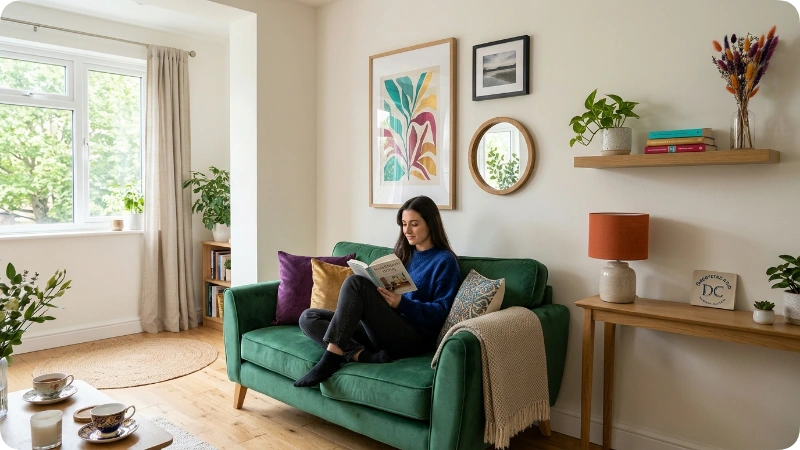
Small living rooms need wall decor that works with the available floor space, furniture, and light.
The aim is not to make every wall look empty. It is to choose pieces that contribute to the room without creating unnecessary visual or physical clutter.
Choose a Focal Point Instead of Many Small Objects
One carefully sized artwork can make a small room feel more organized than a scattered collection of tiny decorations.
A compact gallery wall can also work, particularly when the frames share a color or subject. Keep the arrangement within a defined area so the display does not compete with nearby windows and doorways.
Use Mirrors Selectively
A mirror can create a sense of depth when it reflects a useful view or daylight.
Position it where the reflection adds something to the room rather than simply placing it wherever there is empty wall space.
Avoid relying on a mirror to solve every spatial problem. Furniture placement, circulation, window treatments, and lighting have their own effects on how large the room feels.
Make Wall Storage Work Harder
Narrow shelves, wall mounted cabinets, and picture ledges can help when floor space is limited.
However, storage should be sized for the items you actually need to keep. Oversized shelves can make a small wall feel heavy, while crowded open shelves may create the impression of clutter.
Consider closed storage for everyday items and open display space for a few selected objects.
Keep Walkways Clear
Wall decorations that project significantly from the surface may be unsuitable near narrow routes or compact seating arrangements.
Choose flatter artwork where people pass close to the wall. If you use shelves or sculptural pieces, account for their full depth rather than measuring only the wall area they cover.
Best choice:
A focal artwork, strategically placed mirror, or compact storage arrangement is often more useful than a collection of unrelated decorations.
Trade off:
Small rooms have limited space for large projections and numerous displays. Prioritize the elements that solve the room’s biggest problem.
Make Rental Friendly Living Room Walls Look Finished
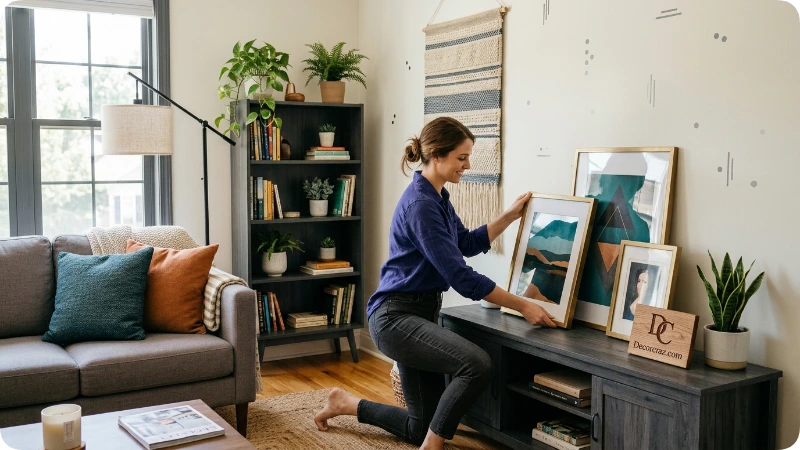
Renters can decorate their living room walls without automatically committing to permanent alterations.
The right method depends on the rental agreement, wall surface, weight of the decoration, and whether the installation can be removed without damage.
Use Removable Picture Hanging Products
Adhesive picture strips and hooks can be useful for lightweight decorations when the product is compatible with the wall surface.
Check the manufacturer’s weight rating and installation instructions. The surface may need to be clean and dry, and some paints or textured finishes may not provide suitable adhesion.
Never assume that a product is safe for a heavy mirror or valuable artwork simply because it holds a small picture.
Lean Artwork Where It Is Safe
A framed picture placed on a stable console or shelf can provide a decorative effect without requiring a new wall fixing.
Larger frames may also be displayed on the floor in suitable spaces, but they should not obstruct walkways or become a tipping hazard.
Where a tall or heavy item could fall, use an appropriate anti tip solution or choose another arrangement.
Try Picture Ledges
Picture ledges make it easy to rotate artwork and photographs.
You can layer frames of different sizes while keeping the display within a defined horizontal area. They are particularly useful when you want flexibility without repeatedly rearranging wall hooks.
However, most ledges still need secure installation. Check whether drilling is permitted and whether the mounting system suits the wall.
Test Removable Wallpaper Carefully
Peel and stick wallpaper can change the look of a wall without conventional wallpaper paste.
Its removability varies by product and surface. Poorly prepared walls, delicate paint, textured surfaces, and unsuitable adhesives can complicate removal.
Test the product in an inconspicuous area and keep the manufacturer’s guidance available.
Best choice:
Removable hanging systems, lightweight art, and flexible displays are useful when permanent changes are restricted.
Trade off:
Rental friendly does not mean damage proof. Confirm permission where necessary and choose each mounting method according to the item’s weight and the wall’s condition.
Decorate Above a Fireplace or Television
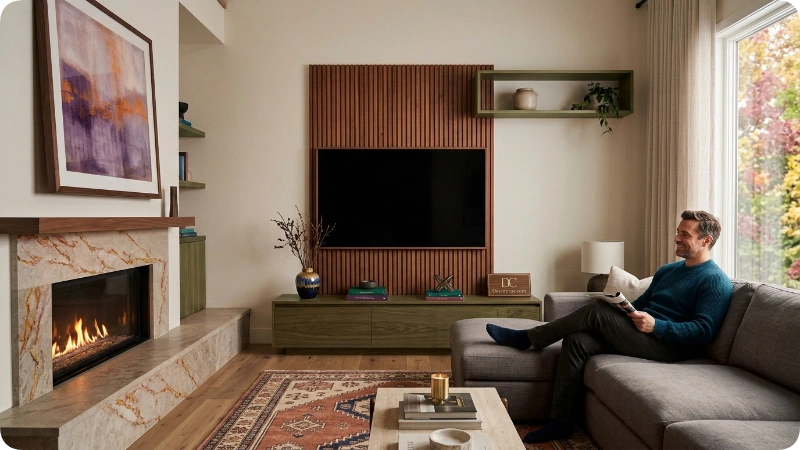
Fireplaces and televisions often occupy the most visually important wall in a living room. Because both already attract attention, additional decor needs careful placement.
Above a Fireplace
A fireplace can support a substantial painting, a decorative mirror, or a carefully arranged collection.
Consider the mantel’s width, the wall height, and the fireplace’s operating requirements before choosing a piece.
Do not position artwork, mirrors, shelves, plants, or other heat sensitive objects where they may be exposed to excessive heat. Follow the fireplace manufacturer’s clearance instructions, especially for combustible materials and mounted electronics.
If the fireplace is frequently used, its heat output and the mantel’s dimensions may limit the available decorative options.
Around a Television
A television can become a natural focal point, but it does not have to dominate the entire wall.
You can use a low cabinet, a coordinated wall color, or restrained shelving to connect the screen with the rest of the room.
Artwork may sit beside the television, while a fitted cabinet can conceal some equipment and cables.
Avoid placing numerous small decorations around the screen if they distract from viewing. Also, preserve access to ventilation openings and follow the manufacturer’s installation and mounting requirements.
Decide Whether the Main Feature Needs More Decoration
A fireplace or television wall may already contain enough visual activity.
Before adding anything else, step back and consider whether the wall needs more detail or simply better spacing, cable management, or a clearer relationship between the existing elements.
Sometimes removing unnecessary objects produces a better result than buying additional decor.
Make Living Room Wall Decor Work on a Budget
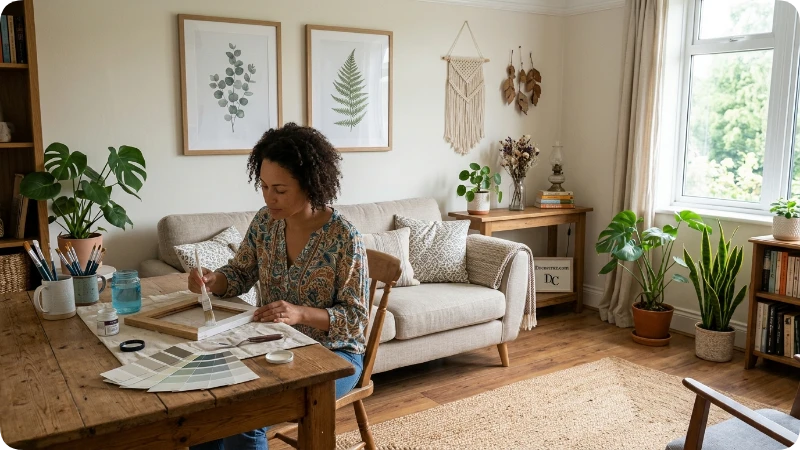
A good wall arrangement does not require expensive artwork or a full renovation.
You can often improve the room by reorganizing objects you already own, adjusting their placement, or adding one carefully selected item.
Reuse Artwork and Personal Photographs
Look through your existing prints, photographs, postcards, and framed items before purchasing anything new.
A group of photographs can become a gallery wall, while a single print can look more substantial when given a suitable frame and mat.
You may also have artwork that would work better in the living room than in its current location.
Refresh Frames Instead of Replacing Everything
If the artwork itself still suits your room, changing the frame can alter its appearance.
A simple wood frame can make a print feel warmer, while a dark frame can give a light colored image more definition.
You can also rearrange existing frames into a more cohesive grouping, reducing the need to purchase new decorations.
Choose One High Impact Improvement
If your budget is limited, identify the wall that needs the most attention.
A well sized artwork, a fresh coat of paint, or a small set of coordinated prints may make a greater difference than several unrelated purchases.
Spend according to the room’s actual needs. A wall that needs storage may benefit more from a practical shelf than from another decorative object.
Calculate the Full Cost of DIY
DIY wall treatments may reduce labor costs, but the materials and preparation still matter.
For painting, consider primer, rollers, masking materials, and surface preparation. For wallpaper, account for pattern matching and possible waste. For shelves, include appropriate brackets, fixings, and any tools you need.
If a project involves heavy materials, electrical work, or uncertain wall conditions, do not compromise safety to stay within budget.
How to Arrange Living Room Wall Decor So It Looks Balanced
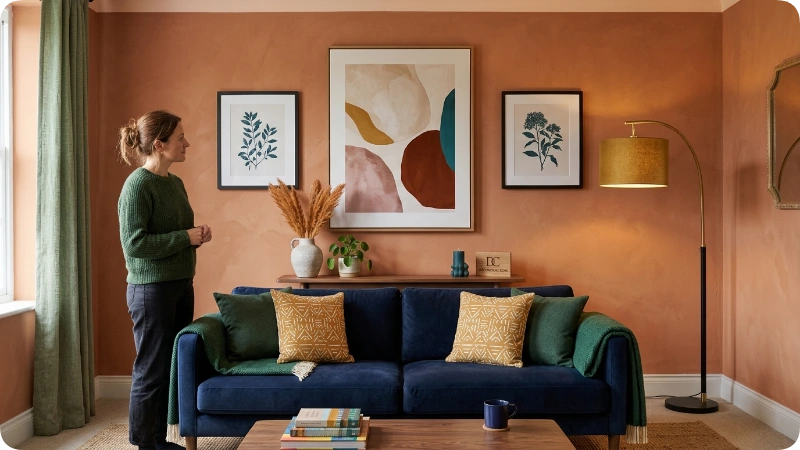
Choosing attractive pieces is only part of the job. Their placement determines whether the finished wall feels connected to the room.
Use the following practical checks before making permanent changes.
Relate the Decor to the Furniture
A wall decoration should usually connect visually with the furniture beneath it.
Above a sofa, the artwork or grouping should relate to the sofa’s width. Above a narrow console, a similarly compact arrangement may look more balanced.
This does not mean the furniture and decor must share exact dimensions. It means their proportions should feel related rather than accidental.
Consider Height From the Viewing Position
Artwork is often hung too high, particularly above sofas and consoles.
Instead of automatically centering a picture on the entire wall, consider the furniture and the position from which people will see it.
As a starting point, the center of artwork in an open wall arrangement is often placed around 145 to 152 cm from the floor. This is a guideline rather than a universal standard; furniture height, ceiling height, and the artwork’s dimensions can change the ideal position.
Above a sofa, the bottom edge may need to sit relatively close to the furniture so the two elements read as one arrangement. Leave enough space to avoid an awkward gap, while ensuring that the artwork does not interfere with anyone sitting down.
Balance Visual Weight
Visual weight is the amount of attention an object attracts.
A dark, large frame may feel heavier than a small pale print. Several small pictures grouped together can create a visual weight similar to one larger piece.
If one side of a wall looks noticeably heavier, consider changing the arrangement, moving a frame, or simplifying the display.
Balance does not require identical objects on each side. It requires the composition to feel reasonably stable as a whole.
Leave Room for the Wall to Breathe
Empty space is part of the design.
You do not need to cover every section of a living room wall, and you do not need to fill every shelf with objects.
Leaving some wall visible helps separate focal points and allows individual pieces to stand out. If a wall already contains artwork, shelves, lighting, and architectural detail, removing one element may improve the result.
Test the Arrangement Before Installing It
Use paper templates, painter’s tape where suitable, or a floor layout to test the positions of your decorations.
View the arrangement from the sofa and the main entrance. Check it in daylight and under the room’s usual evening lighting.
This is particularly useful for gallery walls, symmetrical arrangements, and installations involving several shelves or frames.
Common Living Room Wall Decor Mistakes to Avoid
Even attractive decorations can look wrong when their scale, placement, or installation does not suit the room.
Choosing Artwork That Is Too Small
Small artwork can disappear above a large sofa or across a broad wall.
Before buying a piece, measure the available area and compare the artwork’s dimensions with the furniture below it.
If one large painting is outside your budget, consider a coordinated pair or a gallery wall that creates a similar overall shape.
Hanging Pictures Too High
Artwork placed too close to the ceiling can feel disconnected from the furniture.
Consider the viewing position and the relationship between the frame and the sofa, console, or mantel. Test the placement before drilling.
Mixing Too Many Competing Styles
Different styles can work together, but every element does not need to make a separate statement.
If a room contains a bold wallpaper, colorful artwork, ornate mirror, patterned curtains, and sculptural shelving, consider which elements deserve the most attention.
A shared color, material, or theme can help connect different pieces.
Overfilling Shelves
Shelves become harder to appreciate when every space is occupied.
Group objects deliberately and leave some empty areas. If you need more storage than the shelves can comfortably provide, consider closed cabinets instead of adding more decorative items.
Ignoring the Wall Material
A hanging method that works on one wall may fail on another.
Plasterboard, masonry, timber, tile, and other surfaces require different approaches. Check the fixing requirements and the weight of the item before installation.
Do not rely on adhesive products for loads beyond their stated limits or assume that every wall can support a heavy mirror or shelf.
Adding Decor Without Considering Maintenance
Plants need care, textiles can collect dust, open shelves need cleaning, and reflective surfaces show fingerprints.
Consider how much maintenance you can realistically manage before choosing a decorative feature.
The best option is one that suits both the room and the way you use it.
A Simple Plan for Decorating Your Living Room Walls
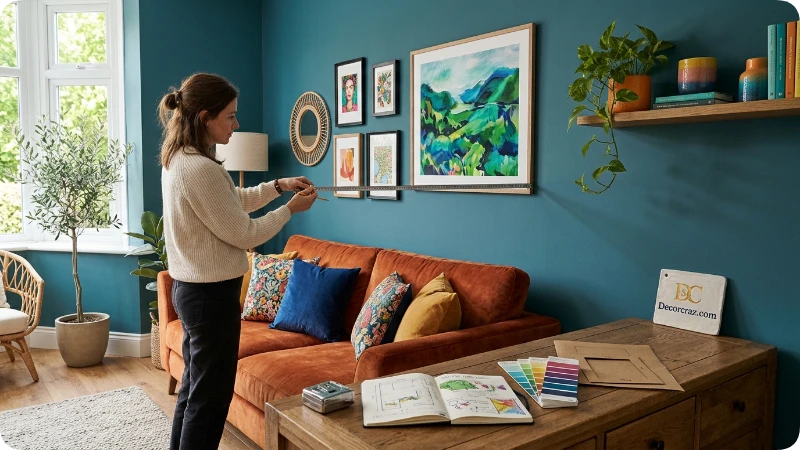
If you are unsure where to begin, work through the following steps before purchasing anything.
Step 1:
Identify the main problem.
Decide whether the wall feels empty, lacks storage, needs a focal point, or would benefit from a change in color or texture.
Step 2:
Measure the space.
Record the wall’s width and height, the dimensions of nearby furniture, and the location of windows, doors, switches, and outlets.
Step 3:
Choose one main solution.
Select artwork, a gallery wall, a mirror, shelves, paint, wallpaper, or another treatment according to the problem you identified.
Step 4:
Set a realistic budget.
Include the cost of installation materials, frames, hardware, tools, and any professional assistance required.
Step 5:
Check the restrictions.
If you rent, confirm what changes are allowed. For heavy decorations, determine the wall type and the correct mounting method.
Step 6:
Test the layout. Use temporary templates or a floor arrangement to check proportions, spacing, and visual balance.
Step 7:
Install carefully.
Follow the product instructions, use suitable fixings, and keep decorations clear of electrical hazards, heat sources, and walkways.
Step 8:
Review the result.
Look at the wall from the sofa, the doorway, and other main viewing positions. Remove or reposition anything that competes unnecessarily with the focal point.
This process keeps the project focused. You can make a meaningful change without decorating every wall or replacing the furniture that already works.
Conclusion
Living room wall decor works best when it responds to the room’s size, furniture, lighting, and practical needs. A large artwork can establish a focal point, mirrors can reflect useful views, shelves can provide storage, and paint or textured finishes can change the character of a wall. Renters can explore flexible displays, while homeowners may have more freedom to install permanent features.
Start with the wall that needs the most attention and choose one solution that addresses the problem. Measure before buying, test the arrangement before drilling, and use suitable mounting methods for the wall and decoration. Most importantly, leave enough space for the room’s existing features to remain visible. A thoughtful arrangement of a few well chosen pieces can make the living room feel more complete without unnecessary expense or clutter.

I am Claudia Winkle, a passionate Name Researcher and Content Writer at decorcraz.com. I enjoy exploring the meanings, origins, history, and cultural significance behind names from around the world. Through carefully researched and engaging articles, I help readers discover unique names, understand their stories, and find meaningful naming inspiration for every occasion. My goal is to make name research simple, interesting, and useful for readers looking for the perfect name.