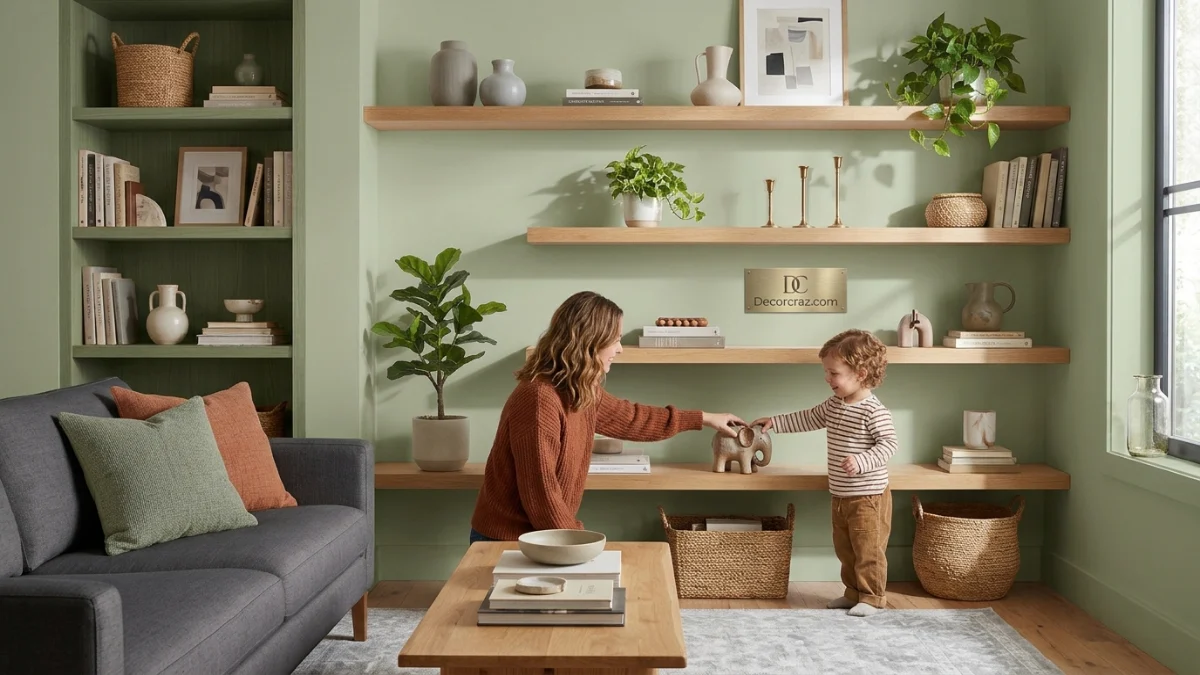
Quick Answer :
The best living room shelf decor ideas combine books, framed artwork, ceramic vases, plants, and personal accessories to create a stylish yet functional display. Mix different heights, shapes, and textures, coordinate colors with your existing furniture, and leave some open space to avoid clutter. If you’re styling floating shelves, built in bookcases, or a small corner shelf, choose decorations that suit your room’s size, storage needs, and personal style.
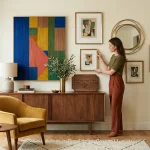
Living room shelves can do more than hold books and everyday belongings. With thoughtful placement, they can display favorite objects, organize small items, add color to a plain wall, and make an awkward corner more useful. The best living room shelf decor ideas depend on your shelving type, available space, and storage needs.
Start by choosing items that complement your existing furniture, such as books, framed artwork, ceramic vases, and small plants. Arrange them at different heights and leave some open space to keep the shelves from looking crowded. Floating shelves often work best with simple displays, while larger bookcases can combine practical storage with decorative accents.
If you have a small apartment, a TV wall, or a full wall of built in shelving, these ideas will help you create a display that looks intentional and works for everyday living.
Style Floating Shelves Above the Sofa
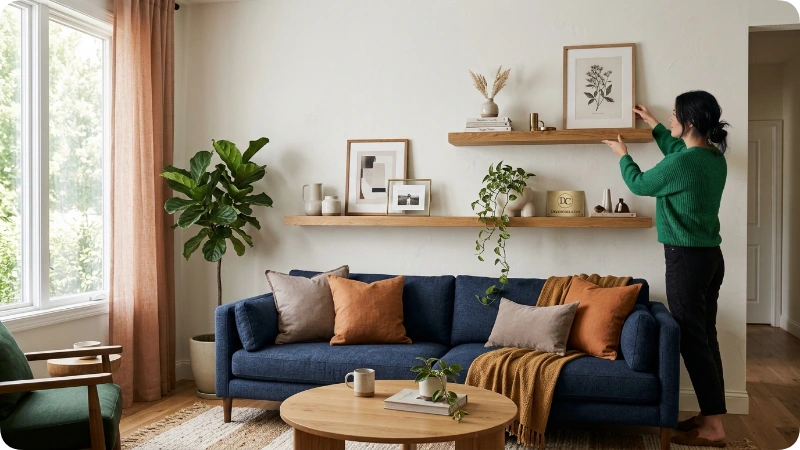
Floating shelves above a sofa provide a place for artwork and decorative objects without taking up floor space. They work particularly well in small living rooms where a large bookcase might make the seating area feel crowded.
- Create a layered display: Lean a framed print against the wall, then place a small ceramic vase or a short book stack beside it.
- Use different heights: Combine one taller object with shorter accessories to avoid a flat, horizontal arrangement.
- Keep the sofa in proportion: Choose shelf lengths that relate to the sofa’s width rather than extending awkwardly beyond it.
- Leave visual breathing room: Empty sections help the artwork and decorative objects stand out.
For a rental home, removable picture ledges or lightweight shelves may offer a flexible option, provided the mounting system is appropriate for the wall and intended load. Check the installation requirements before placing anything above seating.
Decorate Shelves Around the TV
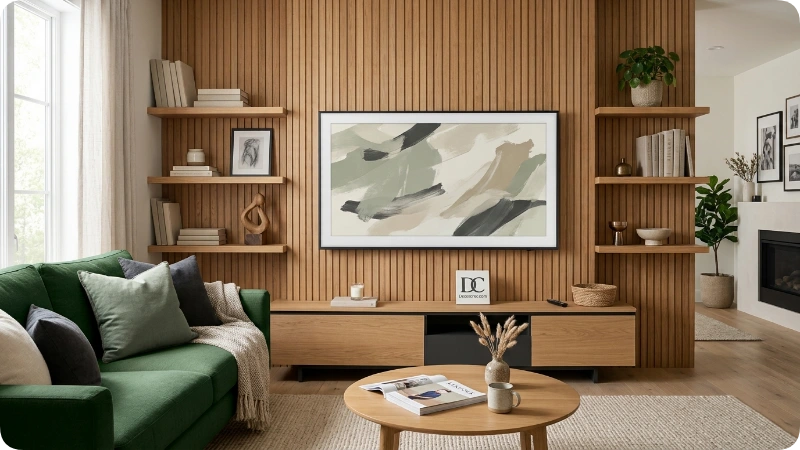
A TV wall can look visually unbalanced when the television is the only prominent object. Shelves placed beside or near it can introduce warmth, storage, and visual interest without competing with the screen.
Choose a restrained combination of books, small framed artwork, and a few decorative objects. Repeat one or two colors from the sofa, curtains, or media console to connect the display with the rest of the room.
If your TV is centered between two shelving units, you can use similar visual weight on both sides without making the arrangements identical. For example, place a stack of books and a ceramic vessel on one side, then use a framed print and a small plant on the other.
Keep the television’s ventilation openings clear, avoid placing unstable objects where they could fall onto electronics, and follow the equipment manufacturer’s clearance guidance. Route cables neatly rather than hiding them beneath loosely arranged decor.
Arrange Built In Shelves With Books and Decor

Built in shelves provide more room to combine display and storage, but filling every section with accessories can make the entire wall look busy. A better approach is to give different shelves different jobs.
Use some sections primarily for books, others for personal objects, and a few for baskets or boxes that conceal everyday belongings. This makes the bookcase practical while keeping the overall arrangement visually varied.
Mix vertical and horizontal books
Stand frequently used books upright with bookends, and lay a few others in horizontal stacks. Horizontal stacks create a lower platform for a lightweight decorative object, while upright books add vertical lines.
Group objects by visual weight
A large vase or substantial basket can anchor one section. Balance it elsewhere with a framed print, a small sculpture, or a compact group of books rather than repeating the same arrangement in every cubby.
Leave some shelves relatively open
Open sections give the eye a place to rest and prevent the display from becoming one continuous mass. If you need every shelf for storage, use matching boxes or baskets to create a more consistent appearance.
Use Corner Shelves to Make an Empty Corner Useful
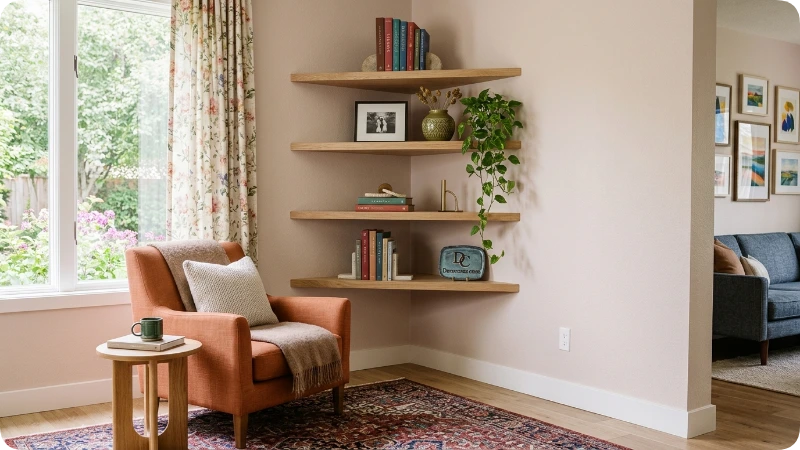
An unused corner can become a useful display area with a few well positioned shelves. Corner shelving is especially helpful in compact living rooms where a freestanding cabinet would interfere with walking space.
Choose shallow shelves for lightweight decorative items, small books, or framed photographs. A trailing plant can soften the sharp lines of the shelves, while a few upright objects create height without taking over the corner.
If the corner is already dark, avoid filling it with bulky, dark colored accessories. Lighter finishes and a limited number of objects can help the arrangement feel less visually heavy.
For a more functional setup, dedicate the lower shelf to items you use regularly and reserve the upper shelves for decoration. Before installing corner shelves, check for wall obstructions and use suitable fixings for the wall material and expected load.
Combine Books, Vases, and Decorative Objects
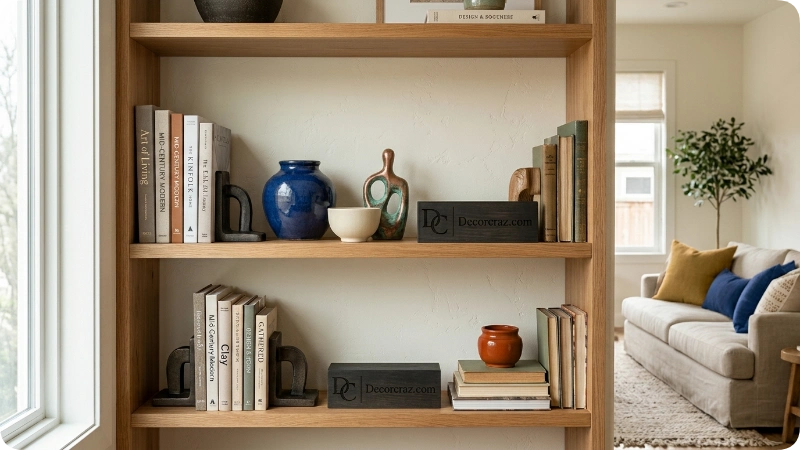
Books and decorative objects are a versatile combination because they bring different shapes, colors, and textures to a shelf. Books provide a structured base, while pottery, bowls, and sculptures introduce softer or more distinctive forms.
Start with books you genuinely want to keep accessible. Arrange some upright and others horizontally, then add a vase or bowl where it has enough room to stand out.
Choose objects that differ in shape rather than simply collecting several items of similar height. For instance, a rounded ceramic vessel beside a rectangular stack of books creates a useful contrast.
Color can tie the display together. If your living room features warm wood and cream upholstery, consider earthy ceramics and books with muted covers. For a more colorful interior, choose one accent shade that appears in several places around the room.
Avoid placing so many small ornaments together that their individual shapes disappear. A few larger, clearly visible pieces can be more effective than numerous tiny accessories.
Add Plants for Natural Color and Texture
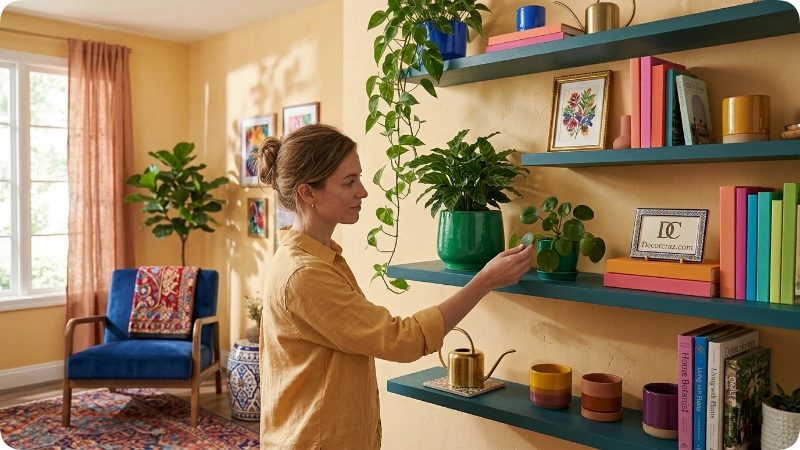
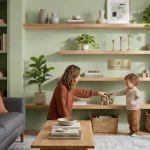
Plants introduce natural color and soften the straight lines of wooden or metal shelving. You can use a small upright plant to fill a compact space or place a trailing variety on a shelf where its foliage can hang without obstructing artwork or nearby objects.
The right plant depends on the amount of natural light available. Check the plant’s light and watering needs before choosing it, particularly if the shelves are far from a window.
For real plants, use a suitable waterproof saucer or protective liner and clean up spills promptly. Even a small amount of recurring moisture can damage some wood finishes. Keep pots stable, and avoid placing heavy planters on shelves that were not designed to support them.
If your living room receives little natural light or you prefer minimal maintenance, a realistic artificial plant can provide a similar visual effect without watering. Choose one that fits the shelf rather than allowing foliage to crowd the entire display.
Keep Neutral Shelf Decor Simple and Balanced
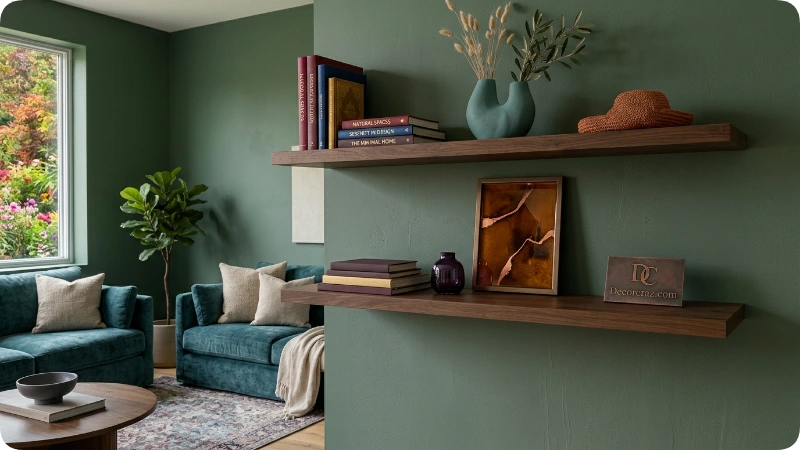
Neutral shelf decor works well when you want the display to complement the living room rather than become its main focal point. Shades such as ivory, beige, taupe, soft gray, and natural wood can create continuity with neutral sofas, rugs, and curtains.
However, using similar colors does not mean every object should look alike. Introduce contrast through materials and shapes: matte ceramic beside glass, textured woven baskets beside smooth wood, or a dark book cover against a pale background.
A simple arrangement might include two or three books, one sculptural object, and a small framed print. A larger bookcase can repeat these materials across different shelves while varying the arrangement.
If the shelves and walls are both pale, include a darker accent to make the objects easier to distinguish. If the room already contains dark furniture, lighter accessories may help balance the display.
The goal is not to match every object perfectly. It is to create enough visual connection that the shelves belong in the room.
Display Personal Photos, Artwork, and Collectibles
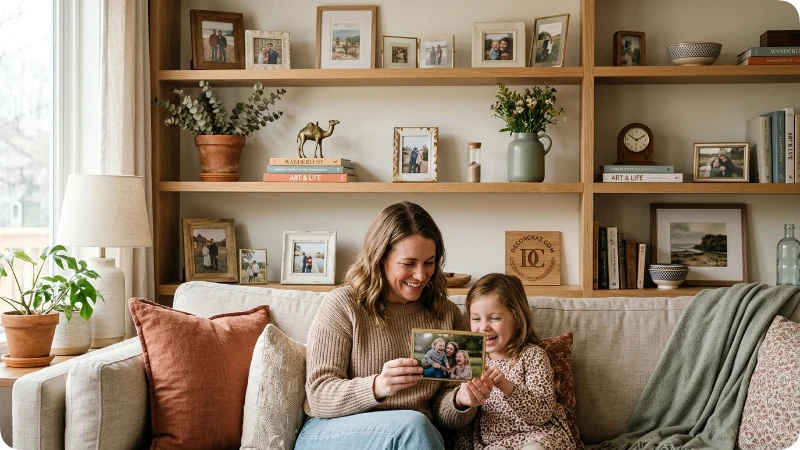
Shelves can display objects that have personal meaning rather than relying entirely on decorative accessories. Family photographs, travel souvenirs, inherited pieces, and small collections can make a living room feel individual.
To prevent a personal display from looking disorganized, group related objects together. For example, place a framed photograph beside a small souvenir from the same trip, or arrange a collection of ceramics by color or material.
Vary the frames and object sizes thoughtfully. Frames in complementary finishes can connect different photographs, while one distinctive vintage object can provide contrast against simpler pieces.
For artwork, use frames or stands that support the piece securely. Leaning frames are convenient for flexible styling, but they should be stable and positioned away from areas where people or pets could knock them over.
You do not need to display every keepsake at once. Rotate smaller collections occasionally so that meaningful pieces remain visible without overcrowding the shelves.
Use Baskets and Decorative Boxes for Hidden Storage
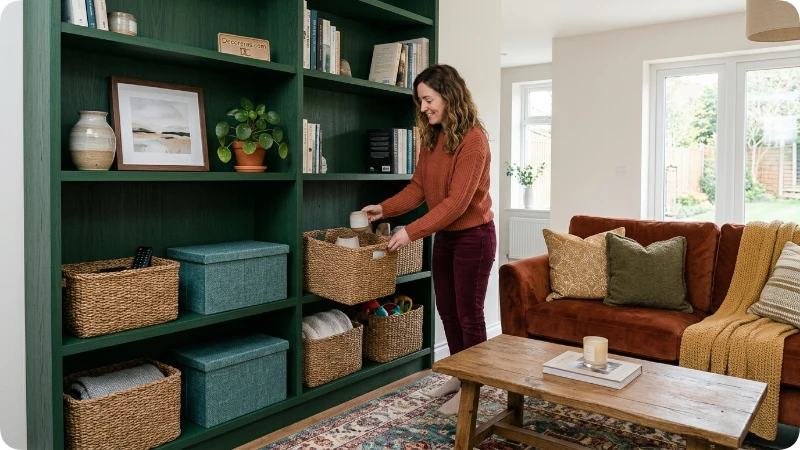
Decorative storage is useful when your living room shelves need to hold practical items such as chargers, remote controls, stationery, or small accessories. Baskets and boxes conceal visual clutter while keeping frequently used belongings close at hand.
Measure the shelf before choosing a container. A basket that is too wide may leave no room for neighboring objects, while a box that is too tall can make a shelf difficult to use.
Use matching or complementary containers for a consistent appearance. Woven baskets suit natural materials and relaxed interiors, while simple fabric covered or rigid boxes can work well in contemporary spaces.
Reserve the easiest to reach shelves for items you use often. Decorative objects can occupy higher shelves, while heavier storage containers generally belong lower down, provided the shelving is designed to support their weight.
This approach is particularly useful in family living rooms, where toys, cables, and small household items need a convenient place to go at the end of the day.
Make a Small Living Room Shelf Feel Less Crowded
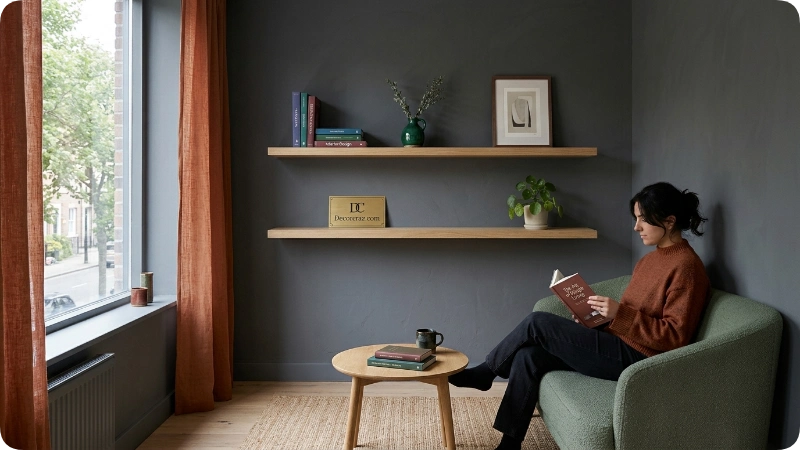
In a small living room, shelves should add useful display space without making the wall feel overloaded. Slim floating shelves, narrow bookcases, and compact corner units can help you use vertical space while preserving floor area.
Start by deciding what the shelves must hold. If you need storage for books and everyday items, choose a functional shelf or bookcase with enough capacity. If the main goal is decoration, a smaller ledge with artwork and a few accessories may be sufficient.
Keep bulky objects to a minimum and select pieces that suit the shelf depth. Oversized vases and large horizontal book stacks can leave narrow shelves looking crowded, while smaller objects with clear spaces between them are easier to appreciate.
Use the wall color to your advantage. Shelves in a similar color may blend into the background, while contrasting shelves can create a more noticeable feature. Either can work; choose according to if you want the shelving to stand out or recede visually.
If you rent, freestanding shelving may be preferable when wall drilling is restricted. Always secure tall furniture according to its instructions and assess if it could tip.
How to Style Living Room Shelves Without Clutter
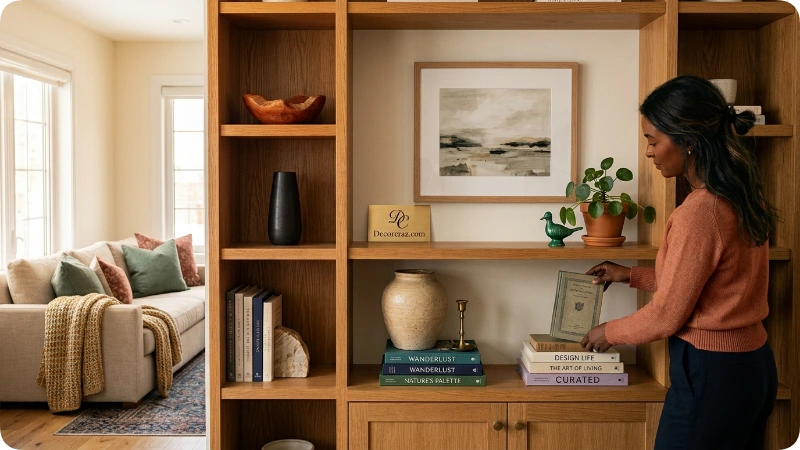
A successful shelf arrangement needs a balance between display space and useful storage. Start with a blank surface, select the pieces you want to keep, and arrange the largest items before adding smaller accessories. This approach helps you see which objects genuinely improve the display.
Follow a simple styling sequence
- Clear the shelves. Remove everything so you can assess the available space, shelf depth, and surrounding furniture.
- Choose a color direction. Pull two or three colors from the room’s existing decor rather than introducing an unrelated palette.
- Place the largest objects first. Start with framed art, a substantial vase, a basket, or a group of books.
- Vary the arrangement. Mix upright books, horizontal stacks, rounded ceramics, and smaller accents where appropriate.
- Leave some space empty. You do not need to fill every corner. Open space makes individual objects easier to see.
- Check the result from across the room. Look for areas that feel too heavy, repetitive, or crowded, then remove or reposition items.
These are flexible design guidelines, not strict rules. A bookcase used for a large personal library will naturally look fuller than a pair of floating display shelves.
Choose Shelf Decor That Fits Your Budget
You can improve living room shelves without replacing the shelving or purchasing a complete set of accessories. The most useful approach is to work with what you already own and add items only where there is a genuine gap.
| Budget approach | What to try | Best for |
|---|---|---|
| No spend refresh | Rearrange existing books, frames, and keepsakes | Shelves that feel cluttered or unbalanced |
| Low cost update | Add one small plant, a secondhand vase, or a simple storage box | Empty shelves needing color or function |
| Moderate refresh | Introduce a larger framed print, coordinated baskets, or a few ceramic pieces | Displays lacking a clear focal point |
| Larger investment | Replace unsuitable shelving or add built in storage | Rooms needing a structural or storage solution |
Before buying anything, check if the problem is the objects themselves or how they are arranged. Moving a framed print, removing a few ornaments, or changing the direction of a book stack may be enough.
If the shelves are too shallow, unstable, or poorly positioned for your needs, changing the accessories will not fully solve the problem. In that situation, consider a different shelf depth, a more appropriate unit, or a revised layout.
Conclusion
The best living room shelf decor ideas combine style, personality, and practical storage to make your space feel more organized and inviting. If you prefer floating shelves, built in bookcases, or compact corner displays, small changes can make a noticeable difference.
Mix books, framed artwork, plants, ceramic vases, and meaningful accessories to add color and texture without overcrowding the shelves. Choose pieces that complement your existing furniture, vary their heights, and leave some open space for a balanced look. You can also use baskets and decorative boxes to keep everyday essentials neatly stored.
Most importantly, work with your available space and budget rather than buying unnecessary decorations. With thoughtful placement and a few carefully chosen pieces, you can create living room shelves that look beautiful and suit your everyday needs.