Quick Answer:
How to Choose the Best Last Supper Wall Decor
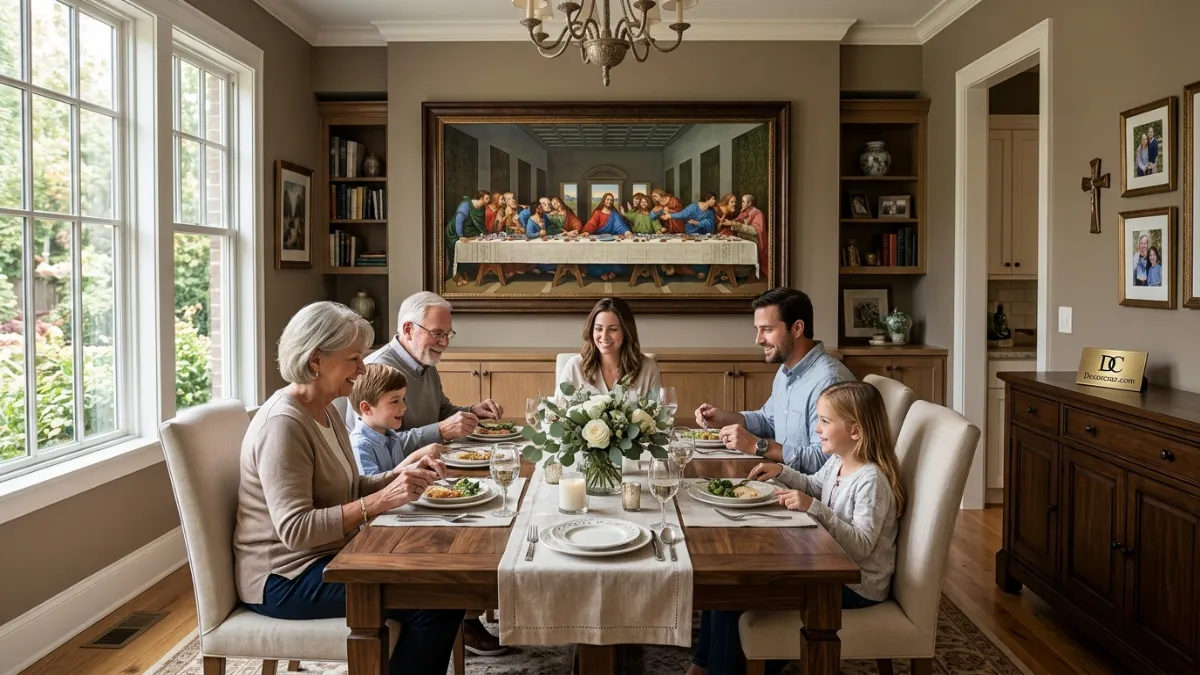
The best Last Supper wall decor combines meaningful Christian imagery with a size, finish, and placement that suit your home. A traditional framed painting works beautifully in a classic dining room, while a modern canvas or minimalist interpretation can complement contemporary interiors. For a large wall, choose a horizontal artwork that preserves the full scene and gives the figures enough room to remain recognizable. For smaller spaces, a compact framed print can create a meaningful focal point without overwhelming the room.
The dining room is a natural place to display Last Supper artwork because the scene represents Jesus sharing a final meal with his disciples. A living room, hallway, or dedicated prayer corner can also be appropriate, depending on your preferences and available wall space.
Before buying, measure the wall, consider the furniture underneath, and select a finish that suits the room’s lighting. Traditional wood frames create a formal appearance, canvas offers a softer presentation, and metal or acrylic finishes can provide a more contemporary look. Choose artwork that reflects your faith, personal taste, and the atmosphere you want to create rather than selecting a design based on size or appearance alone.
Last Supper wall decor brings together Christian symbolism, artistic expression, and interior design. For many households, an image of Jesus sharing his final meal with the twelve apostles is more than a decorative feature. It represents faith, fellowship, remembrance, and the importance of sharing meaningful moments around the table.
The artwork is also visually distinctive. Its wide composition makes it suitable for dining rooms, living rooms, and other spaces with generous wall areas. From traditional paintings inspired by Renaissance art to contemporary canvas prints and handcrafted decorative panels, there are many ways to incorporate this subject into different homes.
Choosing the right piece, however, involves more than finding an attractive image. The proportions should suit the wall, the finish should work with the lighting, and the placement should feel appropriate for the household. This guide explores practical Last Supper wall decor ideas, helping you choose artwork that respects its religious significance while fitting naturally into your interior.
Classic Last Supper Painting With a Traditional Frame
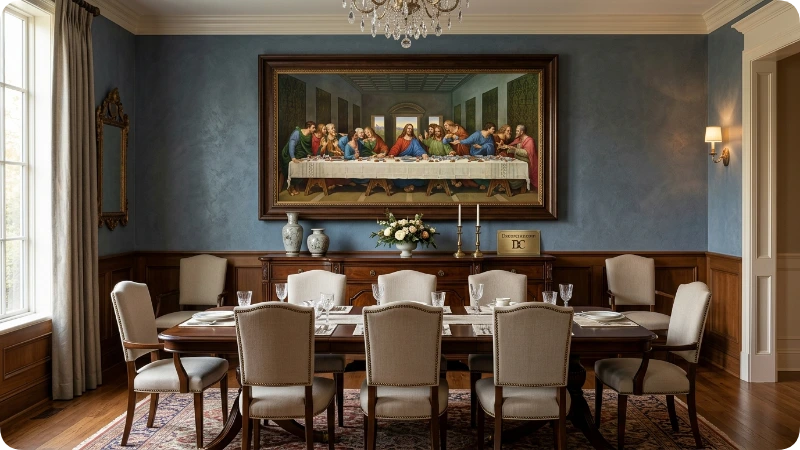
A traditional Last Supper painting is a strong choice for homes with classic furniture, warm wood finishes, and established religious artwork. It draws attention to the figures, gestures, and expressions within the biblical scene rather than relying on decorative effects.
Choose a frame that complements the artwork
A dark wooden frame can connect the artwork to a traditional dining table, wooden chairs, or a sideboard. A gold toned frame creates a more formal presentation, particularly when the room already includes warm metallic accents. For a quieter interior, a simple brown or black frame keeps attention on the painting itself.
The frame should support the image rather than compete with it. A heavily ornamented frame may suit a traditional room, but it can appear overwhelming in a small dining area with patterned wallpaper and decorative furniture.
Where this style works best
Hang the painting on a wide, unobstructed wall where the complete scene can be viewed comfortably. The wall above a sideboard is often a practical option because the furniture visually anchors the artwork.
If the room has a large wooden dining table, coordinate the frame with the table’s finish without trying to match every wood tone exactly. Similar warmth is usually enough to establish a visual connection.
Best for:
Traditional homes, formal dining rooms, and households that prefer recognizable religious imagery.
Potential drawback:
An ornate frame and highly detailed painting can make an already busy room feel crowded. Keep the surrounding wall relatively simple.
Modern Last Supper Canvas Wall Art
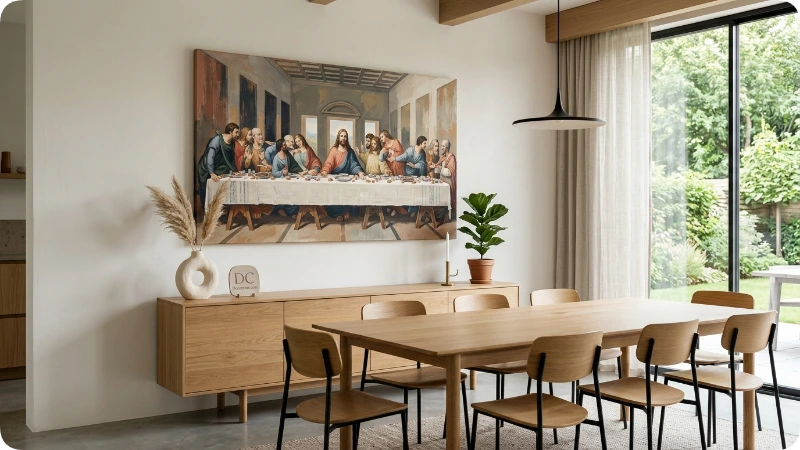
Modern Last Supper canvas wall art offers a more relaxed alternative to traditional framed paintings. It can suit contemporary homes, apartments, and interiors with clean lines, simple furniture, and limited decorative accessories.
The key is to select a contemporary treatment that preserves the subject’s meaning. A modern interpretation may simplify the background, adjust the palette, or use less traditional artistic techniques without losing the central scene.
Select the right canvas finish
A stretched canvas provides a textured appearance and can be displayed without a conventional glass front. This can be useful in rooms where reflections from windows or ceiling lights would distract from the artwork.
A framed canvas combines the softer texture of canvas with a more finished border. A frameless canvas offers a simpler appearance, although its exposed edges and construction should suit the intended display.
Before purchasing, check if the product is a printed reproduction, an original painting, or a handcrafted interpretation. These are different types of artwork and should not be treated as interchangeable.
Keep the surrounding decor restrained
A contemporary Last Supper canvas can become the main focal point above a low console or dining sideboard. Avoid placing several equally prominent artworks immediately beside it.
For example:
A muted canvas above a simple wooden console can establish a clear visual center without requiring additional wall decorations. If the image contains rich reds, blues, and golds, repeat only one or two of those colors elsewhere in the room.
Best for:
Modern apartments, contemporary dining rooms, and homeowners who prefer understated presentation.
Potential drawback:
Some heavily stylized designs may make the figures or details difficult to recognize from a distance. Inspect the complete image before choosing a large format.
Large Last Supper Wall Art for a Dining Room
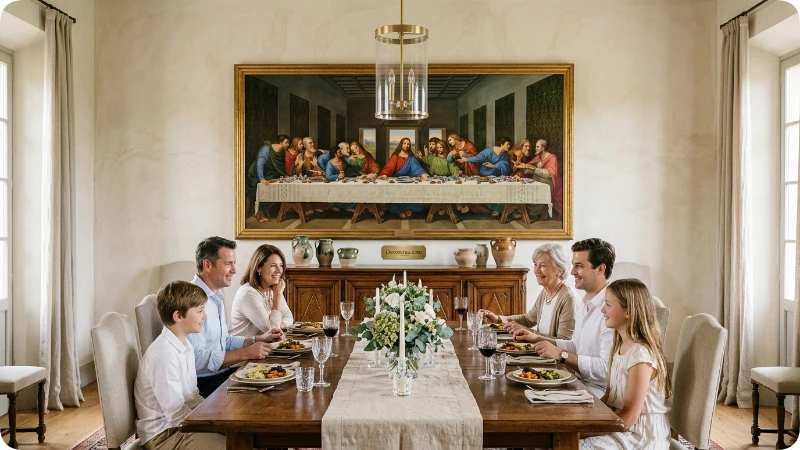
A dining room is one of the most natural places to display Last Supper artwork because the biblical scene centers on a shared meal. A large piece can connect the artwork visually with the table beneath it while creating a focal point for the room.
However, large artwork should be chosen according to the available wall rather than the room’s name alone.
Measure the wall and furniture first
Measure the usable wall width, the furniture beneath the proposed location, and the height available between the furniture and ceiling.
As a design guideline rather than a universal rule, artwork above a sideboard or console often looks balanced when its width is approximately two thirds to three quarters of the furniture width. The right proportion can differ with the frame thickness, wall height, and surrounding architecture.
For instance, if your sideboard is 150 cm wide, artwork approximately 100 to 112 cm wide could be a reasonable starting point. Mark that width on the wall with removable painter’s tape before buying.
This simple test helps you see if the piece will feel appropriately sized without committing to a purchase.
Preserve the complete composition
Last Supper artwork is usually wider than it is tall. Its horizontal arrangement helps show the central figure and the surrounding disciples within one continuous scene.
Avoid choosing an oversized square or vertical crop if it cuts off important figures or compresses the composition. When comparing products, check the actual printed image rather than relying on the product photograph, which may show a different crop or perspective.
Account for the dining environment
Choose a wall away from direct cooking heat, grease, and persistent steam. A dining area separated from the kitchen can offer a more suitable display location than a wall beside a hob.
If the artwork will hang above a dining table, check the clearance from pendant lights and ensure that people can sit and move comfortably without striking the frame.
Best for:
Spacious dining rooms, wide sideboards, and open plan homes with an available feature wall.
Potential drawback:
An artwork that is too large can dominate a small dining area. If the wall cannot accommodate the full scene comfortably, select a smaller piece instead.
Small Last Supper Wall Decor for Apartments and Compact Rooms
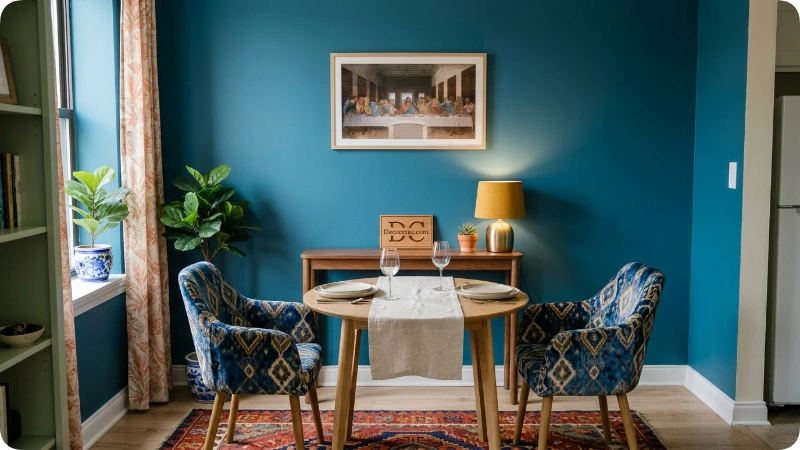
Small Last Supper wall decor can be meaningful without requiring a large feature wall. It is especially useful in apartments, dining nooks, narrow hallways, and homes where several functions share one room.
The aim is to preserve the clarity of the image while respecting the available space.
Choose a complete, readable image
A small framed print can work well above a compact console, on a dining nook wall, or within a modest prayer space. Look for a reproduction that retains the central figures and recognizable arrangement.
Do not assume that a smaller image must be visually unimportant. Its effect depends on its position, contrast, framing, and relationship to nearby objects.
A small picture placed deliberately on an otherwise quiet wall can attract more attention than a larger piece surrounded by competing decorations.
Use the frame to define the display
A narrow black frame can suit modern interiors, while a modest wood frame can complement traditional furniture. A light colored mat may give a small print additional breathing room, provided the visible image remains large enough to appreciate.
If you want to include other religious artwork, place the pieces together only when their styles and sizes form a coherent arrangement.
Consider a removable display
Renters may prefer artwork that can be displayed on a shelf or console rather than permanently mounted.
A small framed piece can lean against a wall on a stable surface, provided it cannot slide or fall easily. For a wall mounted display, use a suitable hanging method that complies with the rental agreement and the wall’s construction.
Best for:
Renters, studio apartments, small dining areas, and compact prayer corners.
Potential drawback:
Very small prints can lose important facial expressions and details when viewed from across the room. Choose a size that remains readable from the usual viewing position.
Gold and Antique Finish Last Supper Wall Decor
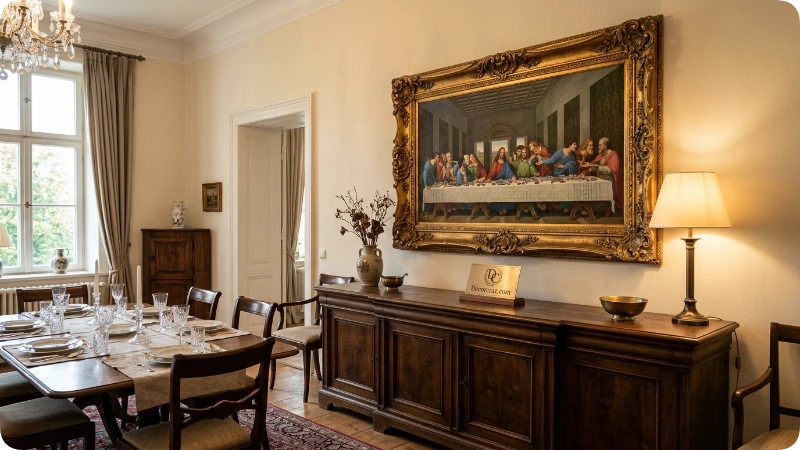
Gold and antique finishes can give Last Supper artwork a more formal appearance. They may complement traditional furniture, warm lighting, carved wood, and interiors with established religious decorations.
The important distinction is between a finish that supports the artwork and one that overwhelms it.
Gold frames versus gold toned artwork
A gold frame places the metallic accent around the scene, allowing the painting itself to retain its original colors.
A gold toned image, by comparison, uses metallic looking colors or finishes within the artwork. This can produce a unified appearance, but excessive shine may obscure details under strong lighting.
An antique finish often uses subdued gold, bronze, brown, or aged looking tones. These colors can work well with dark wood and traditional furnishings because they share a similar visual weight.
Balance the metallic elements
If the artwork already has a prominent gold frame, you may not need additional gold objects directly underneath it.
Instead, repeat the finish sparingly through a lamp base, a small decorative object, or another existing detail. This creates a connection without turning the entire wall into a collection of competing metallic surfaces.
Think about lighting before buying
Glossy finishes may reflect windows and overhead lights. Matte or satin finishes can be easier to view when the room receives strong daylight.
If the artwork is behind glass, examine the wall from the normal viewing position at different times of day. A beautiful painting can become difficult to appreciate if glare repeatedly falls across the central figures.
Best for:
Traditional interiors, formal dining spaces, and homes with warm wood or antique style furniture.
Potential drawback:
Highly reflective gold finishes can distract from the scene. Choose the finish according to the room’s lighting rather than its appearance in a product photograph alone.
Last Supper Wall Decor With a Minimalist Interior
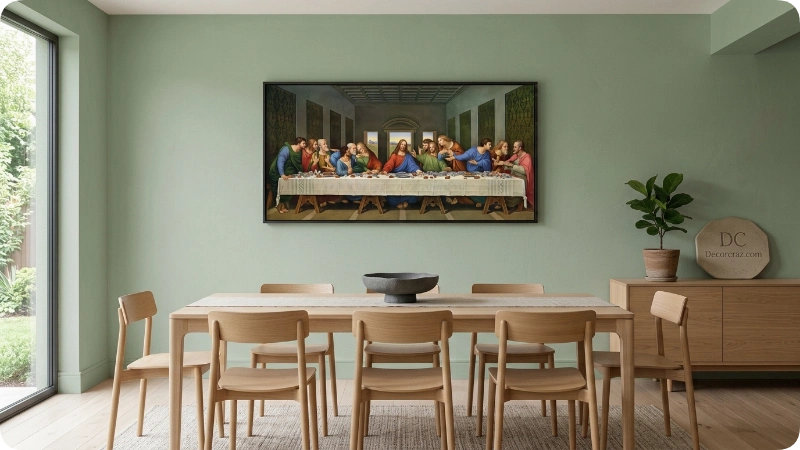
Minimalist interiors do not require the removal of meaningful religious artwork. They simply benefit from a more deliberate approach to color, composition, and surrounding objects.
A Last Supper painting can work in a modern, minimalist room if its size and visual complexity are balanced against the rest of the interior.
Choose a restrained interpretation
Consider a simplified painting, a muted color reproduction, a refined line art interpretation, or a composition with a relatively quiet background.
These options reduce visual competition without necessarily changing the subject’s significance.
If you prefer a traditional, highly detailed painting, you can still display it in a minimalist room. In that case, let the artwork provide the detail while keeping the furniture and surrounding wall relatively uncomplicated.
Use negative space deliberately
Negative space is the unoccupied area around an object. In wall decor, it helps distinguish the artwork from nearby furniture, shelves, and other pictures.
A single Last Supper canvas on a clear wall can appear intentional because the viewer’s attention has somewhere to settle.
Avoid filling every remaining part of the wall with small frames or decorative signs simply because space is available. If you want additional artwork, check if it supports the same visual arrangement rather than distracting from the main piece.
Coordinate colors without matching everything
A black frame can connect with dark furniture or window frames. A natural wood frame can soften an interior dominated by white and gray. A muted painting can work as a subtle focal point, while a more colorful image can provide the room’s principal contrast.
The most useful choice depends on what the room needs visually. If the furniture and walls are already dark, a lighter image may improve contrast. If the room is bright and visually sparse, a deeper toned painting may provide a stronger anchor.
Best for:
Contemporary homes, neutral interiors, and rooms with simple furniture.
Potential drawback:
Extremely abstract versions may not suit households that prefer a clearly recognizable traditional depiction. Choose a more detailed composition if that is important to you.
Multi Panel Last Supper Wall Art
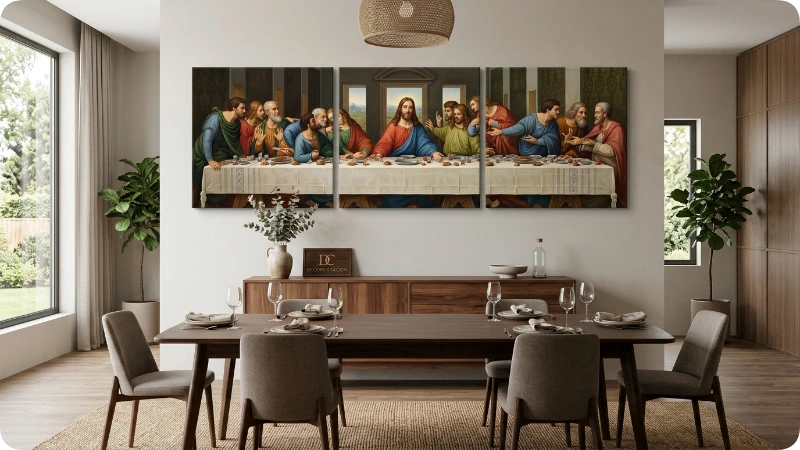
Multi panel Last Supper wall art divides one image across two or more separate panels. This arrangement can create a broad display on a feature wall, particularly when one continuous canvas would be difficult to transport or handle.
However, the panels must be selected and installed carefully to preserve the image.
Choose between a single canvas and multiple panels
A single canvas is generally simpler to install because it requires one main position and does not depend on matching several separate pieces.
A multi panel design can distribute a large image across the wall, but it requires consistent spacing and alignment. Incorrect gaps may interrupt faces, table edges, or other important details.
Before purchasing, confirm the total assembled width and height. Individual panel measurements do not necessarily communicate how much wall space the completed arrangement will occupy.
Plan the spacing before hanging
Place the panels on the floor in their intended order, then mark the arrangement on the wall with removable tape.
Check that the visual center of the entire image aligns with the furniture below it. Measure the gaps between panels rather than estimating each gap independently.
The spacing should suit the design. A narrow gap may help the image read as one scene, while a wider gap creates more visible separation. Follow the product’s intended arrangement if the image depends on a specific sequence.
Consider the room’s viewing distance
Multi panel art is most successful when viewers can see the overall composition without being forced to stand too close to interpret it.
A large dining room or living room may provide enough distance to appreciate the complete scene. In a narrow hallway, the viewer may encounter individual panels at close range, making interruptions in the image more noticeable.
Best for:
Large feature walls, spacious dining rooms, and homeowners who want a broad decorative display.
Potential drawback:
Alignment errors are more visible in a multi panel image. Choose a single canvas if simple installation is a higher priority than the divided panel appearance.
Last Supper Wall Decor Above a Sideboard or Console
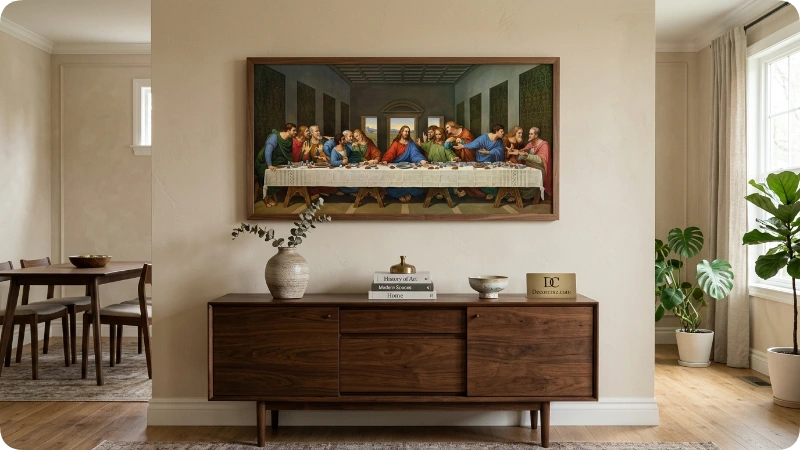
A sideboard or console provides a practical base for Last Supper wall decor because the furniture creates a visual connection between the artwork and the room.
This arrangement works in dining rooms, living rooms, entryways, and other spaces with a suitable horizontal surface.
Match the artwork to the furniture
Start by comparing the width of the artwork with the width of the sideboard. A piece that is too narrow may look disconnected from the furniture, while an excessively wide piece can make the arrangement feel top heavy.
As an initial design guideline, aim for artwork that occupies roughly two thirds to three quarters of the furniture’s width. Adjust this according to the artwork’s frame, the wall’s proportions, and the surrounding architecture.
If the furniture is unusually tall or visually heavy, a smaller painting with a simpler frame may create a better balance.
Keep the display surface functional
A sideboard may hold dishes, serving items, lamps, or everyday belongings. Leave enough usable space for these objects rather than treating the surface as a purely decorative platform.
If you add accessories, keep them low enough that they do not obscure the artwork. A tall vase placed directly in front of a central figure, for example, interferes with the scene rather than supporting it.
One or two carefully positioned objects may be sufficient. Their purpose should be to connect the artwork with the room, not to compete for attention.
Check practical clearance
If the console has doors or drawers, make sure they can open without striking objects or the lower edge of the frame.
In a dining room, allow enough space for chairs and people to move comfortably. Secure the artwork using hardware suitable for its weight and the wall material.
Best for:
Homes with sideboards, entry consoles, or dining room storage furniture.
Potential drawback:
Excessive tabletop decoration can obscure the artwork’s lower edge and create a crowded display. Keep the immediate area around the picture clear.
Handcrafted and Textured Last Supper Wall Decor
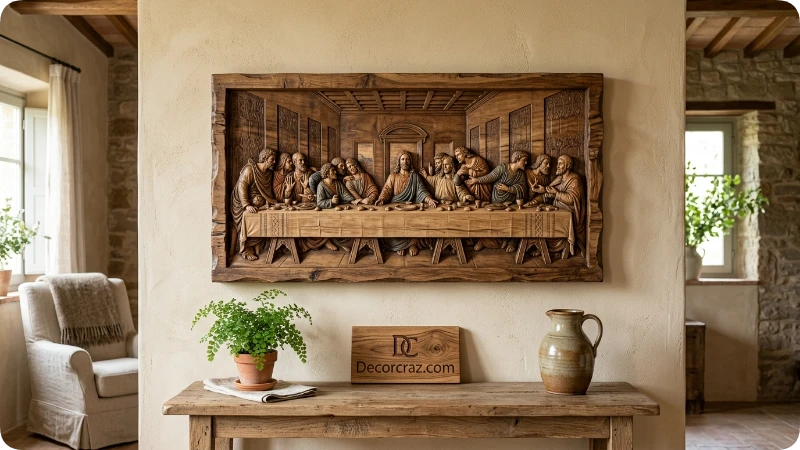
Handcrafted Last Supper wall decor can introduce visible texture and material variation that differ from a conventional flat print.
Depending on the design, the artwork may use carved wood, raised relief, textured paint, molded material, or decorative resin. Each finish creates a different relationship between the image and the surrounding light.
Choose texture according to the room
Carved wood may suit interiors with natural materials, rustic furniture, or traditional craftsmanship.
Raised relief can create shadows around figures and architectural details. This may make the scene more visually dimensional, although excessive depth can produce strong shadows under directional lighting.
Resin and other glossy finishes can offer a polished decorative appearance, but reflections should be considered before installation.
The material itself does not determine if a piece is high quality. Examine the clarity of the composition, the consistency of the finish, the construction, and the way the artwork is intended to be mounted.
Consider cleaning and maintenance
Textured surfaces can collect dust in recesses, making them more difficult to clean than smooth prints.
Check the manufacturer’s care instructions before using cleaning products. Some finishes may be damaged by moisture, abrasive cloths, or unsuitable chemicals.
If the artwork includes delicate raised details, a location away from frequent contact may reduce the chance of accidental damage.
Make sure the texture does not hide the scene
The central figures should remain recognizable from the normal viewing distance.
Before buying a large textured piece, inspect photographs that show the full artwork as well as close up details. A close up alone may make a product appear more intricate than it looks when displayed across a room.
Best for:
Homes that value craftsmanship, traditional materials, or three dimensional decorative art.
Potential drawback:
Deep texture and reflective finishes may create distracting shadows or highlights. A flatter canvas may be more suitable when visual clarity is the main priority.
Last Supper Wall Decor in a Prayer Corner
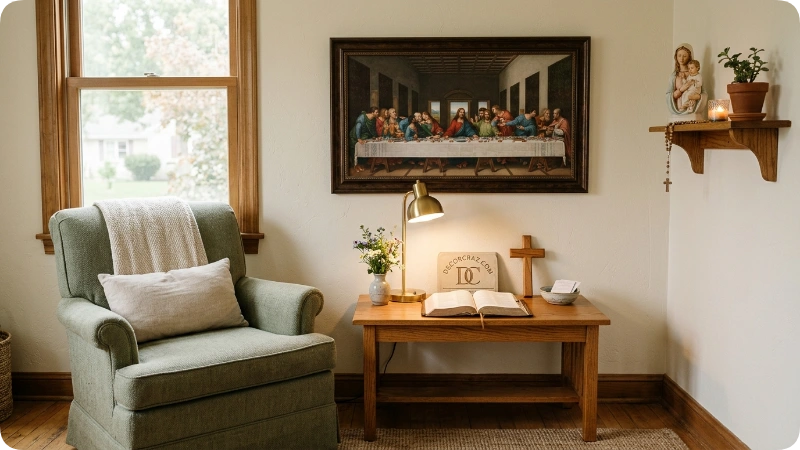
A dedicated prayer corner can provide a quiet place for reflection, prayer, and religious reading. A Last Supper image may serve as the main artwork in this area, particularly for households that associate the scene with Christian faith and devotion.
The arrangement does not need to be large or elaborate to be meaningful.
Select a size suited to the available space
A compact framed print may be enough for a small corner with a chair, side table, or shelf. A larger painting can work in a dedicated room or a wider alcove.
The artwork should remain visible from the position where you usually sit or stand. Check the viewing angle before mounting it, particularly if the space has a sloped ceiling or furniture that limits sightlines.
Keep the surrounding objects purposeful
A prayer corner may include a Bible, a small shelf, a reading lamp, or other devotional items. Select only what supports the way the space will be used.
A reading lamp can help illuminate a book without directing a harsh beam onto the painting. A simple shelf can hold frequently used items, but it should not block the artwork.
If you prefer a more traditional arrangement, a coordinated frame and modest lighting can help define the area. For a modern home, a simple print and an uncluttered wall may be sufficient.
Respect the room’s practical needs
Avoid placing the artwork where it could be knocked over by a door, exposed to persistent dampness, or damaged during everyday movement.
If the corner is shared with another household activity, choose a position that maintains its intended function without obstructing access to furniture or walkways.
Best for:
Households with a dedicated devotional area or a quiet place for personal reflection.
Potential drawback:
A corner that is too crowded may become less useful for prayer or reading. Prioritize comfortable seating, adequate light, and easy access to the items you use.
Last Supper Wall Decor for a Rustic or Farmhouse Interior
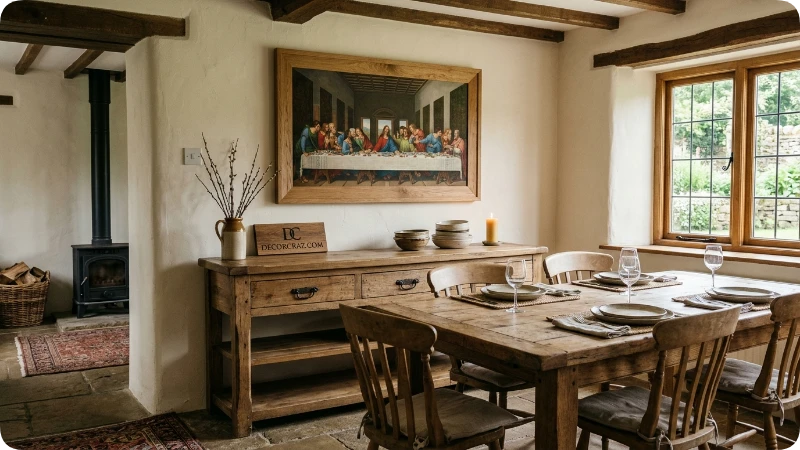
Rustic and farmhouse interiors often feature natural wood, simple furniture, visible textures, and practical materials. Last Supper artwork can fit these spaces when the frame and finish complement the existing room instead of introducing an unrelated decorative style.
Select a suitable frame
A natural wood frame can connect the artwork with a farmhouse dining table, wooden bench, or sideboard. A distressed finish may suit an established rustic interior, while a smooth oak toned frame can work in a cleaner, more contemporary farmhouse room.
Avoid choosing a distressed frame simply because the room contains wood. If the furniture already has strong grain patterns and several different finishes, a simpler frame may provide better visual balance.
Use the artwork as the main decorative feature
A rustic dining room may already include open shelving, baskets, pottery, or decorative lighting. The Last Supper painting does not need to compete with every object.
Place it on a wall where the image remains easy to see. If the room has exposed beams, check that the painting aligns with the wall and furniture rather than appearing awkwardly squeezed between architectural features.
A traditional painting with warm colors can work particularly well with medium or dark wood. A lighter, more restrained interpretation may suit a room with pale walls and natural finishes.
Consider the finish’s durability
Rustic surroundings can include fireplaces, cooking areas, or spaces where dust and temperature changes are more noticeable. Select a display location that protects the artwork from excessive heat, moisture, and direct sunlight.
Best for:
Farmhouse dining rooms, rustic homes, and interiors with natural wood furnishings.
Potential drawback:
An artificially aged frame may look out of place in a room with otherwise clean, contemporary finishes. Match the frame to the actual interior rather than relying on a rustic label.
Last Supper Wall Decor in a Hallway or Entryway
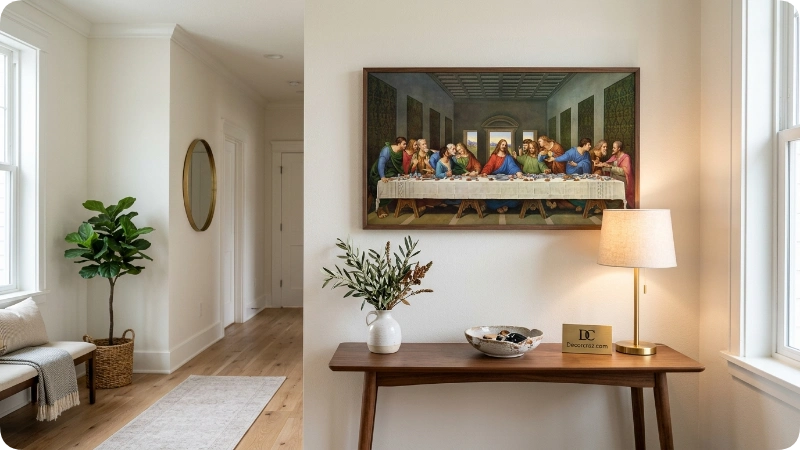
A hallway or entryway can be an alternative location when the dining room and living room have limited wall space. A wide hallway may accommodate a horizontal painting, while a smaller entrance may suit a more compact print.
The most important considerations are viewing distance, available width, and the amount of everyday movement around the artwork.
Check the available wall width
A hallway wall can appear generous when viewed from the entrance but feel narrow when someone walks directly beside it.
Measure the clear wall area and check how far the artwork will project into the walking space. Account for the depth of a frame and any decorative elements that extend beyond the wall.
A slimmer frame can be practical in a narrow passage because it reduces the chance of accidental contact.
Position the artwork for comfortable viewing
Place the picture where it can be seen naturally while walking or standing. A painting positioned too high may feel disconnected from the entrance, while one placed too low can be difficult to appreciate and more vulnerable to accidental contact.
As a starting point, many wall art arrangements place the center near standing eye level. Adjust the height for the proportions of the hallway and the artwork’s relationship to nearby furniture.
Avoid unnecessary competition
If the entryway already includes a mirror, coat hooks, or several family photographs, check if adding a large religious painting will overcrowd the wall.
You can create a separate focal point by leaving space around the Last Supper artwork rather than forcing it into an existing gallery arrangement.
Best for:
Wide hallways, entrances with clear wall space, and homes where other rooms are already fully decorated.
Potential drawback:
A narrow hallway may not provide enough distance to appreciate a large, detailed scene. A smaller or less complex image can be a better choice.
How to Choose the Right Last Supper Wall Decor
Choosing between different Last Supper wall decor options becomes easier when you evaluate the room, the artwork, and the installation requirements together.
Compare the main options
| Wall decor option | Best suited to | Main advantage | Main limitation |
| Traditional framed painting | Classic dining rooms and formal interiors | Defines the scene with a finished border | Ornate frames may overwhelm small rooms |
| Stretched canvas | Modern living rooms and dining areas | Offers a softer presentation without a glass front | Canvas quality and edge finishing vary |
| Gold or antique finish | Traditional interiors with warm accents | Creates a more formal decorative appearance | Reflective finishes may cause glare |
| Small framed print | Apartments and compact spaces | Fits limited wall areas | Fine details may be harder to see |
| Multi panel artwork | Large feature walls | Covers a broad area | Requires accurate alignment |
| Carved or textured artwork | Homes that value material detail | Adds physical texture and dimensionality | Can collect dust or cast distracting shadows |
| Minimalist interpretation | Contemporary interiors | Reduces visual competition | May not suit preferences for traditional imagery |
| Rustic wood framed artwork | Farmhouse and rustic rooms | Connects with natural materials | Distressed finishes may clash with modern furniture |
| Prayer corner artwork | Dedicated devotional spaces | Supports a focused display | Oversized pieces may dominate small corners |
| Hallway artwork | Wide passages and entrances | Uses otherwise empty wall space | Close viewing may reveal limitations in image quality |
Check the image quality before buying
Last Supper paintings can differ significantly in composition, detail, and artistic interpretation.
Look closely at the central figure, the surrounding disciples, and the arrangement of the table. Check that the image has not been cropped in a way that removes important parts of the scene.
If you are buying a reproduction of a familiar painting, confirm which version is being reproduced. Contemporary artists also create original interpretations of the Last Supper, so not every design will follow the same composition.
For large prints, pay attention to the resolution of the source image. A picture that looks sharp on a phone screen may appear soft or pixelated when enlarged substantially.
Decide between framed and unframed art
Framed art can create a more finished appearance and protect a print when appropriate glazing is used. The frame also adds weight and affects how far the artwork projects from the wall.
Unframed canvas offers a simpler appearance and avoids reflective glazing across the image. However, the quality of the canvas, its edges, and its mounting system still matters.
There is no single best format for every home. Choose according to the artwork, lighting, desired appearance, and practical installation requirements.
Check the seller’s product information
Before ordering, confirm:
- The complete artwork’s width and height.
- if the listed dimensions include the frame.
- if the image is printed, hand painted, or produced using another technique.
- The frame material and finish.
- if mounting hardware is included.
- The recommended cleaning method.
- The return policy if the size or finish does not suit your room.
These checks help prevent common mismatches between product photographs and the actual artwork delivered.
How to Hang Last Supper Wall Decor Correctly
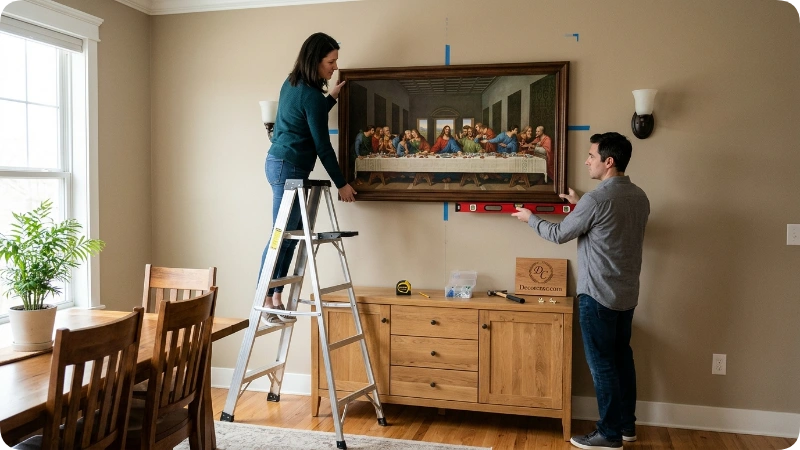
Even a beautiful painting can look out of place if it is hung at the wrong height or attached insecurely. A short planning process helps you avoid unnecessary wall damage and improves the final arrangement.
Step 1:
Measure the display area
Measure the width and height of the available wall. If the artwork will hang above furniture, measure the furniture as well.
Check the space around ceiling lights, doors, windows, and shelving. A wide painting needs enough room to preserve its horizontal proportions without appearing compressed.
Step 2:
Test the position before drilling
Use removable painter’s tape to mark the artwork’s approximate outline on the wall.
Stand where you normally enter the room or sit at the dining table. Check if the picture feels balanced with the furniture and remains visible from the usual viewing positions.
If you are choosing a multi panel arrangement, mark every panel and gap separately.
Step 3:
Select appropriate mounting hardware
The correct mounting method depends on the artwork’s weight, the frame, and the wall construction.
Lightweight prints and heavy framed canvases may require different hardware. Plasterboard, masonry, and other wall types also have different fixing requirements.
Check the manufacturer’s instructions and use fixings rated for the actual load. For heavy artwork or uncertain wall construction, seek suitable professional assistance rather than relying on a small nail or adhesive strip without verifying its capacity.
Step 4:
Check the final height
There is no universal hanging height that works for every room. Standing areas, seating areas, tall furniture, and unusually high ceilings may require different arrangements.
For a dining room, consider how the picture looks when people are seated. For a hallway, consider the view while standing and walking.
The artwork should feel connected to the room rather than isolated high on the wall.
Step 5:
Evaluate the lighting
Natural daylight can help reveal color and detail, but prolonged direct sunlight may damage some artwork over time.
Strong artificial lighting can also create reflections on glass or glossy finishes. If the painting is difficult to view from the main seating position, adjust the light source or consider a less reflective finish.
Step 6:
Secure and inspect the display
Once installed, check that the frame sits level and the fixings are secure.
For heavy frames, ensure that the mounting system distributes the load appropriately. Avoid locations where doors, furniture, or everyday activity could strike the artwork.
Recheck the display periodically, particularly if the frame is heavy or the wall is subject to vibration.
These installation recommendations are consistent with the general preservation principles in the International Association of Lighthouse Authorities’ Guideline G1080, which advises using suitable hanging hardware and avoiding prolonged exposure to direct sunlight, dampness, heat, and dirt.
Common Mistakes to Avoid
The most effective way to improve a Last Supper wall display is often to avoid a few preventable mistakes.
Buying artwork before measuring the wall
A painting that looks appropriately sized in an online listing may be much smaller or larger than expected.
Measure the wall and the furniture first. Use removable tape to visualize the dimensions before committing to a particular size.
Cropping important figures
A wide image may be advertised in several formats, but not every format preserves the complete composition.
Inspect the actual image dimensions and crop. Choose a smaller complete scene rather than a larger version that cuts off important figures.
Choosing a finish that conflicts with the lighting
Glossy surfaces can reflect windows and ceiling lights. Gold toned details may also become visually dominant under strong illumination.
Review the artwork in relation to the intended wall and lighting rather than relying only on staged product photographs.
Overdecorating the surrounding wall
Adding too many frames, shelves, signs, and decorative objects can make the main artwork difficult to appreciate.
Give the painting sufficient visual space. Additional objects should have a clear purpose in the arrangement.
Ignoring installation requirements
A frame that is too heavy for its fixings can fall, damaging the artwork and potentially injuring someone.
Check the total weight, wall material, and recommended mounting system before installation.
Assuming every version has the same meaning or composition
Traditional reproductions, contemporary interpretations, and stylized decorative versions can differ in appearance.
Choose the particular artwork intentionally. If historical accuracy or a specific artistic tradition matters to you, examine the image and its description before purchasing.
FAQs
Where is the best place to hang Last Supper wall art?
The dining room is a natural choice because the artwork depicts a shared meal. A living room, hallway, or prayer corner can also work when the wall provides enough space and the artwork suits the household’s preferences.
What size should Last Supper wall decor be?
Choose a size that preserves the complete scene and fits the available wall. Above a sideboard, artwork measuring roughly two thirds to three quarters of the furniture’s width is a useful starting point, but the final choice depends on the wall and viewing distance.
Is canvas or framed Last Supper artwork better?
Canvas generally offers a softer presentation without a glass front, while framed artwork provides a defined border and may protect paper prints. Consider the room’s lighting, the artwork’s material, and the appearance you prefer.
Can Last Supper wall decor suit a modern home?
Yes. A minimalist interpretation, muted color painting, or simple canvas can complement modern interiors. Traditional artwork can also work when the surrounding furniture and decorations are kept visually balanced.
How do I protect Last Supper wall art from damage?
Avoid prolonged direct sunlight, excessive moisture, heat, and locations where the artwork could be struck. Use appropriate mounting hardware and follow the care instructions for the specific material and finish.
Conclusion
Last Supper wall decor is a beautiful way to combine Christian faith, artistic expression, and personal style in your home. If you choose a traditional framed painting, modern canvas art, an antique gold finish, or handcrafted artwork, the right piece can create a meaningful focal point.
Before purchasing, consider your wall space, furniture, lighting, and interior design. Large horizontal paintings suit spacious dining rooms, while smaller framed prints work well in apartments, hallways, and prayer corners. Choose artwork that preserves the complete scene and reflects your personal preferences.
Measure your wall carefully, select a suitable finish, and use secure mounting hardware. Protecting the artwork from excessive moisture, heat, and direct sunlight can help maintain its appearance. With thoughtful placement, your Last Supper wall decor can bring lasting beauty and meaning to your home.

I am Claudia Winkle, a passionate Name Researcher and Content Writer at decorcraz.com. I enjoy exploring the meanings, origins, history, and cultural significance behind names from around the world. Through carefully researched and engaging articles, I help readers discover unique names, understand their stories, and find meaningful naming inspiration for every occasion. My goal is to make name research simple, interesting, and useful for readers looking for the perfect name.