Quick Answer:
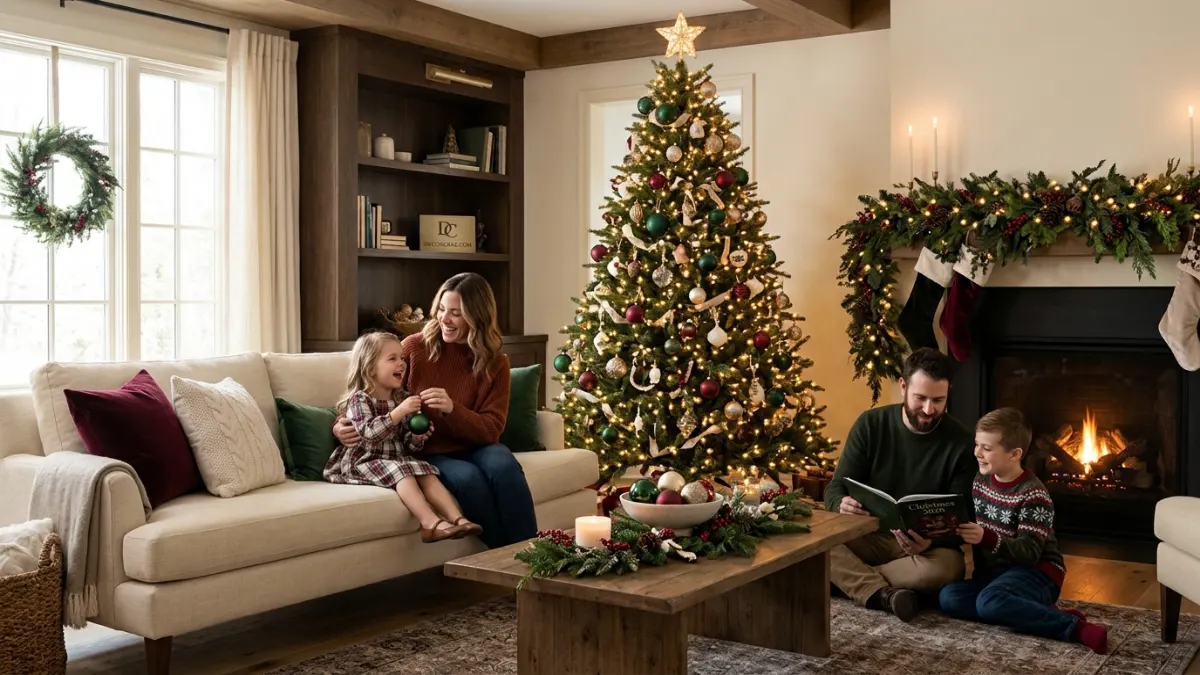
The best living room Christmas decor ideas combine a beautiful focal point, coordinated holiday colors, cozy textiles, and warm lighting. Decorate your Christmas tree, add festive cushions and throws, display seasonal greenery, and style your mantel or coffee table with simple accents. For small living rooms, choose slim trees, space-saving decorations, and multifunctional accessories to create a festive atmosphere without overcrowding the space.
Creating a festive living room for Christmas doesn’t require a complete makeover or a large decorating budget. With the right combination of Christmas tree decorations, cozy cushions, warm lighting, and seasonal greenery, you can transform your everyday living space into a welcoming holiday retreat.
If you prefer classic red and green, elegant white and gold, natural greenery, or colorful Christmas accents, the key is to choose a style that complements your existing furniture and reflects your taste.
From decorating a small apartment to styling a fireplace mantel or creating a stunning Christmas tree display, the possibilities are endless. These living room Christmas decor ideas offer practical inspiration for different room sizes, decorating styles, and budgets, helping you create a beautiful, comfortable space where family and friends can enjoy the holiday season together.
Create a Traditional Christmas Living Room With Red and Green
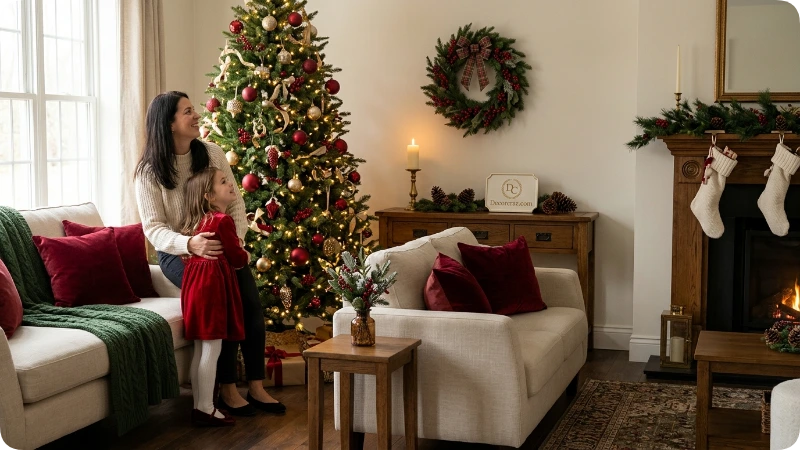
Traditional red and green decorations bring a recognizable Christmas look to the living room. The combination works particularly well with natural wood furniture, cream upholstery, and evergreen branches.
Start with a green Christmas tree decorated with red baubles, warm white lights, and a few gold ornaments. Carry the colors into the seating area with one or two red cushions and a green throw. If your sofa is already colorful, reverse the balance by using neutral cushions and placing the strongest red accents elsewhere.
How to arrange the look:
- Position the tree where it can be seen from the entrance or main seating area.
- Add a wreath above a console or on a suitable interior door.
- Use a red throw on one end of the sofa rather than covering the entire seating area.
- Repeat the tree’s main colors in a small tabletop arrangement.
The key is to give each color a purpose. Green connects the room to the tree, while red draws attention to smaller decorative details.
Best for: Traditional homes, family living rooms, and anyone who enjoys a familiar Christmas palette.
Lower cost alternative: Reuse your existing ornaments and add red cushion covers instead of purchasing a new collection of decorations.
Style a Small Living Room Without Losing Floor Space
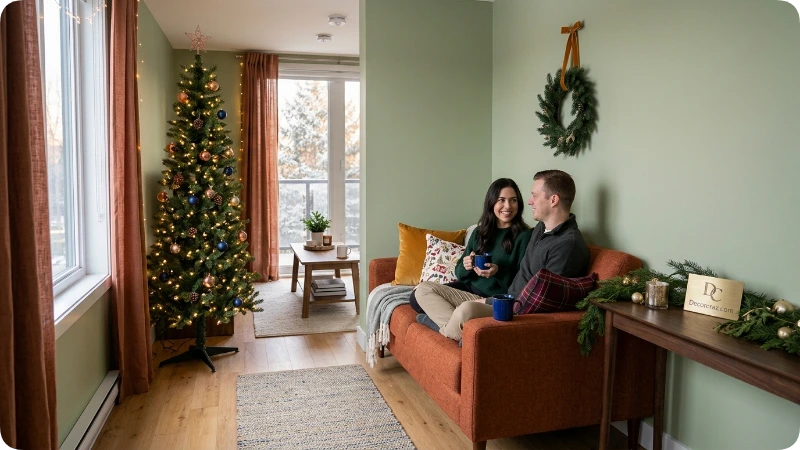
In a small living room, every decoration competes with furniture, storage, and walking space. A slim tree or tabletop Christmas tree can provide a festive focal point without making the room difficult to use.
Before choosing decorations, identify the main walking route between the entrance, sofa, and adjoining rooms. Keep that route clear and avoid placing a large tree where people must squeeze past its branches.
Vertical surfaces can do more work when floor space is limited. A small wreath, a decorated shelf, or a few paper ornaments can introduce Christmas details without adding another piece of furniture.
Try these space conscious choices:
- Place a slim tree in an unused corner rather than beside the main walkway.
- Use a tabletop tree on a stable console if a floor standing version won’t fit.
- Replace everyday cushion covers with festive designs.
- Decorate one shelf instead of adding accessories to every surface.
- Use a small arrangement of evergreen branches in a vase as an alternative to a full tree.
For example, a compact living room with a beige sofa could use a small green tree, burgundy cushions, and a simple wreath. The decorations remain visually connected without crowding the seating area.
Best for: Apartments, narrow living rooms, and homes with limited storage.
What to avoid: Large floor baskets, oversized tree skirts, and bulky decorative pieces that reduce usable space.
Decorate With Elegant White, Cream, and Gold
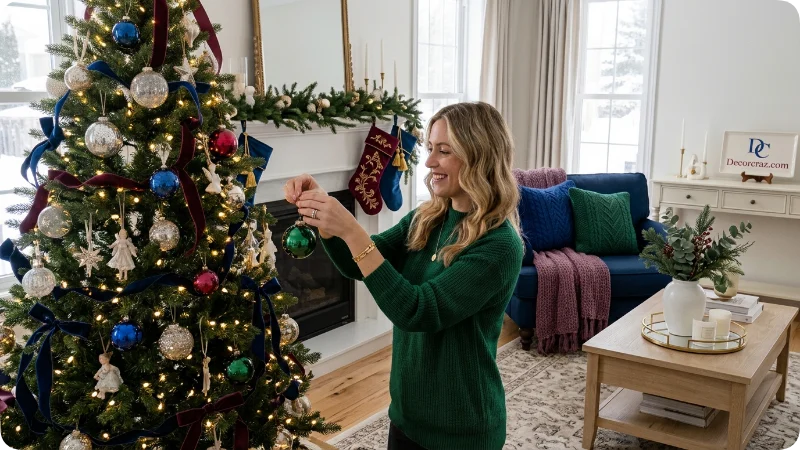
A white and gold Christmas palette offers a softer alternative to traditional red and green. It works particularly well with cream sofas, pale walls, light wood, and interiors that already use neutral colors.
Begin with white, ivory, or champagne ornaments on a green or flocked tree. Add warm metallic details through gold baubles, ribbon, or a small decorative bowl. Cream knitted cushions and a textured throw can connect the Christmas decorations to the everyday furnishings.
Avoid making every object metallic. Too many reflective surfaces can compete with one another, particularly in a room with shiny furniture or strong overhead lighting.
A more balanced arrangement uses matte white ornaments as the foundation, gold as a highlight, and greenery to provide contrast.
How to make it work:
- Choose one main metallic finish rather than mixing several competing shades.
- Place gold ornaments at different heights on the tree.
- Keep the sofa accessories mostly neutral.
- Use warm white lighting to soften the contrast between white decorations and metallic finishes.
For a less expensive version, keep your existing tree and add ivory ribbon, paper snowflakes, or a few gold ornaments.
Best for: Contemporary living rooms, neutral interiors, and understated holiday decorating.
Make the Christmas Tree the Main Focal Point
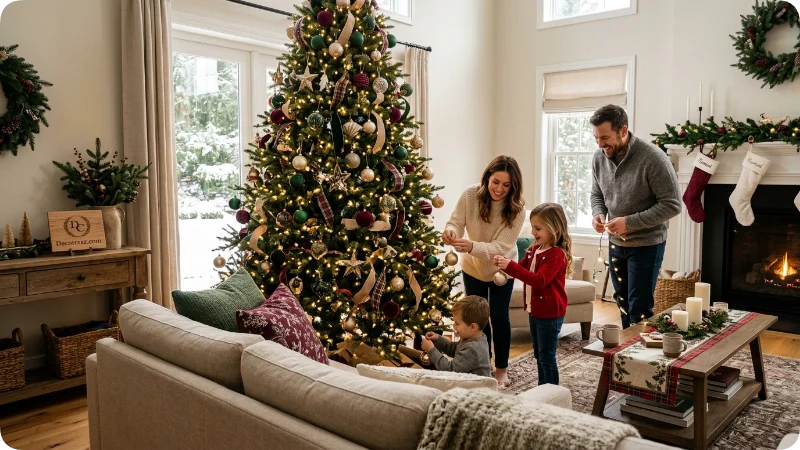
A Christmas tree can organize the entire decorating scheme. When its placement and size work with the room, the remaining decorations become easier to arrange.
Choose a tree based on the available footprint, ceiling height, furniture layout, and distance from heat sources. A tall tree may suit a spacious living room, while a narrow tree can fit a smaller corner without overwhelming the seating area.
Before decorating, check how the tree looks from the sofa and entrance. Leave enough space to move around it, open nearby doors, and reach electrical outlets without stretching cords across walkways.
Use these styling steps:
- Choose the location first. Look for a visible corner that doesn’t obstruct the main route through the room.
- Establish the lighting. Arrange the lights evenly before adding ornaments.
- Select a color scheme. Decide if the tree will feature traditional colors, neutrals, or a more playful combination.
- Distribute ornaments. Place larger pieces where they can be seen and use smaller ornaments to fill visual gaps.
- Finish the base. A simple tree skirt or decorative collar can conceal the stand without adding unnecessary bulk.
The tree should relate to the rest of the room rather than look like an isolated display. Repeat one or two of its colors in the cushions, mantel, or coffee table arrangement.
Best for: Rooms where the tree is the primary holiday feature.
Alternative: If a full tree blocks furniture or movement, use a tabletop tree or a wall mounted arrangement of lightweight decorations.
Dress the Fireplace Mantel With Greenery and Stockings
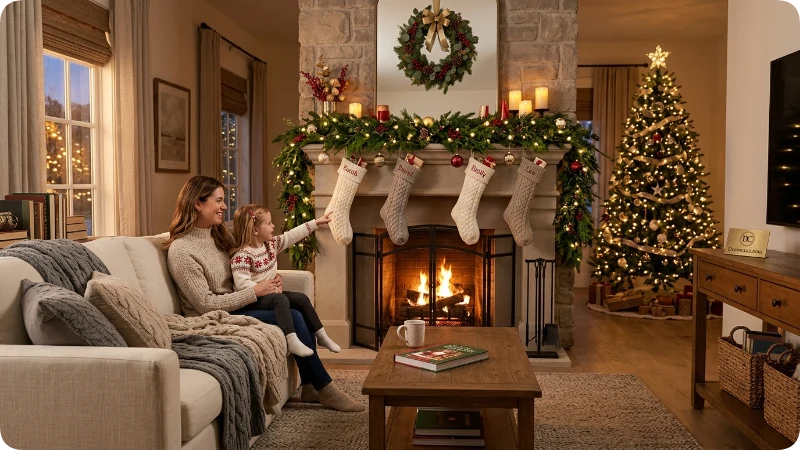
A fireplace mantel provides a natural horizontal surface for Christmas decorations. Greenery, stockings, and a few carefully placed accents can make it a secondary focal point without competing with the tree.
Start by measuring the mantle and deciding how much of its surface must remain available. Arrange a garland along the shelf, then add stockings or a small decorative arrangement. Vary the height of the objects so the display doesn’t look like a straight line of identical accessories.
A mirror or artwork above the mantel can provide a backdrop, but it doesn’t need to be surrounded by numerous additional decorations. A restrained arrangement often works better when the wall already contains a prominent feature.
If the fireplace is functional, keep garlands, stockings, ribbons, and other combustible decorations away from the firebox and heat. The U.S. Consumer Product Safety Commission recommends keeping burning candles away from flammable items and using flameless candles when possible.
Styling options:
- Use evergreen garland with simple red or gold accents.
- Hang stockings evenly without letting them interfere with the fireplace opening.
- Place a small wreath above the mantel if the wall needs a focal point.
- Choose battery operated candles for a decorative glow without an open flame.
If you don’t have a fireplace, style a console table against a wall and hang stockings from a suitable freestanding holder. This creates a similar visual effect without pretending a decorative display is a working fireplace.
Best for: Living rooms with a mantel or a suitable console table.
Add Christmas Cushions and Throws to the Sofa
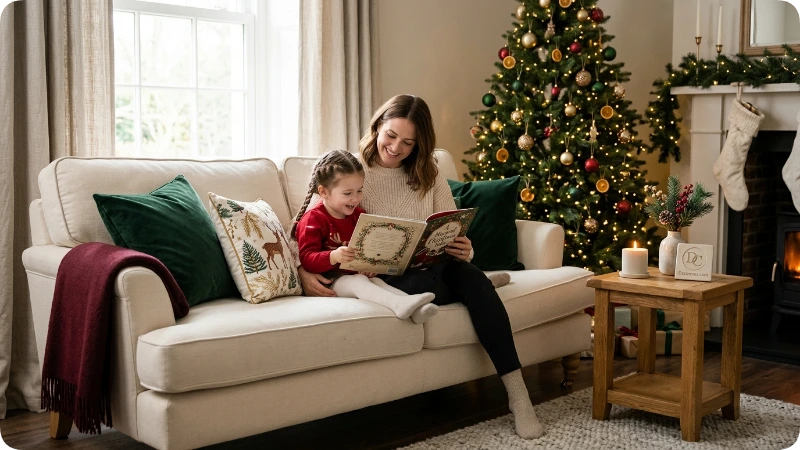
Textiles are among the easiest ways to change the appearance of a living room for Christmas. Cushion covers and throws can introduce seasonal colors without requiring permanent changes or additional floor space.
Start with the sofa’s existing color. A neutral sofa can support brighter red, forest green, or patterned cushions. A dark or brightly colored sofa may look more balanced with cream textiles and a smaller number of contrasting accents.
Instead of covering every seat with a different Christmas pattern, choose one dominant design and combine it with solid colors or subtle textures.
For example, a cream sofa could feature two dark green cushions, one patterned Christmas cushion, and a rust red throw. The arrangement introduces several seasonal details while leaving the sofa’s original color visible.
Practical styling tips:
- Choose cushion covers that fit your existing inserts.
- Fold a throw over one sofa arm or place it within easy reach.
- Use washable fabrics where children or pets frequently use the seating area.
- Keep decorative pillows out of the main sitting position if they make the sofa uncomfortable.
You can also reuse these pieces in another room after Christmas, reducing the need for dedicated seasonal storage.
Best for: Renters, budget conscious decorators, and anyone who wants a noticeable change without rearranging furniture.
Use Warm Lighting to Change the Evening Atmosphere
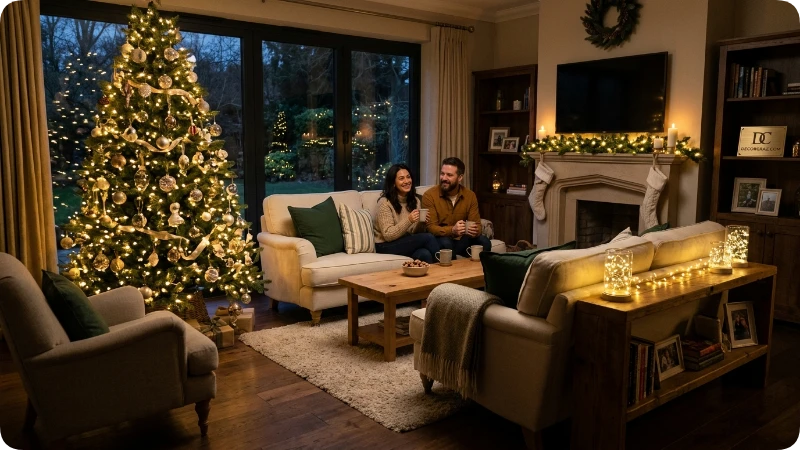
Lighting affects how Christmas decorations look after dark. A tree can become the room’s main source of visual interest, while a nearby table lamp and a few smaller light displays create additional depth.
Begin with the room’s existing lighting rather than adding strings of lights everywhere. Turn on the tree lights, then assess if the seating area or shelves need additional illumination.
Warm white lights generally complement cream textiles, natural wood, and traditional greenery. Cooler white lights can suit a more icy palette, especially when paired with silver or pale blue ornaments. The choice depends on the room’s existing light sources and the atmosphere you want to create.
Ways to layer Christmas lighting:
- Use tree lights as the primary decorative feature.
- Place a table lamp near the sofa for comfortable evening illumination.
- Add a small string of lights to a shelf if it needs emphasis.
- Use battery operated lights in suitable decorative containers.
- Keep the brightest display away from television screens to reduce distracting reflections.
Lighting also needs to remain practical. Inspect decorative lights before use, avoid overloaded outlets, and never run cords underneath rugs or where furniture can damage them.
Best for: Evening gatherings, television rooms, and spaces that feel visually flat after sunset.
Bring Natural Greenery Into the Living Room
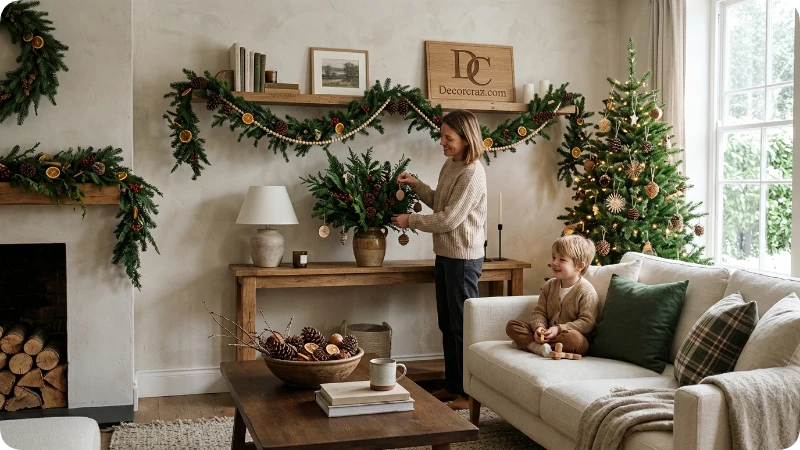
Natural greenery adds variation in shape and texture, especially in rooms dominated by smooth furniture, painted walls, and glass surfaces.
Evergreen branches can be arranged in a vase, placed along a suitable shelf, or incorporated into a garland. Pinecones and wooden ornaments introduce contrasting textures without requiring a large collection of colorful decorations.
The goal is to use greenery where its shape helps the room. A horizontal garland can soften a long console, while a vertical branch arrangement can draw attention to an otherwise empty corner.
Simple ways to use greenery:
- Arrange evergreen branches in a stable, appropriately sized vase.
- Add pinecones to a shallow bowl on a coffee table.
- Use a small wreath on a wall that needs a seasonal focal point.
- Place a garland along a shelf that can safely support its weight.
Keep decorative branches away from heaters, fireplaces, and other heat sources. If you have pets or young children, avoid placing small ornaments, berries, or breakable containers within easy reach.
For a low maintenance option, choose artificial greenery that can be stored and reused. It provides the same opportunity to introduce shape and color without requiring regular replacement.
Best for: Rustic, Scandinavian, traditional, and nature inspired interiors.
Create a Christmas Coffee Table Display
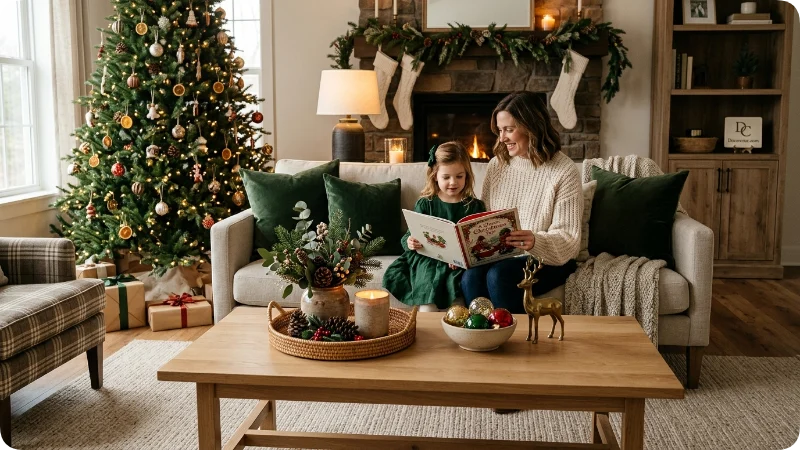
A coffee table offers a convenient place to introduce smaller Christmas decorations, but the arrangement should leave room for drinks, books, and everyday activities.
Begin with the table’s shape and available surface area. A round table often benefits from one compact central arrangement, while a larger rectangular table can accommodate a tray positioned toward one end.
Use a small number of objects with different heights and textures. For example, a shallow tray can hold a decorative bowl of ornaments and a short evergreen arrangement. A stack of books may work as a base for a single seasonal object if the stack remains stable.
A practical arrangement might include:
- One tray or shallow decorative dish.
- A small evergreen arrangement.
- A few ornaments in a bowl.
- A single seasonal accent that connects to the room’s color scheme.
Leave part of the tabletop open rather than filling every available space. This makes the display easier to maintain and keeps the furniture useful when guests arrive.
If you have young children or pets, avoid unstable stacks, small loose ornaments, and breakable containers placed near the table’s edge.
Best for: Living rooms where the tree and sofa are already decorated but the central area still feels unfinished.
Try a Colorful or Playful Christmas Decorating Theme
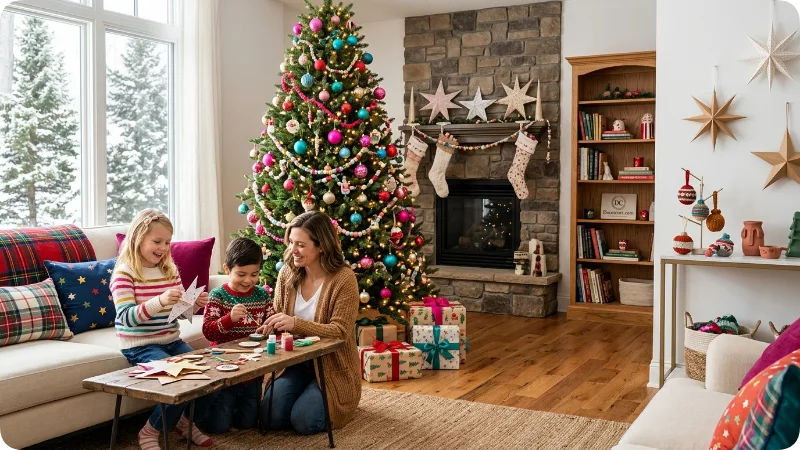
Christmas decorations don’t have to follow a traditional or neutral palette. A colorful scheme can suit family rooms, creative interiors, and homes where decorations are part of the seasonal fun.
Start by choosing a dominant color and one or two supporting colors. Pink and red can create a playful look, while blue and silver offer a cooler palette. Multicolored ornaments can also work well when the room’s existing furniture and textiles provide a relatively simple background.
The most important decision is where to concentrate the color. A brightly decorated tree can provide enough visual interest on its own, allowing the sofa and other surfaces to remain relatively simple.
Ideas for a playful living room:
- Decorate the tree with ornaments in different shapes and saturated colors.
- Add one or two festive cushions that repeat the tree’s palette.
- Display paper stars or lightweight decorations on a suitable wall.
- Use colorful wrapped empty boxes as temporary decorative accents.
- Create a small decorating area where children can display their own crafts.
For a more controlled result, repeat a color from the tree in just one other part of the room. This connects the decorations without making every surface compete for attention.
Best for: Family living rooms, colorful interiors, and people who prefer an expressive Christmas display.
How to Choose the Right Christmas Decor for Your Living Room
The best decorating approach depends on the room’s size, existing colors, available storage, and how you use the space during the holidays.
| Your living room | Recommended approach | What to prioritize |
| Small apartment | Slim or tabletop tree | Clear walking routes |
| Neutral interior | White, cream, and gold | Texture and subtle contrast |
| Traditional family room | Red, green, and natural greenery | A coordinated tree and sofa |
| Modern living room | Restrained colors and simple shapes | Clean lines and selective accents |
| Rental property | Cushion covers and removable decorations | Minimal wall damage |
| Living room with a fireplace | Tree and carefully arranged mantel decor | Safe distances from heat |
| Colorful family room | Multicolored ornaments | One main visual focal point |
You can adapt any of these approaches to your existing furniture. A decorating scheme doesn’t need to follow every suggestion in its category; the table is a starting point for choosing the elements that solve your particular space’s problems.
Keep the Budget Under Control
Before buying anything, take stock of your existing ornaments, lights, cushion covers, and decorative containers.
Prioritize items that will make the greatest visible difference. If the tree already looks complete, replacing the entire ornament collection is unlikely to improve the room as much as arranging the lighting or adding a few coordinated textiles.
A sensible order is:
- Use what you already own.
- Decide which area needs attention.
- Choose one or two additions that address that gap.
- Check if the new items can be stored or reused.
- Avoid buying accessories simply to fill an empty surface.
This approach helps prevent duplicate decorations and reduces the amount of seasonal storage required.
Make the Room Safe and Comfortable
Christmas decorations should not interfere with the room’s normal use.
Keep the main walking routes open, position the tree so its branches don’t block doors, and make sure decorative cords cannot become tripping hazards. Follow the manufacturer’s instructions for lights and other electrical decorations, and replace damaged sets rather than attempting to conceal damaged wiring.
Keep combustible decorations away from heat sources and open flames. If you have a live tree, follow appropriate care instructions and keep it watered.
Finally, consider the people who use the room. Families with young children may prefer shatter resistant ornaments and securely positioned decorations. Pet owners may need to keep tempting or fragile objects out of reach. These practical adjustments can change which decorating choices make sense.
Frequently Asked Questions About Living Room Christmas Decor
How can I decorate my living room for Christmas on a budget?
Reuse existing ornaments, add festive cushion covers, arrange evergreen branches in a vase, and use warm white lights to create a seasonal atmosphere. Focus on one main area, such as the Christmas tree or sofa, instead of buying decorations for every surface.
How do I decorate a small living room for Christmas?
Choose a slim or tabletop Christmas tree, decorate vertical surfaces, and use festive textiles to introduce seasonal colors. Keep walkways clear and avoid oversized decorations that make the room feel crowded.
What colors look best for Christmas living room decor?
Red and green create a traditional Christmas look, while white and gold suit neutral interiors. Forest green with cream works well in natural style rooms, and pink, blue, or multicolored ornaments can create a more playful display. Choose colors that complement your existing furniture.
How can I make my living room look festive without a Christmas tree?
Decorate the sofa with seasonal cushions and throws, hang a wreath, arrange greenery in a vase, and add a few Christmas accents to shelves or a coffee table. Warm lighting can also create a festive atmosphere without requiring a tree.
How can I decorate my living room for Christmas without damaging rental walls?
Use removable hooks suitable for your wall surface, freestanding decorations, tabletop trees, and festive textiles. Check the manufacturer’s instructions and your rental agreement before attaching anything to walls or ceilings.
How do I make Christmas decorations look coordinated?
Choose one main focal point and repeat two or three compatible colors in nearby decorations. Match the tree ornaments with a few cushions, greenery, or tabletop accents, while leaving some surfaces uncluttered to maintain visual balance.
How can I decorate a living room safely for Christmas?
Keep decorations and combustible materials away from fireplaces, heaters, and open flames. Inspect decorative lights for damage, secure cords away from walkways, and keep small ornaments or breakable objects out of reach of young children and pets. Follow the manufacturer’s safety instructions for electrical decorations.
Conclusion
Living room Christmas decor is all about creating a festive space that feels beautiful, comfortable, and suited to your lifestyle. If you prefer traditional red and green, elegant white and gold, or colorful holiday accents, start with one main focal point and build the look around it.
A Christmas tree, decorated sofa, warm lighting, or natural greenery can make a noticeable difference without requiring a complete room makeover. For smaller living rooms, choose space saving decorations and keep walkways clear.
Reuse existing accessories whenever possible to manage your budget. With thoughtful color choices, balanced arrangements, and practical safety measures, you can create a welcoming Christmas living room that your family enjoys throughout the holiday season.

I am Claudia Winkle, a passionate Name Researcher and Content Writer at decorcraz.com. I enjoy exploring the meanings, origins, history, and cultural significance behind names from around the world. Through carefully researched and engaging articles, I help readers discover unique names, understand their stories, and find meaningful naming inspiration for every occasion. My goal is to make name research simple, interesting, and useful for readers looking for the perfect name.