Quick Answer :
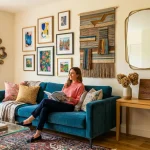
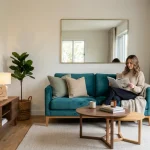
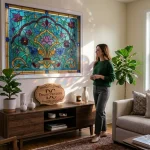
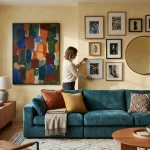
Mid century wall decor combines geometric artwork, vintage-inspired prints, botanical illustrations, sculptural mirrors, and natural wood accents. Choose warm colors, coordinate decorations with existing furniture, and leave enough empty space to create a stylish, balanced interior.
Creating a mid century-inspired wall does not require expensive antiques or a complete interior redesign. Often, a carefully selected painting, a coordinated pair of prints, or a sculptural mirror is enough to introduce the style. The key is to combine simple shapes, natural textures, and colors that work with the furniture and finishes already in your room.
From gallery walls and atomic-inspired accents to budget-friendly DIY artwork, mid century wall decor offers options for different spaces and decorating preferences.
The ideas below will help you choose suitable pieces, arrange them with confidence, and create a cohesive look without overcrowding your walls.
Geometric Abstract Art for a Graphic Focal Point
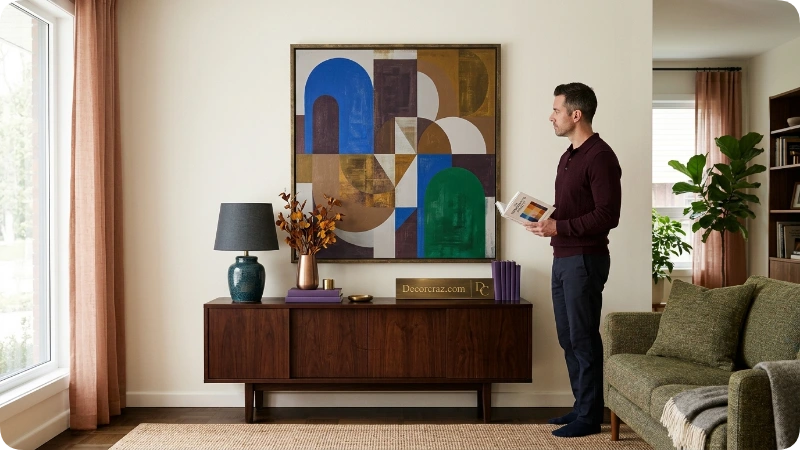
Geometric abstract art is one of the most recognizable choices for mid century wall decor. Circles, arches, rectangles, curved lines, and overlapping shapes create visual interest while maintaining the clean, structured appearance associated with this style.
Choose artwork that complements the colors already present in your room. Mustard yellow, rust, olive green, teal, cream, and charcoal can work well together, but you do not need to use every shade in one composition.
For a living room, consider a large abstract print above a sofa or walnut credenza. In a bedroom, softer shapes and muted colors can create a more relaxed atmosphere. A home office may benefit from a graphic black and cream print with a small accent of ochre or olive.
Frame selection also affects the final appearance. Natural wood and walnut frames add warmth, while slim black frames create a sharper contrast against pale walls.
The goal is to give the wall a clear focal point without making the artwork compete with patterned furniture, decorative lighting, or other prominent features.
Vintage Inspired Prints and Retro Posters
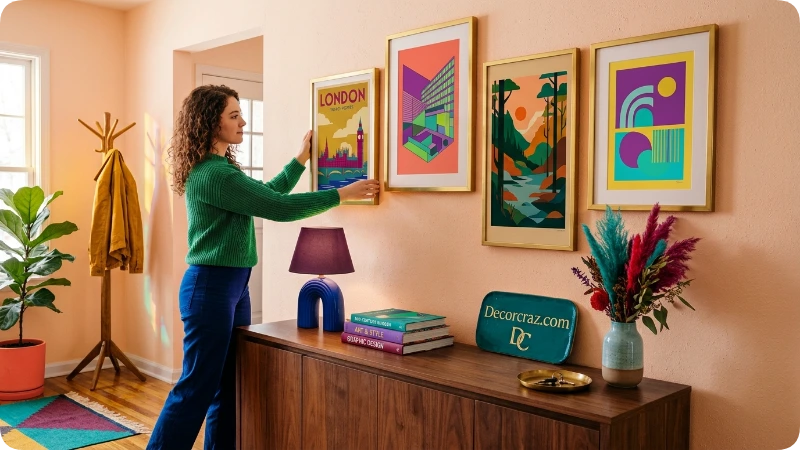
Vintage inspired posters bring a sense of history and personality to mid century interiors. Travel posters, stylized landscapes, architectural illustrations, and retro graphic prints can all complement the period’s distinctive visual language.
You do not need authentic vintage collectibles to achieve this look. Modern reproductions and newly designed retro inspired prints can work just as well when their colors, shapes, and framing suit the room.
Consider placing a vertical poster above an entryway console, a horizontal print above a dining room sideboard, or a smaller framed illustration beside a reading chair.
To keep the arrangement cohesive, repeat one or two colors from the artwork elsewhere in the room. For example, a poster featuring rust and cream can connect with terracotta accessories and light colored upholstery.
If you want to display multiple prints, choose a consistent frame finish or a related subject matter. This creates visual unity without requiring every image to look identical.
Botanical Wall Art and Simplified Nature Prints
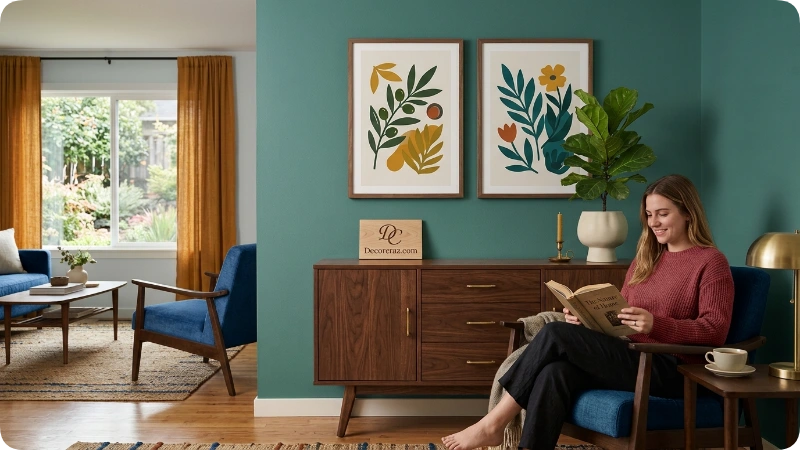
Botanical artwork introduces organic shapes into rooms that feature straight lined furniture and geometric patterns. Stylized leaves, simplified flowers, and abstract plant illustrations are particularly suitable for mid century inspired spaces.
For a natural look, pair olive or sage green prints with cream walls, walnut furniture, and understated textiles. If your room already contains several plants, choose botanical artwork with simple shapes rather than highly detailed illustrations that compete with the foliage.
A single large botanical print can work above a dresser or sideboard. Two coordinated prints can suit a dining nook, bedroom, or narrow wall beside a window.
Matching frames help the arrangement feel intentional. Natural wood frames reinforce the organic theme, while black frames provide contrast and definition.
Botanical wall art is also useful when you want to introduce color without choosing a large, bold abstract painting. The subject feels familiar, while simplified shapes maintain the clean appearance of mid century design.
Sculptural Mirrors With Rounded or Organic Shapes
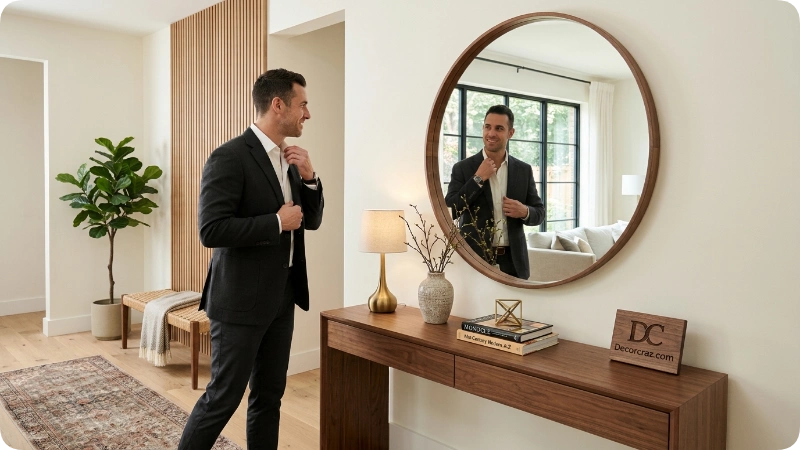
Mirrors provide both decoration and practical value. They can reflect daylight, create a greater sense of depth, and introduce curved shapes that contrast with rectangular furniture.
For mid century wall decor, consider a round mirror with a wooden frame, an oval mirror with a restrained metal border, or an asymmetrical design with a simple silhouette.
A round mirror looks particularly effective above a rectangular entryway console because the contrasting shapes create a balanced composition. A horizontal oval mirror can work well above a long sideboard or dresser.
Before choosing a mirror, consider what it will reflect. A view of a window, an attractive light fixture, or an uncluttered section of the room can improve the overall appearance. Reflecting a crowded shelf or an untidy corner may create unwanted visual distraction.
In a rental, check the mirror’s weight and use a mounting system suitable for the wall surface. A securely positioned freestanding mirror can be another option when permanent installation is not practical.
Wooden Wall Accents and Slatted Panels
Wooden wall decor connects artwork with the natural materials commonly used in mid century inspired furniture. Walnut, teak inspired finishes, and lighter natural woods can introduce texture without requiring additional colors.
Popular options include geometric wooden sculptures, decorative relief panels, small wood arrangements, and carefully positioned slatted sections.
A sculptural wooden accent can provide a focal point above a console, while a larger panel may help define a dining area in an open plan interior.
Consider the visual weight of the wood before selecting a piece. Dark, heavily textured accents can dominate a small room, especially when paired with dark furniture. Lighter wood or a smaller sculpture may create a more balanced effect.
You can also introduce wood through the frame of an abstract painting rather than adding another decorative object. This approach is especially useful when the wall already contains enough visual detail.
For a rental or a room where you want flexibility, framed artwork and removable decorative pieces are generally easier to change than permanent wall panels.
Mid Century Gallery Walls With a Clear Layout
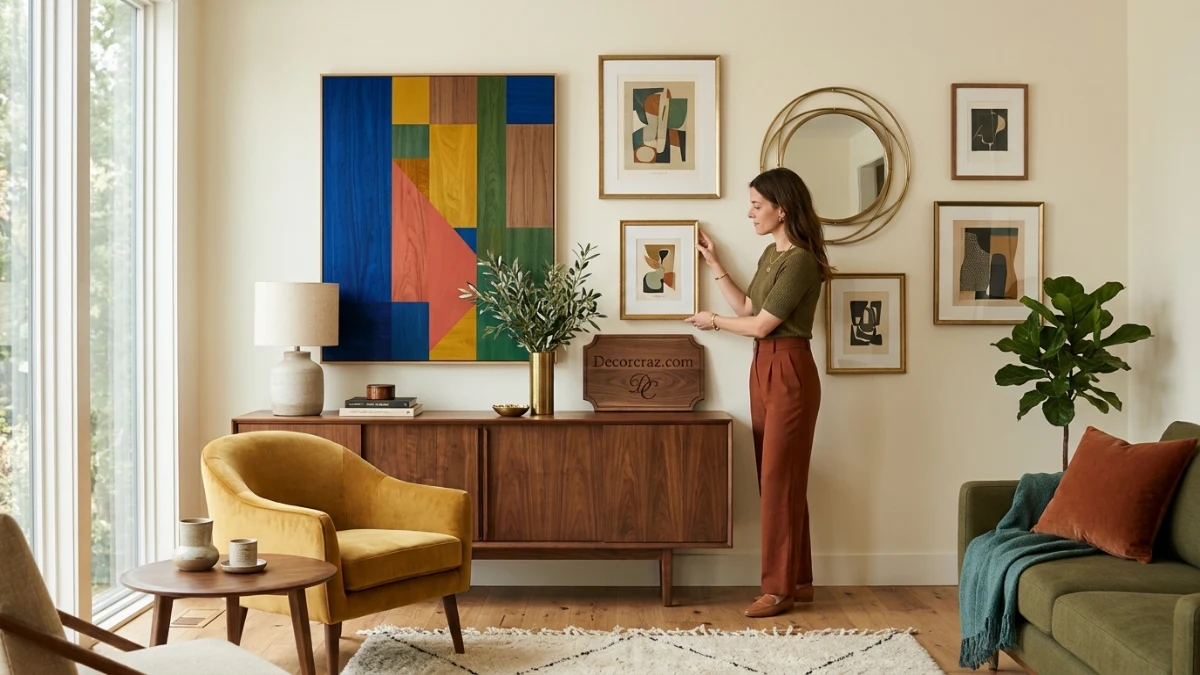
A gallery wall can combine abstract paintings, botanical prints, retro posters, and smaller illustrations into one coordinated display. The key is to organize the pieces before hanging them.
A structured grid works well above a long sofa or sideboard because its repeated lines complement the furniture. A looser arrangement can suit a more casual interior, especially when the artwork shares a common palette or subject.
To create a balanced gallery wall:
- Choose the artwork before selecting the final arrangement.
- Lay the frames on the floor to test different combinations.
- Establish a consistent outer shape for the complete display.
- Repeat a frame finish or a small group of colors.
- Check the arrangement against the furniture below it before hanging anything.
For example, two geometric prints and one botanical illustration can work together when they share olive, cream, and rust tones.
Avoid filling every available section of the wall. If the room already contains patterned upholstery, sculptural lighting, or prominent furniture, a single large artwork may provide a better balance than a gallery wall.
Atomic Motifs and Starburst Wall Decor
Atomic motifs are a recognizable feature of retro inspired interiors. Starburst shapes, radiating lines, and orbit like forms add a playful accent to rooms with simple furniture and restrained wall colors.
A starburst sculpture can work above a small console, while an atomic style wall clock can introduce character into a kitchen, office, or living room.
Choose the finish according to the surrounding materials. Black metal creates a strong graphic effect, muted brass adds warmth, and wood provides a more natural appearance.
The main consideration is visual balance. If your room already features geometric artwork, patterned cushions, and decorative lighting, a simple starburst may be enough. Several competing atomic motifs can make the wall feel crowded.
For a contemporary interpretation, choose a design with a clear silhouette rather than combining numerous exaggerated retro accessories. One distinctive piece can establish the theme without turning the room into a period display.
Mid Century Wall Decor for the Bedroom
Bedroom wall decor should complement the furniture while keeping the room visually restful. Artwork above the bed is often the main focal point, so its size and colors deserve particular attention.
A horizontal abstract painting can relate to the width of a headboard, while a pair of vertical prints may work better on a narrower wall.
Consider the bedding and bedside furniture before choosing artwork. If the bedding has a noticeable pattern, a simple abstract or botanical print can provide contrast. In a neutral bedroom, a piece featuring rust, olive, mustard, or muted blue can introduce color without requiring a complete room makeover.
Some useful combinations include:
- Cream artwork with walnut furniture and olive bedding.
- Muted terracotta prints with natural linen and warm wood.
- Black and cream geometric art with simple furniture and neutral textiles.
For smaller bedrooms, one carefully selected artwork may be more effective than several small decorations. Make sure any wall mounted pieces are securely installed and positioned appropriately above the bed.
If you prefer not to make holes in the wall, framed artwork can be displayed on a dresser or another stable piece of furniture.
Mid Century Wall Decor for Entryways and Hallways
Entryways and hallways often have limited space, making proportion and placement especially important. Vertical prints, mirrors, and small sculptural accents can introduce character without interfering with movement.
Above an entryway console, center a round mirror or framed artwork to create a clear focal point. A rectangular print reinforces the console’s horizontal line, while a circular mirror introduces contrast.
In a narrow hallway, a series of related prints can create visual continuity. Keep the frame finishes consistent and align the pieces along a shared axis to avoid a scattered appearance.
Mirrors can be particularly useful in dim entryways when they reflect available light. If the space receives little natural light, choose artwork with clear shapes and sufficient contrast so the design remains visible.
Leave enough room around door frames, switches, and storage areas. Wall decor should work with the way people move through the space rather than simply occupy every empty section.
DIY Mid Century Wall Decor on a Budget
You can create mid century inspired wall decor without buying expensive vintage artwork or investing in permanent wall treatments. Simple shapes, coordinated colors, and suitable materials are often enough to achieve the desired look.
DIY Geometric Artwork
Create an original composition using circles, arches, and rectangles on suitable paper or canvas. Select colors that already appear in your room, and sketch the arrangement before painting.
You can keep the design minimal with two colors or introduce a third accent for contrast. The important part is creating a balanced composition rather than adding shapes simply to fill the canvas.
Update Existing Picture Frames
Reuse plain frames by giving them a consistent finish. Natural wood, black, or restrained warm tones can help unrelated prints feel like part of one collection.
Before repainting or refinishing a frame, check that the material is suitable for the finish you plan to use.
Create a Coordinated Print Display
Combine your own drawings, personal photographs, and appropriately licensed or public domain artwork. A shared frame finish can connect different subjects without requiring identical images.
This is a practical option for renters because the display can be rearranged or moved when needed.
Make Simple Wooden Wall Accents
If you have suitable materials, tools, and the necessary skills, small wooden offcuts can be arranged into a geometric wall accent. Sand the pieces properly and ensure the finished object can be mounted securely.
For a rental friendly alternative, use lightweight framed artwork or removable hanging products that are appropriate for the wall surface and the item’s weight. Always follow the product instructions and check the finish before applying adhesive.
DIY decor does not need to reproduce a historical design exactly. Focus on shapes, materials, and proportions that complement your existing interior.
How to Choose the Right Size and Placement
The relationship between artwork and furniture often matters more than the subject of the artwork itself. A beautiful print can look disconnected when it is too small for a large sofa or hung too far above a console.
Above a Sofa or Sideboard
As a starting guideline, artwork around two thirds the width of the furniture can create a balanced appearance. A wider arrangement may also work, depending on the room and the surrounding architecture.
Keep the artwork visually connected to the furniture rather than allowing it to appear isolated on the wall.
On a Narrow Wall
Choose a vertical print, a small mirror, or a compact arrangement that uses the available height. Avoid pieces that interfere with door frames, switches, or nearby furniture.
In a Compact Room
One clear focal point is often sufficient. A single abstract painting or a coordinated pair can introduce mid century character without making the room feel visually crowded.
At the Right Hanging Height
Use eye level as a starting point, then adjust the placement according to the furniture and the viewing position. Artwork above a sofa or console should feel connected to the piece below it.
Before making holes, measure the wall and test the proposed arrangement using paper templates. This makes it easier to assess spacing and proportion before committing to a position.
Colors and Materials That Tie the Wall Together
Mid century wall decor becomes easier to coordinate when you select colors and materials that already relate to the room.
| Wall decor element | Suitable pairings | Visual effect |
| Walnut or teak inspired frames | Cream walls, leather, warm neutrals | Adds warmth and material continuity |
| Mustard and terracotta artwork | Olive, beige, dark wood | Creates warm color contrast |
| Teal or muted blue prints | Walnut, cream, charcoal | Introduces a cooler counterpoint |
| Black geometric art | Pale walls, simple furniture | Creates definition and contrast |
| Botanical prints | Natural wood, green textiles, plants | Introduces organic shapes |
| Round or oval mirrors | Rectangular consoles and cabinets | Contrasts straight lines with curves |
These combinations are suggestions rather than strict rules. A cool toned interior can accommodate warm artwork, and a neutral room does not need a bright retro accent in every corner.
Start with one existing element, such as a sofa cushion, rug, or wooden cabinet. Repeating a color or material in the wall decor can help the new piece feel connected to the rest of the interior.
Common Mistakes to Avoid
- Choosing artwork that is too small: A tiny print above a long sofa may look disconnected. Consider a larger piece or a coordinated group with a more suitable overall width.
- Using too many competing patterns: Multiple atomic designs, busy geometric prints, and patterned accessories can make the wall difficult to read. Give one piece the leading role.
- Matching every color exactly: Repeating one or two shades is often enough to create cohesion without making the room look overly coordinated.
- Ignoring frame proportions: Ornate or oversized frames can distract from simple artwork. Choose a frame that supports the image rather than overpowering it.
- Making everything look vintage: Contemporary artwork can complement mid century furniture when its colors, shapes, and materials suit the room.
- Forgetting the wall itself: Consider wall color, available light, furniture placement, and the room’s proportions before selecting decorations.
The aim is not to cover every empty area. It is to select pieces that have a clear purpose and contribute to the overall composition.
Frequently Asked Questions
1. What is mid century wall decor?
Mid century wall decor features clean lines, geometric shapes, natural materials, vintage-inspired artwork, and simple decorative accents. Popular choices include abstract paintings, botanical prints, wooden wall accents, and sculptural mirrors.
2. What kind of wall art works best with mid century modern decor?
Geometric abstract art, retro posters, simplified botanical prints, and stylized landscapes work well with mid century modern decor. Choose artwork that complements your existing furniture, wall color, and room accessories.
3. What colors are best for mid century wall decor?
Mustard yellow, rust, olive green, teal, cream, charcoal, and warm wood tones are suitable choices. You can combine one or two accent colors with neutral shades to create a balanced look.
4. How do you decorate a wall in mid century modern style?
Start with one focal point, such as a large abstract painting, a round mirror, or a wooden wall accent. Coordinate its colors and materials with nearby furniture, and leave enough empty space to prevent the wall from looking crowded.
5. How do you create a mid century modern gallery wall?
Choose a combination of abstract artwork, botanical prints, and retro posters. Arrange the frames on the floor before hanging them, and create visual unity by repeating frame finishes, colors, or related subjects.
6. What type of mirror suits mid century wall decor?
Round mirrors with wooden frames, oval mirrors with simple metal borders, and asymmetrical mirrors suit this style. Their curved shapes create an attractive contrast with rectangular furniture, such as consoles and sideboards.
7. How can you decorate walls in mid century style on a budget?
Create DIY geometric artwork, update existing picture frames, display personal photographs, or combine affordable retro-inspired prints. Reusing materials and coordinating colors can help you achieve the look without purchasing expensive vintage pieces.
8. How do you choose the right size wall art for mid century decor?
As a starting guideline, choose artwork around two-thirds the width of the furniture beneath it, such as a sofa or sideboard. For narrow walls, consider vertical prints or compact arrangements, and use paper templates to test placement before hanging.
9. What wall decor works best in a small room?
A single abstract painting, a small sculptural mirror, or two coordinated prints can work well in a compact room. Choose pieces that suit the available wall space and avoid combining too many competing patterns or decorative accents.
10. Can you use mid century wall decor in a rental home?
Yes. Framed prints, lightweight decorative accents, and suitable removable hanging products can introduce mid century style without permanent changes. Always check the wall surface, item weight, and product instructions before installing anything.
11. How do you decorate a bedroom with mid century wall art?
Place a horizontal abstract painting above the bed or use a pair of vertical prints on a narrower wall. Coordinate the artwork with the bedding, headboard, and bedside furniture, and make sure wall-mounted pieces are securely installed.
12. What materials work well for mid century modern wall decor?
Natural wood, walnut-inspired finishes, black metal, and restrained brass accents work well with this style. These materials complement geometric artwork, botanical prints, and sculptural mirrors while adding warmth and texture.
Conclusion
Mid century wall decor is an easy way to bring character, warmth, and visual balance into your home. From geometric abstract artwork and vintage inspired posters to botanical prints, sculptural mirrors, and wooden wall accents, there are many ways to incorporate this style into different rooms.
The key is to choose decorations that complement your existing furniture, color palette, and available wall space. You do not need to fill every wall or purchase expensive vintage pieces to achieve the desired look.
A carefully selected painting, a coordinated gallery wall, or a simple DIY project can make a meaningful difference.
If you are decorating a living room, bedroom, entryway, or hallway, focus on proportion, natural materials, and thoughtful placement. With the right combination of shapes, colors, and textures, you can create a mid century inspired interior that reflects your personal taste.

I am Claudia Winkle, a passionate Name Researcher and Content Writer at decorcraz.com. I enjoy exploring the meanings, origins, history, and cultural significance behind names from around the world. Through carefully researched and engaging articles, I help readers discover unique names, understand their stories, and find meaningful naming inspiration for every occasion. My goal is to make name research simple, interesting, and useful for readers looking for the perfect name.