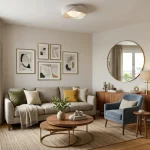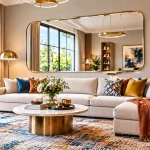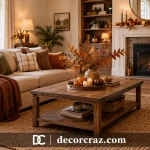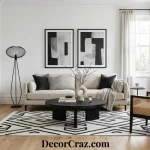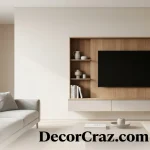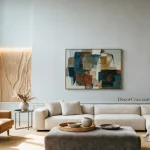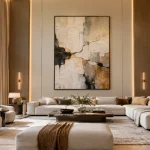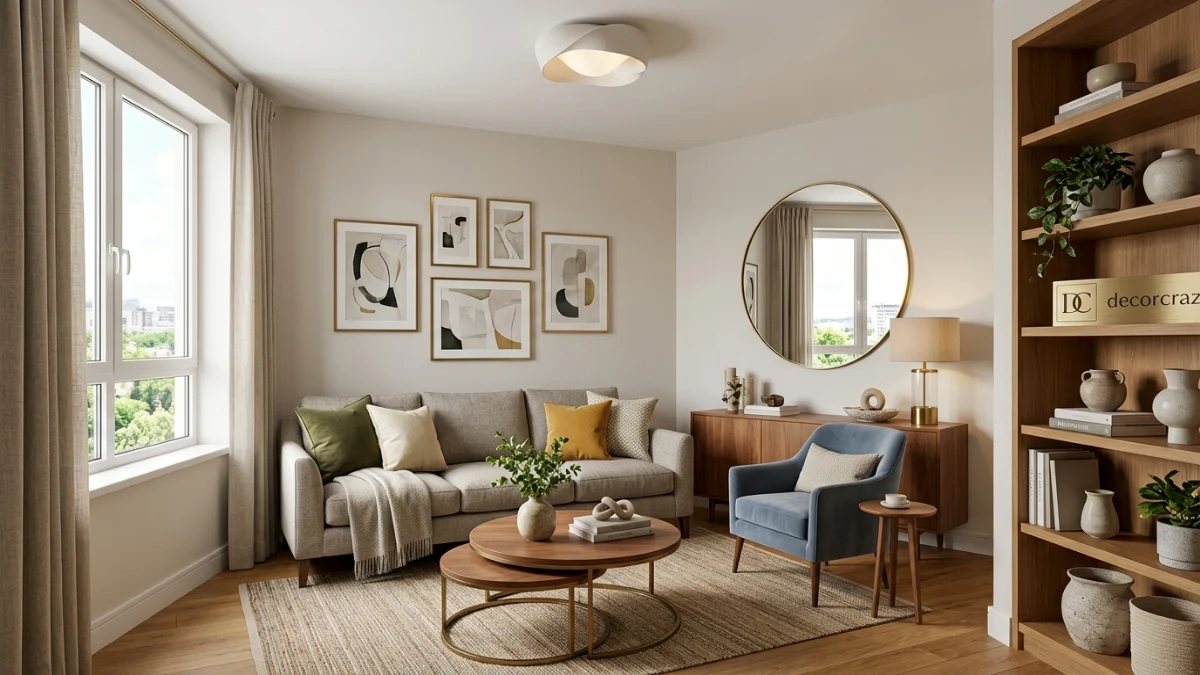
A small living room does not need more furniture to feel finished. It usually needs better decisions about scale, circulation, storage, light, and visual weight. Start by measuring the room and deciding what must happen there conversation, TV watching, reading, entertaining, or a mix.
Then choose furniture that fits those activities without blocking movement. The most effective small living room decor ideas are not simply about making everything smaller.
A compact sofa can help, but so can one larger piece of art instead of several small frames, a storage ottoman instead of a separate table, or curtains that keep the window visually open.
Current small space guidance consistently puts layout, furniture proportion, multifunctional pieces, storage, and light near the center of the solution.
Start With the Furniture Layout Before Adding Decor
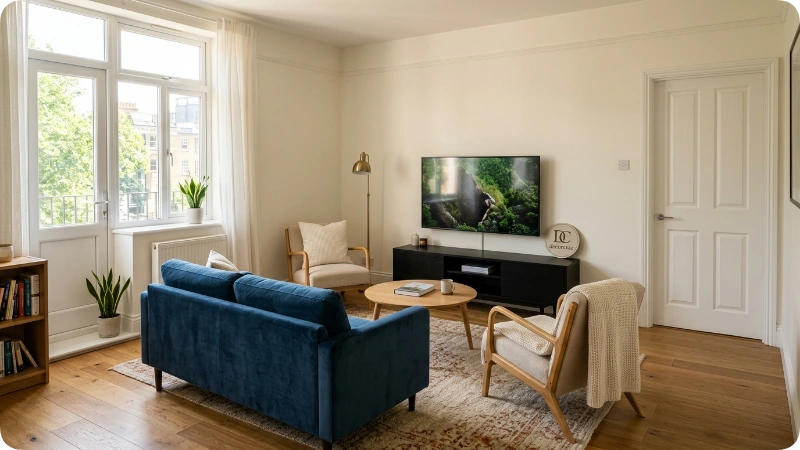
The layout determines how much usable space remains, so it should come before pillows, artwork, plants, and accessories. Measure the room, doors, windows, radiators, outlets, and existing furniture before deciding what stays.
Begin with the largest piece, usually the sofa. Position it around the room’s main function rather than automatically placing every item against a wall. A sofa can sit along the longest usable wall, face the TV, or help divide an open plan room when the layout allows it. Keep the main walking route clear, especially around doors and between the seating area and other rooms.
Match the layout to the room’s job
If the room is mainly for TV viewing, orient the seating around the screen. If conversation matters more, bring seats into a tighter group around a coffee table. In a living dining combination, use the sofa, rug, or lighting to visually separate the sitting zone from the dining zone.
The goal is not to create the emptiest possible floor. It is to make movement and furniture relationships feel intentional. Design guidance for compact rooms repeatedly emphasizes measuring circulation and furniture before committing to a layout.
Choose Furniture With the Right Visual Weight
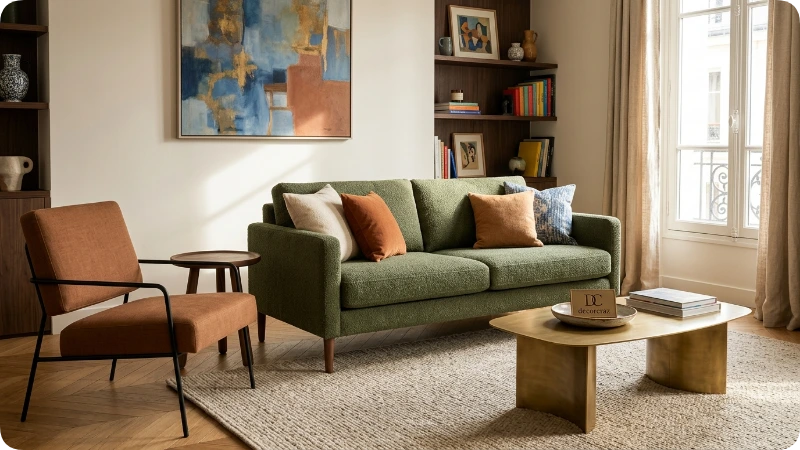
One of the easiest ways to make a small living room feel crowded is to choose furniture based only on its dimensions. Two sofas can have similar widths but create very different visual effects depending on their depth, arms, legs, upholstery, and surrounding space.
Look for pieces with proportions that leave some floor and wall area visible. Sofas with slimmer arms, raised legs, and moderate depth can allow more visual breathing room than heavily upholstered pieces that sit close to the floor.
However, do not assume that several tiny pieces are always better. A properly scaled sofa can be more efficient than a full size sofa plus multiple small chairs. Architectural Digest similarly highlights thoughtful scale and standard sized seating rather than automatically filling a compact room with numerous undersized pieces.
When a sectional makes sense
A compact sectional can work when it replaces separate seating and fits the room’s dimensions. It becomes a problem when its chaise blocks a walkway, door, or useful corner.
If a sectional is too large, consider a compact sofa paired with one lightweight chair. For renters or people who expect to move soon, freestanding pieces are also easier to rearrange than built in seating.
Use One Strong Focal Point Instead of Many Small Accents
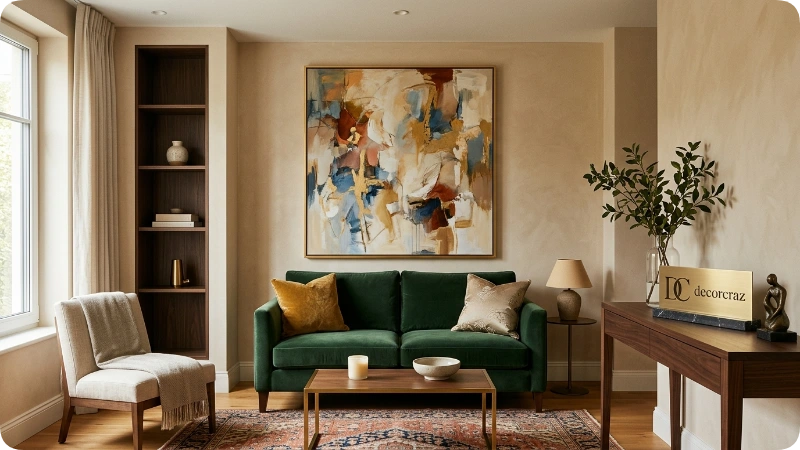
Small rooms can become visually noisy when every wall, shelf, and tabletop carries a separate decorative object. Instead, choose one area for the eye to land.
That focal point could be a large piece of art above the sofa, an attractive TV wall, a fireplace, a distinctive lamp, or a window with a good view. The point is not to make the focal object enormous; it is to give the room a clear visual hierarchy.
For wall decor, one or two appropriately scaled pieces can work better than a dense collection of small frames. Homes & Gardens specifically recommends considering scale and avoiding wall arrangements that make a compact room feel visually busy.
Keep the surrounding area quieter
If the artwork is bold, simplify the nearby shelves. If the fireplace is the focal point, let the mantel and surrounding walls breathe. This creates contrast between the feature and the empty space around it.
A focal point also makes decorating easier because you can choose colors, textures, and accessories that support one central idea instead of competing for attention.
Take Decor Up the Walls
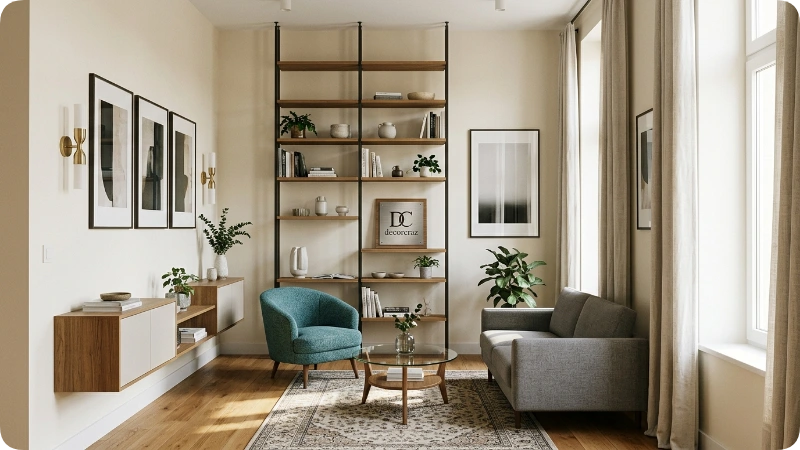
When floor space is limited, the walls become valuable decorating and storage surfaces. Vertical shelving, tall bookcases, wall mounted cabinets, sconces, artwork, and floor length curtains can direct attention upward without adding another object to the middle of the room.
This is particularly useful in apartments where floor area is fixed. A wall mounted shelf can display books and small objects while leaving the floor underneath open. A narrow vertical cabinet can provide storage without requiring the footprint of a wide sideboard.
Use height without filling every wall
Vertical decor should not mean covering every available surface. Choose one or two walls where height will solve a real problem.
For example, if the room lacks storage, use a tall cabinet. If it lacks visual interest, use a vertical art arrangement. If the ceiling feels low, floor length curtains can emphasize the full height of the window wall.
The result should be more usable space, not simply more things placed higher up.
Add a Mirror Where It Can Reflect Light or Depth
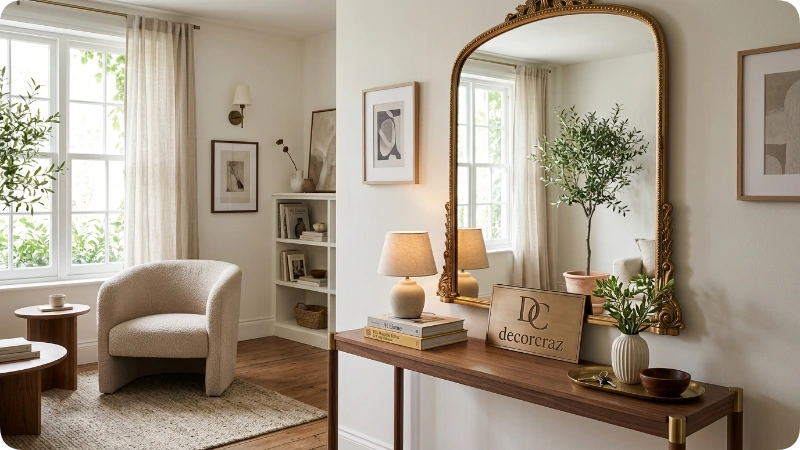
A mirror can be useful in a small living room because it reflects whatever is already in the space. Placed thoughtfully, it can reflect daylight, a window view, or another attractive part of the room and make the composition feel deeper.
A large mirror above a console or opposite a window is one possible approach, but the best position depends on what the mirror will actually reflect. A mirror facing a blank wall may provide less visual benefit than one positioned toward natural light or an appealing view.
Do not use mirrors just because the room is small
A mirror is not automatically helpful. If it reflects clutter, a television, an awkward corner, or an unattractive view, it can repeat the visual problem.
Choose the mirror according to its reflection, scale, and location. A single substantial mirror may be more effective than several small reflective pieces competing across the walls.
Make Storage Part of the Decor
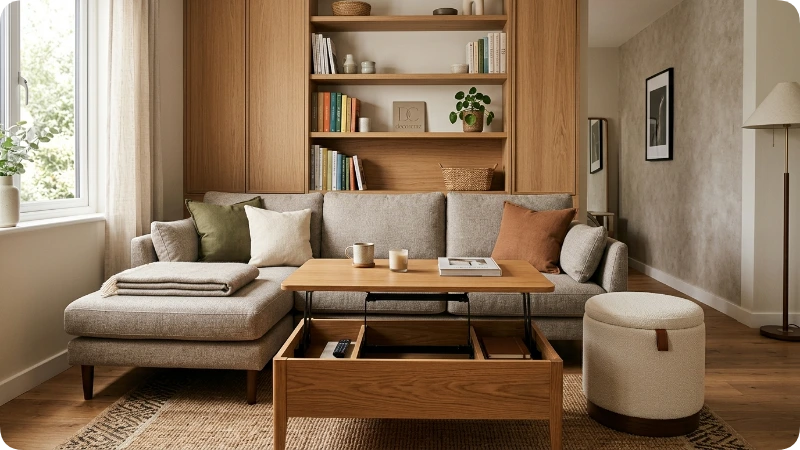
Storage is especially important when the living room also handles toys, books, electronics, blankets, paperwork, or everyday household items. Without a storage plan, decorative styling can quickly disappear beneath clutter.
Choose furniture that performs more than one job when possible. A storage ottoman can provide seating, a footrest, and concealed storage. A lift top coffee table can provide a work or eating surface while storing small items. A wall mounted cabinet can hold electronics without requiring a deep floor standing unit.
Current small space guides frequently recommend multifunctional and vertical storage because these solutions add capacity without demanding as much floor area.
Give everyday items a specific home
Storage only helps when it matches the way the room is used. Keep frequently handled items where they can be reached quickly. Less used items can go into closed cabinets or higher storage.
For open shelves, leave some empty space. A shelf packed edge to edge can make the room look busier even when everything is technically organized.
Use Light and Color to Keep the Room Visually Open
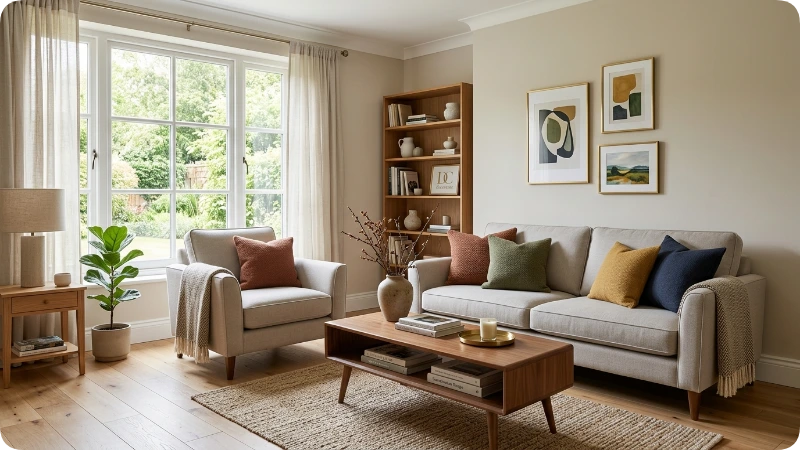
Color does not physically enlarge a room, but it can change how boundaries, light, and visual weight are perceived. Lighter walls and furnishings can help a room feel more open, especially when natural light is limited. Designers also use stronger colors successfully in small rooms when they are controlled and intentionally placed.
You do not need an all white room. A soft neutral wall can be paired with deeper cushions, artwork, wood tones, or a colorful chair.
Try a connected palette
Using related colors across walls, curtains, upholstery, and larger accessories can reduce visual fragmentation. Instead of choosing many unrelated accent colors, select a main background color and repeat one or two supporting tones.
For a rental, use removable textiles and artwork to create this connection without repainting. For an owned home, paint can provide a stronger foundation if the existing color is fighting the room’s natural light.
Layer Lighting Instead of Relying on One Ceiling Fixture
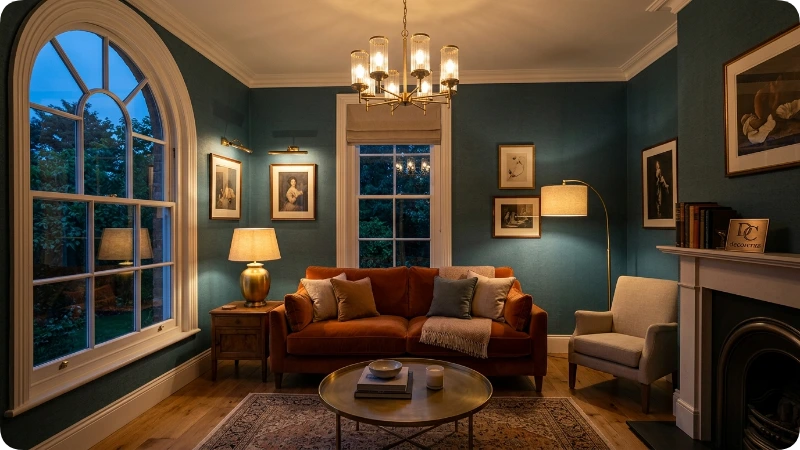
A single overhead light can leave corners dark and make the room feel visually flat. Layered lighting gives you more control over how the room looks and functions at different times.
Use the existing ceiling fixture for general illumination, then add a table lamp, floor lamp, wall light, or another suitable source where a specific task needs it. A reading chair needs useful light near the seat; a dark corner may benefit from a lamp that brings that area into the composition.
Homes & Gardens’ small room guidance also emphasizes controlled lighting at different levels rather than simply flooding a compact space with ceiling light.
Let lighting support the focal point
A lamp can highlight artwork, a reading corner, or a useful surface. This gives decorative objects a functional reason to be present instead of adding accessories simply to fill space.
Keep the Floor Visually Clear
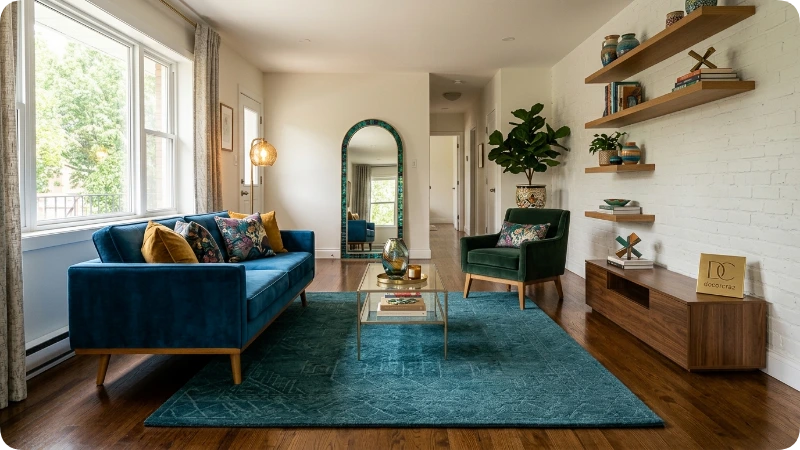
The more of the floor you can see, the easier it is for the room to read as open. That does not mean eliminating rugs or furniture. It means avoiding unnecessary objects that interrupt the main visual path.
Furniture with visible legs can expose some flooring beneath seating. Wall mounted storage can do the same. A coffee table with a lighter visual profile may work better than a very solid block in the center of a compact seating group.
Use the rug to define rather than crowd the seating area
A rug can visually connect the sofa and chairs into one zone, especially in an open plan apartment. The important consideration is proportion: a rug that is too small can make the seating arrangement look disconnected, while one that overwhelms the available floor can make circulation harder.
Measure the seating group and walking routes before buying the rug rather than choosing its size from the room name alone.
Decorate With Fewer, Better Scaled Accessories
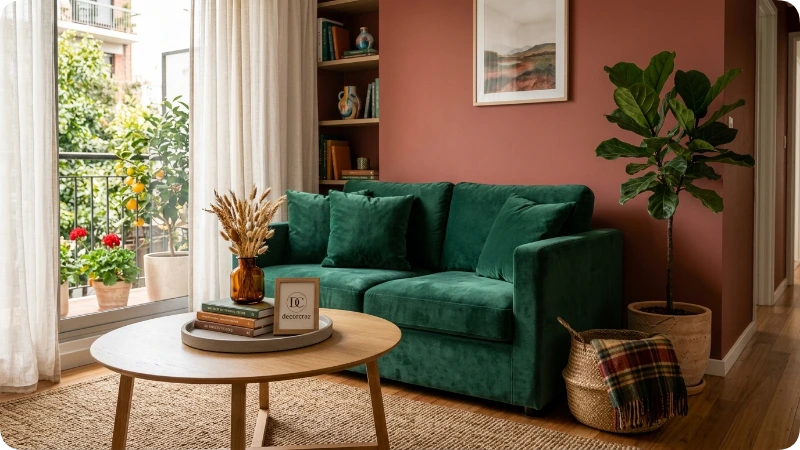
Small living rooms benefit from editing. Instead of placing a plant, vase, stack of books, basket, candle, and decorative object on every surface, decide what each object contributes.
A plant can add height or soften a hard corner. Books can occupy otherwise unused shelf space. A basket can hold blankets while contributing texture. Artwork can establish the room’s focal point. A decorative tray can group frequently used items on a coffee table.
The key is function or visual purpose. If removing an accessory makes the room easier to use and does not remove anything meaningful, it probably does not need to stay.
Small Living Room Decor Ideas for Different Situations
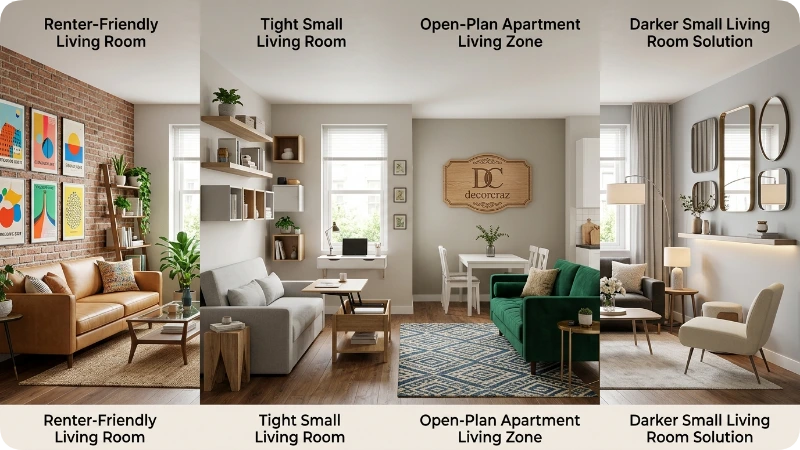
For renters
Prioritize freestanding furniture, removable artwork, plug in lighting where appropriate, and storage that can move with you. Avoid expensive built ins unless your rental agreement and expected stay make them worthwhile.
For very tight rooms
Reduce the number of furniture functions rather than simply buying miniature versions of everything. A storage ottoman may replace a footstool and storage basket. A compact sectional may replace a sofa and chair if its shape fits the room.
For open plan apartments
Use a rug, sofa orientation, lighting, or a narrow console to establish the living zone. The goal is to define the area without building a visual wall between the living room and the adjacent space. Houzz’s small room guidance also notes that rugs can help distinguish areas in apartment layouts.
For dark small living rooms
Prioritize unobstructed windows, reflective surfaces used strategically, lighter large furnishings, and multiple light sources. Avoid assuming that every wall must be white; the better question is whether the chosen colors work with the room’s actual light.
Common Small Living Room Decorating Mistakes
Buying furniture before measuring. A piece that looks compact online may be too deep for the room.
Pushing everything against the walls. Sometimes this helps circulation, but not always. The best position depends on doors, windows, furniture dimensions, and the room’s function. Some design guidance specifically recommends testing a small gap or floating arrangement when the layout allows it.
Using too many tiny decorative objects. Small objects can create more visual noise than one well scaled focal piece.
Blocking windows. Heavy or poorly positioned furniture and window treatments can reduce natural light.
Choosing storage that creates another obstacle. Storage is only useful if doors, drawers, and walking paths remain practical.
Assuming small means everything must be miniature. A well proportioned larger mirror, artwork, or rug can sometimes create a stronger composition than a collection of undersized pieces.
A Simple Order for Decorating Your Small Living Room
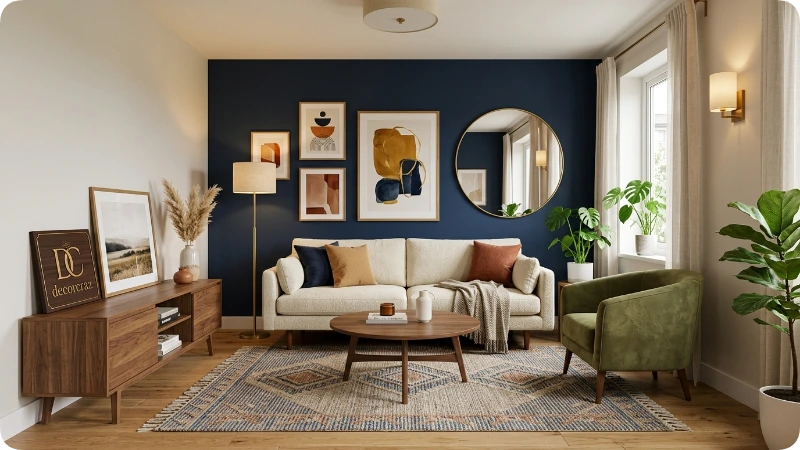
If you are starting from an empty room, work in this order:
- Measure the room and identify fixed features.
- Choose the main furniture arrangement.
- Confirm walking routes and door clearance.
- Select the largest furniture pieces by proportion.
- Add storage where clutter actually accumulates.
- Choose the rug and main lighting.
- Create one focal point.
- Add mirrors or vertical elements where they solve a visual problem.
- Finish with only the accessories that support the room.
This sequence prevents you from decorating around furniture that does not fit. It also makes the final styling easier because every later decision has to work with the layout rather than compete with it.
Frequently Asked Questions
How do you make a small living room look bigger?
Use appropriately scaled furniture, keep walking paths open, make good use of natural light, and limit visual clutter. Mirrors, lighter colors, raised furniture, and vertical elements can also change the room’s visual perception when positioned thoughtfully.
What furniture works best in a small living room?
Furniture that fits the room’s actual dimensions and serves the room’s main activities works best. Compact sofas, appropriately sized sectionals, storage ottomans, nesting tables, and wall mounted storage can be useful when they solve a specific space problem.
Should all furniture go against the walls?
No. Wall placement can be practical in some layouts, but it is not a universal rule. If the room allows it, moving seating slightly forward can create visual depth and better define the conversation area. The final choice should preserve circulation and access to doors, windows, and other functional areas.
Can a sectional work in a small living room?
Yes, if its dimensions and orientation fit the room. A compact sectional can combine seating efficiently, but a deep or oversized sectional can block circulation and make the room harder to use.
Conclusion
Decorating a small living room is less about adding more and more pieces and more about making every choice work for the space. Start with a practical furniture layout, keep walking paths open, and choose pieces that provide the right balance of comfort and visual space.
Use vertical walls for storage and artwork, add a mirror where it can reflect light or depth, and layer lighting to make the room feel more functional. A coordinated color palette and a few well scaled accessories can also keep the space from feeling crowded. Most importantly, avoid decorating simply to fill empty areas.
Choose furniture and decor based on how you actually use the room, its natural light, and its available floor space. With thoughtful planning, even a compact living room can feel organized, stylish, comfortable, and easy to live in.

I am Claudia Winkle, a passionate Name Researcher and Content Writer at decorcraz.com. I enjoy exploring the meanings, origins, history, and cultural significance behind names from around the world. Through carefully researched and engaging articles, I help readers discover unique names, understand their stories, and find meaningful naming inspiration for every occasion. My goal is to make name research simple, interesting, and useful for readers looking for the perfect name.