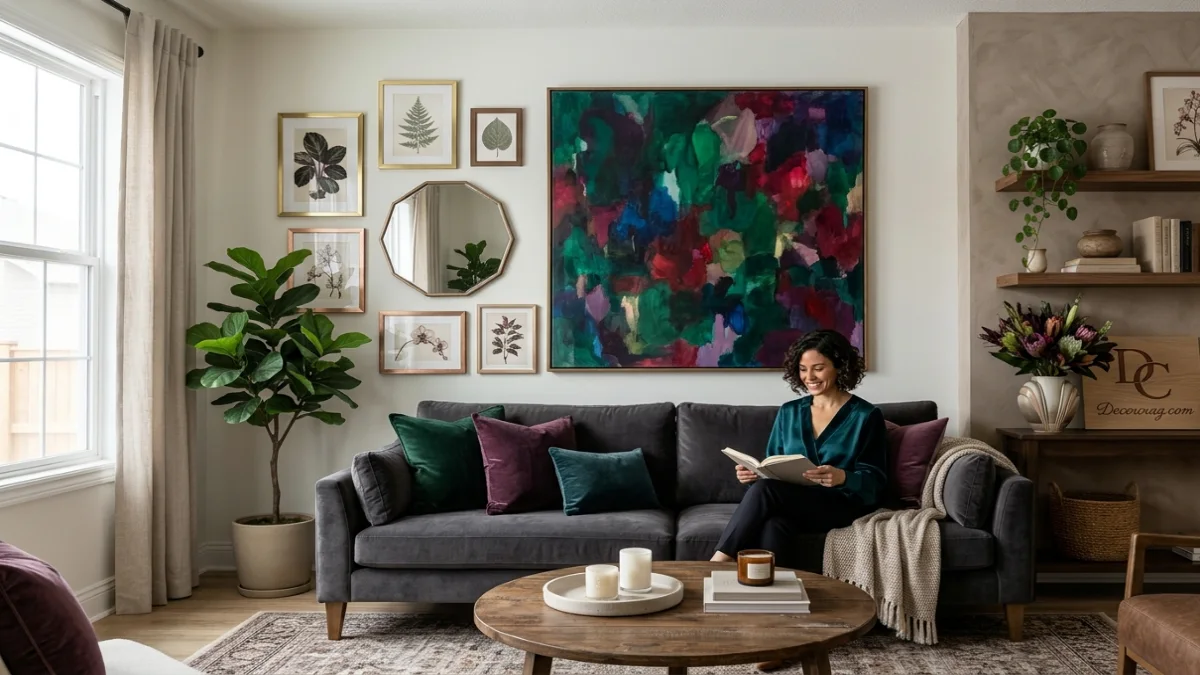
Quick Answer :
The best living room wall decor ideas include oversized artwork, gallery walls, decorative mirrors, floating shelves, woven wall hangings, botanical prints, accent walls, and decorative sconces. Choose pieces that complement your furniture, wall size, budget, and decorating style to create a beautiful and balanced living space.
Empty living room walls can make a space feel unfinished, but the right decorations can add color, personality, and visual interest without creating clutter. If you have a large blank wall behind your sofa, a small apartment living room, or a simple space that needs more character, there are plenty of ways to make your walls look more inviting.
From oversized artwork and stylish gallery walls to decorative mirrors, floating shelves, and accent paint, these living room wall decor ideas offer inspiration for different styles, spaces, and budgets.
Explore 13 practical ways to decorate your walls and discover how to create a balanced look that complements your furniture and makes your living room feel more complete.
Hang Oversized Artwork Above the Sofa
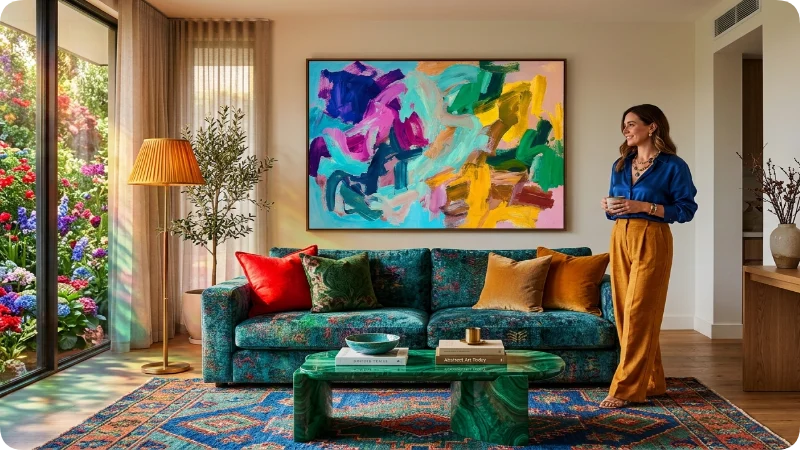
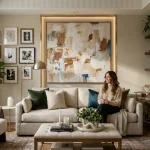
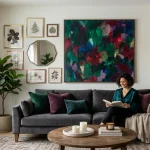
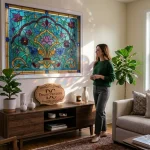
Oversized artwork is one of the simplest ways to decorate a large living room wall. A single painting or framed print creates a focal point without requiring multiple decorative pieces.
Choose abstract art, landscape photography, colorful paintings, or minimalist prints that complement your sofa and other furnishings. For a coordinated appearance, select artwork with colors already present in your rug, cushions, or curtains.
Keep the size of the artwork proportional to the furniture. A useful starting point is to choose a piece approximately two thirds the width of the sofa.
Best for: Modern, minimalist, contemporary, and neutral living rooms.
Create a Gallery Wall With Framed Pictures
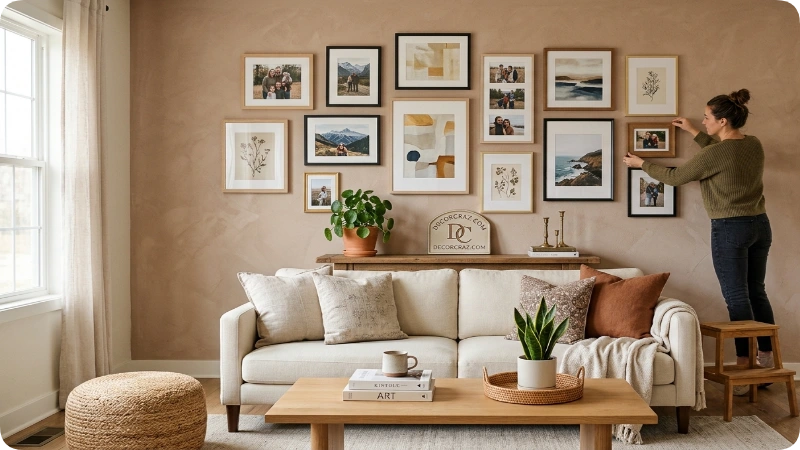
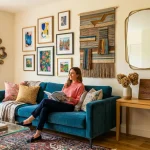
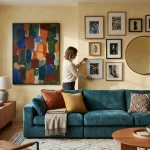
A gallery wall allows you to display family photographs, artwork, travel memories, and illustrations in one arrangement. It works well when you want your living room to reflect your personality.
Combine different frame sizes while maintaining a visual connection through similar colors, materials, or subjects. Arrange the frames on the floor before hanging them so you can adjust the layout.
A picture ledge is another option if you prefer to change your artwork regularly without creating additional holes in the wall.
Best for: Family homes, eclectic interiors, and personalized living spaces.
Use a Decorative Mirror to Reflect Light
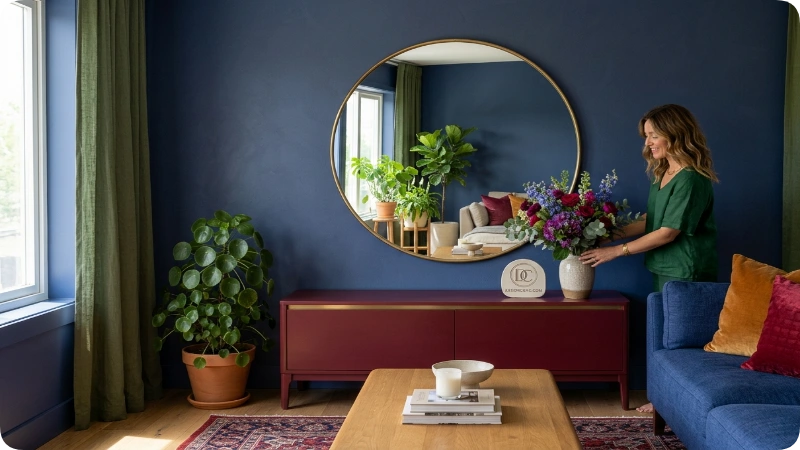
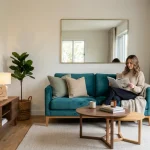
A decorative mirror can make a living room feel brighter when positioned to reflect a window or another attractive view. It also adds visual depth without introducing another artwork or busy pattern.
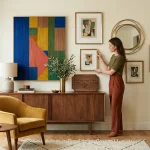
Choose a round mirror to soften a room with many straight lines, an arched mirror for a graceful shape, or a rectangular mirror above a console table.
Pay attention to the reflection before installing it. A mirror facing a cluttered corner may draw attention to an area you would rather keep discreet.
Best for: Small living rooms, darker spaces, and rooms that need a reflective decorative element.
Add Floating Shelves for Wall Decoration
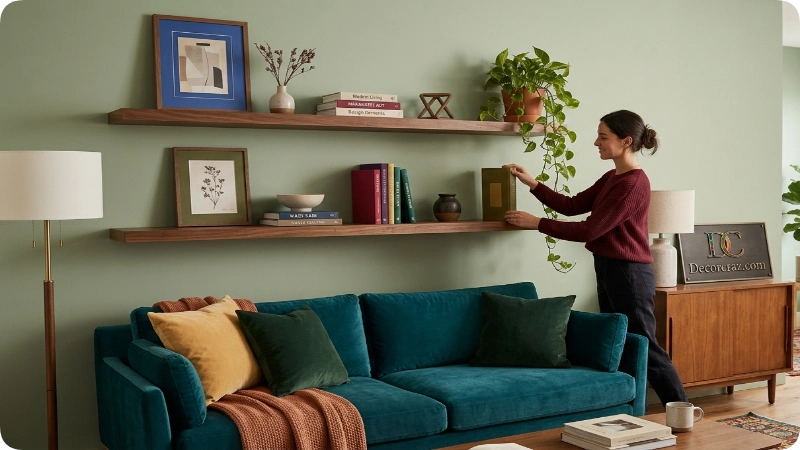
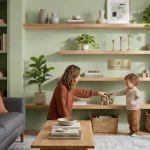
Floating shelves combine display space with decorative appeal. You can use them to arrange framed prints, small ceramics, books, and other meaningful objects.
A single long shelf creates a simple horizontal line, while two shelves provide more room for layered styling. Keep some space empty so the display does not become overcrowded.
Choose shelf materials that complement your furniture, such as natural wood for a warm interior or a simple painted finish for a contemporary room.
Best for: Apartments, casual living rooms, and people who enjoy changing their decor.
Decorate With Woven Wall Hangings
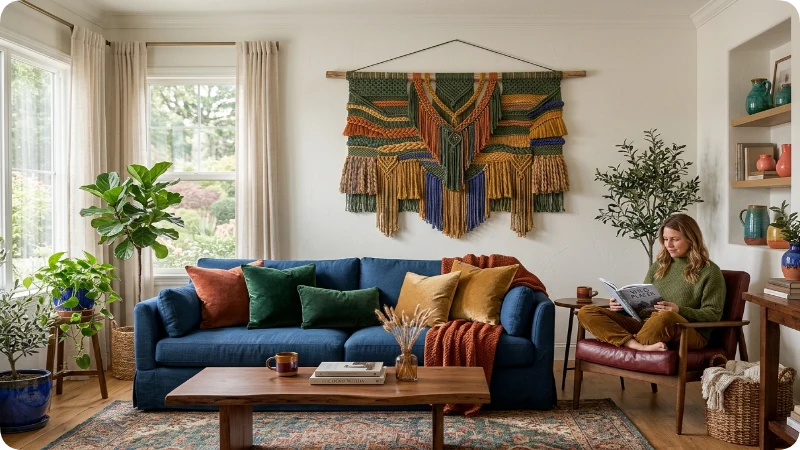
Woven wall hangings introduce texture that framed artwork cannot provide in the same way. Macramé, woven tapestries, and textile art work particularly well in rooms with smooth walls, leather furniture, glass, or metal accents.
Choose neutral fibers for a subtle look or a patterned textile to add color and character. A larger hanging can balance a wide sofa, while a narrow piece can fill a smaller section of wall.
Keep fabric decor away from fireplaces and other heat sources, and follow the item’s care instructions.
Best for: Bohemian, rustic, Scandinavian inspired, and relaxed interiors.
Display Framed Botanical Prints
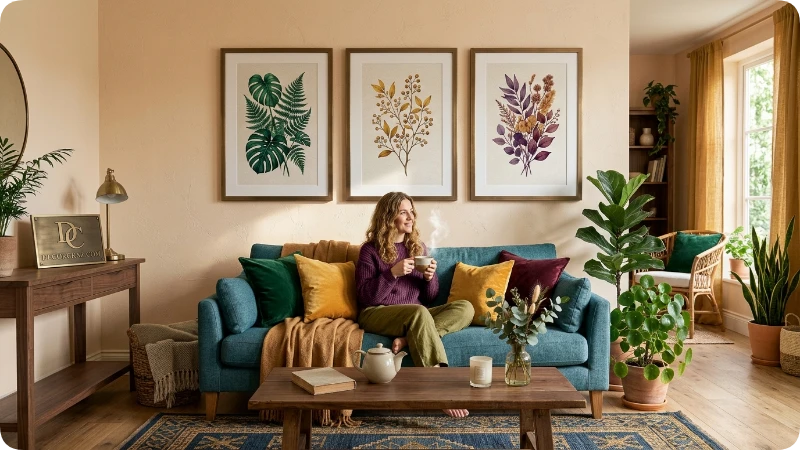
Botanical prints bring natural shapes into your living room through illustrations of leaves, flowers, and plants. They are a useful choice if you prefer nature inspired decor without relying on live plants.
Hang two or three related prints above a sofa or console table. Matching frames create a formal arrangement, while coordinating but different frames give the display a more collected appearance.
Green, beige, cream, and muted brown artwork works well with natural wood and neutral furnishings.
Best for: Farmhouse, cottage, traditional, and nature inspired living rooms.
Create an Accent Wall With Paint
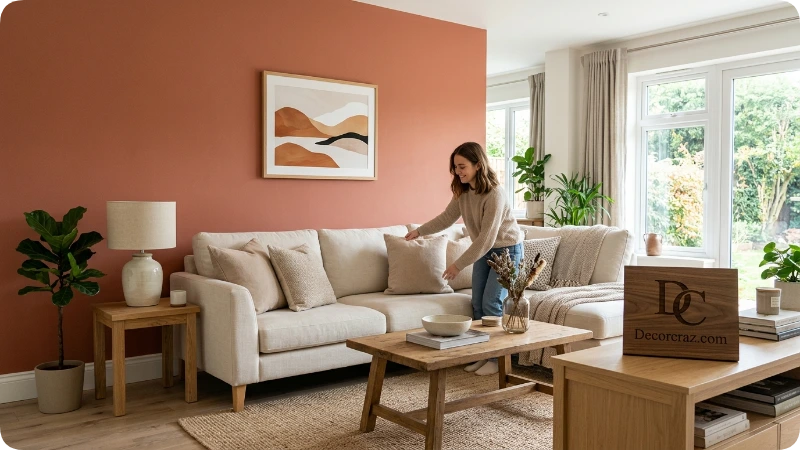
Painting one wall a different color can make a living room feel more defined without adding many decorative objects.
Consider muted green, warm terracotta, deep blue, or charcoal, depending on your furniture and lighting. Lighter shades maintain a softer appearance, while darker colors provide contrast for artwork and lighter furnishings.
Test paint samples on the wall and observe them in daylight and evening lighting before choosing a final shade.
If you rent your home, check your lease before painting. Removable decals can provide a temporary alternative when suitable for the wall surface.
Best for: Homeowners and renters permitted to make decorative changes.
Add Picture Frame Wall Molding
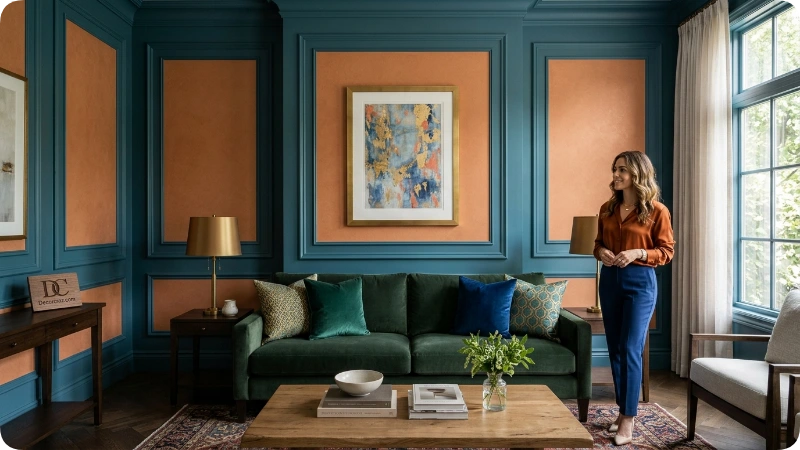
Picture frame molding creates rectangular outlines on a wall, giving the room architectural detail. It can make a plain wall look more structured even when painted the same color as the rest of the room.
Use the molding to frame artwork or leave some panels empty for a restrained appearance. Plan the spacing around the wall’s dimensions and the furniture below it.
This approach suits traditional and modern classic interiors, although installation requires more measuring and finishing work than hanging pictures.
Best for: Homeowners looking for a more permanent wall treatment.
Choose Sculptural Wall Decor
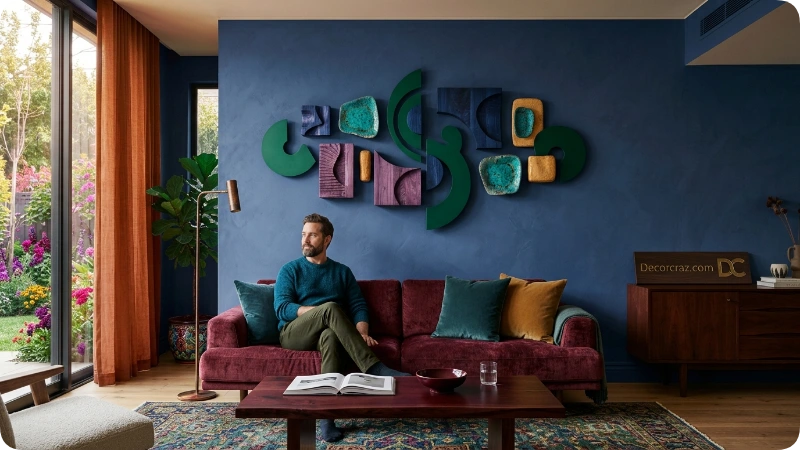
Sculptural wall decor adds dimension through materials such as metal, carved wood, ceramic, and other decorative forms.
A black metal sculpture can stand out against a pale wall, while natural wood introduces warmth. Ceramic wall pieces offer texture without necessarily adding a strong color.
Choose one prominent piece for a simple room or a coordinated group for a larger wall. Avoid placing highly detailed sculptures alongside busy wallpaper if both compete for attention.
Best for: Contemporary, modern, eclectic, and art focused living rooms.
Install Decorative Wall Sconces
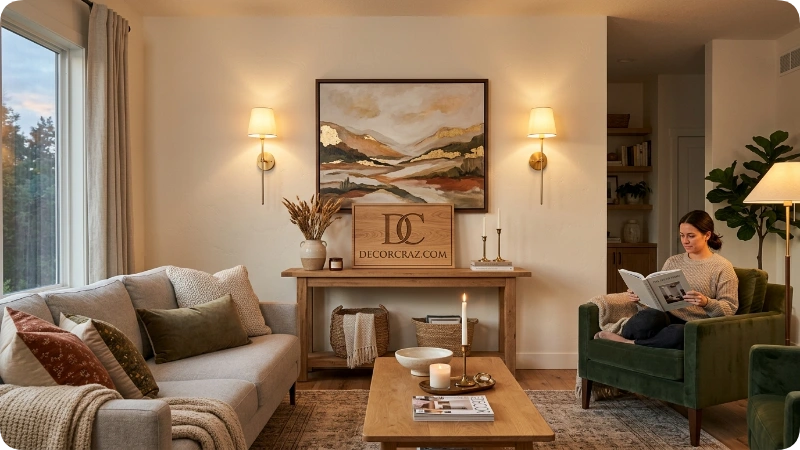
Wall sconces combine lighting with decoration. They can frame artwork, highlight a console table, or provide useful light beside a reading chair.
Matching sconces create a symmetrical arrangement, while a single adjustable fixture may be more practical in a small seating area.
Choose lighting according to its purpose. A shaded fixture can provide soft ambient light, while a directional sconce can illuminate a reading spot.
Hardwired fixtures require appropriate electrical installation. Plug in versions offer an alternative when permanent wiring changes are not practical.
Best for: Reading corners, living rooms with limited table space, and walls that need additional lighting.
Choose Wall Decor for a Small Living Room
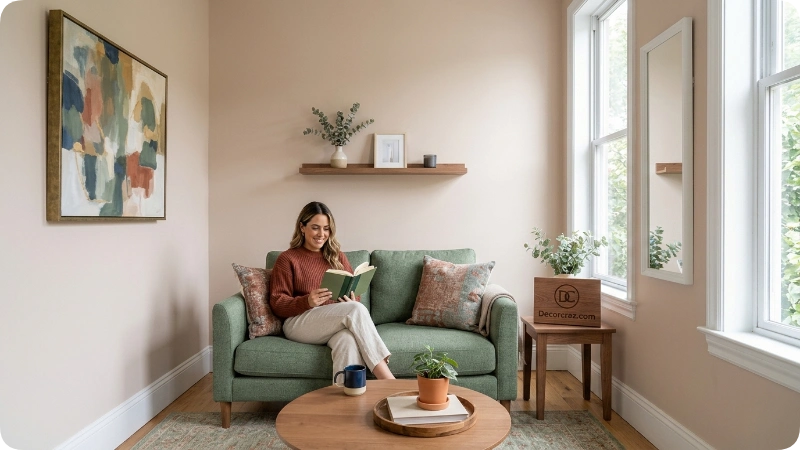
Small living rooms benefit from wall decorations that establish a clear focal point without making the space feel busy.
One well proportioned artwork may work better than several scattered pictures. A vertical arrangement can suit a narrow wall, while a mirror positioned opposite a window can reflect daylight.
Consider shallow picture ledges if you want a flexible display. Avoid deep shelves in narrow walkways, and make sure decorations do not interfere with doors or windows.
Best for: Apartments, compact living rooms, and small seating areas.
Style a Large Blank Living Room Wall
A large blank wall often needs a decoration with enough visual presence to balance the furniture below it.
Consider one oversized painting, a carefully arranged gallery wall, or a combination of artwork and a low console table. Each approach creates a different effect, so choose according to how much detail you want.
In rooms with high ceilings, a taller artwork or vertical arrangement can help use the wall’s height. On a wide wall, a horizontal painting or broader gallery arrangement may feel more balanced.
Avoid filling every available area simply because the wall is large. Leaving some negative space helps the main decoration remain noticeable.
Best for: Open plan homes, large living rooms, and rooms with long walls behind a sofa.
Try Rental Friendly Wall Decor
You can decorate a rental living room without making permanent changes. Leaning artwork, freestanding mirrors, and removable display systems offer flexibility and can be rearranged when needed.
Try placing framed prints on a stable console or using removable hanging products that are compatible with your wall finish and the item’s weight.
Before installing adhesive hooks or strips, read the manufacturer’s instructions and check your rental agreement. Not every painted surface is suitable for adhesive products, and heavier objects may require a different mounting method.
Best for: Renters, temporary homes, and people who frequently change their decor.
How to Choose the Right Wall Decor for Your Living Room
The best wall decor depends on the problem you want to solve. Use this comparison to narrow down your options.
| Living room need | Recommended wall decor | Main benefit |
| Empty wall behind a sofa | Oversized artwork | Creates a focal point |
| Personal and meaningful display | Gallery wall | Shows photographs and memories |
| Dark or compact room | Decorative mirror | Reflects light and adds depth |
| Additional display space | Floating shelves | Holds small decorative objects |
| Plain wall lacking character | Accent paint | Adds color and contrast |
| More architectural detail | Picture frame molding | Creates visual structure |
| Extra ambient lighting | Wall sconces | Combines function and decoration |
| Rental friendly solution | Leaning artwork | Avoids permanent installation |
Before hanging artwork, outline its proposed position with painter’s tape. View the arrangement from the sofa and the room entrance to check its scale.
For standalone artwork, a center point around 57–60 inches from the floor is a common starting guideline. Above a sofa or console, adjust the height to keep the artwork visually connected to the furniture.
For heavy mirrors and framed pieces, use mounting hardware appropriate for the wall construction and the object’s weight.
Frequently Asked Questions
1. What should I put on the wall above my living room sofa?
A large framed painting, a coordinated gallery wall, a decorative mirror, or a textile hanging can work well above a sofa. Choose an option that suits the sofa’s width and the room’s overall style.
2. How do I decorate a living room wall on a budget?
Use printable artwork in affordable frames, rearrange pictures you already own, create a small gallery wall, or display existing books and decorative objects on a shelf. Changing the arrangement can refresh the room without requiring a complete makeover.
3. How can I decorate a living room wall without drilling holes?
Consider leaning framed artwork on a stable console, using freestanding mirrors, or choosing removable hanging products compatible with your wall. Always check weight limits and surface compatibility before installing anything.
4. What wall decor works best in a small living room?
One appropriately sized artwork, a vertical picture arrangement, or a strategically positioned mirror can work well. Avoid overcrowding the wall with too many small objects, particularly when the room already contains busy patterns.
5. How do I make a large blank wall look balanced?
Choose artwork or a decorative arrangement that relates to the furniture below it. An oversized painting, a gallery wall, or artwork above a console can create a clear focal point without filling the entire wall.
Conclusion
The right wall decor can make your living room feel more complete while reflecting your personal style. Start by identifying what your space needs most: a focal point, additional texture, better use of wall space, or a practical decorative feature.
Oversized artwork works well above a sofa, gallery walls display meaningful memories, and mirrors can reflect light into darker areas. Floating shelves and woven hangings offer different ways to introduce character, while accent paint and wall molding create a more permanent change.
Consider your budget, room dimensions, furniture placement, and If you rent or own your home before making a decision. Most importantly, decorate with purpose rather than filling every empty space. A thoughtful arrangement can create a balanced living room without unnecessary clutter.

I am Claudia Winkle, a passionate Name Researcher and Content Writer at decorcraz.com. I enjoy exploring the meanings, origins, history, and cultural significance behind names from around the world. Through carefully researched and engaging articles, I help readers discover unique names, understand their stories, and find meaningful naming inspiration for every occasion. My goal is to make name research simple, interesting, and useful for readers looking for the perfect name.