Quick Answer :
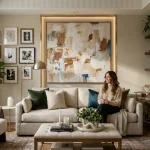
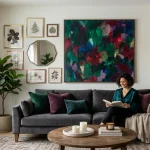
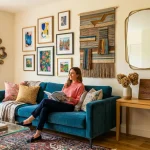
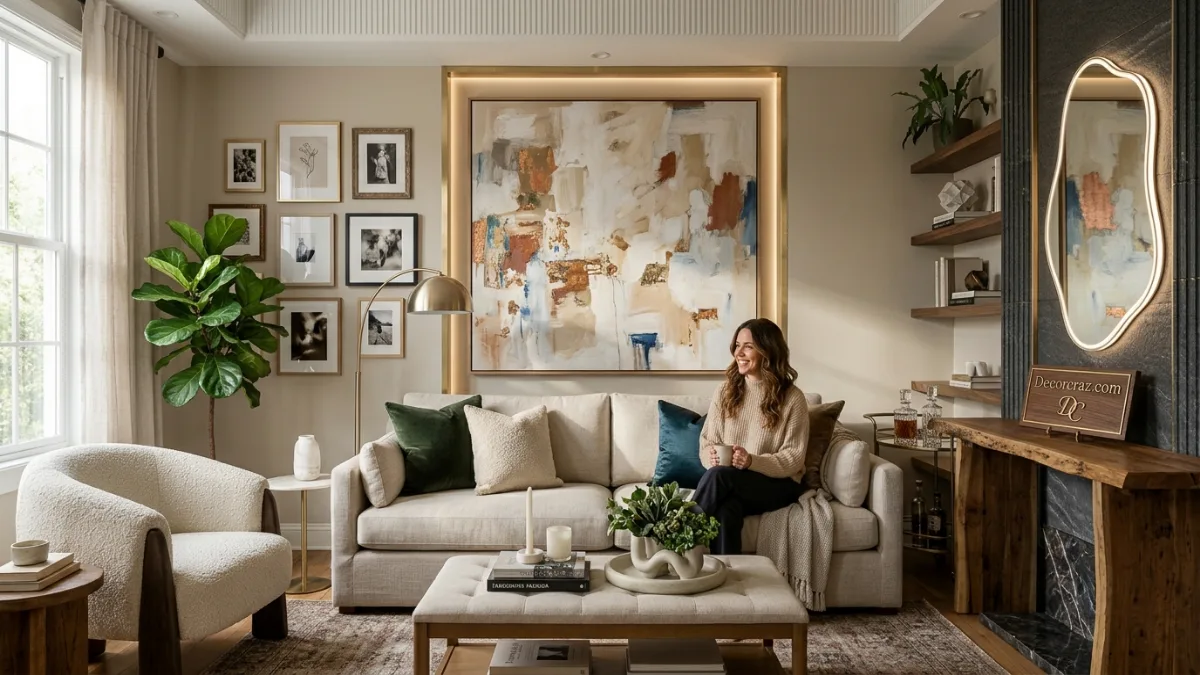
The best living room wall decor ideas include oversized artwork, gallery walls, decorative mirrors, floating shelves, textured wall hangings, and accent walls. Choose pieces that complement your furniture, match your interior style, and suit your available wall space. For a balanced look, start with one focal wall, consider the size and placement of each decoration, and leave enough empty space to keep your living room feeling open and inviting.
Empty walls can make even a beautifully furnished living room feel unfinished. The right wall decor living room ideas can completely change how your space looks by adding personality, visual interest, texture, and balance without requiring a major renovation.
If you’re styling a large wall behind the sofa, decorating a small apartment, or refreshing an outdated fireplace area, a few thoughtful choices can make a noticeable difference.
From oversized artwork and elegant gallery walls to decorative mirrors, floating shelves, and textured accent walls, there are countless ways to create a space that reflects your personal style. The key is choosing decorations that work with your furniture, wall dimensions, lighting, and existing color scheme.
In this guide, you’ll discover stylish and practical living room wall decor ideas, along with helpful tips for choosing the right pieces, arranging them beautifully, and making your walls feel complete without creating unnecessary clutter.
Start With One Focal Wall
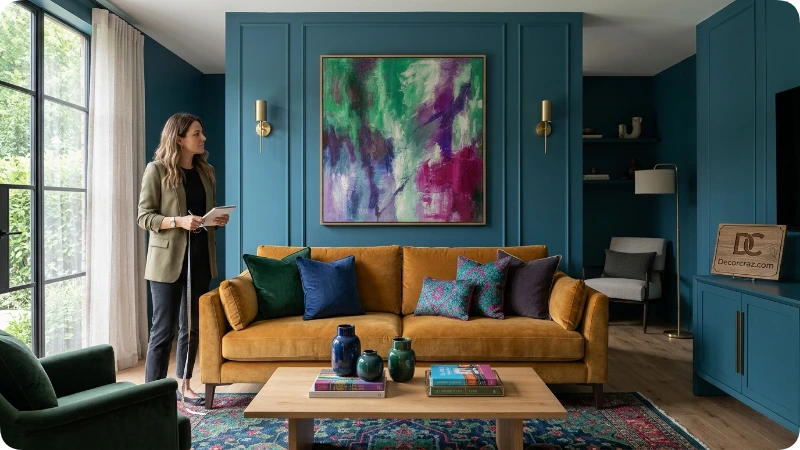
Before choosing individual decorations, decide which wall deserves the most attention. In many living rooms, the wall behind the sofa makes a natural focal point because it occupies a prominent position in the seating area. A fireplace wall or the first wall visible when entering the room can also work well.
A focal wall gives the room a clear visual direction. Without one, several small decorations may compete for attention without creating a unified arrangement.
Choose the focal wall according to your room’s layout:
- Behind the sofa: Use a large artwork, a coordinated gallery wall, or a picture ledge.
- Above the fireplace: Center artwork or a mirror around the mantel and fireplace opening.
- Opposite the seating: Consider a large mirror, a substantial art piece, or carefully arranged shelves.
- In an open plan room: Use wall decor to help define the living area without blocking the visual connection to adjacent spaces.
Once you have chosen the main wall, look at the furniture, lighting, and colors already present. If your sofa has a bold pattern, simpler artwork may provide better balance. If the furniture is understated, colorful artwork or a textured wall treatment can introduce visual interest.
Use Large Artwork Above the Sofa
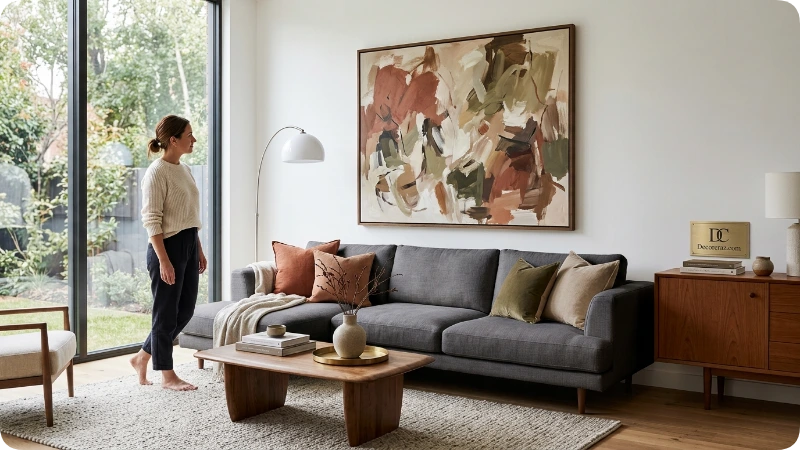
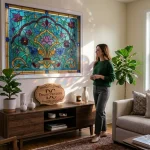
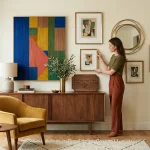
A large artwork is one of the simplest ways to give an empty living room wall a defined purpose. It creates a focal point without requiring multiple frames, shelves, or decorative accessories.
The key is proportion. A small frame above a long sofa can look disconnected from the furniture, while an oversized piece may crowd the seating area.
As a practical design guideline, aim for artwork approximately 60–75% of the sofa’s width. This is a starting point rather than a strict rule, so adjust the size according to the wall, frame, and surrounding features.
Popular options include:
- Abstract art: Introduces color and shape without requiring a specific subject.
- Landscape paintings: Bring natural colors and scenery into the room.
- Black and white photography: Adds contrast without introducing another strong color.
- Textured artwork: Adds depth to rooms with plain walls and smooth furniture.
- Personal artwork: Makes the room feel individual when the subject has meaning to the household.
Hang the piece low enough to relate visually to the sofa rather than floating near the ceiling. Before drilling, mark the proposed position with painter’s tape and check how it looks from the main seating area.
Create a Gallery Wall With a Clear Layout
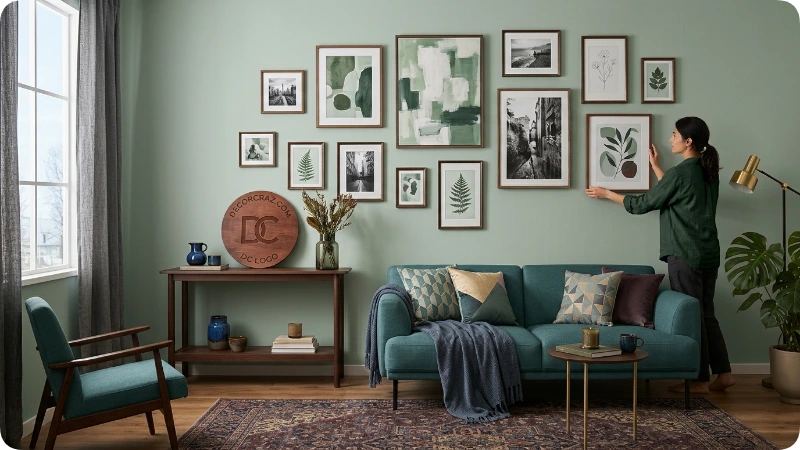
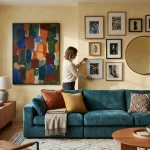
A gallery wall suits anyone who wants to display several artworks, photographs, illustrations, or prints together. It can fill a broad wall more flexibly than a single frame, particularly when one artwork alone would feel too plain.
The challenge is making a collection look intentional rather than scattered.
Grid arrangement: Frames follow consistent horizontal and vertical lines. This creates a structured appearance and works well in modern interiors.
Loose gallery arrangement: Frames of different sizes form a balanced overall shape. This is useful when your collection includes varied subjects or dimensions.
Picture ledge arrangement: Frames rest on narrow shelves, making it easier to replace pieces and adjust the composition.
Choose a connection between the pieces. It might be a shared color palette, a subject such as architecture, or a consistent frame finish. The artwork does not need to match exactly.
Before hanging anything, place the frames on the floor or cut paper templates to their sizes and tape them to the wall. Adjust the arrangement until it feels balanced with the furniture beneath it.
Keep enough space around the overall group so it does not appear squeezed against nearby windows, doors, or ceilings.
Add Mirrors to Reflect Light and Create Depth
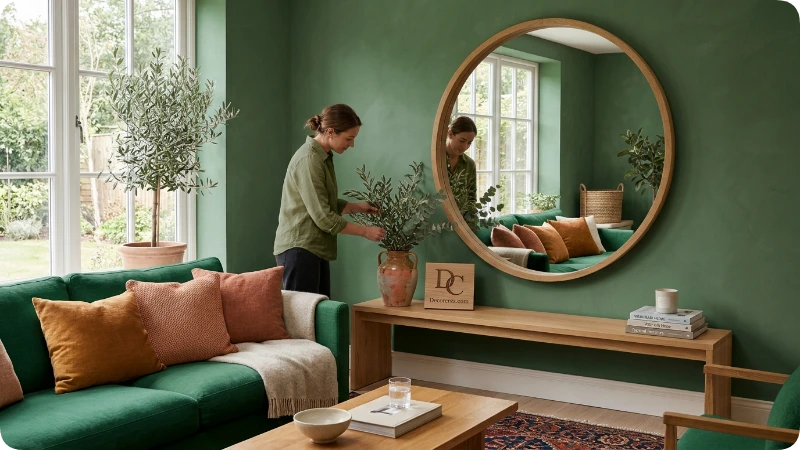
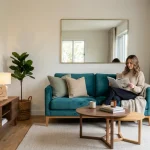
Mirrors are useful when you want wall decor to do more than provide color or imagery. They reflect parts of the room, can redirect available daylight, and introduce another shape into the arrangement.
Placement matters more than the mirror’s decorative style.
- Near a window: A mirror may reflect daylight and an attractive view, depending on its position.
- Above a console: A round or rectangular mirror can create a defined decorative display.
- On a narrow wall: A vertically oriented mirror can emphasize height.
- Beside artwork: A mirror can provide visual variation without introducing another picture.
A mirror will not automatically make every room look larger. If it reflects a cluttered corner, television, or an unappealing view, that reflection may become more noticeable instead.
Choose a frame that relates to the room’s existing materials. Wood can connect with wooden furniture, while a slim metal frame can complement contemporary lighting or table legs.
For heavy mirrors, use mounting hardware appropriate for the mirror’s weight and wall construction. Follow the manufacturer’s installation instructions.
Style Floating Shelves Without Creating Clutter
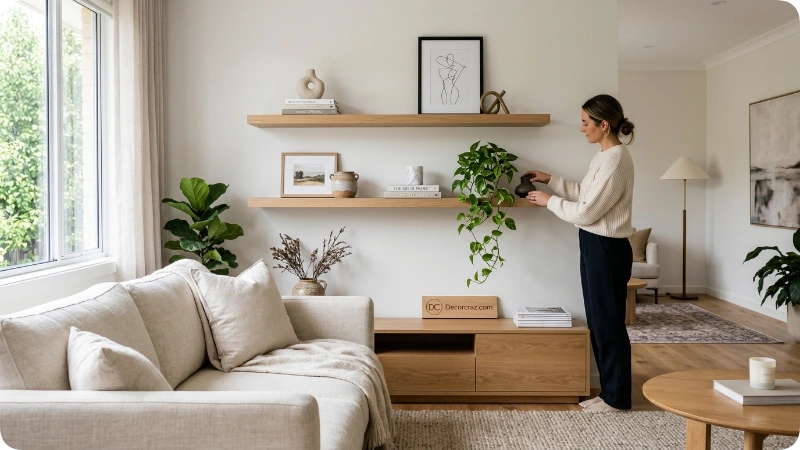
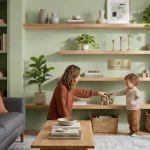
Floating shelves are a practical choice when you want wall decor that can change over time. Unlike a fixed gallery wall, shelves let you rotate small artworks, display books, and introduce decorative objects without committing to a permanent arrangement of frames.
They are particularly useful when you want to combine display space with modest storage.
For a balanced arrangement, begin with one larger object, such as a framed print, and add smaller pieces around it. Vary the heights and shapes, but leave open space between objects so the shelf remains visually clear.
A few useful combinations include:
- Art and ceramics: Lean a framed print against the wall and place a ceramic vessel beside it.
- Books and small sculptures: Use books to add horizontal lines and a sculpture to introduce a contrasting shape.
- Natural materials: Pair wooden shelves with stoneware or woven objects.
- Layered frames: Overlap two frames slightly, provided both remain stable and visible.
Avoid filling every inch of shelf space. Too many small objects can make the wall look busy, especially when the room already has patterned upholstery or decorative cushions.
If you rent, consider freestanding bookcases or removable display options. Check the wall type, load rating, and installation requirements before mounting shelves.
Introduce Texture With Wall Hangings and Natural Materials
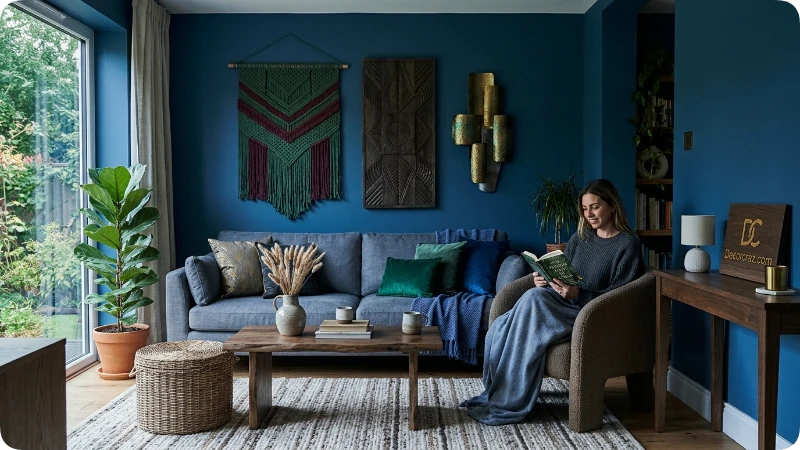
Not every living room wall needs framed artwork. Textile wall hangings, woven pieces, carved wood, and sculptural objects provide visual depth through their materials and surfaces.
This approach is particularly useful when a room has plain walls, simple furniture, or a palette that relies on subtle differences rather than strong colors.
Choose materials according to the effect you want:
- Woven wall hangings: Add soft looking texture and irregular patterns.
- Carved wooden panels: Introduce visible grain and a stronger architectural presence.
- Metal wall sculptures: Provide defined shapes and contrast against a plain wall.
- Ceramic wall pieces: Add surface variation without requiring a large picture.
- Decorative baskets: Create a relaxed, handmade look when their shapes and arrangement suit the room.
Scale is important. A small woven piece may disappear above a large sectional, while a very thick or highly detailed installation can compete with other focal points.
Try one substantial piece above a seating area before building a collection. In a room that already contains textured rugs, patterned curtains, and detailed upholstery, a simpler wall treatment may provide better balance.
Textile hangings can contribute to a softer acoustic environment, but a small decorative piece should not be expected to soundproof a room.
Use Paint, Wallpaper, or Paneling for a Feature Wall
When hanging decorations alone does not solve the problem, consider changing the wall surface itself. Paint, wallpaper, wood paneling, and decorative molding can establish a focal point across a larger area.
These options differ in cost, installation effort, and how easily the room can be changed later.
| Wall treatment | Best suited to | Main consideration |
| Accent paint | Adding color without many decorative objects | Coordinate the color with furniture and natural light |
| Wallpaper | Introducing patterns or illustrated designs | Large patterns may overwhelm a small wall |
| Wood paneling | Adding lines, depth, and material contrast | Installation requires more commitment |
| Decorative molding | Creating structure on a plain wall | Spacing should relate to the wall’s proportions |
| Textured finish | Adding surface variation without a busy print | Repair or removal may be difficult |
For a modest update, paint is a flexible starting point. A deeper color behind a light sofa can create contrast, while a muted shade can define the seating area without demanding attention from the rest of the room.
Paneling or molding makes more sense when you want the wall itself to become a lasting architectural feature. If you rent, removable wallpaper or framed artwork may be more suitable, depending on the wall surface and product instructions.
You do not need to cover the entire room. One well chosen wall treatment can establish a focal point while leaving the other walls visually quiet.
Decorate Small Living Room Walls Without Overcrowding Them
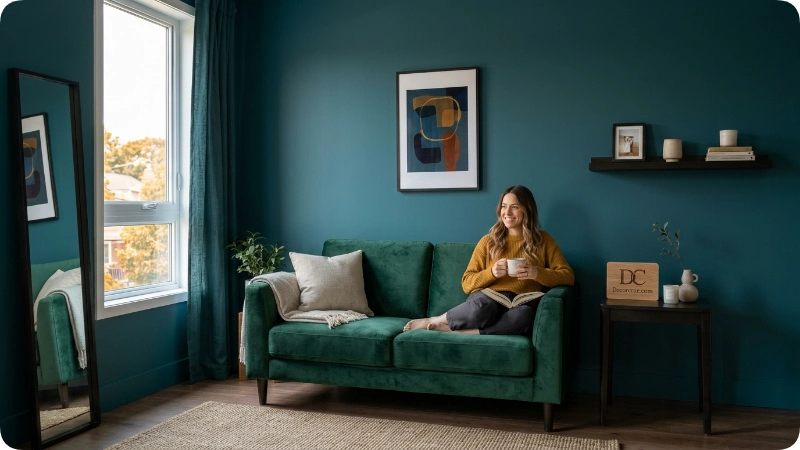
Small living rooms benefit from wall decor that has a clear purpose. Too many little frames, shelves, and accessories can make the room feel visually fragmented, particularly when the floor area is already occupied by furniture.
Instead of choosing the smallest possible decorations, consider Ifone appropriately scaled piece would create a more coherent arrangement.
For a compact room:
- Choose one main artwork: A well proportioned piece often reads more clearly than several unrelated small frames.
- Use a mirror strategically: Position it where it reflects useful light or an attractive part of the room.
- Keep shelves shallow: Deep shelves can protrude into circulation space and make a narrow room feel more crowded.
- Use vertical arrangements where appropriate: Taller compositions can suit narrow walls beside windows or doors.
- Preserve blank space: Empty wall areas help separate the focal point from the rest of the room.
The furniture underneath the wall is just as important as the wall itself. A large painting above a compact loveseat may work well, but the same arrangement can feel cramped if it extends into an adjacent doorway or window.
If you rent or frequently rearrange your furniture, leaning framed artwork on a stable console or picture ledge can give you flexibility without requiring repeated wall alterations.
Coordinate Wall Decor With Your Living Room Style
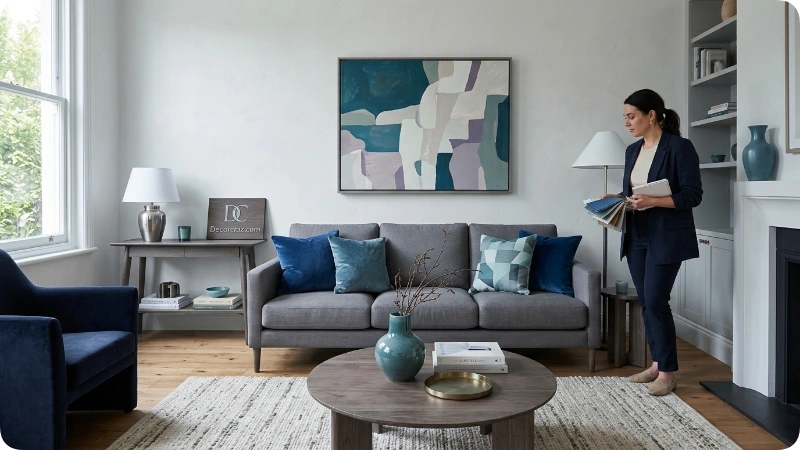
Wall decor looks more connected to a room when it relates to existing colors, materials, and shapes. This does not mean every frame must match or every artwork must share the same palette.
Instead, choose a visual connection that makes sense with the furniture you already own.
Modern and Minimalist
Choose a few well scaled artworks, simple frames, or a sculptural wall piece. Leave enough open wall space for each element to stand out.
Mid Century Modern
Look for geometric artwork, abstract prints, warm wood frames, and shapes that relate to the furniture’s clean lines. Walnut finishes and muted accent colors can help connect the wall to the rest of the room.
Traditional
Landscapes, portraits, collected prints, and detailed frames can complement classic furniture and architectural features. A coordinated group of paintings may work better than several unrelated decorative objects.
Eclectic
Combine different subjects and frame styles through a shared color, recurring material, or meaningful theme. Variation works best when the arrangement still has a visible structure.
Farmhouse and Rustic
Consider botanical prints, natural wood frames, woven wall pieces, and simple landscape artwork. Balance these materials with plain wall space to prevent the room from becoming visually crowded.
When in doubt, choose the artwork first and use its colors to connect existing cushions, throws, or other accessories. This is often easier than buying wall decor that attempts to match every item already in the room.
Make the Wall Work Around the Television or Fireplace
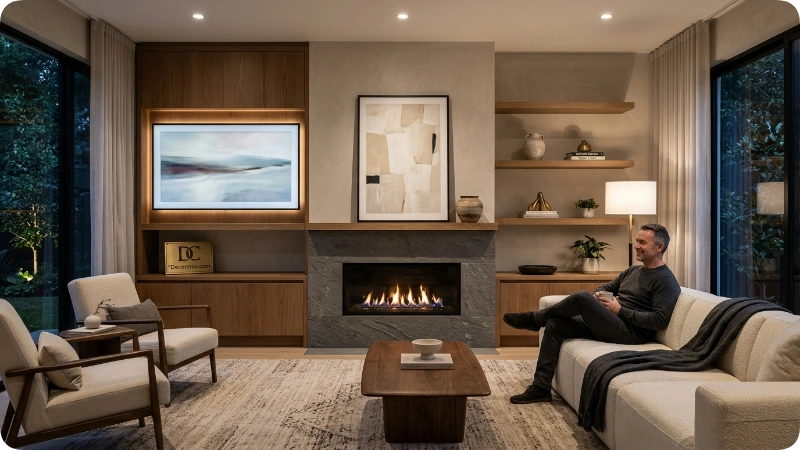
Some living room walls already have a dominant feature, such as a television, fireplace, or built in media unit. Decorating these walls requires a different approach because the main feature already attracts attention.
The objective is to create a balanced composition without making the wall unnecessarily busy.
For a television wall: Keep the screen visually distinct and avoid surrounding it with numerous small frames that compete for attention. A low media console, restrained shelving, or a simple background treatment can help the installation feel intentional.
For a fireplace wall: Center the main artwork or mirror in relation to the fireplace opening or mantel. If the fireplace is already visually prominent, a single substantial piece may be enough.
For a built in unit: Treat the shelves, cabinetry, and wall surface as one composition. A few selected decorative objects can provide variation without filling every compartment.
For an off center television or fireplace: Balance the visual weight rather than forcing artificial symmetry. A vertical shelf or larger artwork on the opposite side may help, provided it does not interfere with movement or practical use.
Before adding wall decor around a television, check cable access, ventilation requirements, and the manufacturer’s installation instructions. Near a fireplace, follow the appliance manufacturer’s clearance guidance rather than assuming decorative objects can safely sit at any distance.
Check Scale and Placement Before Hanging Decor
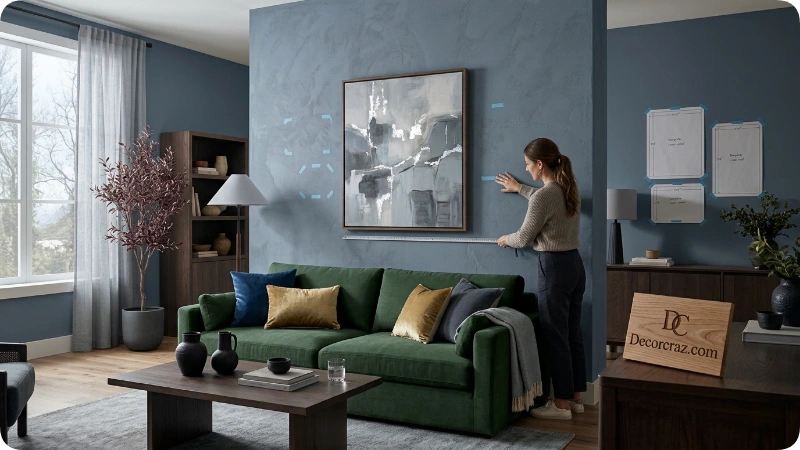
A good wall arrangement can still look wrong if it sits too high, extends too far beyond the furniture, or competes with a window or doorway. Planning the layout before installation helps avoid unnecessary holes and rearranging.
Use this checklist before committing to a design:
- Measure the wall and the furniture beneath it.
- Mark the intended arrangement with painter’s tape or paper templates.
- Check the composition from the main seating position.
- Consider nearby windows, doors, switches, and lighting.
- Confirm that the mounting method suits the wall surface and the item’s weight.
- Step back and check the balance before making permanent changes.
For artwork above a sofa, relate the piece to the sofa rather than positioning it near the ceiling simply because the wall is tall. For gallery walls, judge the entire collection as one visual unit.
There is no need to decorate every wall. One thoughtfully arranged focal point, supported by simpler details elsewhere, can make the whole living room feel more cohesive.
Frequently Asked Questions
1. What should I put on a large blank living room wall?
A large blank wall can work well with oversized artwork, a planned gallery wall, a decorative mirror, floating shelves, or wall paneling. Choose one main feature that suits the wall’s proportions and the furniture nearby. If the room already has patterned furniture or several decorative elements, a simpler arrangement may look more balanced.
2. How high should wall art hang above a sofa?
A useful starting point is to leave approximately 6–10 inches between the top of the sofa and the bottom of the artwork. Adjust the gap according to the artwork’s size, the sofa height, and the overall arrangement. The goal is to make the art feel connected to the seating rather than floating too high.
3. What size artwork looks best above a living room sofa?
Artwork that spans roughly 60–75% of the sofa’s width is a useful starting point. You can achieve this with one large piece or a group of smaller frames arranged together. The right size depends on the wall’s dimensions, nearby features, and the visual weight of the furniture.
4. How can I decorate living room walls without drilling holes?
Try leaning framed artwork on a stable console, using a freestanding bookcase, or choosing a picture ledge or removable hanging system suitable for the item and wall surface. Check the manufacturer’s weight limits and removal instructions before using adhesive products, particularly on painted or delicate walls.
5. How do I make living room wall decor look cohesive?
Choose a connection between your decorations, such as a shared color palette, similar frame finishes, recurring materials, or a common subject. Coordinate these details with the furniture and textiles already in the room. You do not need matching artwork everywhere; a consistent visual direction is usually enough.
Conclusion
Living room wall decor works best when every piece has a clear purpose and relates naturally to the furniture, lighting, and overall layout. Start by choosing one focal wall, then decide If oversized artwork, a gallery wall, a mirror, floating shelves, or a feature finish best suits your space.
Consider proportion before buying decorations, especially when styling the wall above a sofa or filling a large, empty surface. In smaller living rooms, fewer well chosen pieces can create a more balanced result than numerous scattered accessories.
If you rent, prioritize flexible options that are easy to rearrange and suitable for your walls. Most importantly, let your personal taste guide the final choices. You do not need to decorate every wall to create a living room that feels complete, comfortable, and distinctly yours.

I am Claudia Winkle, a passionate Name Researcher and Content Writer at decorcraz.com. I enjoy exploring the meanings, origins, history, and cultural significance behind names from around the world. Through carefully researched and engaging articles, I help readers discover unique names, understand their stories, and find meaningful naming inspiration for every occasion. My goal is to make name research simple, interesting, and useful for readers looking for the perfect name.