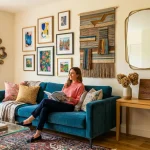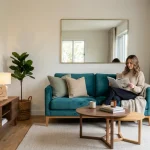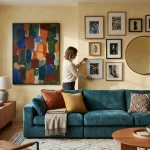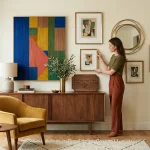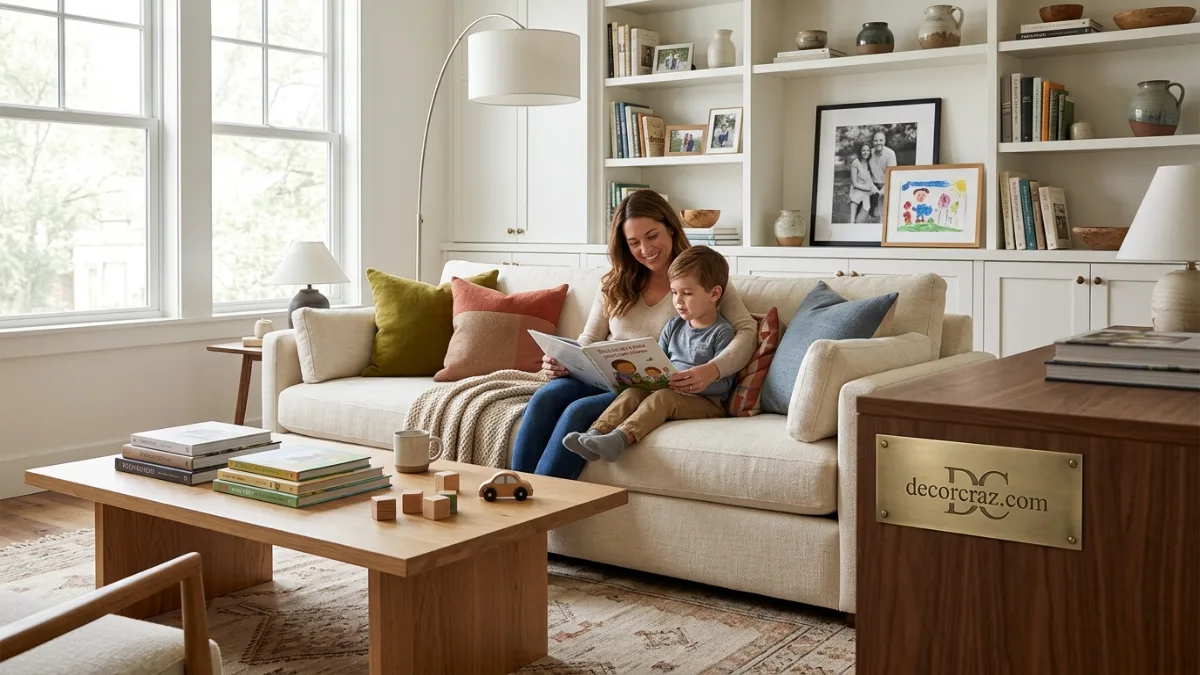
A family room is a place where everyone can relax, watch TV, spend time together, and enjoy everyday activities. The right family room decor ideas can help you create a space that feels comfortable, stylish, and practical for your household.
From choosing the right furniture arrangement and coordinating colors to adding cozy cushions, attractive wall art, and smart storage, small updates can make a big difference.
If you have a small family room, an open-plan space, or a busy household that needs better organization, there are plenty of ways to improve your room without spending a fortune.
In this guide, you’ll discover practical decorating ideas to make your family room more inviting, organized, and visually balanced while reflecting your personal style and meeting your family’s everyday needs.
Start With a Practical Furniture Layout

Before purchasing decorations, consider how your family uses the room. A well planned layout makes it easier to move around, sit comfortably, and enjoy different activities.
Arrange Seating Around Your Main Activity
If your family frequently watches television, position the main sofa for comfortable viewing. If conversation is more important, arrange the sofa and accent chairs so people can face one another.
For a room used for both activities, keep the sofa facing the television and angle an additional chair toward the seating area. This creates a flexible arrangement without making the room feel crowded.
Keep Walkways Clear
Leave enough space between furniture pieces to move comfortably between doors, windows, and adjoining rooms. Choose a coffee table that is easy to reach without blocking the main walking route.
A functional layout is especially important in busy households because it makes the room easier to use throughout the day.
Choose a Coordinated Color Palette

A consistent color palette helps the different elements of your family room work together. Start with the colors you already have in your flooring, sofa, curtains, and large furniture pieces.
Then introduce one or two accent colors through smaller accessories.
Warm Neutral Colors
Cream, beige, warm white, and natural wood create a calm background for family room furniture. These colors work particularly well when you want to keep existing neutral furniture and introduce interest through texture or artwork.
Earthy Accent Colors
Olive green, terracotta, rust, and brown can add depth to a neutral room. Use these shades in cushions, throws, framed prints, or an accent chair.
Blue and White Combinations
Navy blue, muted blue, and ivory provide contrast without requiring a dramatic wall color. Repeating a shade of blue in several parts of the room helps the design feel connected.
You do not need every accessory to match exactly. Related shades and varied textures generally create a more natural appearance than identical decorative sets.
Refresh Your Sofa With Simple Accessories
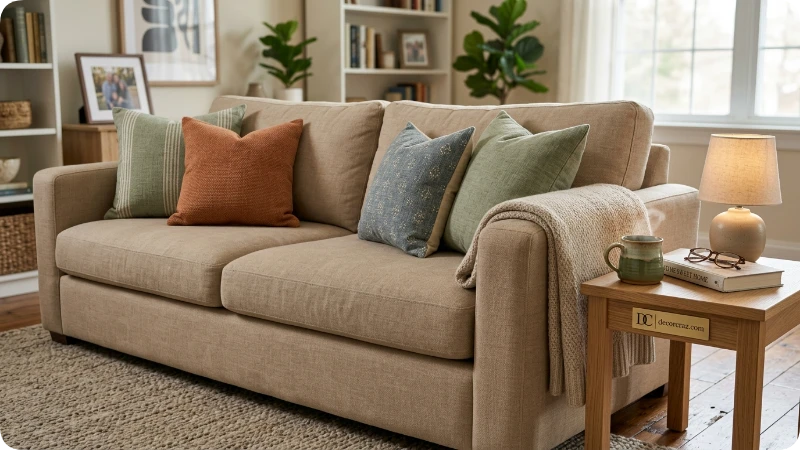
The sofa is often one of the largest pieces of furniture in a family room, so it has a strong influence on the overall design.
If your current sofa is comfortable and in good condition, consider updating its accessories instead of replacing it.
Mix and Match Throw Pillows
Combine plain cushions with a few patterned designs. You can also mix materials such as cotton, linen, and woven fabrics to create visual interest.
Choose colors that complement the existing room palette. Avoid adding so many cushions that the sofa becomes uncomfortable or requires constant rearranging.
Add a Functional Side Table
A side table provides a convenient place for drinks, books, and remote controls. Choose a size that fits beside the sofa without narrowing the walkway.
These simple updates are useful when you want to refresh your family room without spending money on major furniture replacements.
Use an Area Rug to Define the Seating Area
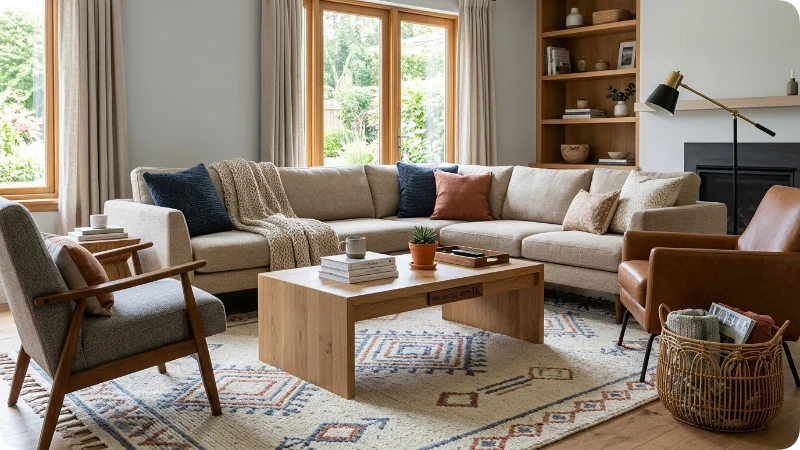
An area rug can visually connect the sofa, accent chairs, and coffee table. It also introduces texture and helps distinguish the seating zone from the rest of the room.
Choose a rug that relates to the size of your furniture. When space allows, placing the front legs of the main seating pieces on the rug helps the arrangement feel connected. A rug that is too small may appear disconnected from the furniture.
Consider your household’s cleaning needs before choosing a material. Low pile rugs may be easier to maintain in frequently used spaces, while washable options can be useful for families dealing with everyday spills.
AIf the rug tends to slide, use an appropriate rug pad to improve stability.
Add Storage to Reduce Everyday Clutter
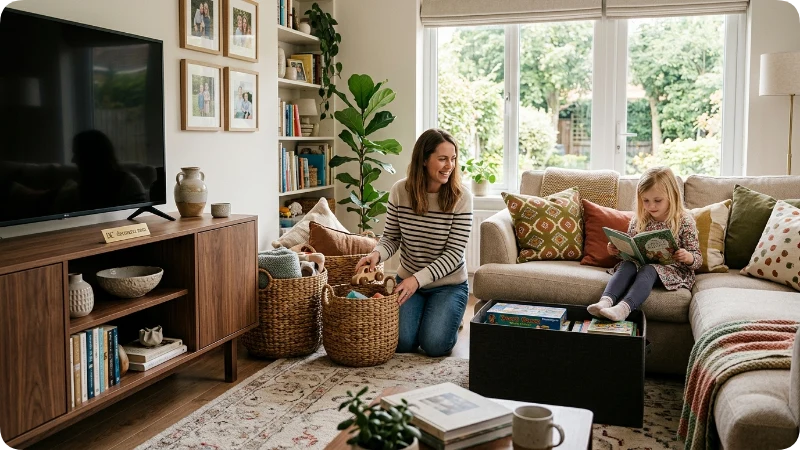
Family rooms often collect blankets, toys, books, games, charging cables, and entertainment accessories. Without designated storage, even a well decorated room can look messy.
The best storage solutions keep frequently used belongings accessible while reducing unnecessary visual clutter.
- Closed cabinets: Hide miscellaneous belongings and create a cleaner appearance.
- Storage baskets: Hold blankets, toys, and other frequently used items.
- Open shelving: Display books and a few meaningful decorative objects.
- Storage ottomans: Provide a footrest or additional seating while storing lightweight items.
- Media consoles: Keep entertainment equipment and accessories organized.
In a small room, consider vertical storage instead of adding bulky furniture to every corner.
Secure heavy furniture according to the manufacturer’s instructions, particularly in homes with young children. Keep walkways clear and place fragile objects where they are less likely to fall.
Improve the Room With Layered Lighting
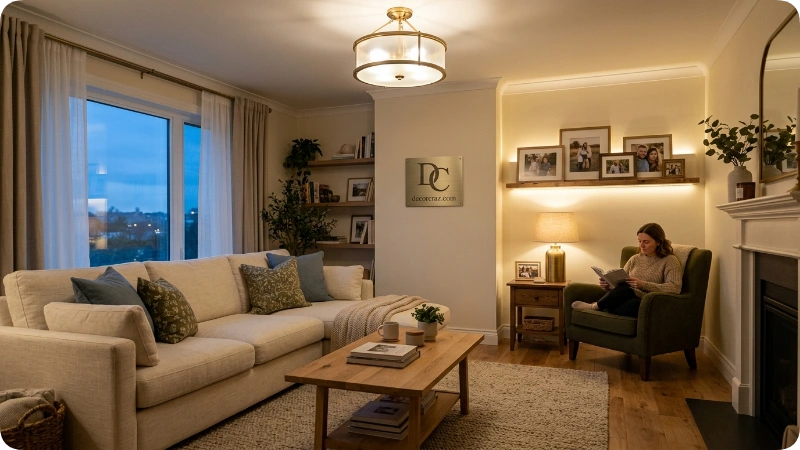
Lighting affects how comfortable and functional a family room feels. A single overhead fixture may provide general illumination, but additional light sources can make the space more adaptable.
Ambient Lighting
Ceiling fixtures and suitable recessed lights illuminate the general room. They are useful for everyday activities that require light across a larger area.
Task Lighting
A table lamp beside a reading chair or a lamp near a homework area provides focused illumination. Position task lighting to reduce glare and make reading more comfortable.
Accent Lighting
A lamp near artwork or a selected display area can draw attention to a feature without illuminating the entire room.
For a relaxed evening atmosphere, consider warm toned bulbs. For reading or other detailed activities, choose lighting that provides sufficient brightness where it is needed.
Combining these light sources gives you more flexibility than relying on one bright ceiling light.
Decorate the Walls With Artwork and Photographs
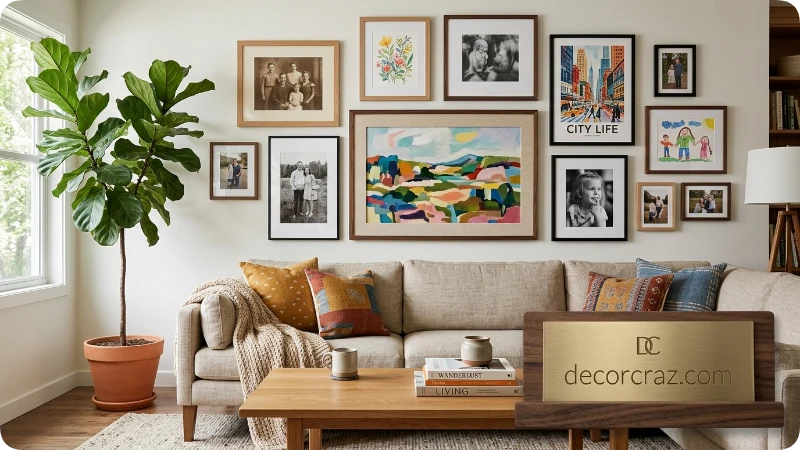
Wall decor adds personality and helps connect the room’s furniture and color palette. The right arrangement depends on the available wall space and the size of the furniture below it.
Create a Gallery Wall
Combine family photographs, prints, and artwork in different sizes. Using related frame colors can help the collection feel coordinated even when the pictures have different subjects.
Plan the arrangement before hanging the frames so you can adjust the spacing and overall shape.
Choose One Large Artwork
A single larger print or canvas can create a clear focal point above a sofa. As a starting guideline, artwork around two thirds of the sofa’s width often looks balanced, although the final proportions depend on the wall and furniture.
Use Rental Friendly Wall Decor
If you rent your home, consider freestanding artwork, stable leaning frames, or suitable removable hanging products. Check the product’s weight limits and your rental agreement before making changes.
The goal is to choose artwork that complements the room without covering every available wall.
Style Open Shelves Without Overcrowding Them

Open shelves provide space for books, photographs, and meaningful decorative objects. However, filling every shelf can make the room feel visually busy.
Start by grouping books together. Add a few objects of different heights and shapes, and leave some empty space between the arrangements.
For example, a small framed photograph can sit beside a short stack of books, while a larger ceramic object can balance a group of smaller accessories.
You do not need to decorate every shelf in the same way. Variation can make the arrangement feel more natural, provided the overall colors and proportions remain balanced.
Keep frequently handled items within easy reach and position fragile or heavy objects where they are less likely to fall.
Add Texture Through Fabrics and Natural Materials

Texture adds visual interest without requiring additional colors or decorative objects.
If your room has smooth upholstery and hard flooring, woven fabrics or a textured rug can introduce contrast. If the room already contains several patterned surfaces, simpler accessories may help create balance.
Consider these practical options:
- Linen or cotton curtains for a softer window treatment.
- A woven rug to define the seating area.
- A knitted throw for the sofa.
- Natural wood furniture for visual warmth.
- Ceramic accessories to contrast with smooth or glossy surfaces.
Choose materials according to your household’s needs. Washable cushion covers and easy care throws can be more practical than delicate fabrics in a heavily used family room.
Make the Television Area Look Organized
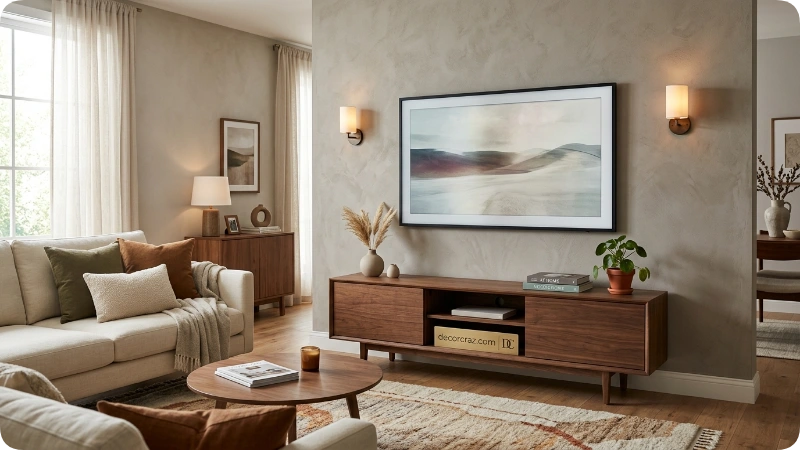
The television is an important feature in many family rooms. Rather than trying to hide it, make the surrounding area organized and visually consistent with the rest of the space.
Choose a media console that suits the television’s size and provides sufficient storage for the equipment you use. Closed cabinets can reduce the appearance of cables, remotes, and other accessories.
Add only a few decorative objects to the console, leaving enough room for equipment ventilation and safe access.
If you mount the television on the wall, use mounting hardware suitable for the wall type and the device’s weight. Follow the manufacturer’s installation instructions, and use appropriate methods for managing electrical cables.
A tidy television area helps the room look more intentional without sacrificing its entertainment function.
Make a Small Family Room Feel More Spacious
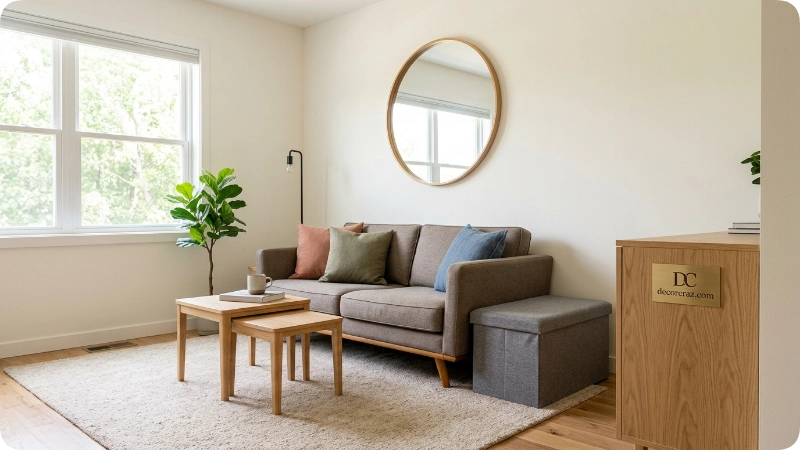
Small family rooms benefit from furniture that serves more than one purpose and arrangements that preserve usable floor space.
Choose Multifunctional Furniture
A storage ottoman can provide seating and hold blankets. Nesting tables can be separated when needed and tucked together afterward. A compact cabinet can provide storage without taking up too much floor space.
Avoid Unnecessary Furniture
Do not add chairs, tables, or accessories simply because a corner looks empty. Keeping some floor space open can make the room easier to navigate.
Furniture with visible legs may also create a lighter visual appearance by allowing more of the floor to remain visible.
Use Mirrors Thoughtfully
A mirror can reflect daylight or visually extend a view when positioned carefully. However, it will not physically increase the room’s size, and a poorly placed mirror may reflect clutter or create unwanted glare.
For renters, movable accessories and freestanding furniture are useful alternatives to permanent built ins or major wall changes.
Personalize the Room With Meaningful Decor
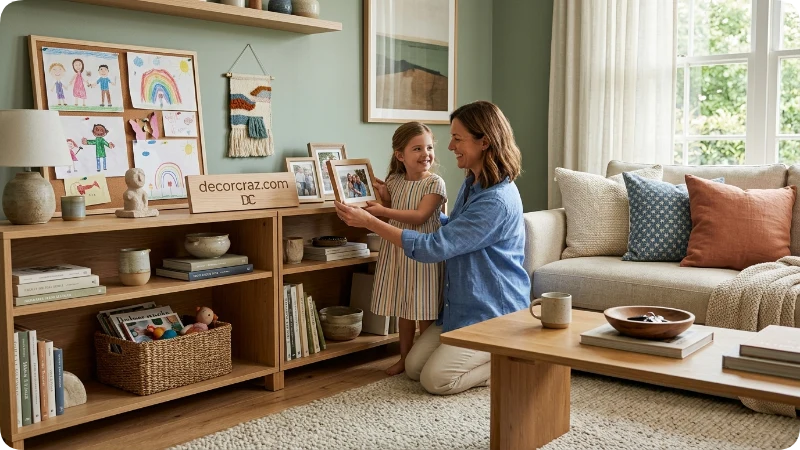
A family room should reflect the people who use it. Personal details help the room feel individual rather than like a generic furniture display.
Display favorite photographs, artwork collected over time, books, or handmade items. These objects do not need to follow one exact style, although a shared frame color or repeated material can help connect them.
Avoid displaying every keepsake at once. Rotating smaller accessories gives you a way to refresh the room without buying more decorations.
If children use the space, create a designated area for their artwork. This allows you to display changing creations without filling every wall and surface.
Refresh Your Family Room on a Budget
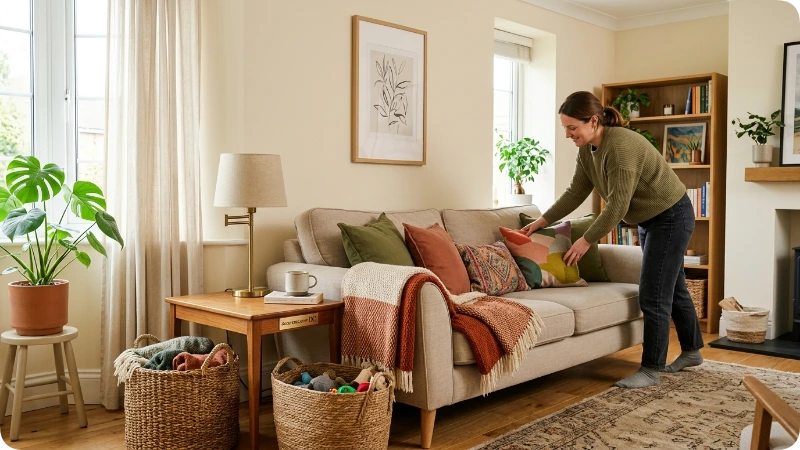
You can improve your family room without replacing all the furniture. The most effective approach is to identify the main problem and spend money only where it will make a noticeable difference.
Start With Free Changes
Rearrange existing furniture, remove unnecessary accessories, reorganize shelves, and move lamps to improve the layout.
Make Small, Affordable Updates
Replace a few cushion covers, add a useful storage basket, or introduce a framed print that complements the existing colors.
Save Larger Purchases for Real Problems
Consider buying a new rug, storage cabinet, or lighting fixture when the current item is unsuitable or no longer meets your needs.
Before purchasing anything, ask what the room actually lacks. If it feels crowded, removing furniture may help more than buying another accessory. If the seating area feels disconnected, a correctly sized rug may be a more useful investment.
Updating one area at a time also helps you evaluate each change before spending money on the rest of the room.
Decorate an Open Plan Family Room
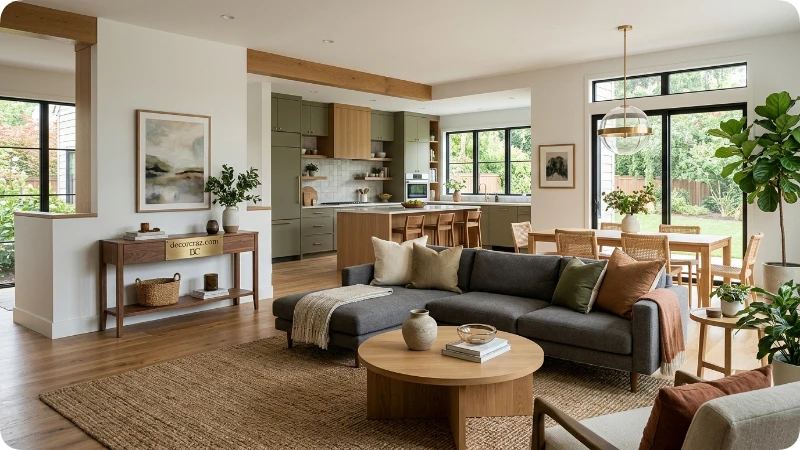
When the family room shares space with a kitchen or dining area, the challenge is defining each zone while maintaining a connected overall appearance.
Use rugs, furniture placement, and lighting to establish different functions. A rug can anchor the seating area, while a dining table and pendant light can distinguish the eating area.
Repeat one or two colors or materials across the adjoining spaces. For example, similar wood finishes in the family room and dining area can create continuity without requiring matching furniture.
Avoid using too many unrelated colors or competing decorative styles. Each area should have a clear purpose while still feeling like part of the same home.
In narrow open plan spaces, keep walkways clear and avoid bulky dividers. Larger rooms may accommodate a console table or open shelving unit to provide subtle separation without blocking light.
Choose Curtains That Complement Your Decor
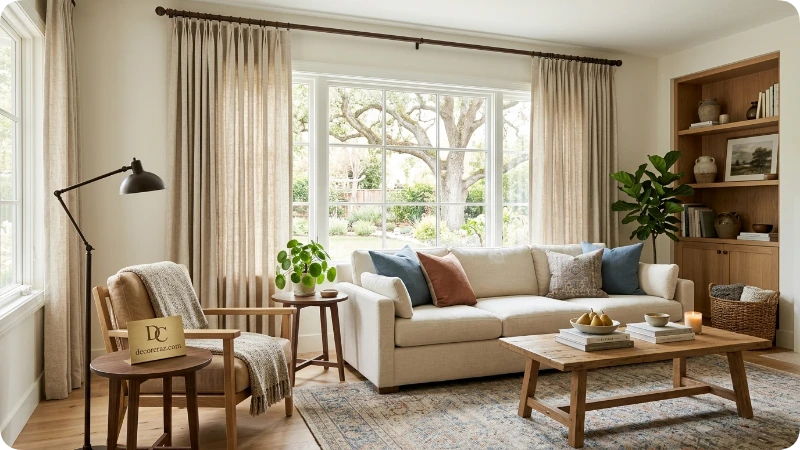
Curtains can connect the colors of the walls, upholstery, and flooring while providing privacy and controlling daylight.
For a simple appearance, choose curtains close to the wall color. If the room feels visually flat, a contrasting shade or subtle pattern can add interest.
Consider the following options:
- Light filtering curtains: Allow some daylight into the room while providing a degree of privacy.
- Room darkening curtains: Help reduce incoming light for television viewing or other activities.
- Textured curtains: Add visual depth when the room contains mostly smooth surfaces.
- Patterned curtains: Introduce color when their design relates to the room’s other textiles or artwork.
Where the window and ceiling allow, placing the curtain rod higher and extending it beyond the window frame can create a more substantial window treatment.
Check that curtains do not interfere with doors, radiators, or other fixtures. Choose a length and fabric that suit both the window and your household’s cleaning requirements.
How to Choose the Best Family Room Decor
The right decorating approach depends on the room’s biggest challenge.
| Room problem | Recommended starting point | Main benefit |
| Too much clutter | Closed storage and fewer accessories | Reduces visible distractions |
| Unfinished appearance | Area rug or well proportioned wall art | Connects the main elements |
| Plain color scheme | Contrasting cushions and textured fabrics | Adds visual interest |
| Limited floor space | Revised layout and multifunctional furniture | Preserves usable space |
| Poor lighting | Better lamp placement and suitable window treatments | Improves illumination |
| Disconnected furniture | Coordinated color palette | Creates visual continuity |
| Difficult maintenance | Washable fabrics and practical storage | Simplifies everyday care |
| Distracting entertainment area | Organized media console | Keeps equipment and accessories together |
Solve the room’s biggest functional problem before adding more decorations. A decorative accessory cannot compensate for a blocked walkway or furniture that is too large for the space.
Common Family Room Decorating Mistakes to Avoid
Even attractive furniture and accessories can create problems when they do not suit the room.
- Buying furniture without measuring: Check room dimensions, doorways, and furniture sizes before making a purchase.
- Choosing a rug that is too small: Select a rug that relates to the seating arrangement and available floor space.
- Overcrowding shelves: Remove unnecessary objects so the remaining pieces have room to stand out.
- Ignoring storage: Give frequently used belongings a convenient place instead of relying on constant tidying.
- Using only overhead lighting: Add task lighting or accent lighting where it improves the room’s function.
- Choosing impractical materials: Consider cleaning requirements and household activities before selecting delicate fabrics.
- Blocking walkways: Keep routes between doors, windows, and adjoining spaces clear.
- Making unauthorized rental changes: Check your rental agreement and installation requirements before drilling, painting, or installing permanent fixtures.
A well decorated family room does not need to look perfectly staged at all times. It needs a sensible layout, useful storage, comfortable furnishings, and decorative details that suit the people who use it.
Frequently Asked Questions About Family Room Decor Ideas
How can I decorate my family room on a budget?
You can decorate your family room on a budget by rearranging existing furniture, updating cushion covers, adding affordable artwork, and organizing clutter with baskets or storage bins. Focus on the changes that make the biggest difference instead of replacing all your furniture.
How do I make a small family room look bigger?
Use appropriately sized furniture, keep walkways clear, and avoid overcrowding the room with decorative accessories. Mirrors can reflect natural light, while multifunctional furniture, such as storage ottomans and nesting tables, helps maximize usable space.
What colors work best for a family room?
Warm white, beige, cream, and soft gray provide versatile backgrounds for family room decor. You can add personality with accent colors such as olive green, navy blue, terracotta, or muted brown. Choose colors that complement your existing furniture and flooring.
How can I make my family room look more inviting?
Arrange seating for comfortable conversation, add soft cushions and throws, improve lighting with table or floor lamps, and display a few meaningful personal items. Keeping everyday belongings organized also helps the room feel more comfortable and welcoming.
What should I put on the wall above my family room sofa?
You can hang one large artwork, create a gallery wall with framed photographs, or display a coordinated collection of prints. Choose an arrangement that suits the sofa’s width and the available wall space to maintain visual balance.
How do I decorate a family room with a TV?
Make the television area look organized with a suitable media console, closed storage, and neatly managed cables. Keep decorative accessories to a minimum and ensure that electronic equipment has adequate ventilation according to the manufacturer’s instructions.
How can I keep my family room organized?
Give frequently used items designated storage spaces. Use baskets for blankets and toys, cabinets for miscellaneous belongings, and shelves for books and selected decorative objects. Returning items to their designated places regularly helps prevent clutter from building up.
How can I decorate a family room that also serves as a living room?
Create separate functional zones through furniture placement, area rugs, and lighting. Arrange the main seating around your primary activity, maintain clear walkways, and repeat a few colors or materials throughout the room to create a coordinated appearance.
Conclusion
The best family room decor ideas combine comfort, functionality, and personal style to create a space everyone can enjoy. From arranging furniture and choosing coordinating colors to adding cozy textiles, wall art, layered lighting, and practical storage, even small changes can make your room feel more inviting.
You don’t need to replace all your furniture or spend a large amount of money to achieve a fresh look. Start by identifying what your family room needs most, whether it’s better organization, improved lighting, or a more comfortable seating area.
Then make thoughtful updates that fit your space, lifestyle, and budget. With the right balance of practical solutions and meaningful decorative touches, you can create a family room that looks beautiful, stays organized, and supports everyday living.

I am Claudia Winkle, a passionate Name Researcher and Content Writer at decorcraz.com. I enjoy exploring the meanings, origins, history, and cultural significance behind names from around the world. Through carefully researched and engaging articles, I help readers discover unique names, understand their stories, and find meaningful naming inspiration for every occasion. My goal is to make name research simple, interesting, and useful for readers looking for the perfect name.