An entertainment center is often one of the main focal points of a living room. It holds your television, gaming devices, remotes, and other everyday essentials. With the right decor, it can also become an attractive part of your home rather than just a place for electronics.
The best entertainment center decor ideas combine practical storage with thoughtful styling. You can decorate a simple TV stand with a few accessories, arrange open shelves with books and artwork, add greenery, or create a more finished look with coordinated cabinetry and lighting.
If you live in a small apartment, rent your home, or have a spacious living room, you do not need an expensive renovation to improve your entertainment area. A few well chosen changes can make the space feel more organized and connected to your existing furniture.
Keep Your TV Console Simple and Stylish
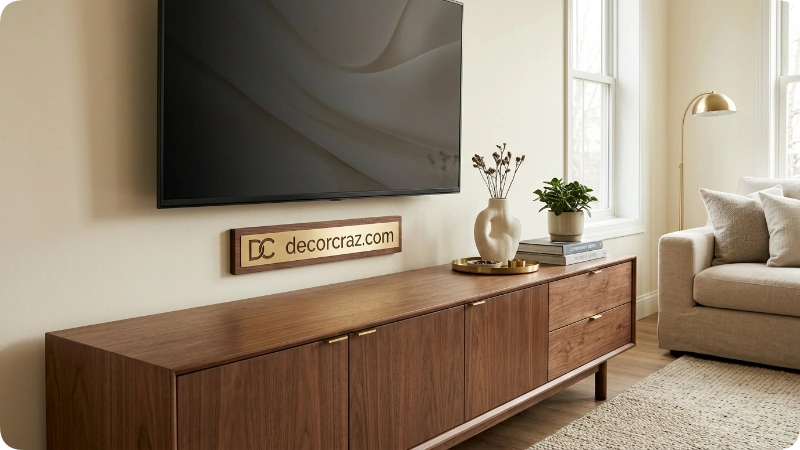
One of the easiest ways to decorate an entertainment center is to style the console beneath your television. Start by removing unnecessary items and keeping the surface clear enough for everyday use.
Place a decorative tray, a ceramic vase, or a small stack of books toward one side of the console. If your TV is centered, leaving some open space on the other side helps balance the arrangement.
Choose accessories that complement the room’s existing colors and materials. For example, a wooden console pairs well with natural textures, while a black media unit can work with neutral ceramics and simple metallic accents.
Avoid filling the entire surface with small decorations. A few carefully selected objects usually create a cleaner and more intentional appearance.
Decorate Open Shelves Around Your Television

Open shelving provides space to display books, framed pictures, decorative bowls, and personal collections. However, the shelves can look cluttered when every available space is filled.
Arrange objects in small groups and vary their heights. Place a few books together on one shelf, a decorative vessel on another, and a framed print in a suitable compartment.
Leave some shelves partially empty to give the arrangement breathing room. This also helps the television remain the main focal point.
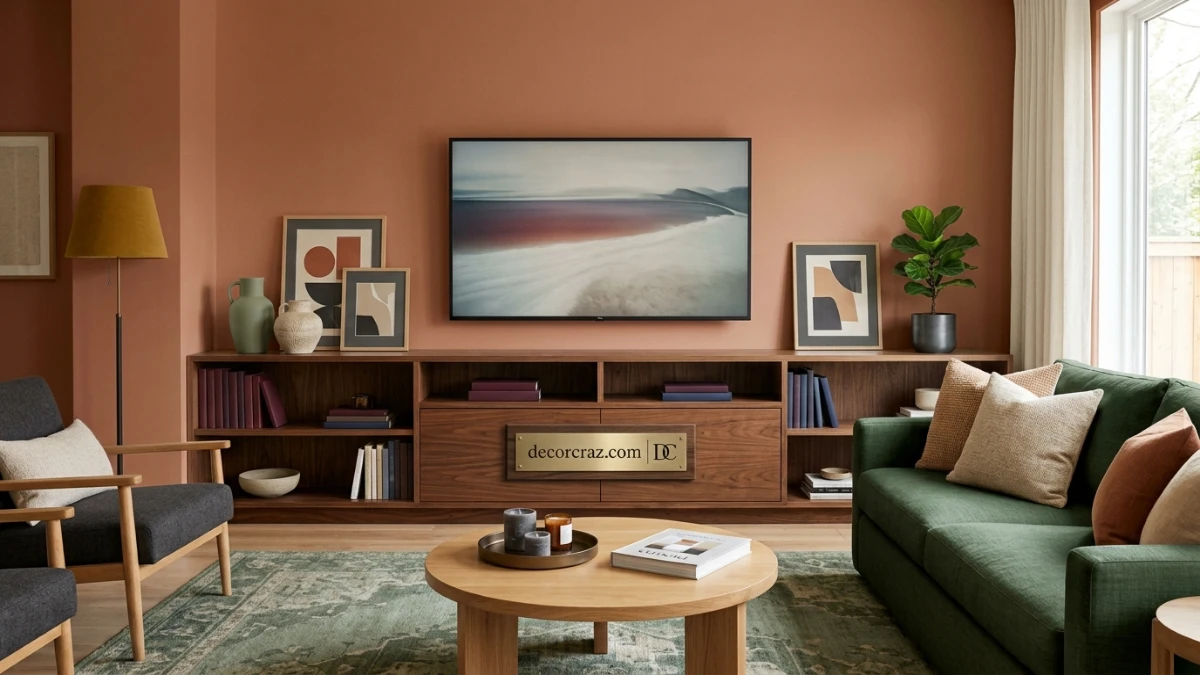
For a coordinated appearance, repeat a few colors or materials throughout the shelves. You can use natural wood, neutral ceramics, or small black accents to connect the different sections without making every shelf look identical.
Add Natural Wood for Warmth
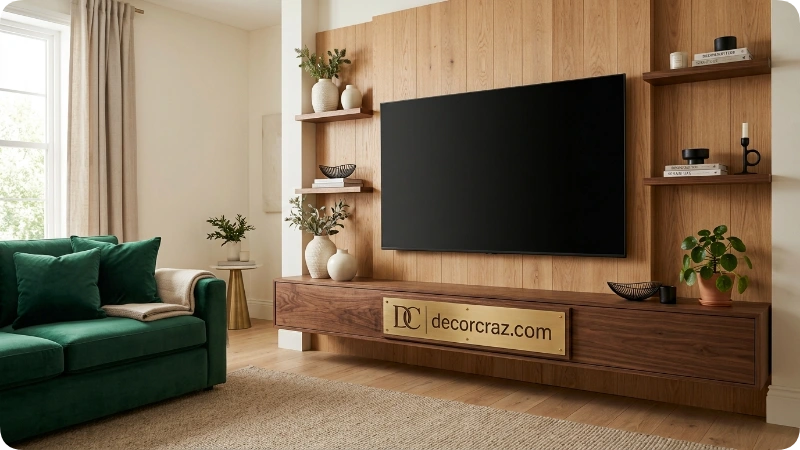
Wooden finishes can soften the appearance of a television wall, especially when the screen and surrounding electronics have dark surfaces.
A walnut or oak media console can introduce natural texture and create a visual connection with nearby furniture. You can repeat the wood finish in a side table, picture frame, or shelving detail.
If you want a more noticeable change, consider a wood look accent panel behind the television. This can help define the entertainment area without requiring additional decorative objects.
Before choosing a finish, consider the colors already present in your living room. Warm wood often works well with beige, cream, and earthy tones, while lighter wood can complement white walls and simple contemporary furniture.
You do not need every wooden item to match perfectly. Choosing finishes with compatible undertones is often enough to create a cohesive look.
Use Plants to Soften the Entertainment Area
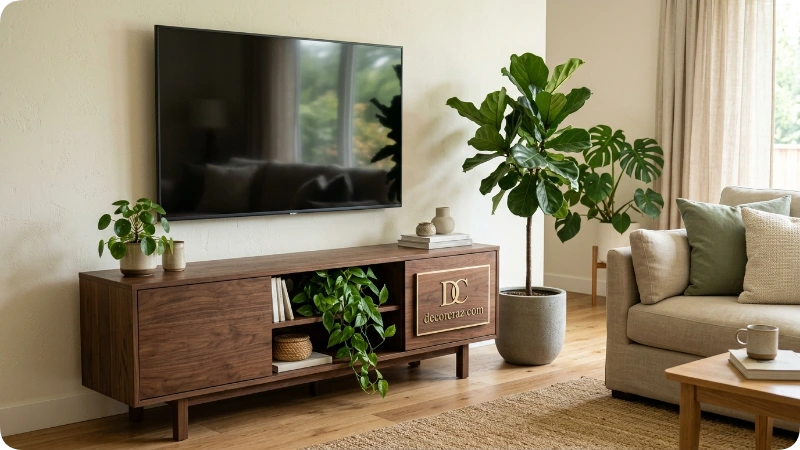
Plants introduce organic shapes and natural color to an area dominated by straight lines and electronic equipment.
Place a small potted plant at one end of the console or choose a trailing plant for a suitable open shelf. Make sure the pot is stable and that water cannot spill onto electronic devices.
If your entertainment center receives little natural light, consider an artificial plant that suits the scale of the furniture.
Keep the arrangement simple. A single plant in a well chosen location can add visual interest without taking up too much space.
For a more balanced appearance, choose a plant that fits the console rather than one that overwhelms the television or blocks the view from the sofa.
Incorporate Artwork and Personal Decor

Artwork can help connect your entertainment center with the rest of your living room. Framed prints, family photographs, and small decorative pieces add personality without requiring a complete redesign.
If your television sits between built in shelves, place a framed print in one of the open compartments. You can also display artwork on a nearby wall to extend the arrangement beyond the media console.
Choose frames and colors that complement your existing decor. A neutral room may benefit from a simple abstract print, while a colorful living room can use artwork that repeats shades already found in the cushions or rug.
Avoid adding too many decorative pieces directly around the screen. The goal is to complement the television, not compete with it.
For rental homes, securely positioned tabletop frames can provide a flexible alternative to hanging additional artwork.
Add Soft Lighting Around the TV

Lighting can make an entertainment center more visually interesting, particularly in the evening.
Concealed LED strips beneath shelves or behind a suitable television mount can highlight the surrounding surfaces. A floor lamp beside the media console can also create a softer atmosphere without requiring permanent installation.
Choose lighting that suits the room’s purpose. If you frequently watch television at night, dimmable, indirect lighting can be more comfortable than a bright light directed toward the screen.
Check the arrangement from your usual seating position to make sure the light does not create distracting reflections.
For a simple, budget friendly update, try repositioning an existing lamp before buying new lighting. Sometimes changing the direction of the light is enough to improve the overall appearance.
Choose Space Saving Decor for Small Living Rooms
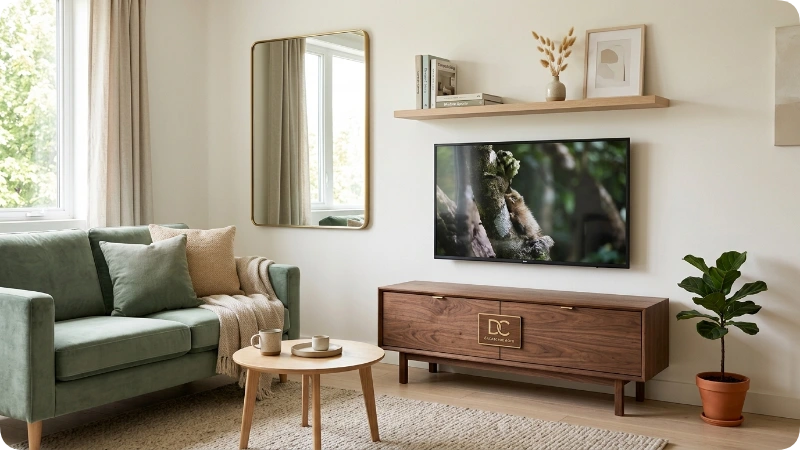
Small living rooms need an entertainment center that looks attractive without taking up unnecessary space.
A shallow console can preserve walking room, while a floating media unit can leave more of the floor visible. Wall shelves may provide additional display space without requiring another freestanding cabinet.
Keep accessories proportionate to the furniture. Large decorative objects can overwhelm a compact console, while numerous tiny objects can make the area look busy.
Closed storage is particularly useful when you need space for controllers, cables, games, and remote controls. It keeps everyday belongings accessible without leaving everything on display.
Before purchasing a new unit, measure the available wall and floor space. Make sure the television, console, and nearby seating work together without obstructing doors or walkways.
Create a Coordinated Built In Entertainment Center
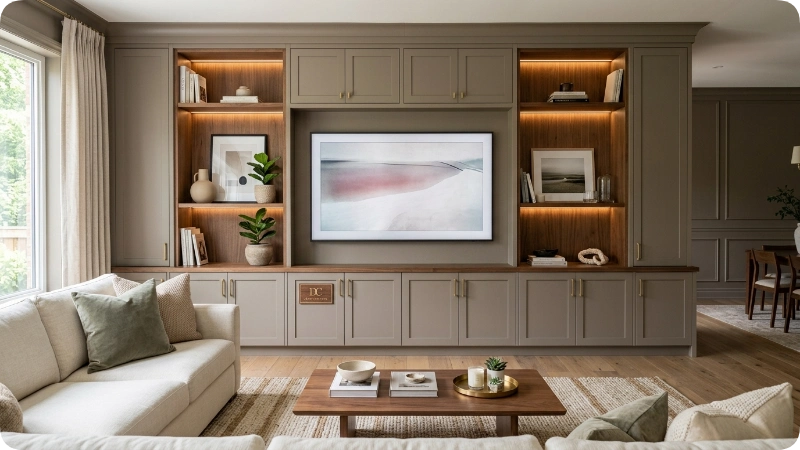
A built in entertainment center can make a large television wall feel more organized and architectural. It is especially useful when you need a combination of display shelving and concealed storage.
Consider using a consistent cabinet finish throughout the lower section, with a few open shelves above or beside the television. This creates a clear visual structure while allowing space for books and selected decorative objects.
You can introduce contrast through the back panels, shelf materials, or hardware. For example, light cabinetry with natural wood shelves creates a different effect from a darker media wall with understated accessories.
Plan the practical details before installation. Consider the position of electrical outlets, cable routes, equipment access, and ventilation.
Because built ins are more difficult to change than freestanding furniture, they are best suited to homeowners or anyone comfortable making a longer term design commitment. A ready made console paired with matching bookcases can offer a similar appearance with greater flexibility.
Use Color to Complement the Television
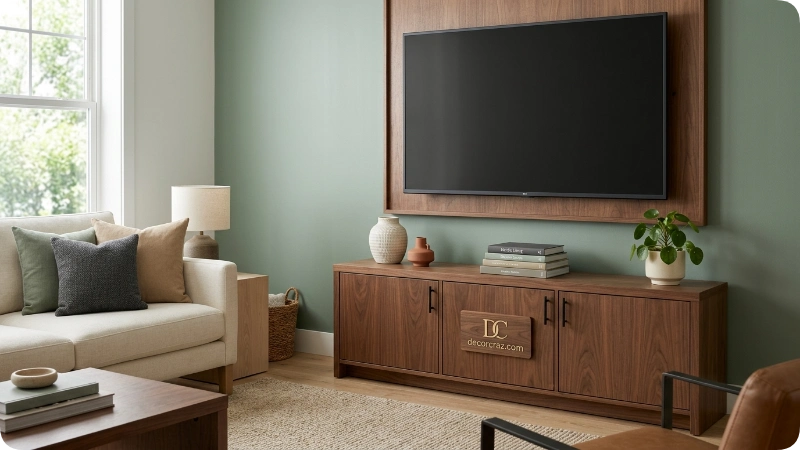
A television’s dark screen can appear visually separate from the surrounding decor if its colors and materials have no connection with the room.
One simple solution is to repeat a small amount of black or charcoal in nearby accessories, such as a picture frame, lamp base, or cabinet hardware.
You can also introduce an accent color behind the entertainment center. Muted green, deep blue, warm beige, and charcoal are possible choices, depending on the existing furniture and the amount of natural light.
Start with the colors already present in your living room. Choose one supporting color and repeat it in a limited number of places rather than introducing several unrelated shades.
If your rug, curtains, and upholstery already have strong patterns or colors, a neutral media console may create a more balanced result.
Organize Cables and Electronic Accessories
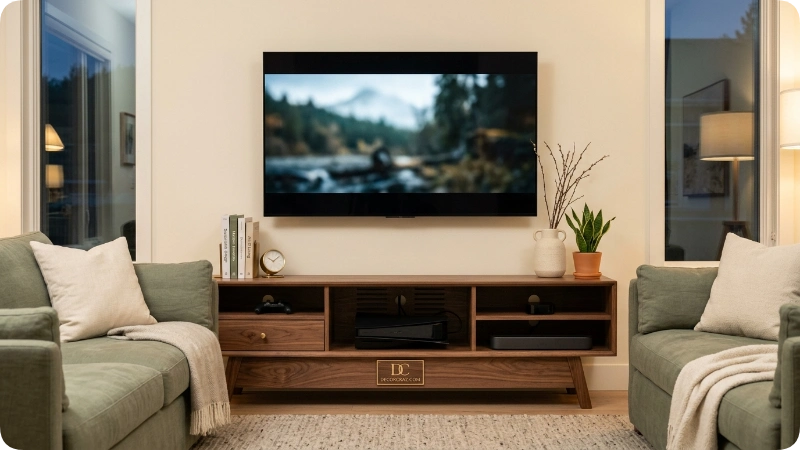
Even a beautifully decorated entertainment center can look untidy when cables, controllers, and remote controls are scattered across the surface.
Use cable ties or sleeves to keep compatible cords organized. Cable channels can help conceal visible cable runs, while furniture designed with rear openings can make connections easier to manage.
Store smaller accessories in drawers or baskets. Keep frequently used remotes and controllers somewhere accessible rather than hiding them in difficult to reach compartments.
Electronic equipment also needs appropriate ventilation. Avoid placing heat producing devices in sealed containers or blocking their vents. Follow the manufacturer’s instructions for installation and clearance.
If you are mounting a television, choose a suitable cable management solution and follow applicable electrical requirements. Use a qualified professional when the installation involves electrical work inside walls.
A well organized setup is easier to clean, simpler to use, and more visually consistent with the rest of the room.
How to Choose the Right Entertainment Center Decor
The best decor depends on your room size, storage needs, and willingness to make permanent changes.
| Your Situation | Recommended Approach | Main Benefit |
| Small living room | Shallow console and minimal accessories | Preserves usable space |
| Open shelving | Grouped books and decorative objects | Creates a balanced display |
| Gaming setup | Closed storage with suitable ventilation | Keeps accessories organized |
| Rental home | Freestanding furniture and removable decor | Offers flexibility |
| Large television wall | Coordinated shelving or built ins | Creates a unified arrangement |
| Evening TV watching | Indirect, dimmable lighting | Helps control glare |
| Busy family living room | Durable accessories and secure furniture | Supports everyday use |
You do not need to use every decorating idea. Choose the options that solve your current problems and suit the way you use the room.
Common Entertainment Center Decorating Mistakes
Filling Every Shelf
Too many decorative objects can make an entertainment center feel crowded. Leave some open space between arrangements so individual pieces remain visible.
Choosing Accessories That Are Too Large
Oversized vases, plants, or sculptures can overwhelm a narrow console or obstruct the television. Check the available surface area before adding new pieces.
Mixing Too Many Finishes
Several unrelated wood tones, metal finishes, and accent colors can make the entertainment area feel disconnected. Repeat a few materials to create visual continuity.
Ignoring Cable Management
Visible cords and scattered electronics can undermine an otherwise well styled arrangement. Plan storage and cable routes alongside the decorative elements.
Blocking Ventilation
Do not cover equipment vents or enclose heat producing devices without adequate airflow. Check manufacturer instructions when arranging electronics inside cabinets.
Overlooking Stability
Choose stable furniture and secure televisions and other heavy items according to manufacturer guidance. This is particularly important in households with children or pets.
Frequently Asked Questions
How can I decorate my entertainment center?
You can decorate your entertainment center with a few carefully chosen accessories, such as ceramic vases, framed artwork, books, and small plants. Add soft lighting and coordinate the colors with your existing furniture. Keep the arrangement simple and leave enough space for your television and electronic devices.
What should I put on an entertainment center?
Consider placing a decorative tray, a small vase, a few books, framed photos, or a potted plant on your entertainment center. For open shelves, mix decorative objects with books and artwork. Avoid overcrowding the surface, and keep remotes, controllers, and other everyday accessories in designated storage spaces.
How do I make my TV entertainment center look stylish?
Choose a console that complements your living room furniture and use a consistent color palette. Add natural textures, subtle lighting, and a few decorative accessories to create visual interest. Organize visible cables and leave some open space around the television for a clean, balanced appearance.
How do I decorate an entertainment center in a small living room?
Choose a shallow console, floating media unit, or wall-mounted shelves to save floor space. Use small accessories, closed storage, and a limited color palette to keep the area from looking crowded. Measure your available space before purchasing furniture, and make sure walkways remain clear.
How can I hide cables around my entertainment center?
Use cable ties, cable sleeves, or suitable cable management channels to organize visible cords. Store controllers and remotes in drawers or baskets, and choose furniture with built-in cable openings when possible. Keep electronic devices properly ventilated and follow manufacturer instructions when arranging equipment inside cabinets.
What colors look best for an entertainment center?
Neutral colors such as white, beige, gray, and black work well with many living room styles. Natural wood adds warmth, while muted green or deep blue can create an attractive accent. Choose colors that complement your walls, flooring, sofa, and other furniture for a coordinated appearance.
How can I add lighting to an entertainment center?
You can add indirect lighting with LED strips behind suitable shelving or the television, or place a floor lamp beside the console. Dimmable lighting can create a comfortable atmosphere for evening viewing. Position lights carefully to minimize reflections and avoid distracting glare on the television screen.
How do I decorate an entertainment center without making it look cluttered?
Start by removing unnecessary items and displaying only a few accessories at a time. Group objects by color, material, or height, and leave empty space between arrangements. Use drawers or baskets to store everyday electronics and accessories, keeping the visible surfaces neat and functional.
Conclusion
The best entertainment center decor ideas combine style, comfort, and practical organization to create a TV area that complements your living room. From decorating a simple console and styling open shelves to adding natural wood, greenery, artwork, and soft lighting, small changes can make a noticeable difference.
Choose colors, materials, and accessories that work with your existing furniture, and use smart storage solutions to keep cables and electronic devices organized. If you have a small living room or a rental home, focus on space-saving furniture and flexible decor.
For larger spaces, coordinated shelving or built-in cabinetry can create a more polished look. Start with the updates that suit your needs, budget, and lifestyle to create an attractive, functional entertainment area.

I am Claudia Winkle, a passionate Name Researcher and Content Writer at decorcraz.com. I enjoy exploring the meanings, origins, history, and cultural significance behind names from around the world. Through carefully researched and engaging articles, I help readers discover unique names, understand their stories, and find meaningful naming inspiration for every occasion. My goal is to make name research simple, interesting, and useful for readers looking for the perfect name.