A living room rug can bring your furniture together, add color to a neutral space, and make a seating area feel more defined. If you have a small apartment, a spacious family room, or an open plan living area, the right rug can improve the room’s overall appearance without requiring major changes.
The best living room rug ideas start with three things: the size of your seating arrangement, the colors already in the room, and how you use the space every day. A large neutral rug can create a calm foundation, while a vintage pattern or bold geometric design can become the main decorative feature.
Before choosing a rug, measure your furniture arrangement and consider your flooring, cleaning needs, and budget. These details will help you find a rug that looks good and works for your lifestyle.
12 Living Room Rug Ideas Worth Considering
1. Choose a Neutral Rug With Natural Textures
A beige, ivory, or oatmeal rug works well with wooden furniture, linen curtains, and neutral upholstery. Instead of relying on strong patterns, choose a woven texture or subtle raised design to add visual interest.
This approach suits minimalist, Scandinavian, and contemporary living rooms. It also gives you flexibility when changing cushions, curtains, or other accessories.
However, very light rugs can show spills and marks more easily. If your living room gets heavy daily use, consider a textured beige rug or a slightly darker neutral shade.
2. Make a Vintage Style Rug the Focal Point
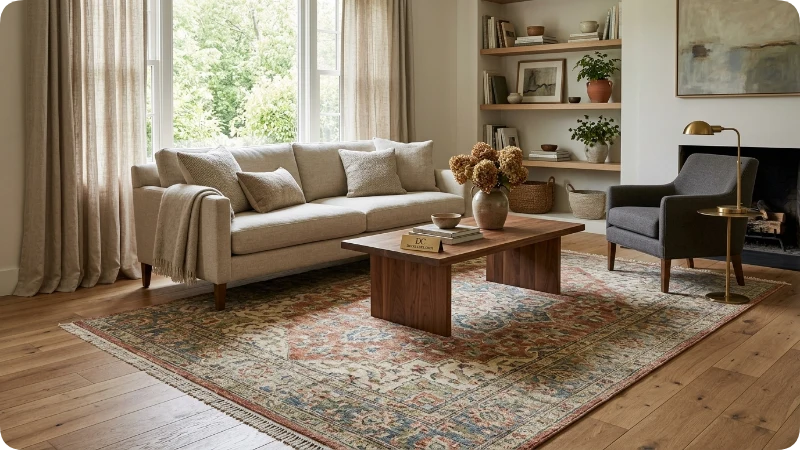
A vintage inspired rug with faded floral details, decorative borders, or Persian style patterns can introduce several colors into a living room.
Pair it with a simple sofa and understated furniture so the pattern remains easy to appreciate. You can repeat one color from the rug in a cushion or another small accessory to create a connected look.
This style works particularly well in traditional, eclectic, and transitional interiors. Before buying, compare the rug’s undertones with your flooring and furniture.
3. Introduce Color With an Earthy Green Rug
Olive, sage, and moss green rugs add color without necessarily overwhelming a room. These shades work well with cream sofas, walnut furniture, natural wood floors, and warm neutral walls.
A muted green rug can become the main color feature in an otherwise simple living room. If you want a coordinated appearance, repeat the green in one or two small details rather than matching every accessory.
Choose a shade that works with the room’s existing lighting. Green can look warmer or cooler depending on nearby colors and the amount of natural light.
4. Try a Geometric or Checkerboard Rug
Geometric rugs introduce clear shapes and visual structure. Checkerboard patterns, stripes, and angular designs can complement modern furniture and simple architectural details.
Black and ivory create strong contrast, while beige and cream offer a softer alternative. A geometric rug can be especially effective when the sofa and curtains are solid colors.
If your room already contains patterned upholstery or decorative wallpaper, choose a simpler rug design. Too many competing patterns can make the space feel visually crowded.
5. Choose a Proportionate Rug for a Small Living Room
A small living room does not automatically need a tiny rug. A rug that connects the sofa and coffee table can make the seating area feel more unified.
Depending on the layout, a 5 by 8 foot rug may work in a compact room, while a 6 by 9 foot rug might provide better coverage. These are starting points rather than fixed requirements.
Keep enough exposed flooring for doors and walkways to function comfortably. Before purchasing, outline the proposed rug dimensions on the floor with painter’s tape.
6. Anchor a Large Room With an Oversized Rug
A large rug can connect a sofa, armchairs, and coffee table in a spacious living room. Without a clearly defined seating area, furniture may appear scattered across the floor.
Choose a rug that accommodates the furniture arrangement rather than focusing only on the coffee table. In many rooms, placing the front legs of the main seating pieces on the rug creates a balanced result.
Larger rugs generally require a bigger budget and more effort to clean or move. Measure the full seating group before deciding how much coverage you need.
7. Soften the Room With a Round Rug
A round rug introduces curves into a room filled with rectangular sofas, cabinets, and coffee tables. It can work particularly well beneath a rounded accent chair or in a compact conversation area.
For a balanced look, choose a round rug large enough to relate to the surrounding furniture. A small circular rug placed far from the seating can look disconnected.
Round rugs are not the best solution for every rectangular seating arrangement. Compare the rug’s shape with the furniture layout before making a decision.
8. Add Natural Texture With a Flat Weave Rug
Flat weave rugs and natural fiber designs, such as jute, bring visible texture to living rooms. They complement wooden furniture, cotton upholstery, linen curtains, and relaxed coastal interiors.
Their relatively low profile can also make it easier to move furniture across the surface.
Natural fibers vary in softness and cleaning requirements. Some can feel rough underfoot or be difficult to clean after a liquid spill. Check the manufacturer’s care instructions if the living room is used frequently by children or pets.
9. Layer Two Rugs for More Visual Depth
Layering rugs can combine broad floor coverage with a smaller decorative pattern. Place a smaller patterned rug over a larger neutral rug, leaving enough of the base rug visible around the edges.
This arrangement can work when a favorite decorative rug is too small to anchor the entire seating area by itself.
The two rugs should complement each other in color, texture, or pattern. Use a suitable non slip solution to reduce shifting and bunching, and check that the layered edges do not create a tripping hazard.
10. Create Contrast With a Dark Rug
Charcoal, navy, deep brown, and muted black can provide a strong visual base for light colored furniture. A dark rug may be especially effective with a cream sofa and pale wood flooring.
If you prefer a softer appearance, choose a dark rug with subtle texture or a low contrast pattern instead of a completely solid surface.
Remember that dark rugs can show lint, dust, or light colored pet hair. Consider the rug’s texture and your cleaning routine before choosing a very dark shade.
11. Keep the Room Tonal With a Cream Rug
A cream or ivory rug works well in a living room with neutral walls, pale furniture, and light wood finishes. The similar colors create a consistent appearance, while texture helps distinguish the rug from the surrounding surfaces.
Look for subtle ribbing, woven details, or a low contrast pattern if a plain rug feels too simple.
For busy households, a patterned beige rug or a deeper cream shade may be more practical than a very pale, solid design.
12. Use a Terracotta or Rust Rug for Warmth
Terracotta, rust, and clay colored rugs can complement walnut furniture, tan leather, cream upholstery, and warm wood flooring.
A simple abstract pattern can introduce movement without competing with the furniture. If the rug contains several colors, choose one that already appears somewhere in the room to create a visual connection.
Check the rug in both natural and artificial lighting before buying. Warm colors can appear noticeably different depending on the light source and nearby finishes.
How to Choose the Right Rug Size for Your Living Room
Rug size has a major effect on how a living room looks and functions. A rug can have the right color and pattern but still feel out of place if it is too small for the furniture.
The following dimensions are general planning suggestions. Your room shape, furniture size, and available walking space should guide the final choice.
| Common rug size | Where it may work | Placement suggestion |
|---|---|---|
| 5 × 8 feet | Compact seating areas | Place under the coffee table and, where possible, beneath the sofa’s front legs |
| 6 × 9 feet | Small or medium living rooms | Connect the sofa and nearby chairs |
| 8 × 10 feet | Many medium sized seating arrangements | Place the front legs of the main seating pieces on the rug |
| 9 × 12 feet | Large seating groups | Accommodate most or all of the seating arrangement |
| 10 × 14 feet or larger | Spacious rooms and large sectionals | Anchor a larger furniture arrangement when the layout allows |
These sizes are not strict rules. Always compare the rug dimensions with the complete seating area before purchasing.
Decide How the Furniture Will Sit on the Rug
All furniture legs on the rug: This arrangement creates a clearly defined seating area. It works well when the room has enough space for a large rug.
Front furniture legs on the rug: This is a practical middle ground for many living rooms. The rug connects the sofa and chairs without covering the entire floor beneath them.
Coffee table on the rug: This can work in smaller rooms or when the budget limits your options. However, the seating arrangement may feel less connected if the rug does not reach the sofa.
Measure Before You Buy
- Measure the sofa, chairs, coffee table, and overall seating arrangement.
- Mark the proposed rug dimensions on the floor with painter’s tape.
- Check if the rug reaches the furniture legs you want to anchor.
- Confirm that doors can open and walkways remain clear.
- View the outline from the doorway and the main seating position.
For a sectional sofa, include the chaise in your measurements. A rug that reaches only part of the sectional may create an unbalanced appearance.
Choose a Rug Color That Works With Your Room
The best rug color depends on the sofa, flooring, wall color, and other large surfaces. These elements do not need to match exactly, but they should work together.
| Existing room feature | Rug colors to consider | Possible visual effect |
|---|---|---|
| Light beige sofa | Olive, rust, ivory, muted blue | Adds contrast or gentle color |
| Gray sofa | Cream, charcoal, navy, muted green | Introduces warmth or definition |
| Brown leather sofa | Ivory, rust, faded blue, patterned neutrals | Balances the richness of the leather |
| Dark wood flooring | Cream, sand, light gray | Separates the rug visually from the floor |
| Light wood flooring | Sage, terracotta, charcoal, warm beige | Adds definition to the seating area |
| Colorful upholstery | A neutral rug or one that repeats an existing color | Reduces competition between patterns |
Should Your Rug Match Your Sofa?
Your rug does not need to match your sofa exactly. Differences in shade, texture, and pattern help the two pieces remain visually distinct.
For example, a cream sofa can work with a beige rug that has a visible woven texture. If both surfaces are plain and nearly identical in color, introduce contrast through the coffee table, flooring, or other large furniture pieces.
When the sofa already has a bold pattern, a simpler rug is usually easier to coordinate. Plain upholstery gives you more freedom to explore geometric designs, stripes, floral patterns, and vintage inspired rugs.
Select a Rug Material for Everyday Use
A rug should suit the way you use your living room, not just the way you want it to look. Consider foot traffic, spills, pets, cleaning requirements, and comfort before selecting a material.
| Material or construction | Main advantage | What to consider |
|---|---|---|
| Wool | Comfortable feel and natural texture | Often more expensive; cleaning needs vary |
| Synthetic fibers | Broad choice of colors, styles, and price points | Performance depends on the fiber and construction |
| Cotton | Often lightweight and easier to handle | May move more easily or need frequent cleaning |
| Jute and other natural fibers | Distinctive, natural looking texture | Can feel coarse and require careful spill management |
| Low pile | Relatively easy to vacuum and move furniture across | Less plush underfoot |
| High pile or shag | Deep, soft texture | Can be harder to clean and may catch crumbs |
A material name alone does not guarantee quality or stain resistance. Fiber quality, weave, backing, and the manufacturer’s care instructions all matter.
For a busy family living room, a low pile rug with a forgiving pattern may be a sensible choice. For a quieter sitting room, a softer, more textured rug might better suit your needs.
Living Room Rug Ideas for Different Decorating Styles
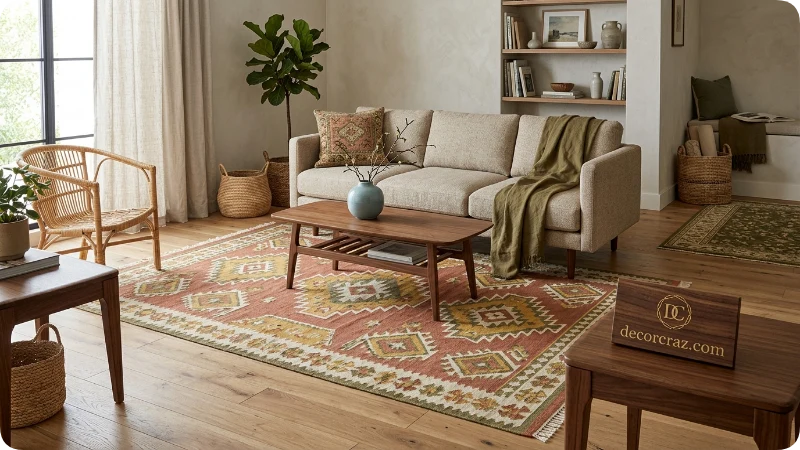
The best rug style complements your existing furniture and architecture. You do not need to redesign the entire room to make a new rug work.
Modern and Minimalist
Choose a solid color rug, subtle geometric pattern, or textured neutral. Restrained colors and simple shapes allow the furniture and room proportions to remain the main focus.
Bohemian and Eclectic
Consider vintage inspired patterns, layered textures, and several coordinated colors. Keep larger furniture pieces relatively simple if the rug already contains strong patterns.
Traditional
Persian inspired motifs, decorative borders, and detailed patterns can complement classic furniture and wood finishes. A faded pattern may create a more relaxed look than a sharply defined design.
Coastal
Cream, sandy beige, pale blue, and natural looking textures work well with light wood and relaxed upholstery. Consider maintenance carefully if the room receives frequent use.
Mid Century Modern
Geometric patterns, low pile textures, rust, olive, mustard, and muted blue can complement tapered wooden furniture and simple silhouettes.
Choose a rug pattern that works with the scale of your furniture rather than competing with every other decorative feature.
How to Arrange a Rug in an Open Plan Living Room

An open plan room may combine a living area, dining space, and kitchen without walls separating them. A rug can define the living area visually and distinguish the seating arrangement from the surrounding space.
Start by positioning the rug around the sofa and chairs rather than centering it on the entire room. Align its edges with the seating group and preserve clear paths between the living area and other parts of the home.
If the dining area also has a rug, the two rugs do not need to match exactly. Repeating a color, texture, or general design style can help the spaces feel connected without making them identical.
Common Rug Choosing Mistakes to Avoid
- Buying a rug that is too small: Measure the complete seating arrangement instead of choosing a size based only on the coffee table.
- Ignoring the floor color: A rug that blends completely into the flooring may lack definition unless a tonal look is intentional.
- Combining too many strong patterns: Bold upholstery, curtains, and rugs can compete for attention.
- Choosing appearance over maintenance: Check cleaning instructions before buying a pale or high pile rug.
- Forgetting the rug pad: A suitable non slip pad can help keep the rug in place. Confirm that it is compatible with your flooring.
- Blocking doors or walkways: Test the proposed placement before buying, especially near entrances and frequently used paths.
- Layering rugs without securing them: Overlapping rugs can shift or bunch. Use an appropriate non slip solution and check the edges regularly.
FAQs
Can You Put a Rug Over Carpet in a Living Room?
Yes. A rug can define a seating area over wall to wall carpet and introduce a different color or texture. Choose a construction that sits securely on the carpet, and use a compatible rug pad if necessary to reduce shifting.
Should a Living Room Rug Be Centered Under the Sofa or Coffee Table?
Position the rug around the seating arrangement as a whole. The coffee table usually sits within the rug’s central area, while the edges should relate to the sofa and chairs. Connecting the furniture is generally more important than centering the rug on the entire room.
What Rug Works Best With a Sectional Sofa?
Choose a rug large enough to connect the main sofa and chaise visually. An 8 by 10 foot rug may work in some layouts, while larger sectionals may need a 9 by 12 foot rug or another suitable size. Measure the complete arrangement before deciding.
Conclusion
Choosing the right living room rug can make your space feel more balanced, comfortable, and visually connected. From neutral rugs and vintage patterns to bold geometric designs and natural textures, the best option depends on your furniture, flooring, room size, and everyday needs.
Before buying, measure your seating area, consider how the rug will sit beneath your sofa and chairs, and choose a color that complements your existing decor.
Material and maintenance also matter, especially in busy homes with children or pets. If you have a small living room, focus on creating a connected seating area without blocking walkways.

I am Claudia Winkle, a passionate Name Researcher and Content Writer at decorcraz.com. I enjoy exploring the meanings, origins, history, and cultural significance behind names from around the world. Through carefully researched and engaging articles, I help readers discover unique names, understand their stories, and find meaningful naming inspiration for every occasion. My goal is to make name research simple, interesting, and useful for readers looking for the perfect name.