A large blank wall can make a living room, bedroom, or dining area feel unfinished, even when the furniture is already in place. The solution is not to cover every inch of the wall. Instead, choose decor that complements the room, relates to the furniture, and creates a clear focal point.
The best large wall decor ideas include oversized artwork, gallery walls, decorative mirrors, picture ledges, textured wall hangings, and architectural details.
Each option creates a different effect, so the right choice depends on your room’s layout, budget, decorating style, and if you want a temporary update or a permanent change. Before buying anything, measure the available wall space and consider what sits beneath it.
A well proportioned artwork or carefully arranged display often looks more intentional than several unrelated decorations competing for attention.
Hang One Oversized Piece of Artwork
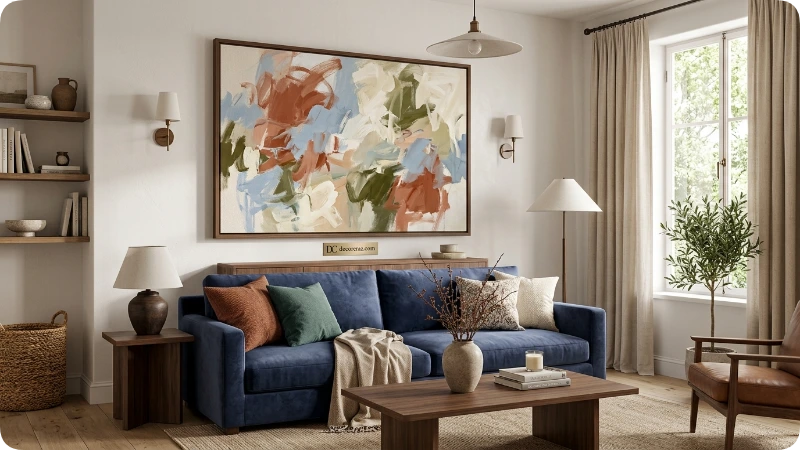
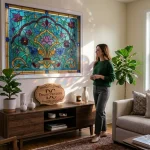
One large painting, framed print, or canvas is a simple way to decorate a wide wall without creating a busy arrangement. It establishes a focal point and works particularly well above a sofa, bed, console table, or fireplace.
Choose artwork that connects with the room’s existing colors. A muted landscape can complement a neutral living room, while a colorful abstract print can introduce contrast into a simple space.
How to style oversized artwork:
- Measure the furniture below the artwork before choosing a frame.
- Select a piece with enough visual presence to balance the wall.
- Leave open space around the artwork so it remains the main feature.
- Coordinate the frame with nearby furniture, lighting, or hardware.
As a starting guideline, artwork above a sofa often looks balanced when its width is around two thirds of the sofa’s width. Adjust this proportion according to the wall, ceiling height, and shape of the furniture.
Best for: Living rooms, bedrooms, dining rooms, and anyone who prefers a simple focal point.
Create a Gallery Wall With Art and Photographs

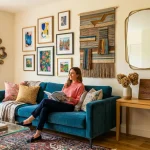
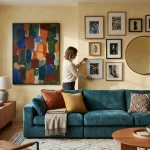
A gallery wall is a useful solution when one artwork cannot display everything you want to include. Combine family photographs, illustrations, prints, paintings, and meaningful keepsakes to create a larger arrangement.
You can choose a symmetrical grid for a structured appearance or mix different frame sizes for a more relaxed display. To keep the collection cohesive, repeat a connecting element such as black frames, warm wood finishes, a shared color palette, or similar artwork themes.
Before hanging the frames, arrange them on the floor and photograph the layout. You can also cut paper templates and attach them temporarily to the wall to test spacing and positioning.
Keep the collection visually connected rather than scattering small frames across the entire wall. The arrangement should read as one composition.
Best for: Family homes, staircases, living rooms, and interiors where personal photographs and collected artwork matter.
Use a Large Mirror to Add Light and Reflection
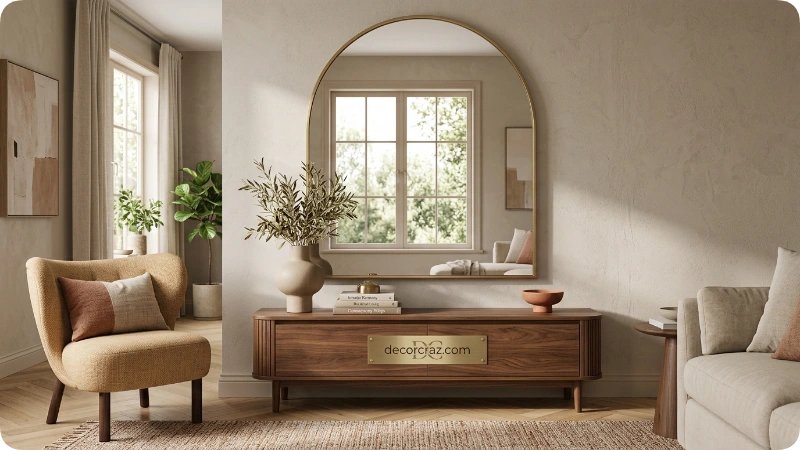
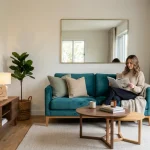
A large mirror can serve as both wall decoration and a practical feature. When positioned to reflect a window or another bright part of the room, it can make the space feel more open.
An arched mirror introduces curved lines into a room filled with rectangular furniture. A large rectangular mirror creates a more structured look and can work well above a console or sideboard.
Before choosing the position, consider what the mirror will reflect. A view of a window, greenery, or an uncluttered section of the room is generally preferable to a reflection of clutter.
Choose a mirror that relates in scale to the furniture beneath it, and make sure its mounting hardware is suitable for its weight. Heavy mirrors should be securely installed using appropriate fixings.
Best for: Entryways, dining rooms, living rooms, and spaces that benefit from reflected light.
Install Picture Ledges for Flexible Decorating

Picture ledges provide a flexible way to display artwork without hanging every frame separately. They allow you to rearrange prints, change photographs, and update the display as your preferences change.
A single long ledge can create a clean horizontal line above a sofa. Two or three ledges can help fill a taller wall, provided there is enough space between them for the frames and other objects.
For example, a living room ledge might hold three framed prints, a small ceramic vase, and a few carefully selected books. The display gains depth without requiring a large collection of accessories.
Before installation, check the wall construction, fixing requirements, and weight capacity. Leave some space between objects instead of filling every available section.
Best for: Living rooms, home offices, renters with suitable mounting options, and people who enjoy changing their displays.
Add Texture With a Large Wall Hanging
Wall decor does not have to consist of framed pictures. A large woven hanging, tapestry, quilt, or fabric panel can introduce texture while filling a broad section of wall.
This approach works particularly well in bedrooms and relaxed living spaces where additional framed artwork might feel too formal or repetitive.
Choose a textile that complements the room’s existing colors and materials. Natural fibers can suit a relaxed interior, while a patterned textile can introduce visual interest into a plain room.
Hang the piece securely and consider its proximity to heat sources. Check the material’s care requirements before placing it in a room where it may collect dust or moisture.
A textile wall hanging can also be an alternative to an expensive framed painting, especially when you want a large decorative feature with a softer appearance.
Best for: Bedrooms, reading corners, and living rooms that need texture.
Use Floating Shelves for Display and Storage
Floating shelves are a practical choice when a wall needs both decoration and useful storage. They create depth and provide space for books, framed prints, ceramics, and small collections.
For a wide wall, two long shelves can establish a strong horizontal arrangement. Staggered shelves may work better when you need to accommodate an architectural feature or an uneven wall layout.
Mix taller objects with shorter pieces and leave some areas empty. This creates visual breathing room and prevents the shelves from looking overcrowded.
Consider how much storage you actually need before choosing the shelf design. Decorative shelves can be relatively shallow, while shelves intended for heavier objects require suitable support and appropriate installation.
Avoid adding too many shelves to a room that already has substantial furniture or a busy decorative scheme.
Best for: Home offices, reading areas, and living rooms that need accessible display space.
Add Decorative Wall Paneling
Decorative wall paneling changes the wall’s surface rather than simply adding objects to it. Options include vertical battens, rectangular molding, wood slats, and flat decorative panels.
Vertical detailing can draw attention upward, while horizontal arrangements can emphasize the width of a room. Painted paneling can add structure without introducing another strong color, while wood finishes can connect the wall to existing furniture.
Before installation, plan around electrical outlets, switches, vents, and other architectural features. Consider the cost of materials, surface preparation, installation, and finishing.
Paneling is most appropriate when you want a lasting design feature. If you are renting or working with a limited budget, framed artwork or removable wallpaper may provide a more flexible alternative.
Best for: Homeowners, feature walls, and rooms that need additional architectural detail.
Create a Feature Wall With Wallpaper or a Mural
Wallpaper and murals turn the wall itself into the main decorative element. Instead of arranging individual objects, you introduce color, pattern, or imagery across a large surface.
A botanical pattern can bring natural detail into a room, while geometric wallpaper can complement a contemporary interior. A landscape mural can also create a focal point in a bedroom or dining area.
The key is to consider the rest of the room before selecting a pattern. Detailed wallpaper may work well with simple furniture, but it can compete with patterned rugs, colorful upholstery, and numerous decorative accessories.
Review a sample under the room’s actual lighting before committing to a full installation. Check the wall preparation requirements and confirm if the product is suitable for your surface.
Peel and stick wallpaper may offer a lower commitment option, but removal depends on the product, wall finish, and installation conditions.
Best for: Bedrooms, dining rooms, and feature walls where color or pattern is the main priority.
Arrange Coordinated Art Panels
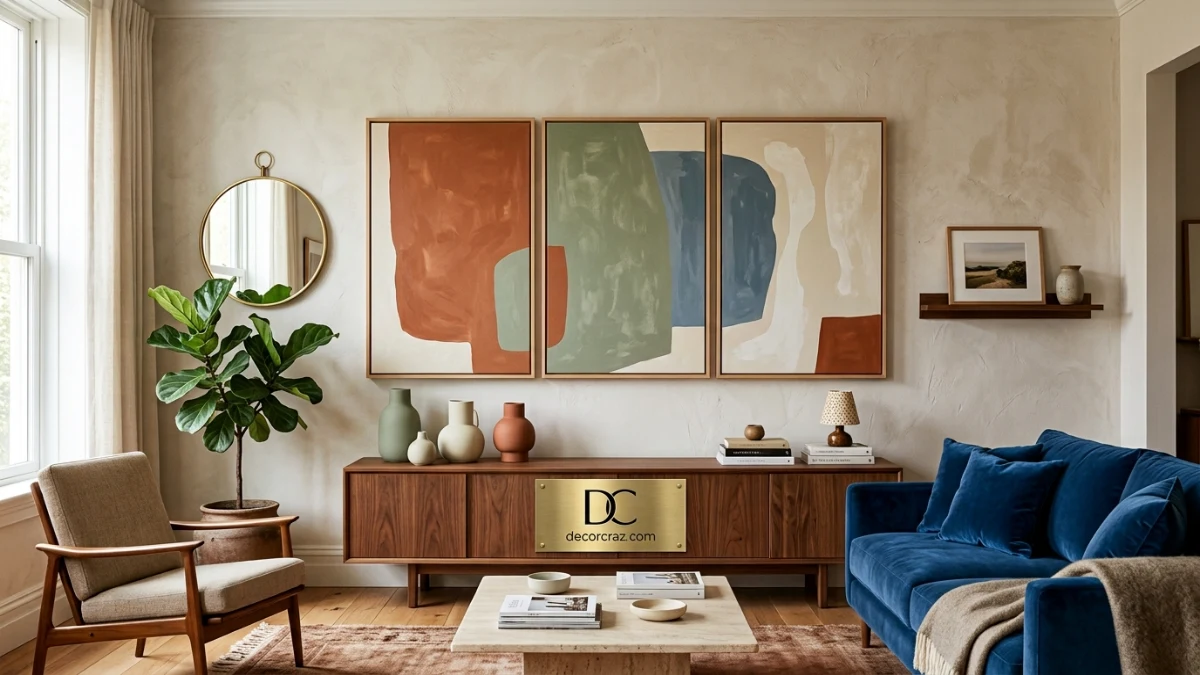
Two or three coordinated art panels can fill a wide wall while keeping the arrangement organized. This approach combines the impact of oversized artwork with the structure of a gallery wall.
The panels may form one continuous image or feature separate designs connected by color, subject, or artistic style. For example, three landscape panels can create a unified scene, while three abstract pieces can repeat the same colors in different compositions.
Measure the total arrangement, including the gaps between panels. The combined width is more important than the size of any individual piece.
Keep the spacing consistent and check how the panels relate to nearby windows, lighting, and furniture. Choose the number of panels according to the available space rather than following a fixed rule.
Best for: Wide sofa walls, dining rooms, and contemporary interiors.
Combine Artwork With Decorative Lighting
Sometimes a wall already has the right artwork but still feels unfinished, particularly in the evening. In this situation, lighting may be more useful than adding more decorations.
A picture light can draw attention to a painting, while a pair of wall sconces can frame artwork and create a more structured arrangement. A floor lamp can also illuminate a wall without requiring permanent electrical work.
Choose lighting that complements the artwork and the room’s usual activities. Avoid glare on glass fronted frames and consider how the light will look from different seating positions.
If you choose hardwired fixtures, have the installation completed by a qualified professional. Plug in or battery operated lighting may be a suitable alternative when permanent changes are not practical.
Best for: Living rooms, dining areas, hallways, and rooms used frequently in the evening.
How to Choose the Right Large Wall Decor
The best choice depends on the wall’s purpose, the furniture nearby, and the effect you want to create.
| Your situation | Suitable option | Main consideration |
|---|---|---|
| Empty wall above a sofa | Oversized artwork | Relate the artwork’s width to the sofa |
| Lots of family photographs | Gallery wall | Plan the complete arrangement first |
| Room needs reflected light | Large mirror | Check what the mirror reflects |
| Need display space | Floating shelves | Check mounting strength and weight limits |
| Room lacks texture | Wall hanging | Choose a suitable material |
| Want architectural detail | Wall paneling | Consider installation costs |
| Prefer bold patterns | Wallpaper or mural | Test a sample in the room |
| Very wide wall | Coordinated art panels | Measure total width and spacing |
| Artwork looks unfinished at night | Picture lighting | Consider glare and placement |
These options are starting points rather than strict rules. If your wall already includes a fireplace, large window, or built in shelving, additional decoration may not be necessary.
How to Get the Scale and Placement Right
Measure the usable wall area
Measure the section you intend to decorate, accounting for windows, doors, furniture, switches, and vents. Do not assume that the entire wall is available for decoration.
For a sofa wall, begin with the sofa’s width and the open space above it. For an empty wall without furniture, consider the room’s proportions and the distance from which the arrangement will usually be viewed.
Plan before hanging anything
Paper templates help you test sizes and positions without repeatedly making holes. For a gallery wall, arrange the frames together first. For coordinated panels, mark the outside edges and the spaces between them.
View the arrangement from the entrance or main seating area. A display that looks balanced up close may appear too small or too high from across the room.
Leave space around the main feature
A large wall does not need to be completely covered. One substantial artwork with open space around it can create a clearer focal point than several unrelated objects spread across the entire surface.
Start with one main element and add supporting decorations only when they improve the composition.
Budget Friendly and Renter Friendly Wall Decor
Decorating a large wall does not require an expensive purchase.
- Low budget option: Rearrange artwork you already own, display personal photographs, or create a simple textile hanging.
- Flexible option: Use picture ledges or suitable freestanding display furniture.
- Rental friendly option: Consider lightweight artwork and removable mounting products approved for your wall surface.
- Long term option: Explore custom framing, built in shelving, or decorative paneling if you own the property and want a permanent update.
Before using adhesive strips, check the manufacturer’s instructions, weight limits, wall surface requirements, and removal method. Some products are unsuitable for textured, delicate, dusty, or freshly painted walls.
Heavy mirrors, shelves, and framed artwork need appropriate support. Confirm the wall construction and hardware requirements before installation, and seek qualified help if the fixing method or load is uncertain.
Common Large Wall Decorating Mistakes to Avoid
Choosing artwork that is too small: A small piece may appear disconnected from the furniture below it. Check the proportions before purchasing.
Hanging artwork too high: Place the artwork in relation to the furniture and normal viewing position instead of automatically moving it toward the ceiling.
Combining too many focal points: A gallery wall, large mirror, several shelves, and bold wallpaper can compete for attention. Choose one dominant treatment.
Ignoring mirror reflections: A mirror can draw attention to clutter or glare when placed without considering the view.
Buying before measuring: Large pieces can be expensive or inconvenient to return. Measure the wall and check the artwork’s dimensions first.
Overloading shelves: Too many objects create visual clutter and increase the weight that the shelves must support.
Making permanent changes in a rental: Review your lease and obtain any required permission before drilling, painting, or installing fixed features.
FAQs
What should you put on a large blank wall?
Oversized artwork, gallery walls, mirrors, picture ledges, and textured wall hangings are useful options. Choose according to the room’s layout, the furniture beneath the wall, and if you need decoration, storage, or reflected light.
How do you decorate a large wall on a budget?
Reuse framed prints, personal photographs, fabric pieces, or artwork you already own. Arrange smaller pieces into a coordinated gallery or display them on suitable picture ledges. Planning the layout first can help avoid unnecessary purchases.
How can renters decorate a large wall without damaging it?
Consider lightweight artwork, freestanding displays, or removable mounting products specifically suited to your wall surface. Check the product instructions and rental agreement before installation, because no removable method is guaranteed to work on every surface.
Conclusion
Choosing the right large wall decor can transform an empty wall into a beautiful and functional part of your home.
From oversized artwork and gallery walls to decorative mirrors, floating shelves, and textured wall hangings, there are plenty of ways to make a large space feel complete.
The best choice depends on your room’s layout, decorating style, budget, and personal preferences. Before purchasing anything, measure your wall, consider the furniture nearby, and decide which option best suits your needs.
You can also explore budget friendly and renter friendly solutions if you want to avoid permanent changes.

I am Claudia Winkle, a passionate Name Researcher and Content Writer at decorcraz.com. I enjoy exploring the meanings, origins, history, and cultural significance behind names from around the world. Through carefully researched and engaging articles, I help readers discover unique names, understand their stories, and find meaningful naming inspiration for every occasion. My goal is to make name research simple, interesting, and useful for readers looking for the perfect name.