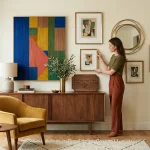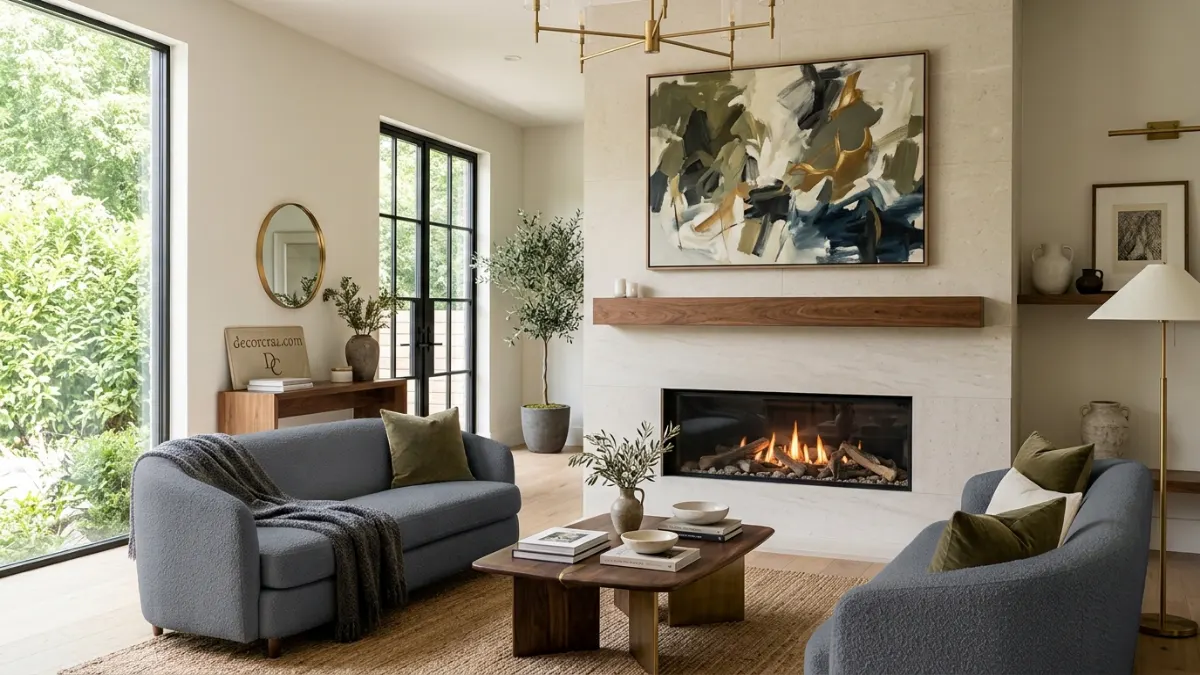
A fireplace can become the focal point of a living room without filling the surrounding area with decorations. The secret to modern fireplace decor is choosing a few elements that complement the fireplace’s shape, materials, and the rest of your interior.
You might refresh an existing mantel with artwork, introduce a stone or tile surround, create a floor to ceiling feature wall, or keep everything simple with a clean, minimalist design.
The right choice depends on your available space, decorating budget, and if you want a temporary update or a permanent renovation.
If you want an easy refresh, start by removing unnecessary accessories and choosing one main focal point. If the fireplace itself looks outdated, consider if changing its color, finish, or surrounding wall would make a greater difference.
Choose a Modern Fireplace Style That Fits Your Room
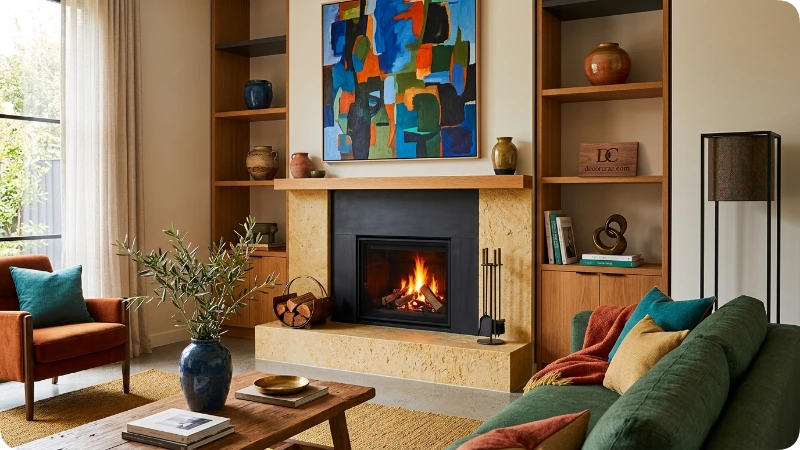
Before purchasing decorations, decide what you want people to notice first: the fireplace materials, artwork above the mantel, or the overall wall design.
Minimalist and Understated
A minimalist fireplace works well with simple shapes, neutral colors, and limited accessories. Choose a clean surround, one substantial artwork piece, and a few carefully selected objects.
This approach suits smaller living rooms and spaces that already contain patterned furniture or decorative accessories.
Modern Organic
Combine natural stone, wood, ceramic accessories, and textured fabrics to create a relaxed contemporary interior. A pale stone surrounded with a wooden mantel, for example, introduces contrasting textures without making the wall feel busy.
This style works particularly well when the room already features wooden furniture, natural flooring, or neutral upholstery.
High Contrast Contemporary
Pair a dark fireplace surround with light walls or use a black firebox against pale stone. Repeating the darker color in a picture frame, side table, or lamp helps connect the fireplace with the rest of the room.
Use contrast carefully in smaller spaces, where a large dark feature can dominate the wall.
Art Led and Expressive
If you prefer a more personal interior, make a colorful painting, distinctive mirror, or sculptural object the main feature. Keep the surrounding accessories simple so the focal point remains easy to appreciate.
Style the Mantel With a Few Well Chosen Pieces

The mantel is one of the easiest places to update because you can change the arrangement without remodeling the fireplace.
Start With One Focal Piece
Choose a large framed print, a suitable mirror, or an interesting sculptural object. A substantial feature usually creates a clearer focal point than several small decorations.
As a flexible styling guideline, artwork around two thirds the width of the mantel can look balanced. Adjust the size according to the fireplace’s proportions and the room’s layout.
Add Height and Texture
Use one or two supporting objects to complement the main feature. A tall ceramic vase can balance a short stack of books, while a small sculpture can introduce contrast against a smooth wooden mantel.
The objects do not need to match exactly. Their size, shape, color, and material should work together.
Leave Some Space Empty
Avoid covering the entire mantel with accessories. Empty space allows the remaining objects to stand out and keeps the fireplace from looking cluttered.
If the arrangement feels crowded, remove a few pieces before buying anything new.
Try Asymmetrical Styling
Place a taller object toward one side and balance it with smaller objects on the other. This creates a more relaxed arrangement than placing identical decorations at both ends.
For shallow mantels, keep accessories compact and stable. Any decorative objects near an operating fireplace must also remain outside the required heat clearances.
Make a Statement With Artwork or a Mirror
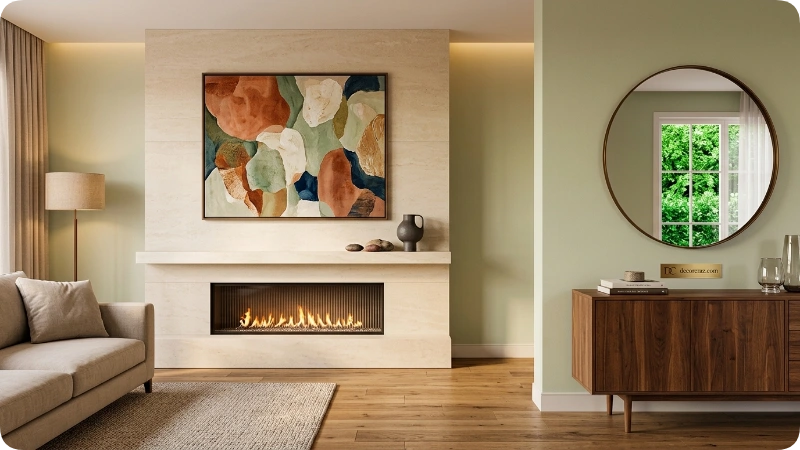
The wall above the fireplace can look unfinished when artwork is too small or positioned without considering the surround.
Choose Artwork for Color and Personality
Artwork is a good choice when you want to introduce color or connect the fireplace with the room’s existing palette.
For example, if a painting contains muted green and warm beige, you can repeat those colors in a cushion, ceramic vase, or nearby decorative accessory.
Choose a piece that relates to the width of the fireplace rather than selecting artwork based on appearance alone.
Use a Mirror to Introduce Shape
A round or arched mirror can soften a fireplace dominated by rectangular lines. A simple black frame creates contrast, while a wooden frame can complement natural materials.
Consider what the mirror will reflect before installing it. Reflecting a window can bring more daylight into the composition, while reflecting a cluttered area may make the room feel busier.
Try Layered Artwork
A large central artwork with a smaller framed piece beside it can create a collected look. However, make sure the mantel is deep enough and that the frames can be secured safely.
For a working fireplace, check the manufacturer’s requirements for artwork, frames, mounting hardware, and other materials near the heat source.
Use Stone, Tile, or Plaster to Transform the Surround
If the fireplace itself feels dated, updating the surround may have a greater impact than changing the accessories.
| Material | What It Adds | Best Suited To |
| Natural or limestone look stone | Texture and an architectural focal point | Minimalist and organic interiors |
| Marble or marble look finishes | Distinctive veining and visual continuity | Contemporary living rooms |
| Geometric tile | Pattern and contrast | Simple rooms that need more visual interest |
| Smooth plaster | A clean, understated surface | Minimalist interiors |
| Painted brick | A refreshed color while retaining brick texture | Existing brick fireplaces |
| Wood accents | Warmth and contrast | Rooms with wooden furniture or flooring |
Should You Use One Material or Combine Two?
A single material creates a more continuous appearance. This works well when the fireplace is large or the room already contains several patterns.
Two complementary materials can add depth. For example, pale stone beside walnut toned wood creates contrast without requiring multiple decorative accessories.
Avoid combining too many competing finishes in a small area.
Always confirm that paint, tile, adhesives, cladding, and other materials are suitable for the fireplace and its heat exposure. Decorative finishes should never obstruct ventilation or required service access.
Take the Fireplace Wall All the Way to the Ceiling
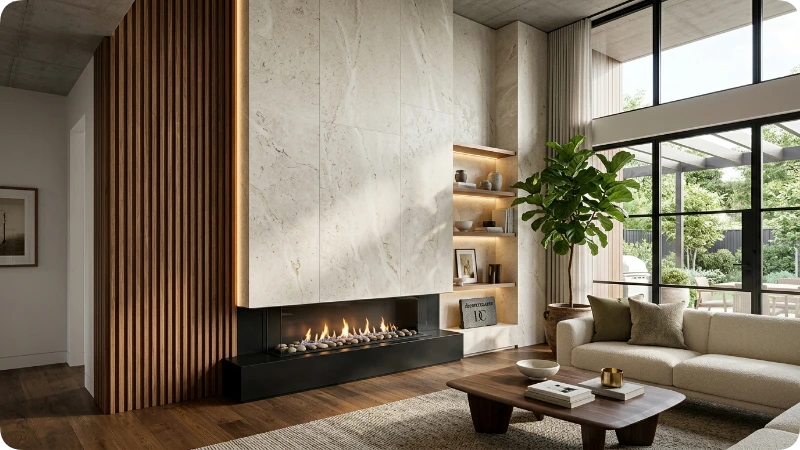
A floor to ceiling fireplace treatment can make the wall feel more connected and visually substantial. It is particularly useful when the fireplace sits beneath a high ceiling or occupies a prominent part of the room.
Full Height Stone or Plaster
A continuous stone or plaster surface creates a strong architectural feature. Choose this approach when you want the fireplace to remain the room’s main focal point.
Vertical Wood Detailing
Vertical wood elements draw attention upward and introduce a linear pattern. Choose a finish that relates to the room’s existing wood tones.
Built In Cabinetry and Shelving
Built ins can frame the fireplace while providing useful storage. They are particularly helpful when a wide wall needs more structure.
A full height treatment is not always the best choice for a small living room. Dark finishes and heavy detailing can make the wall feel overwhelming. A coordinated wall color or appropriately sized artwork may provide enough visual interest without a major renovation.
Before installing woodwork, cabinets, or wall cladding, check the fireplace manufacturer’s clearance and ventilation requirements.
Decorate a Fireplace Without a Mantel
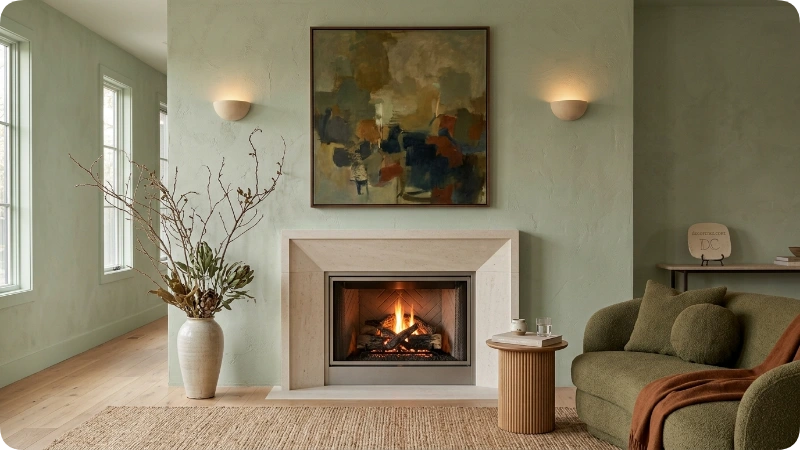
A fireplace does not need a mantel to look complete. The surround, wall, and nearby floor area can provide enough visual interest on their own.
Use One Large Artwork
A substantial painting or framed print can create a focal point without requiring a shelf.
Emphasize the Surround
Stone, tile, or a suitable textured finish can make the fireplace stand out. If the material already has a distinctive pattern, additional decorations may be unnecessary.
Add a Nearby Sculptural Object
A floor vase or side table can balance the composition when there is enough room around the fireplace. Keep walkways clear and maintain the required distance from heat sources.
Consider Wall Lighting
Suitable wall lights can frame the fireplace and provide additional illumination. Their placement should complement the wall’s proportions without competing with artwork.
For renters, movable artwork and freestanding accessories are often easier options than permanent shelves or architectural changes.
Refresh an Existing Fireplace on a Budget
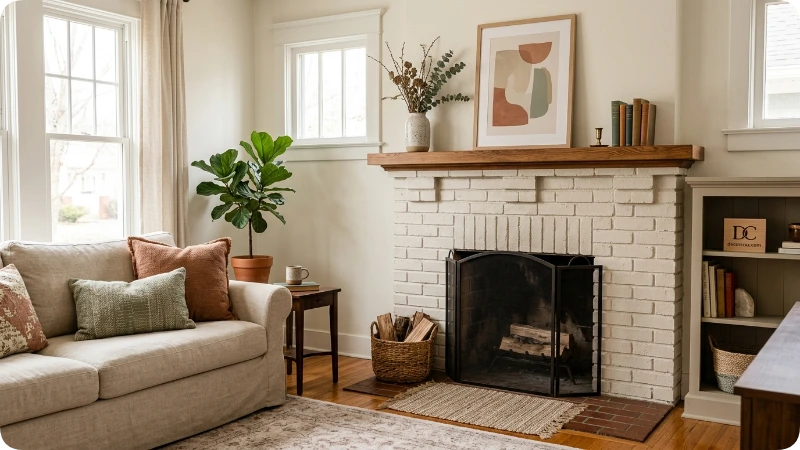
You do not need to replace a fireplace to change its appearance. Start by identifying the main issue: the color, mantel, surrounding wall, or decorative arrangement.
Rearrange the Mantel
Remove excess accessories and arrange the pieces you already own around one focal point. This costs nothing and can make the fireplace feel more organized.
Update the Surrounding Wall
A suitable paint color can help the fireplace blend with the room or create contrast. Test the color in different lighting conditions before making a permanent change.
Introduce One Contrasting Material
A wooden frame, ceramic vase, or dark metal accessory can introduce visual interest without requiring a full renovation.
Refresh Suitable Brick
Painting or limewashing may brighten an older brick fireplace. However, consider the original brick, the finish you want, and the long term maintenance before committing.
Keep Attractive Original Materials
If the brick or stone already complements your room, retain it and update the mantel or artwork instead. Painting over attractive natural materials may remove some of the fireplace’s character.
For a reversible test, try your proposed color on a suitable sample board and view it beside the fireplace during both daylight and evening hours.
Add Built In Shelves Without Making the Wall Feel Busy
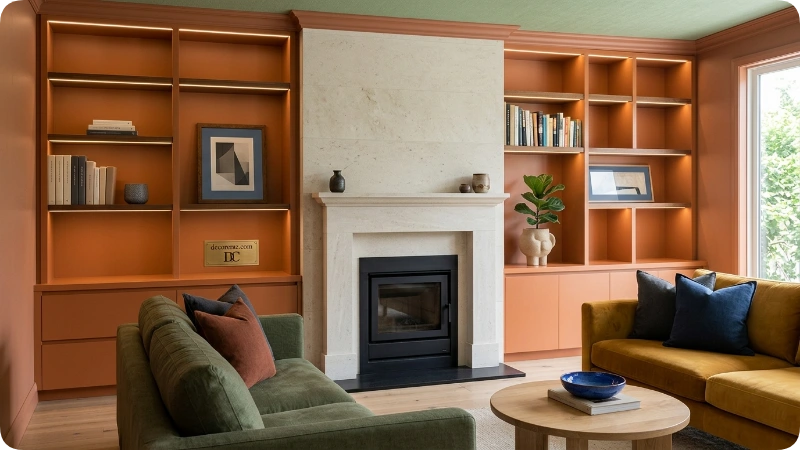
Built in shelves can balance a fireplace wall while providing storage for books and everyday objects.
For a clean appearance, repeat a limited number of finishes across the fireplace and cabinetry. White shelves beside pale stone create a subtle transition, while walnut shelves beside a light surround provide stronger contrast.
Style shelves with objects that have a clear purpose. Books can provide storage and color, while a ceramic vessel can break up a row of rectangular shapes.
Leave some shelves relatively empty instead of filling every compartment.
If you prefer a less permanent solution, consider a freestanding bookcase beside the fireplace, provided there is enough room and the placement is safe.
Built ins must not block ventilation, service access, or required clearances. Always verify the fireplace manufacturer’s installation requirements before making changes.
Coordinate the Fireplace With the Rest of the Living Room
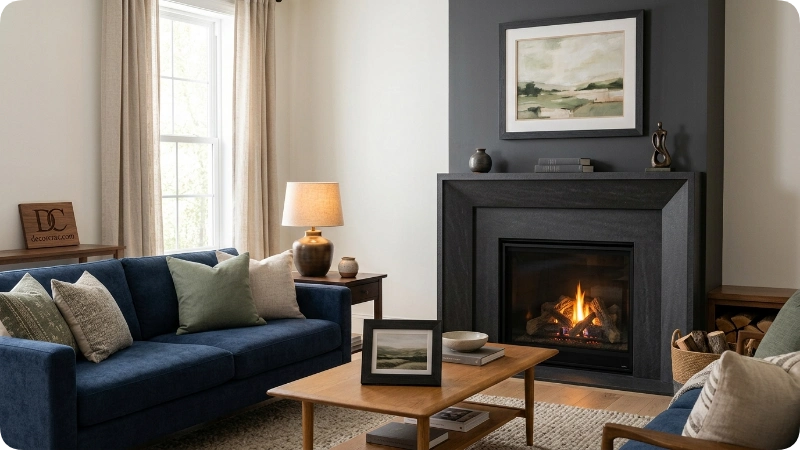
A fireplace can look disconnected when its colors and materials do not relate to the surrounding furniture.
Use the fireplace as a reference point for the room rather than decorating it in isolation.
- Repeat colors: If the fireplace is charcoal, repeat that tone in a picture frame, lamp, or side table.
- Connect materials: A wooden mantel can relate to a coffee table or shelving without requiring an exact match.
- Balance visual weight: A large, dark fireplace may need substantial furniture nearby, while a smaller fireplace can work with lighter furnishings.
- Consider sightlines: View the fireplace from the main seating position. Artwork that looks correctly placed while standing may feel too high or too small from the sofa.
What If the Television Is Above the Fireplace?
A television already occupies a large portion of the wall, so additional artwork and accessories can make the area feel crowded.
Keep the mantel display simple and avoid placing objects where they interfere with the screen.
Before mounting a television above an operating fireplace, check the requirements of both the fireplace and television manufacturers, including heat exposure and mounting clearances. A television on a separate wall may be a better choice if the required conditions cannot be met.
Style an Unused or Decorative Fireplace

A fireplace that no longer operates can still serve as a focal point. The best arrangement depends on if you want to emphasize the opening, use it as a display area, or make the surround blend into the wall.
Keep the Opening Simple
If the fireplace has attractive brick, tile, or stone, leave the opening relatively uncluttered. A restrained arrangement can complement the existing architecture.
Use a Decorative Arrangement
For a confirmed non operating fireplace, suitable decorative objects or artificial logs can add visual interest. Choose materials that complement the room and avoid overcrowding the opening.
Do not assume that a fireplace is permanently inactive just because it appears unused. Confirm its status and check for unresolved flue, ventilation, or maintenance issues before placing objects inside.
Never burn decorative materials or use an unverified fireplace opening for candles or other heat producing items.
Make the Surround the Main Feature
If you do not want to decorate the opening, focus on the surround itself. A suitable paint or finish can help the fireplace blend into the room without removing its architectural presence.
Fireplace Decor: Common Mistakes to Avoid
A few adjustments can make the difference between a deliberate design and a crowded display.
- Choosing artwork that is too small: Select a piece that relates to the fireplace’s width and height.
- Filling every inch of the mantel: Remove unnecessary objects so the focal point remains clear.
- Mixing too many finishes: Repeat a material or color elsewhere in the room to create visual continuity.
- Ignoring existing architecture: Attractive brick or stone may provide more character than a completely new finish.
- Copying designs without considering scale: A full height stone wall that works in a large room may overwhelm a compact space.
- Ignoring fire safety: Keep combustible decorations outside the required clearances and follow the appliance manufacturer’s instructions.
How to Choose the Right Fireplace Update
| Your Situation | Best Starting Point | Why It Works |
| You want an inexpensive refresh | Rearrange the mantel and update the wall color | Requires minimal changes |
| Your room feels cluttered | Remove accessories and choose one focal point | Reduces competing details |
| Your fireplace looks dated | Evaluate suitable paint, tile, or surround finishes | Addresses the main visual problem |
| You have no mantel | Use artwork or emphasize the surround | Creates a focal point without a shelf |
| Your fireplace wall looks empty | Consider built ins or a larger architectural treatment | Adds structure and potentially useful storage |
| You rent your home | Choose movable art and freestanding accessories | Avoids unnecessary permanent changes |
| Your fireplace is non operational | Style the opening after confirming its status | Makes use of the existing architectural feature |
Before spending money, identify the one thing you want to change most. If the problem is clutter, adding accessories will not solve it. If the fireplace itself dominates the room in an unappealing way, changing the surround may help more than restyling the mantel.
Frequently Asked Questions
How can I decorate a modern fireplace without remodeling?
Start with the existing mantel and surround. Remove unnecessary objects, choose one main artwork or mirror, and introduce a few supporting pieces in complementary colors and materials. You can also update the surrounding wall with a suitable paint color.
How do you decorate a fireplace with no mantel?
Treat the wall and surround as the focal point. One large artwork, a distinctive stone finish, or appropriately positioned wall lighting can provide visual interest. A freestanding object beside the fireplace can add balance without requiring a shelf.
What can I put inside a fireplace that is not being used?
Only decorate the opening after confirming that the fireplace is permanently out of service and safe for that purpose. Suitable decorative objects or artificial logs may work, but avoid anything that could ignite or obstruct a flue that remains in use.
How can I make an old brick fireplace look more modern?
First assess if the existing brick color works with the room. If it does not, suitable paint or limewash may create a lighter appearance. If the brick texture is attractive, retain it and modernize the mantel, artwork, or surrounding colors instead.
Conclusion
Modern fireplace decor ideas can help you create a living room that feels balanced, stylish, and connected to your personal taste. If you prefer a minimalist mantel, statement artwork, natural stone, modern tile, or built-in shelving, the best choice depends on your room’s size, existing materials, and budget.
You do not always need a major renovation to refresh your fireplace. Simple changes, such as rearranging accessories, updating the wall color, or introducing complementary textures, can make a noticeable difference.
Focus on one main feature, avoid unnecessary clutter, and choose decorations that work with the rest of your interior. If you have an operating fireplace, always follow the manufacturer’s safety and clearance requirements.

I am Claudia Winkle, a passionate Name Researcher and Content Writer at decorcraz.com. I enjoy exploring the meanings, origins, history, and cultural significance behind names from around the world. Through carefully researched and engaging articles, I help readers discover unique names, understand their stories, and find meaningful naming inspiration for every occasion. My goal is to make name research simple, interesting, and useful for readers looking for the perfect name.