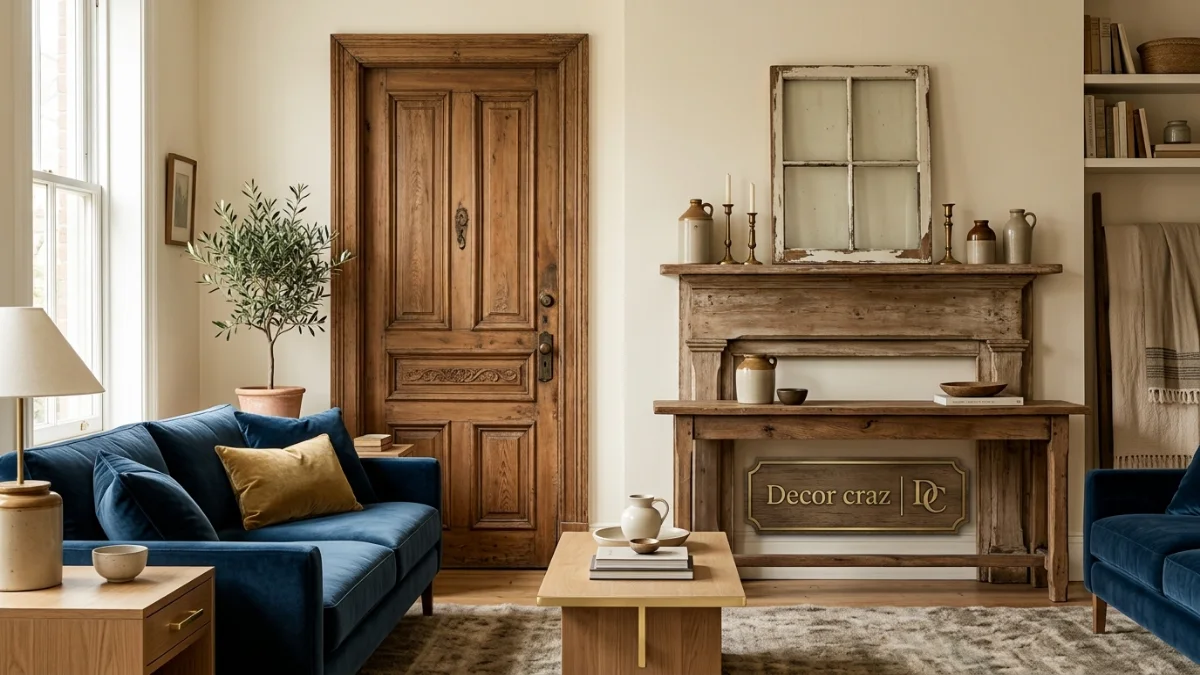
Architectural salvage can be the missing layer in a room that feels too new, too plain, or visually disconnected. An old door, carved corbel, window frame, mantel, shutter, or piece of reclaimed trim can add architectural presence without requiring a full renovation.
The most effective approach is not to fill a room with old pieces. Start with one salvage element that has enough scale or detail to matter, then surround it with simpler furniture and decor.
This lets the worn wood, aged metal, old glass, or original craftsmanship become the focal point instead of competing with everything around it.
Architectural salvage generally refers to building materials, fixtures, and decorative elements recovered from older buildings and reused in another setting. Common examples include doors, windows, mantels, moldings, corbels, hardware, tiles, railings, and lighting.
Start With One Strong Salvage Piece
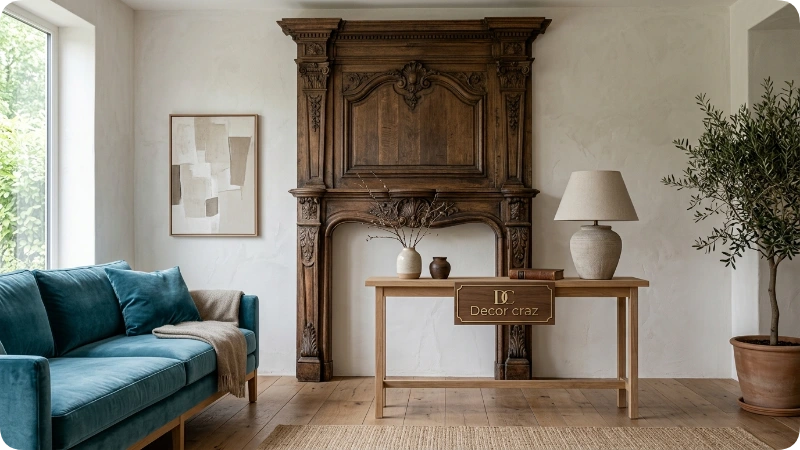
If you’re new to architectural salvage, don’t begin by collecting several unrelated pieces. Choose the item that solves the biggest visual problem in your room.
A blank wall may need an old window or carved panel. A plain fireplace may benefit from a salvaged mantel. A modern entryway may need an antique door, hooks, or architectural trim to give it more visual weight.
The reason this works is simple: architectural salvage already contains strong visual information through its proportions, surface wear, construction details, and age. Adding too many equally noticeable pieces can make the room feel crowded.
Good starting pieces
- An antique door behind a console or sofa
- A salvaged window used as wall art
- A pair of corbels on a shelf or mantel
- An old mantel as a decorative focal point
- Vintage shutters framing artwork
- Salvaged trim around a mirror
- Architectural hardware used on furniture
- A small iron grate or decorative panel displayed as art
For a modern room, one substantial piece usually creates clearer contrast than several small vintage objects scattered around the space.
Best for: beginners, modern homes, apartments, and rooms that need one strong focal point.
Choose Salvage by Scale, Not Just Age
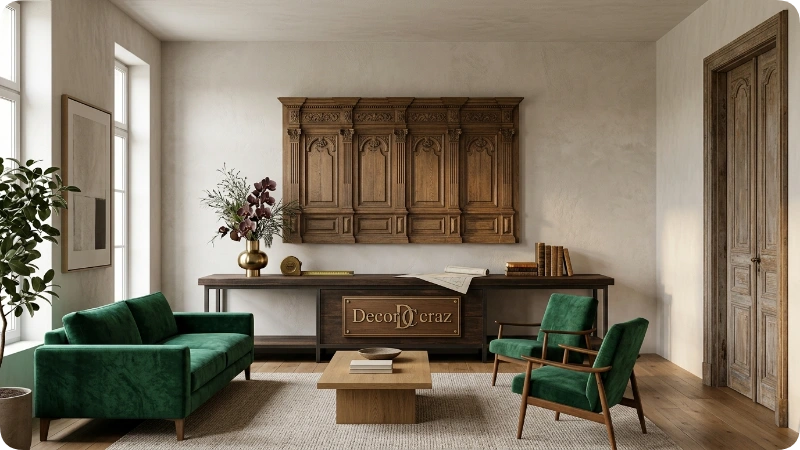
A beautiful architectural piece can still be wrong for your room.
Before buying a door, window, mantel, panel, or other large object, measure the wall, floor area, ceiling height, available depth, and the route through which the piece must enter the home. Salvage often comes in unusual dimensions, so assuming that an old architectural element will fit like a modern product can create expensive problems.
Think about the visual weight as well as the physical dimensions.
A tall carved door can add height behind a low console. A wide mantel can anchor a large wall. A small corbel may disappear on a broad wall but work perfectly on a shelf.
A useful buying test
Before purchasing, ask:
- Where exactly will it go?
- What will sit beside or below it?
- Does its width relate to the furniture nearby?
- Can I safely move and support it?
- Will I still like the piece if the room is viewed from across the space?
If you cannot answer the first two questions, it may be better to keep searching.
Use Old Doors as Architecture Without Rebuilding the Room

Old doors are among the most versatile salvage pieces because their proportions already resemble large scale wall art.
A paneled door can lean behind a console, sit behind a bed as a headboard style backdrop, or become a decorative screen. A pair can frame a piece of artwork or a console when their dimensions allow it.
The strongest application depends on the room.
In a bedroom
Use a pair of narrow doors behind a bed when you want vertical emphasis. Keep the bedding and nearby furniture relatively simple so the door panels remain visible.
In an entryway
A single weathered door can provide height behind a slim console. Add functional pieces such as a lamp or small bowl rather than covering the door with numerous accessories.
In a living room
A large door can act as a backdrop behind a console or seating area. This is especially useful when a newer home lacks architectural detail.
For a rental, leaning or freestanding applications can reduce the need for permanent alterations. Heavy pieces still need to be stabilized appropriately so they cannot tip.
Turn Salvaged Windows Into Framed Wall Decor

Old windows bring both structure and repetition to a wall. Their individual panes create a built in grid, which means they can work as art even without adding much decoration.
A window frame can be:
- Hung above a console
- Leaned behind a sideboard
- Placed above a mantel
- Used as a backdrop for artwork
- Layered behind a mirror where proportions allow
- Displayed beside another architectural element
If the original glass is damaged, loose, or unsuitable for the intended setting, treat the frame as the decorative element rather than assuming the glass must remain.
A window with many small panes has a busier visual rhythm than a simple four pane frame. Pair a highly divided window with calmer furniture and fewer surrounding objects.
Let Corbels, Brackets, and Trim Add Small Scale Architecture

Not every salvage piece needs to dominate a room.
Small architectural elements are useful when you want character without changing the room’s basic layout. Corbels can sit on a shelf, support a properly constructed display surface, or simply be displayed as sculptural objects. Decorative trim can frame artwork, mirrors, shelves, or architectural openings.
The key is to give the piece a clear job.
A corbel that simply sits on an already crowded shelf may look like another object. The same corbel positioned beneath a shelf has a structural visual role, so its shape becomes easier to understand.
This is particularly useful in smaller homes where a large salvaged door or mantel would overwhelm the available space.
Mix Salvage With Modern Pieces
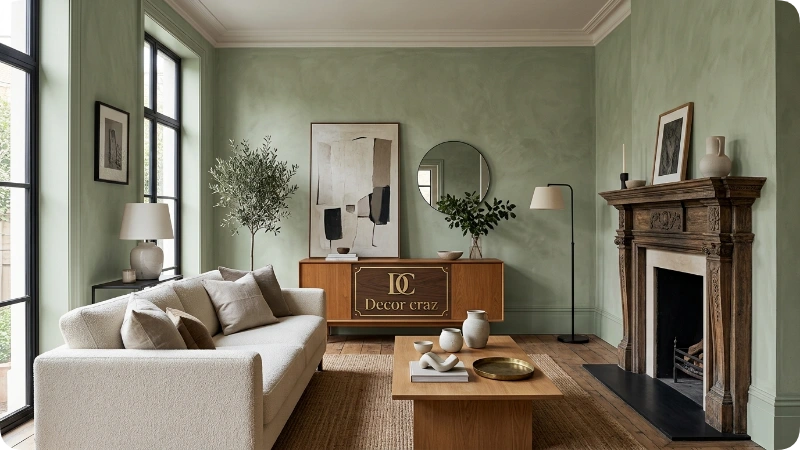
Architectural salvage does not require an entirely vintage room.
In fact, a clean lined sofa, simple dining table, contemporary lamp, or restrained cabinetry can make an old architectural piece easier to notice. The contrast between old and new creates a visual boundary around the salvage.
Try this formula:
Old architectural element + simple modern furniture + repeated color or material
For example, pair a weathered wood door with a simple upholstered bed. Or place an ornate salvaged mantel against a relatively quiet wall with modern furniture.
You do not need every object to belong to the same period. Instead, look for connections in color, material, shape, or scale.
A dark wood salvage piece can relate to another dark wood element elsewhere. Aged brass hardware can connect with a brass lamp. A black iron architectural fragment can repeat a dark metal detail in the room.
The goal is not perfect matching. It is visual connection.
Use Salvage as Functional Decor
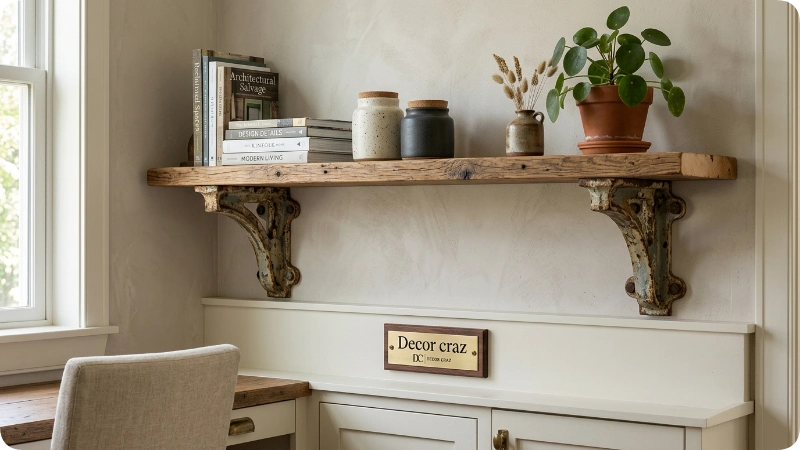
The most useful architectural salvage pieces often do more than look interesting.
An old door can become a backdrop. Salvaged hardware can update a cabinet. Architectural brackets can support a shelf when properly installed. Reclaimed boards can become shelving or a tabletop when their condition and construction make that use appropriate.
Functional applications make salvage feel integrated rather than displayed as a collection.
Consider the original shape
A long narrow piece may naturally work as a shelf or ledge. A broad door may make sense as a vertical panel. A decorative iron grille may work as wall art. A small set of hooks may belong near an entryway.
Let the original geometry suggest the new role instead of forcing every object into the same type of DIY project.
For pieces that will carry weight, become part of a structural installation, or support people or heavy objects, have the construction and attachment method evaluated by an appropriately qualified professional.
Create Vintage Character Without Permanent Installation

You do not need to alter your home’s architecture to use architectural salvage.
For renters or homeowners who want flexibility, focus on pieces that can be displayed without cutting into walls or rebuilding openings.
Low commitment options
- Lean a large door or window in a suitable location
- Place small corbels on shelves
- Use an old frame around existing artwork
- Display architectural fragments on a console
- Layer a lightweight shutter behind a framed piece
- Use salvaged hardware on removable furniture pieces where appropriate
For large or heavy objects, reversible does not automatically mean risk free. Stabilization matters even when you are not permanently installing the piece.
This approach also makes seasonal decorating easier because the architectural element can remain in place while smaller artwork or accessories change around it.
Shop for Character, Condition, and Fit

Architectural salvage shopping is different from buying ordinary home accessories. You are purchasing an object with a previous life, so condition and dimensions matter as much as appearance.
Architectural Digest recommends bringing measurements and reference photos when shopping salvage, particularly when searching for doors, windows, and replacement architectural details.
Inspect before you buy
Look at:
- Structural cracks
- Loose joints
- Warped wood
- Missing hardware
- Rust or corrosion
- Broken glass
- Evidence of pests
- Peeling or deteriorating finishes
- Whether alterations have already been made
Also ask what is known about the item’s origin, previous use, dimensions, and repairs.
If you are buying a large or expensive piece, photographs alone may not reveal enough about its condition. In person inspection can be especially valuable for irregular or fragile pieces.
Where to look
Potential sources include:
- Architectural salvage yards
- Reclamation warehouses
- Estate sales
- Antique shops
- Restoration suppliers
- Auctions
- Local marketplaces
- Specialist online sellers
Salvage yards are particularly useful when you want architectural components rather than ordinary vintage accessories.
Preserve Patina Instead of Making Everything Look New

The worn surface is often part of what makes architectural salvage visually useful.
You do not necessarily need to strip old wood, repaint every surface, or polish aged metal until it looks new. Cleaning, stabilizing, and preserving the existing character can produce a more convincing result than aggressive restoration.
This is a design choice, not a requirement. If the finish is damaged, unstable, contaminated, or unsuitable for indoor use, preservation may require professional assessment rather than simply leaving it untouched.
The visual difference is important:
Patina gives you variation, texture, and evidence of age.
Damage compromises the material’s stability or safe use.
Those are not the same thing.
A chipped edge that is stable may contribute character. A loose section that can fall off is a condition problem.
Know When Salvage Should Stay Decorative

Some architectural elements are better treated as decorative objects than functional building components.
An old door can be beautiful as wall art without being the right choice for a working doorway. An antique window can provide visual structure without being suitable as a modern replacement window. An old plumbing fixture can look interesting without being appropriate for a functioning water system.
This distinction matters because historical dimensions, materials, hardware, and modern building requirements may not align.
If you want to install a salvaged element into an actual building system, check local requirements and have the piece assessed when necessary. Decorative reuse and functional installation are different projects.
Be especially careful with old painted materials
For U.S. homes and renovation work, the EPA notes that pre 1978 properties are more likely to contain lead based paint and that renovation activities such as sanding, cutting, or disturbing painted surfaces can create hazardous lead dust. The EPA recommends lead safe practices and, for relevant renovation work, qualified certified professionals.
Suspected asbestos containing materials also should not be identified by appearance alone. EPA recommends professional sampling when suspect materials may be disturbed during renovation.
So if an old architectural piece has deteriorating paint or involves cutting, sanding, demolition, or another invasive modification, stop and determine what the material contains before proceeding.
Match the Salvage to the Room

Different rooms benefit from different kinds of architectural character.
Living room
Try a mantel, large window frame, carved panel, corbels, or an architectural fragment above a console.
The living room usually has enough visual space for a substantial focal piece, but keep the surrounding accessories restrained.
Bedroom
Doors, shutters, carved panels, and narrow architectural screens work well behind the bed or on a side wall.
Use the salvage to create a strong backdrop rather than competing with patterned bedding, artwork, and multiple decorative layers.
Entryway
Choose smaller pieces when floor space is limited. Hooks, brackets, old trim, a narrow door, or a small architectural panel can establish the style without blocking circulation.
Kitchen
Hardware, old cabinet doors, reclaimed shelving, brackets, and small pieces of trim can add character without requiring the entire kitchen to look historic.
Dining room
A salvaged mirror, window, architectural panel, or substantial piece of trim can anchor a dining wall.
Keep the table and lighting visually clear so the architectural piece does not compete with the dining setting.
Five Common Mistakes to Avoid
Buying before measuring
A beautiful salvage find is not useful if it overwhelms the wall, blocks movement, or cannot enter the room.
Collecting too many statement pieces
When every object demands attention, none becomes a clear focal point. Give the strongest salvage piece enough visual space around it.
Restoring away the character
Aggressive sanding or refinishing can remove the very surface qualities that attracted you to the piece.
Treating decorative salvage like modern building material
Old doors, windows, hardware, tile, and fixtures may not meet modern functional requirements. Decide whether your piece is decorative or functional before modifying it.
Ignoring condition and material history
Peeling finishes, damaged surfaces, pests, unstable construction, and potentially hazardous materials deserve attention before an old piece enters a living space.
How to Choose the Right Salvage for Your Home

Use the simplest decision path:
Want the biggest visual change?
Choose a substantial door, mantel, window, panel, or other architectural focal point.
Have a small room?
Choose corbels, trim, hardware, small frames, or another compact architectural detail.
Renting?
Favor movable or minimally invasive displays, while still stabilizing heavy pieces.
Want a modern vintage mix?
Use one detailed salvage piece against simpler contemporary furniture.
Planning a renovation?
Choose the salvage before finalizing dimensions where possible, then verify fit, condition, and functional requirements.
Want a low risk first project?
Start with decorative display rather than structural installation.
The best piece is not necessarily the oldest, largest, or most ornate one. It is the one whose scale, condition, and visual character make sense in the space you actually have.
Frequently Asked Questions
Can architectural salvage work in a modern home?
Yes. A single old door, mantel, window, corbel, or architectural panel can provide contrast against clean lined furniture. The simpler the surrounding room, the more clearly the salvage’s shape and surface can be seen.
How do I make architectural salvage look intentional instead of cluttered?
Give the strongest piece a clear role and enough surrounding space. Repeat one visual quality such as dark wood, aged brass, or black metal elsewhere in the room rather than adding many unrelated vintage objects.
How should I shop for an old door or window?
Measure the intended location first and take those measurements with you. Check the item’s dimensions, depth, condition, hardware, and route into the home before buying.
Is old painted architectural salvage safe to use indoors?
It depends on the material, condition, age, and whether the finish will be disturbed. In the U.S., pre 1978 painted materials can involve lead based paint, so avoid sanding or cutting potentially painted surfaces until the appropriate safety assessment has been made.
Can renters decorate with architectural salvage?
Yes. Movable pieces such as leaning doors, window frames, corbels, small panels, and decorative hardware can introduce architectural character without a major renovation. Heavy pieces still need appropriate stabilization.
Conclusion
Architectural salvage vintage home decor is a practical way to bring character, texture, and architectural detail into a home without making every room feel overly traditional. The key is to choose pieces based on scale, condition, function, and how they connect with the existing space.
A salvaged door, window, mantel, corbel, or architectural panel can become a strong focal point when balanced with simpler modern furniture and decor. Before buying, always measure your space and inspect the piece carefully, especially when dealing with old finishes or materials.
You do not need a large collection to create a vintage look. Start with one meaningful architectural element, give it room to stand out, and build the rest of the room around it. With thoughtful placement and safe reuse, architectural salvage can make vintage style feel natural, personal, and practical.

I am Claudia Winkle, a passionate Name Researcher and Content Writer at decorcraz.com. I enjoy exploring the meanings, origins, history, and cultural significance behind names from around the world. Through carefully researched and engaging articles, I help readers discover unique names, understand their stories, and find meaningful naming inspiration for every occasion. My goal is to make name research simple, interesting, and useful for readers looking for the perfect name.