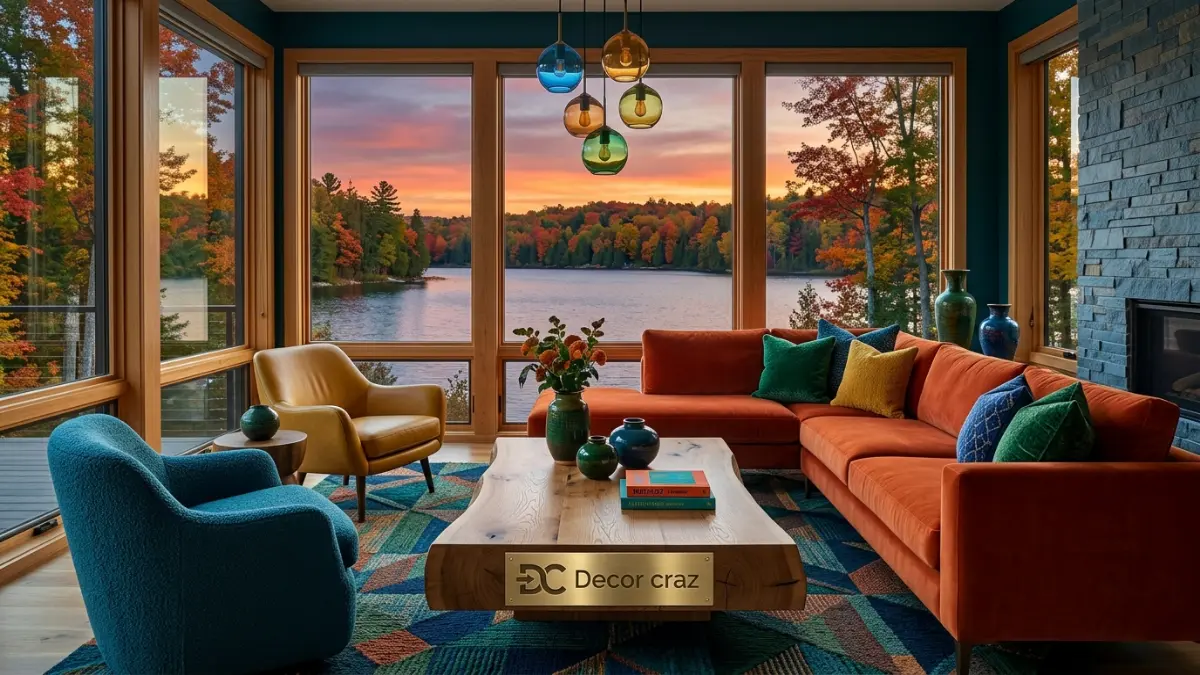
Modern lake house decor works best when it frames the landscape rather than competes with it. The strongest approach combines clean lined furniture and restrained styling with natural wood, stone, textured fabrics, and colors drawn from the water and surrounding landscape.
Large windows should remain visually open, while darker accents such as black frames or charcoal fixtures can provide definition.
Current lake house design guidance consistently emphasizes natural materials, comfortable furniture, uncluttered rooms, and a balance between modern and rustic elements.
The key is deciding where to add character and where to leave space. A modern lake house does not need anchors, oars, rope, or obvious nautical decorations everywhere.
Instead, let the architecture, views, materials, and a few carefully selected details establish the setting.
Build the Room Around the Best Lake View

The lake view should usually become the visual anchor, especially where large windows already provide a strong connection to the outdoors. Rather than placing furniture randomly around the room, orient the main seating toward the water or arrange it so people can enjoy the view without turning their backs on one another.
Keep the Window Zone Visually Quiet
Avoid tall furniture, excessive accessories, or bulky window treatments directly in front of important sightlines. Low sofas, lounge chairs, and slim consoles can preserve the view while still defining the room.
Use the View as Part of the Color Scheme
If the landscape contains blue water, green trees, gray stone, or warm grasses, echo those tones subtly indoors. This creates continuity without making the room look themed.
Best for: Homes with large windows, lake facing living rooms, and open plan spaces.
Trade off: A view oriented layout may reduce the number of possible furniture arrangements, particularly in smaller rooms.
Lower commitment option: Rearrange existing seating before buying anything. Test several orientations at different times of day to see which one preserves both conversation and the view.
Large windows and unobstructed lake views are repeatedly emphasized in modern lake house examples because the landscape is a major part of the interior experience.
Use Warm Neutrals Instead of a Nautical Theme
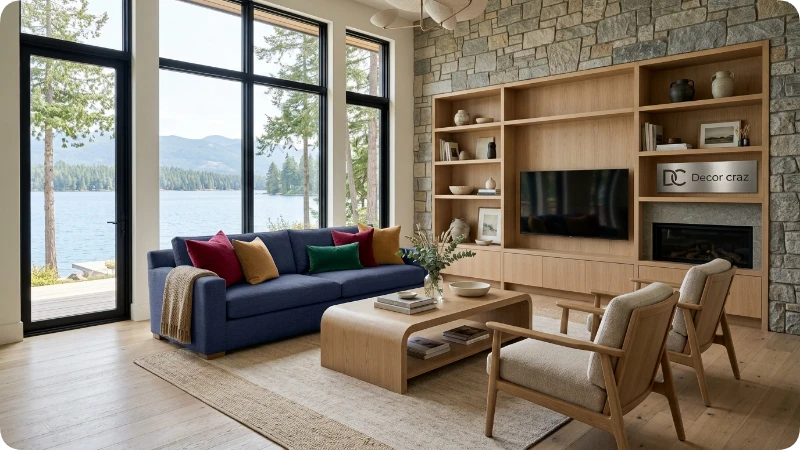
A modern lake house does not have to rely on bright navy, crisp white, anchors, and rope. A warmer neutral foundation can make the home feel contemporary while allowing the landscape to supply its own color.
Try combinations such as:
- Warm white with light oak
- Soft beige with charcoal
- Greige with natural stone
- Taupe with muted blue
- Cream with sage green
- Soft gray with walnut
The purpose of the neutral base is not to make every surface beige. It creates visual breathing room so stronger materials and outdoor views remain noticeable.
Add Blue Selectively
Blue works particularly well when it appears in smaller doses: an upholstered chair, artwork, rug pattern, or a few cushions. Muted blue gray can feel more integrated with a natural setting than highly saturated nautical blue.
Why it works: The palette connects the interior to water, stone, trees, and sand without turning the room into a literal lake theme. Nature inspired colors and restrained neutrals are common recommendations for lake house interiors.
Mix Modern Furniture With Natural Wood
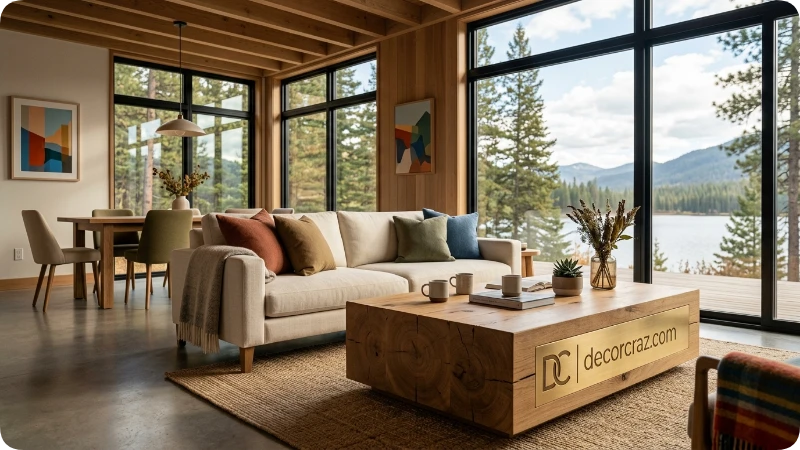
One of the easiest ways to make a lake house feel modern without losing its character is to combine clean furniture silhouettes with warm wood.
For example, place a streamlined cream sofa beside a chunky oak coffee table. Pair a simple upholstered dining chair with a substantial wood table. In a bedroom, use a low profile upholstered bed against a wood paneled wall.
The contrast matters. If everything is sleek, the room can feel disconnected from the natural setting. If everything is rustic, the modern direction becomes difficult to establish.
Choose One Strong Wood Element
Wood can appear on floors, ceilings, beams, cabinetry, furniture, or wall paneling. You do not necessarily need all of them.
If the house already has exposed beams or substantial wood flooring, allow those architectural features to carry the visual weight. Add simpler furniture rather than layering additional heavy wood everywhere.
Best for: Older lake houses that need modernization without completely removing existing character.
Lower commitment option: Introduce a wood coffee table, console, bench, or dining table before considering permanent paneling or cabinetry changes.
Modern lake house examples commonly combine clean lined furnishings with natural wood and other organic materials rather than choosing between strictly rustic and strictly contemporary styles.
Add Stone Where the Architecture Needs Weight
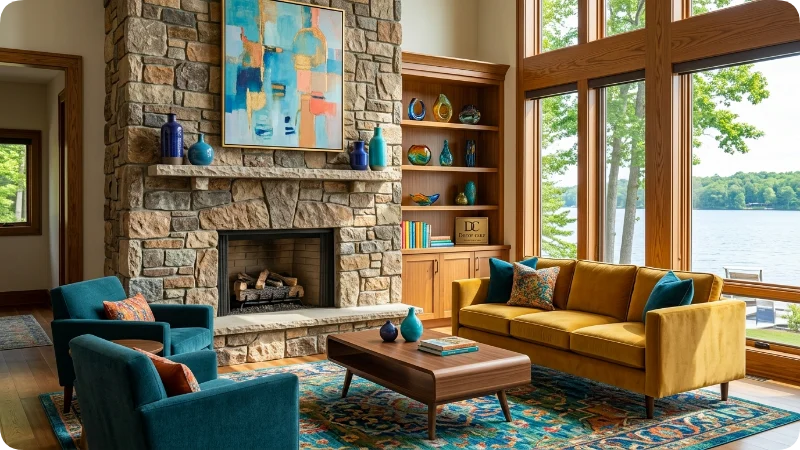
Stone can give a modern lake house a strong connection to its surroundings, particularly around fireplaces, entryways, or other architectural focal points.
A stone fireplace is especially effective because it can anchor a large living room without requiring lots of decorative objects. For a cleaner modern look, pair textured stone with simple furniture and restrained artwork.
Keep the Surrounding Elements Simple
If the stone has strong variation, avoid competing with it through a heavily patterned rug, ornate furniture, and a crowded mantel. Let the material remain the focal point.
Consider the Existing Architecture
A rustic stone fireplace may work beautifully with contemporary seating because the contrast makes both elements more noticeable. In a highly modern house, however, a very rugged stone treatment can feel disconnected unless similar natural textures appear elsewhere.
Design principle: Use stone to provide visual weight; use furniture and lighting to provide refinement.
Modern lake house projects frequently use stone alongside wood, glass, and clean architectural forms to bridge the natural setting and contemporary interior.
Frame the Windows With Simple, Modern Treatments

Window treatments need to solve a practical problem without hiding the reason many lake homes have expansive glazing in the first place.
For daytime privacy, glare control, or nighttime coverage, consider simple shades or full length curtains that can move completely out of the primary sightline.
Use Contrast Intentionally
Dark window frames can create a graphic architectural effect against pale walls and natural materials. Black or charcoal accents can then be repeated subtly in lighting, hardware, or furniture legs.
If the existing frames are already light, there is no need to force black into the room. A warm wood frame can support a softer modern style.
Best for: Homes with expansive windows where the architecture is already a major feature.
Trade off: Dark framing creates stronger visual contrast, which can make a room feel more graphic and less soft.
Black framed windows are specifically noted by design publications as a way to frame outdoor views and introduce contrast.
Make the Kitchen Modern but Connected to the Lake
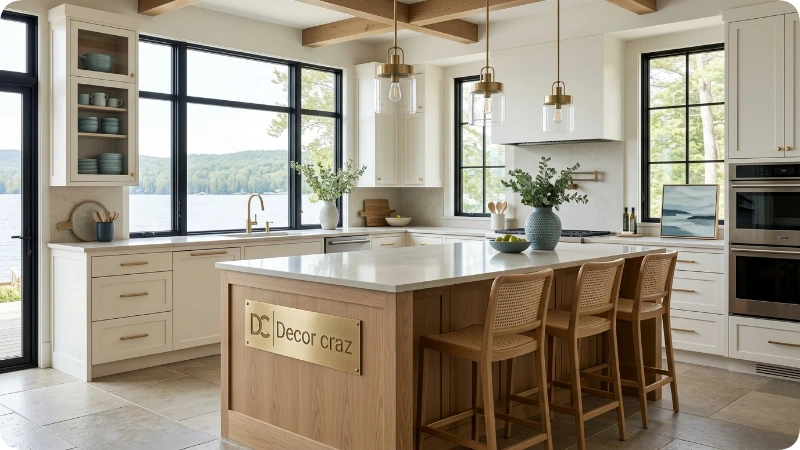
The kitchen is often one of the hardest rooms to balance because it needs to be highly functional while still belonging to the overall lake house scheme.
Use clean cabinetry, simple hardware, natural wood, stone surfaces, and restrained lighting. A large island can become the practical center of the room while also providing a gathering point for family and guests.
Combine Light Cabinetry With Wood
White or warm neutral cabinetry can keep the kitchen visually open. Introduce wood through an island, stools, shelving, or dining furniture rather than covering every surface.
Let Lighting Add Personality
A pair of modern pendants above an island can establish the contemporary character without requiring decorative clutter elsewhere.
In modern lake house examples, kitchens commonly combine wood finishes, large islands, clean cabinetry, substantial windows, and contemporary lighting.
Create a Bedroom That Feels Like a Quiet Retreat

Bedrooms benefit from a softer interpretation of modern lake house style. Instead of repeating the stronger architectural elements from the living room, use warm textiles, natural wood, simple bedding, and limited decoration.
A low profile upholstered bed can keep the room contemporary. Add a wood nightstand or dresser for warmth, then introduce muted blue, sage, or gray through bedding.
Keep the Bed Area Calm
If the bedroom has a lake facing window, avoid placing excessive accessories directly around it. A simple bench, small chair, or low dresser can provide function without blocking the view.
Use Texture Instead of More Color
Linen look bedding, woven shades, wool like rugs, and lightly textured throws can add depth without requiring a busy palette.
Best for: Primary bedrooms, guest rooms, and smaller lake house bedrooms where visual clutter can quickly make the space feel cramped.
Wayfair’s modern lake house guidance similarly combines natural wood with streamlined furniture and textured materials to keep bedrooms warm without abandoning a contemporary direction.
Design the Entryway for Real Lakeside Living
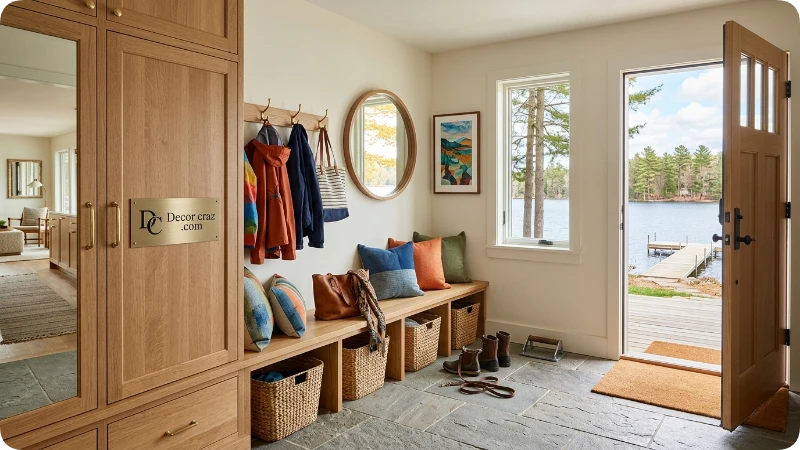
A beautiful lake house still needs somewhere to handle shoes, jackets, bags, towels, and outdoor equipment.
Instead of treating the entry as a purely decorative zone, give it practical storage that matches the rest of the interior.
Use Closed Storage for Visual Control
Cabinets or baskets can hide the less attractive everyday items. Add a few open hooks for frequently used belongings.
Choose Durable Materials
Wood, stone, washable textiles, and easy care flooring make more sense near entrances that receive wet shoes, dirt, and outdoor traffic.
A narrow bench can provide seating without consuming much floor space. Above it, a simple mirror or small artwork can finish the composition without creating unnecessary clutter.
Best for: Family lake houses, vacation rentals, and homes used frequently for outdoor activities.
Organizing lakeside essentials near the entrance is also highlighted in current modern lake house decorating guidance because practical storage supports the way these homes are actually used.
Extend the Modern Style to Outdoor Living Areas
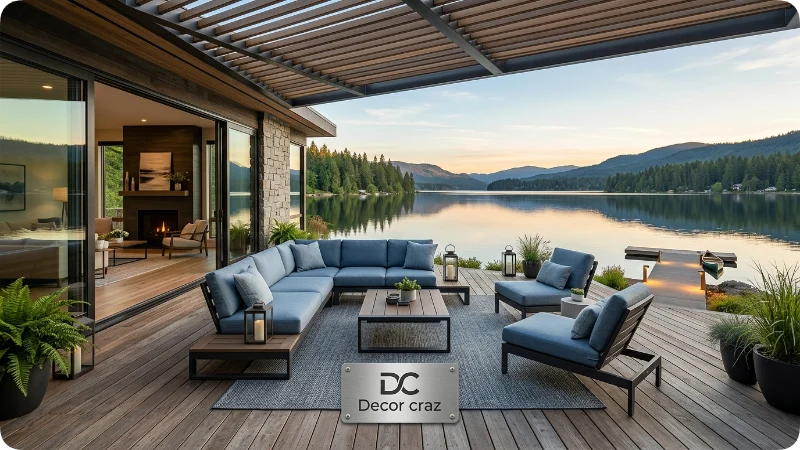
The lake house experience does not stop at the glass doors. A deck, porch, patio, or screened area can function as another living room when furniture and lighting are planned properly.
Start with comfortable weather appropriate seating arranged toward the water. A durable outdoor rug can visually anchor the seating area, while a low table provides a practical surface without obstructing sightlines.
Keep the Outdoor Palette Connected
Repeat one or two interior colors outside rather than creating a completely different scheme. For example, warm wood indoors can be echoed through outdoor furniture, while muted blue cushions can connect the seating to the lake.
Provide Shade Where Needed
Covered areas, umbrellas, or appropriately designed shade structures can make the outdoor space more usable during bright portions of the day.
Outdoor living, covered seating, weather appropriate rugs, and lake facing arrangements are recurring components in modern lake house examples.
Keep the Decor Edited, Not Empty
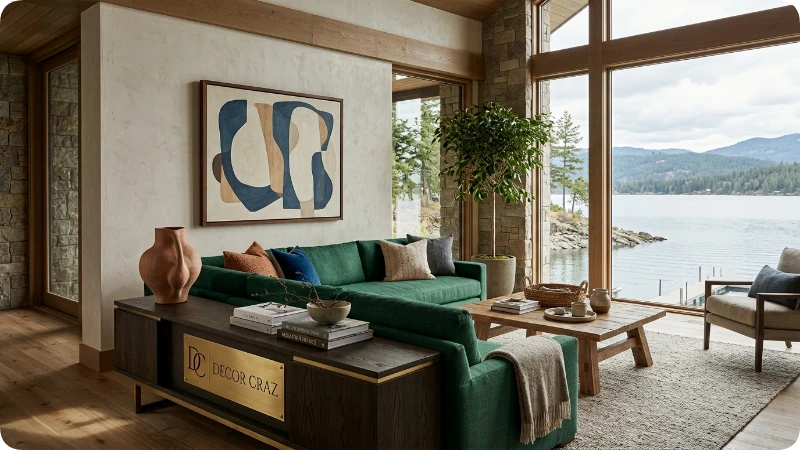
Modern lake house decor should feel intentional rather than bare. The difference comes from choosing fewer objects that have a clear role.
Instead of filling every shelf with lake themed accessories, select artwork, ceramics, books, baskets, or sculptural pieces that support the room’s scale and palette.
Use One Statement Instead of Many Small Pieces
A large artwork above a sofa can often create more visual impact than a collection of small decorations. Similarly, one substantial vase or sculptural object may work better on a console than several unrelated accessories.
Avoid Overdoing Nautical Details
A small reference to the setting can be enough. A shoreline photograph, locally meaningful object, subtle blue textile, or natural material can communicate the lake connection without turning the interior into a themed room.
This restrained approach is consistent with design guidance that recommends subtle, authentic lakeside references rather than excessive nautical motifs.
Choosing the Right Modern Lake House Approach
The best decorating direction depends mainly on the home’s existing architecture, the strength of its views, and how heavily the space is used.
| Situation | Focus On | Avoid |
|---|---|---|
| Large lake-facing windows | Low furniture, simple treatments, view-focused layout | Blocking sightlines |
| Rustic cabin | Modern upholstery, simple lighting, edited accessories | Making everything rustic |
| Glass & steel home | Warm wood, textured fabrics, organic materials | Too many cottage details |
| Small lake house | Light colors, multifunctional furniture, simplicity | Oversized furniture |
| Family retreat | Durable surfaces, practical storage, washable textiles | Fragile decor |
| Rental / easy update | Textiles, artwork, lighting, movable furniture | Permanent renovations |
The goal is not to force every lake house into the same visual formula. A modern lake home can be soft and warm, crisp and architectural, or somewhere between the two. What keeps the design coherent is the relationship between modern forms, natural materials, and the landscape outside.
Common Mistakes to Avoid
Blocking the Main View
Tall cabinets, oversized plants, or furniture placed directly in front of major windows can undermine one of the home’s strongest assets.
Using Too Much Dark Wood
Dark finishes can add contrast, but covering every surface in deep wood can make a smaller or naturally shaded room feel visually heavy.
Turning the Home Into a Nautical Theme
A lake house does not need anchors, ropes, paddles, and boat motifs throughout the room. A few context specific references are usually enough.
Mixing Too Many Design Languages
A modern sofa, rustic coffee table, traditional chandelier, coastal accessories, farmhouse signs, and industrial shelving can compete rather than complement one another. Choose a dominant direction and let supporting pieces reinforce it.
Ignoring Practical Use
Lake homes often involve wet footwear, outdoor equipment, guests, meals, and extended stays. Decorative choices should account for how the house is actually used, not just how it looks in photographs.
FAQ
How do you make a lake house look modern?
Combine clean lined furniture with warm natural materials, restrained colors, simple lighting, and uncluttered layouts. Keep lake views visible and use rustic elements such as wood or stone selectively rather than making every feature rustic.
What colors work best in a modern lake house?
Warm whites, beige, taupe, soft gray, muted blue, sage, and natural wood tones are flexible choices. Select colors that relate to the surrounding landscape rather than relying on a fixed nautical palette.
How can you decorate a lake house without making it look nautical?
Focus on the landscape instead of nautical symbols. Use natural wood, stone, woven textures, landscape inspired artwork, muted water colors, and simple modern furniture. This creates a lakeside connection without relying on themed accessories.
What materials work well for modern lake house interiors?
Natural wood, stone, glass, textured fabrics, and woven materials can create a strong connection between the interior and the outdoor environment. Combine them with cleaner furniture shapes and restrained finishes to maintain the modern direction.
Conclusion
Modern lake house decor is about balancing contemporary style with natural warmth and the beauty of the surrounding landscape. Clean lined furniture, warm wood, stone, soft neutral colors, and carefully chosen accents can create a comfortable and sophisticated retreat. Keep large windows and lake views unobstructed, choose durable materials for everyday use, and avoid excessive nautical decorations.
The most successful design choices are those that support the home’s architecture and how you actually use the space. With a thoughtful mix of modern forms and natural textures, your lake house can feel polished, welcoming, and closely connected to its waterfront setting.

I am Claudia Winkle, a passionate Name Researcher and Content Writer at decorcraz.com. I enjoy exploring the meanings, origins, history, and cultural significance behind names from around the world. Through carefully researched and engaging articles, I help readers discover unique names, understand their stories, and find meaningful naming inspiration for every occasion. My goal is to make name research simple, interesting, and useful for readers looking for the perfect name.