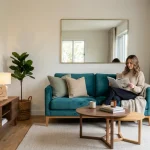
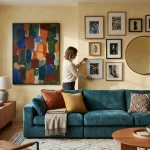
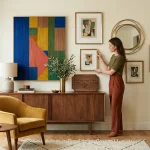
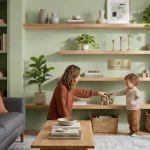
If your living room still feels light and summery when autumn arrives, you do not need to replace the sofa, repaint the walls, or cover every table with pumpkins.
A warmer seasonal look can come from a few deliberate changes: deeper color, heavier looking textiles, natural materials, and better evening lighting.
Looking for warm autumn living room decor that feels comfortable without making your space look cluttered? Create a cozy atmosphere with textured pillows, soft throws, warm wood, natural branches, and layered lighting.
These cozy warm autumn living room decor ideas work with neutral, modern, rustic, and small apartment interiors, helping you welcome the season without replacing your existing furniture.
Current fall decor coverage repeatedly points toward this more edited approach rather than filling rooms with obvious seasonal decorations.
Designers and home publications are emphasizing texture, warm color, natural materials, and layered lighting as ways to shift a room toward autumn while keeping its everyday foundation intact.
Quick answer:
Start with the furniture and colors you already have. Add one warm autumn palette, change the sofa textiles, introduce one natural focal point, and create softer pools of light. The result should feel like your living room in autumn not a completely different room.
Start With the Elements That Change the Room Most
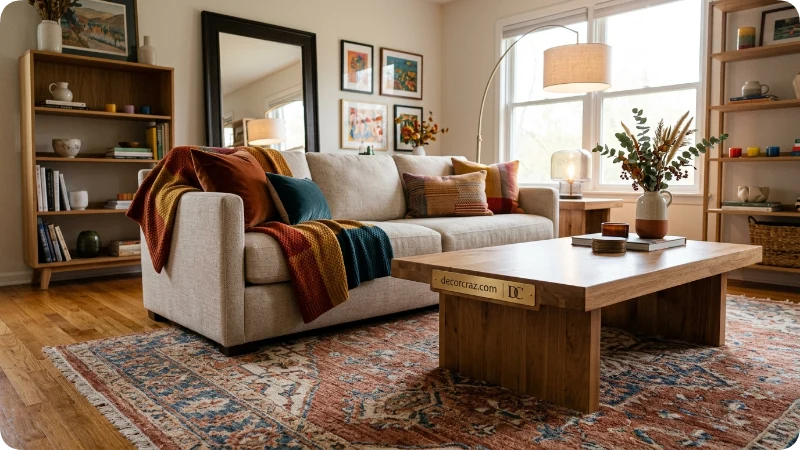
Not every part of a living room deserves a seasonal makeover.
The sofa, lighting, large textiles, and most visible surfaces usually have a bigger visual effect than a collection of small decorative objects. That makes them the best starting points when you want warmth without clutter.
A practical order is:
- Choose the color direction.
- Change one or two large textile layers.
- Adjust the evening lighting.
- Add one natural seasonal display.
- Remove anything that now feels unnecessary.
This approach also works well for renters because most changes are reversible. Pillow covers, throws, lamps, baskets, ceramics, and branches can create a noticeable seasonal shift without altering walls or built ins. Recent fall decorating guides similarly emphasize working with existing furniture instead of replacing it.
Choose a Warm Autumn Palette That Fits Your Existing Room

Warm autumn decorating does not have to mean bright orange.
A useful palette can include rust, terracotta, camel, warm brown, olive, muted mustard, burgundy, cream, and warm ivory. The right combination depends on the colors already present in your sofa, rug, walls, flooring, and curtains. These shades are repeatedly used in current autumn living room guidance because they can introduce seasonal warmth through relatively small pieces.
For a neutral living room
Cream, beige, taupe, camel, rust, and olive create a soft transition without making the room heavily seasonal.
Try:
- A rust pillow
- A camel throw
- A warm wood accent
- Olive foliage
- Cream or oatmeal textiles
For a gray living room
Gray can handle warmer autumn accents particularly well when the warm colors are introduced gradually.
Try rust, cinnamon, caramel, muted mustard, or olive rather than adding several unrelated colors at once.
For a brown or wood heavy room
You already have visual warmth, so you may need less color.
Use cream, muted green, burgundy, amber, or terracotta as accents instead of adding more brown everywhere.
For a colorful living room
Do not automatically add traditional fall colors. Instead, identify one warm color already present in your artwork, rug, or upholstery and repeat it in a seasonal textile.
Design rule: Let the existing room choose the autumn palette. This usually looks more integrated than starting with a collection of seasonal accessories and trying to make them fit afterward.
Layer Texture Before Adding More Decorations
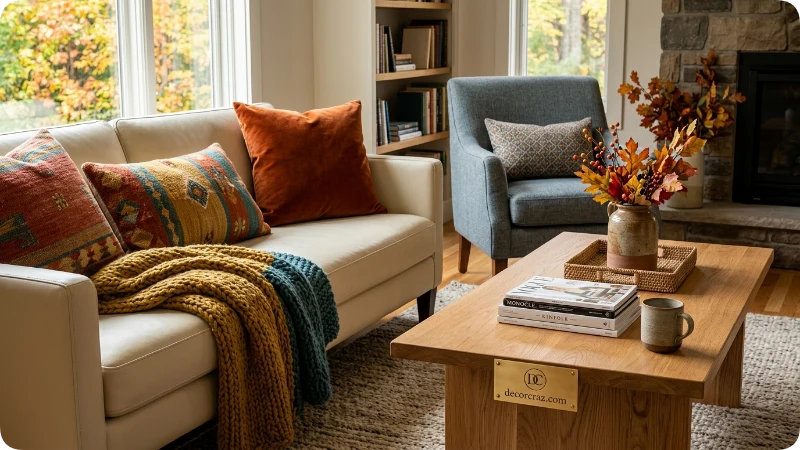
Texture can make a living room feel seasonally richer without making it look themed.
Current design guidance emphasizes mixing materials such as wool, velvet, linen, woven fibers, wood, and ceramics rather than depending entirely on pumpkins or other obvious autumn motifs.
The important part is contrast.
A smooth sofa can take a nubby or knitted throw. A sleek coffee table can be softened with a woven tray. A linen chair can work with a denser cushion.
You do not need five different textures in every corner. Choose materials that make sense with the furniture already there.
A simple texture combination
Smooth upholstery + woven pillow + knitted throw + wood or ceramic accent
The variety gives the eye something to notice without requiring lots of objects.
Warm Up the Sofa First
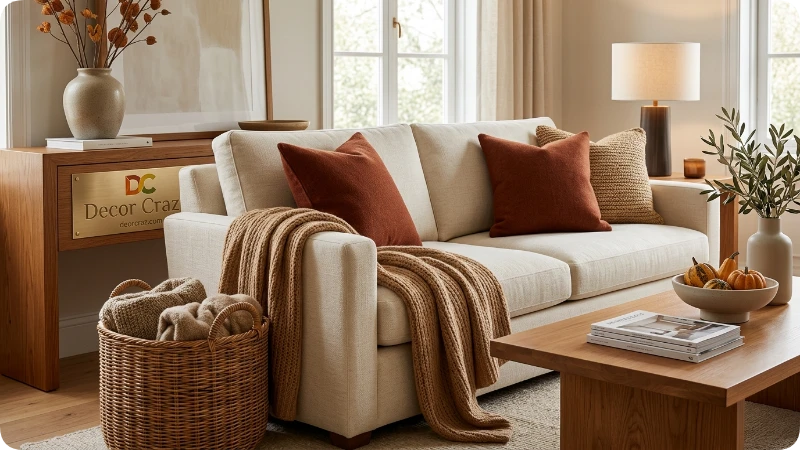
The sofa is often the largest visual surface in a living room, so changing its textiles can shift the room faster than decorating a shelf.
Instead of buying new furniture, try:
- Two autumn toned pillow covers
- One substantial throw
- A cushion in a different texture
- A basket nearby for extra blankets
If the sofa is already patterned, keep the new pieces simpler. If it is plain, you can introduce more texture or a restrained pattern.
A throw does not need to be perfectly folded. A casual drape can make the room feel more relaxed and functional while keeping the textile visible. Seasonal decorating sources frequently recommend pillow and throw swaps as relatively simple ways to refresh a living room.
Use Lighting to Create Autumn Warmth
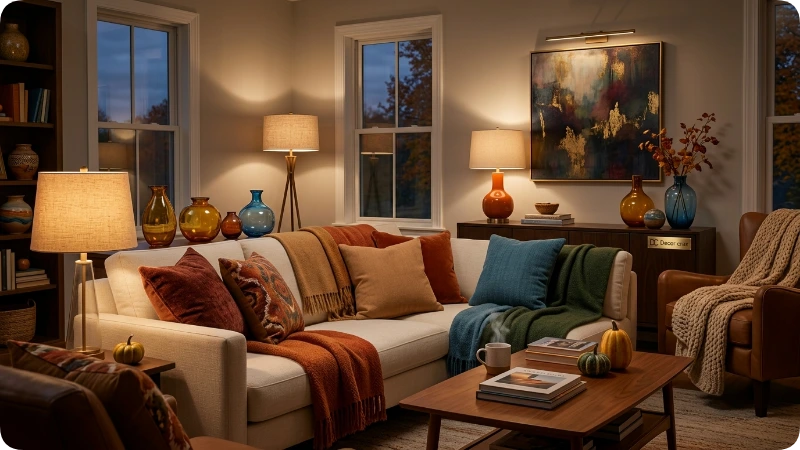
Lighting is one of the most useful changes because autumn evenings naturally make artificial light more noticeable.
Rather than depending on one overhead fixture, create several smaller pools of light:
- A table lamp beside the sofa
- A floor lamp near a reading chair
- A lamp on a console
- Soft accent lighting where appropriate
Recent 2026 design coverage specifically emphasizes layered illumination and multiple light sources at different heights for autumn interiors.
If you are changing bulbs, check the manufacturer’s color temperature information rather than assuming every “warm” bulb produces the same light. A warm white bulb can help create a softer evening appearance, but the fixture, shade, wall color, and surrounding materials also affect the result.
Avoid making the whole room equally dim. A better approach is to create comfortable brighter areas where people read, talk, or move around while allowing other corners to remain softer.
Add One Natural Autumn Focal Point

You do not need a seasonal object on every surface.
Instead, choose one place that naturally attracts attention: the coffee table, mantel, console, bookshelf, or a large side table.
A simple arrangement might combine:
- A ceramic vase
- Dried branches or seasonal foliage
- A wooden bowl
- A small stack of books
- One seasonal accent
Branches and dried botanicals are useful because their shapes provide height and movement without requiring a large collection of small objects. Current fall decorating guidance commonly recommends natural materials and botanical elements as alternatives to heavily themed decor.
The exception is a very large room with several distinct zones. In that case, each zone can have a small seasonal connection but they should relate through color or material rather than looking like separate displays.
Style the Coffee Table Without Filling It

The coffee table is an easy place to introduce autumn, but it is also easy to overcrowd.
Start with the function of the table. People still need somewhere to put drinks, books, remotes, or other everyday items.
A tray can define one decorative zone while leaving the rest of the surface usable.
For example:
Wood tray → ceramic vessel → small natural accent
Or:
Low bowl → seasonal branches → one candle
Keep taller objects toward the back or center where they will not interfere with conversation or sightlines.
If the table is small, reduce the number of objects rather than using smaller versions of everything.
Make the Fireplace or Mantel the Seasonal Anchor

If your living room has a fireplace, it can carry much of the autumn theme so the rest of the room can stay quieter.
A restrained mantel can use:
- One branch arrangement
- A few pieces of pottery
- Warm toned artwork
- A simple garland
- A limited number of seasonal objects
The main issue is scale. A tiny collection spread across a wide mantel can look accidental, while an oversized arrangement can dominate the room.
Repeat one color from the mantel elsewhere perhaps in a pillow or throw so the seasonal display feels connected to the seating area.
If you do not have a fireplace, use the same principle on a console, large shelf, or media unit.
Bring in Warm Wood and Woven Materials
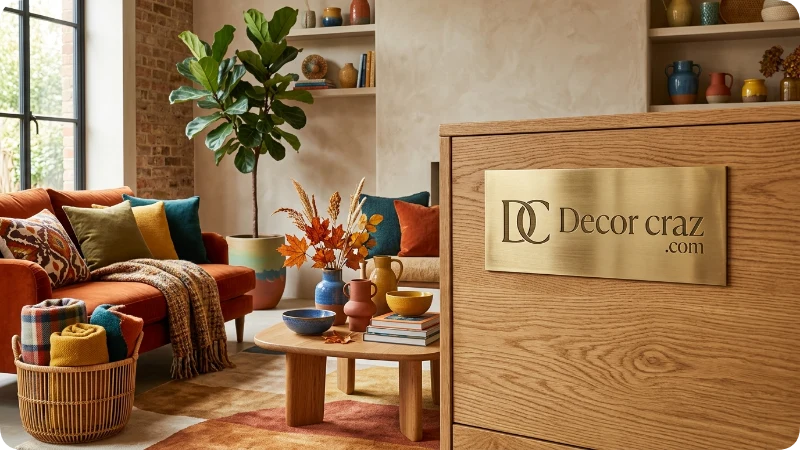
Wood, rattan, baskets, linen, ceramic, and other natural looking materials can add visual warmth without explicitly announcing “fall.”
Warm wood works especially well when the room contains cooler finishes such as gray upholstery or pale painted surfaces.
A woven basket can also have a practical role: store blankets, magazines, or other items instead of functioning only as decoration.
This distinction matters. A seasonal accessory that also solves a storage problem is usually more useful than another small decorative object.
Recent autumn lighting and decor coverage also highlights warm wood, rattan, bamboo, linen, and other organic materials as ways to add tactile warmth.
Create a Small Autumn Reading Corner
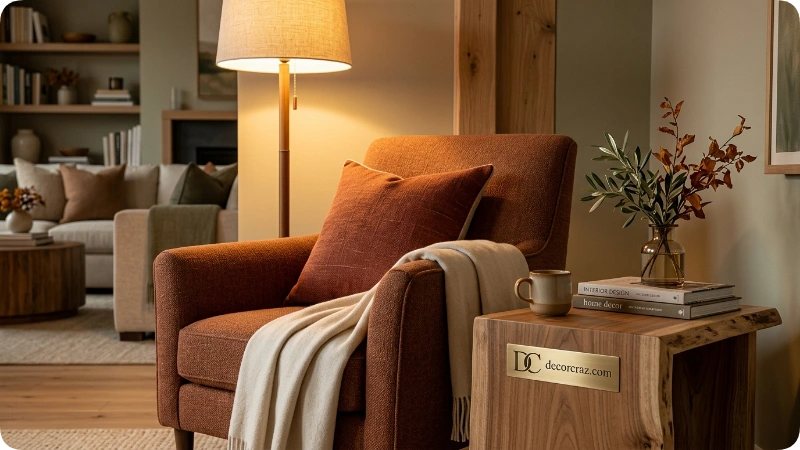
If your living room has an unused chair or awkward corner, autumn is a good opportunity to give it a purpose.
Place a comfortable chair near a suitable light source. Add a small side table if the space allows, then use one pillow or throw that connects to the main living room palette.
The goal is not to create another decorative vignette. It is to make an underused part of the room functional.
In a small apartment, skip the extra table if it blocks circulation. The chair and lighting may be enough.
Decorate a Small Living Room Without Making It Feel Smaller
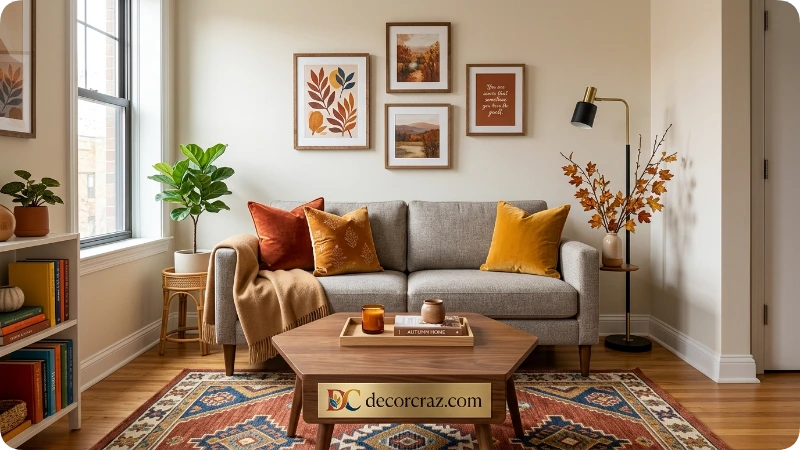
Small rooms need editing more than they need additional decor.
Use seasonal changes that occupy little physical space:
- Pillow covers instead of extra pillows
- One throw instead of several blankets
- A vertical branch arrangement
- A small tray on the coffee table
- One warm lamp
- Seasonal color through artwork or textiles
Keep pathways clear and avoid filling every shelf or tabletop.
For renters, this approach is particularly practical because it focuses on removable elements rather than paint, built ins, or permanent changes. Current fall guides also repeatedly frame textiles, lighting, and small accents as accessible seasonal updates.
Keep the Room Warm Without Making It Look Themed
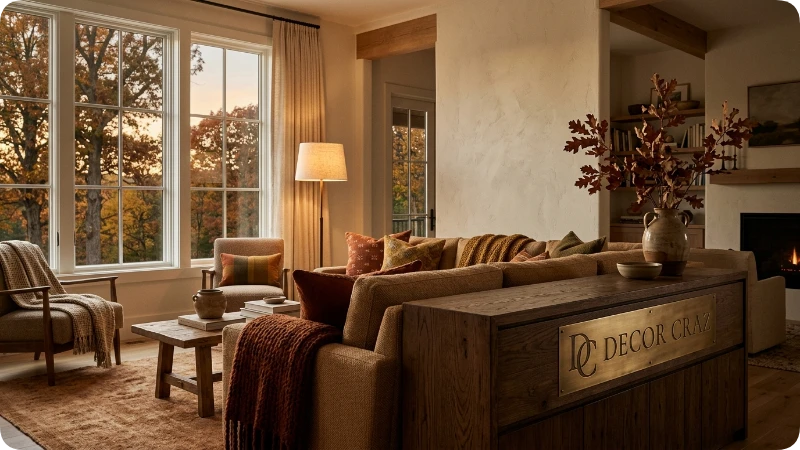
There is a useful difference between autumn atmosphere and autumn decoration.
Autumn atmosphere can come from:
- Deeper colors
- Tactile fabrics
- Warm lighting
- Wood
- Dried branches
- A slightly richer arrangement of objects
Autumn decoration is more literal: pumpkins, leaf signs, seasonal words, repeated motifs, and strongly themed accessories.
Neither approach is wrong. The choice depends on the room and how long you want the styling to work.
If you want a look that can transition easily from September into later fall, use more atmosphere and fewer literal symbols.
Recent coverage from Martha Stewart, BHG, and Apartment Therapy similarly focuses on subtle seasonal shifts and texture rather than covering a room in overt fall decorations.
Use the “One Focal Point” Rule When the Room Feels Cluttered

If your autumn decor looks busy, do not automatically buy more neutral accessories to balance it.
First remove something.
Choose the strongest seasonal area and allow the surrounding surfaces to support it rather than compete with it.
For example:
Full mantel → quieter coffee table → simple sofa textiles
or:
Statement coffee table → restrained mantel → mostly everyday shelves
This creates visual hierarchy. The eye knows where to look, while the rest of the room still participates through repeated color and texture.
Leaving some surfaces quiet is not unfinished decorating. It gives the displayed pieces room to register.
What to Change at Different Commitment Levels
| Commitment | Best Change | Why It Works | Easy Alternative |
|---|---|---|---|
| Very low | Pillow covers | Quickly changes color | Use warmer covers on existing cushions |
| Low | Throw blanket | Adds color and texture | Reuse a blanket from another room |
| Low | Lamp or bulb | Changes evening atmosphere | Rearrange existing lamps |
| Low | Branches or foliage | Adds height and seasonal character | Use branches from existing decor |
| Medium | Area rug | Changes a large visual surface | Layer a small washable textile |
| Medium | Accent chair | Adds color and function | Restyle an existing chair |
| High | Paint | Changes the room’s background | Use artwork or textiles instead |
| High | Furniture | Changes palette and structure | Keep furniture and restyle its surroundings |
The point is not to reach the highest commitment level. Stop at the lowest level that produces the change you actually want.
Common Mistakes That Make Autumn Decor Feel Heavy
Adding every traditional fall color
Rust, orange, mustard, burgundy, brown, and green can all be beautiful, but they do not need to appear together.
Choose a smaller palette and repeat it intentionally.
Decorating every surface
More objects do not automatically create more warmth. Too many competing displays can make the room harder to use and harder to visually read.
Replacing furniture for the season
A seasonal refresh rarely requires a new sofa or coffee table. Start with reversible layers.
Ignoring the existing undertones
A warm accent can look different against a cool gray wall than against warm beige. Test textiles in the actual room, preferably during both daylight and evening light.
Making the room darker instead of warmer
Dark brown walls, heavy curtains, and low lighting are not the only ways to create autumn atmosphere. If the room already lacks natural light, use warm materials and targeted lighting instead of simply making everything darker.
Three Practical Warm Autumn Looks

Warm and Neutral
Palette: cream, camel, warm wood, rust
Best for: Beige, ivory, or light neutral rooms
Use textured textiles and one or two rust accents while keeping the majority of the room light.
Earthy and Botanical
Palette: olive, terracotta, warm ivory, brown
Best for: Rooms with plants, wood furniture, or natural materials
Let foliage and pottery carry the seasonal character rather than adding lots of themed accessories.
Rich and Moody
Palette: burgundy, chocolate brown, deep olive, amber
Best for: Rooms with darker furniture or strong evening lighting
Use the deeper colors selectively. A dark palette needs enough light contrast and lighter surfaces to keep the room usable rather than visually compressed.
A Simple Autumn Refresh You Can Finish in One Afternoon

If you want the shortest route from summer to autumn, work in this order:
1. Remove: Put away visibly summery textiles or accessories.
2. Choose: Pick two or three warm colors that already work with your room.
3. Layer: Change the sofa pillows and add one throw.
4. Light: Turn on lamps in the evening and reduce dependence on a single overhead source.
5. Ground: Add one wood, ceramic, or woven element.
6. Naturalize: Add one branch, foliage arrangement, or other seasonal botanical.
7. Edit: Remove anything that now feels excessive.
This gives you a seasonal change without turning the living room into a storage project.
FAQs
How can I make my living room look more autumnal?
Use warmer colors, heavier looking textures, natural materials, seasonal branches, and softer layered lighting. These changes can create an autumn atmosphere without a full room makeover.
What colors work best for a warm autumn living room?
Rust, terracotta, camel, olive, burgundy, warm brown, muted mustard, cream, and warm ivory are useful starting points. The best combination depends on the colors already in your room.
How do I decorate for fall without making my living room look cluttered?
Concentrate the strongest seasonal styling in one focal area, then repeat its colors or materials elsewhere more subtly. Leave some surfaces intentionally quiet.
Can warm autumn decor work in a modern living room?
Yes. Use restrained colors, natural materials, sculptural branches, textured fabrics, and layered lighting instead of relying on traditional seasonal signs or heavily themed accessories.
How can I make a small living room feel warmer for fall?
Prioritize reversible changes such as pillow covers, one throw, a compact natural arrangement, and better lighting. Avoid filling valuable floor and tabletop space with extra seasonal objects.
Conclusion
Warm autumn living room decor does not have to mean completely changing your space. A few thoughtful updates can create a comfortable fall atmosphere while keeping your existing furniture and personal style.
Start with a warm color palette that works with your room, then layer in textured pillows, a soft throw, natural wood, woven accents, and seasonal branches. Lighting also makes a noticeable difference, especially during darker autumn evenings, so use lamps to create softer pools of light instead of relying only on overhead fixtures.
If your living room is small, focus on compact and reversible changes rather than adding more furniture or accessories. The key is balance: choose a few seasonal elements, repeat colors and textures throughout the room, and leave some surfaces uncluttered.

I am Claudia Winkle, a passionate Name Researcher and Content Writer at decorcraz.com. I enjoy exploring the meanings, origins, history, and cultural significance behind names from around the world. Through carefully researched and engaging articles, I help readers discover unique names, understand their stories, and find meaningful naming inspiration for every occasion. My goal is to make name research simple, interesting, and useful for readers looking for the perfect name.