A living room shelf can be surprisingly difficult to decorate. Put too little on it, and it looks unfinished. Add something to every open spot, and the shelf quickly becomes a collection of unrelated objects.
The most useful approach is to decide what the shelf needs to do before deciding what goes on it. A floating shelf may mainly display art and a few objects, while a built in bookcase may need to combine books, storage, and decoration.
Current shelf styling guides consistently emphasize the same core principles: start with larger pieces, vary heights and textures, mix useful and decorative objects, and leave some open space.
So instead of treating shelf decor as a shopping list, use the ideas below as different solutions for different living rooms.
Start With the Shelf, Not the Decor
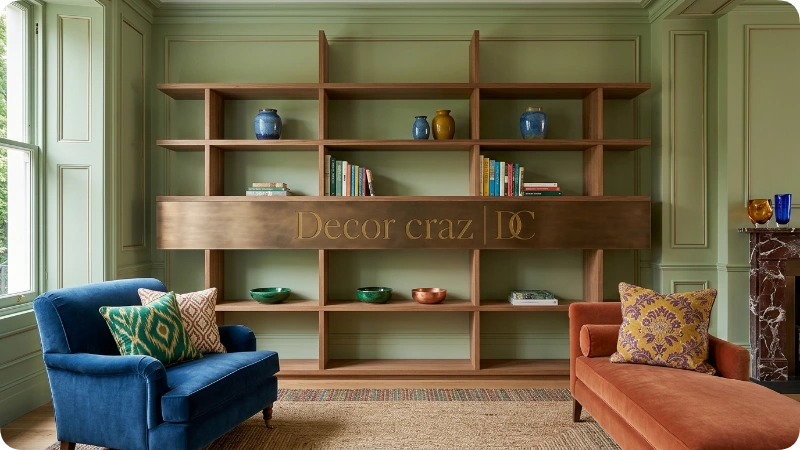
Before buying anything, look at the shelf itself.
Ask four questions:
- What type of shelf is it? Floating shelf, built in, bookcase, ladder shelf, cube unit, or TV shelving?
- How deep is it? Shallow shelves need flatter, smaller pieces; deeper shelves can support layered displays.
- What does the room already contain? Pull colors, materials, and shapes from the sofa, rug, curtains, lighting, or artwork.
- Does the shelf need storage? If it holds blankets, games, remotes, or books, decoration should work around those needs rather than compete with them.
This matters because the same arrangement does not work equally well on every shelf. A deep built in can handle a leaning frame behind a vase and books in front, while a narrow floating shelf may need a simpler arrangement.
A useful starting point is to clear the shelf completely. Seeing the empty surface makes its proportions easier to judge and helps you decide which pieces are genuinely needed. This reset and build approach is also recommended in recent shelf styling guides.
10 Living Room Shelf Decor Ideas That Solve Different Problems
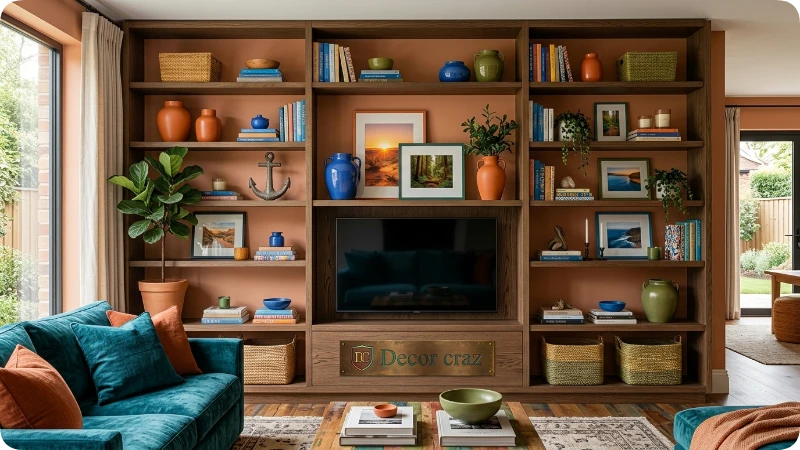
1. Build the Shelf Around Books
Books are one of the easiest ways to give a shelf structure without making it look purely decorative.
Use some books vertically and others horizontally. A horizontal stack can also raise a small object so it does not disappear against the shelf.
For a more organized look, keep books within a related color family. For a collected look, allow different spine colors and sizes to show.
Best for: bookcases, built ins, and deeper shelves.
Why it works: Books provide both vertical and horizontal lines, while stacks create height for smaller decor.
Watch out for: Filling every shelf completely with books if the goal is a decorative display. Open areas help individual pieces stand out.
2. Use One Large Anchor Piece
If your shelf looks scattered, start by removing several small objects and replacing them with one stronger piece.
Try a large vase, framed artwork, sculptural object, basket, or substantial bowl.
The anchor does not need to be the most expensive item. It simply needs enough visual weight to establish a focal point.
Place the larger object first, then add smaller pieces around it. This is easier to balance than starting with several tiny decorations.
Best for: long shelves, large built ins, and shelves that currently look busy but directionless.
Why it works: A larger shape gives the eye a clear starting point.
3. Create a Layered Art and Object Display
Instead of placing every object in one straight line, use depth.
Lean a small framed print toward the back of a deeper shelf. Place a vase or book stack in front of part of it. Keep the foreground object low enough that the artwork remains visible.
This creates two visual layers without requiring additional wall space.
Layering is especially useful on deeper built in shelves, where small objects can otherwise disappear toward the back.
Best for: deep shelves and built ins.
Lower commitment alternative: If your shelf is shallow, use a flat frame or small artwork instead of trying to create multiple deep layers.
4. Add Greenery Where the Shelf Needs Softness
Plants can introduce a different shape and texture from books, frames, and hard edged furniture.
A small upright plant works well when a shelf needs height. A trailing plant can soften the edge of a higher shelf.
You do not need greenery on every level. One or two well placed plants can be enough to break up a display dominated by books and ceramics.
Best for: wood, metal, and minimalist shelving that feels visually hard.
What it changes: The organic shape interrupts repeated straight lines.
If using a real plant, choose a container that fits securely and protect the shelf from moisture according to the material’s needs.
5. Turn Baskets Into Useful Shelf Decor
A basket can solve a storage problem while still contributing texture.
Use baskets on lower shelves for items such as blankets, games, or other everyday belongings that you do not want on display. Decorative boxes can perform a similar job on smaller shelves.
This approach is particularly useful in family living rooms, where open shelving may need to do more than display objects.
Best for: built ins and freestanding bookcases that need concealed storage.
Why it works: Instead of adding decoration simply to fill space, the basket gives that space a job.
Keep frequently used items within easy reach and reserve higher shelves for less frequently handled or more delicate pieces.
6. Mix Smooth and Textured Materials
A shelf made entirely from similar materials can look flat even when it contains enough objects.
Combine contrasting surfaces such as:
- Ceramic with woven texture
- Wood with glass
- Matte objects with a small amount of shine
- Paper and books with harder sculptural forms
- Smooth frames with natural greenery
The goal is not to use every material at once. Pick a few that already relate to the room.
For example, if the living room already has wood furniture and woven accents, repeating those materials on the shelf creates a connection without requiring matching objects.
7. Use Personal Objects Instead of More Filler
Shelves become more meaningful when some objects have a reason for being there.
Consider a favorite book, framed photograph, travel keepsake, handmade ceramic, family piece, or small collection.
The important distinction is between personal objects and filler. If you keep adding small items simply because a space looks empty, the shelf becomes harder to edit.
Instead, choose a few pieces that you would actually want to see every day.
Recent shelf styling guidance similarly recommends using meaningful books and personal pieces alongside decorative objects rather than treating shelves as purely decorative displays.
8. Make a TV Shelf Wall Less Visually Heavy
Shelving around a television can easily become overloaded because the TV is already a large, dark rectangular shape.
Use the shelves to soften rather than compete with it.
Books, lighter colored ceramics, greenery, baskets, and a small amount of artwork can break up the repeated rectangles. Keep the most visually important objects away from directly competing with the screen.
If the shelving also hides electronics or cables, give functional equipment its own area instead of trying to disguise every device with decorative objects.
The goal is not to make the television disappear. It is to keep the entire wall from becoming one large block of technology and storage.
9. Keep Small Space Shelves Light and Edited
Small living rooms benefit from shelves, but open shelving can also make a compact room look visually crowded.
Use fewer, larger pieces rather than many tiny decorations.
For a narrow shelf, a useful combination might be:
- One small frame
- A short stack of books
- One compact ceramic object
- One small plant or piece of greenery
Leave visible gaps between these groups.
This approach also works well for renters because styling existing shelves changes the display without requiring permanent changes to the room. Recent small space shelf guidance similarly emphasizes limited quantities, practical storage, and breathing room.
10. Repeat a Color or Material Across the Whole Shelf Unit
A shelf arrangement does not need identical objects on every level.
Instead, repeat one or two visual connections.
For example, black frames can appear on two different shelves, while natural wood, cream ceramics, or greenery appear elsewhere. The objects remain different, but the repeated elements connect them.
This is especially helpful for large built ins with several bays. Treat the entire unit as one composition rather than decorating every cubby as a separate scene.
How to Arrange Living Room Shelves Without Making Them Look Cluttered
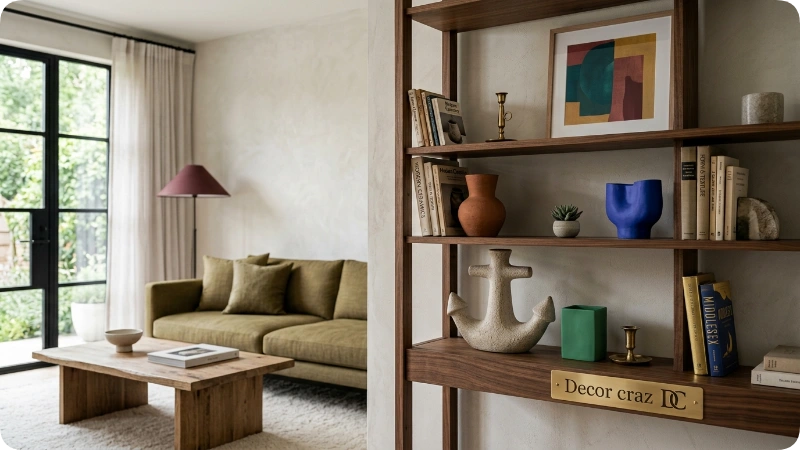
The most common problem is not a lack of decor. It is too many competing decisions.
Start by placing the largest pieces.
Then add medium sized objects.
Only after the arrangement already looks balanced should you consider small accents.
This large to small sequence gives each piece a role instead of producing a shelf full of objects that are all fighting for attention. Recent guides recommend essentially the same anchor to medium to small progression.
Vary Height
If every object is the same height, the shelf can look like a row of products.
Use a combination of:
- Tall vase or frame
- Medium object
- Low book stack
- Small bowl or sculpture
The exact number does not matter. What matters is that the eye has different heights to move between.
Vary Shape
Books and frames create strong rectangular lines.
Balance them with a round bowl, curved vase, organic plant, or sculptural object.
This prevents the display from becoming visually repetitive.
Leave Open Space
Do not treat empty shelf space as a decorating failure.
Open space gives nearby objects room to register and makes it easier to see the structure of the shelf itself. Multiple current shelf guides emphasize leaving breathing room rather than filling every available area.
If an arrangement feels crowded, remove one object before adding another.
Step Back Before You Decide
A shelf can look perfect when viewed from six inches away and unbalanced from across the room.
Take a few steps back and look at the entire shelving unit.
Check if:
- One side feels much heavier
- Too many objects have the same height
- One color dominates unexpectedly
- The eye has nowhere to rest
- Decorative pieces are hiding functional storage
Then make only one or two changes at a time.
What to Put on Different Types of Living Room Shelves
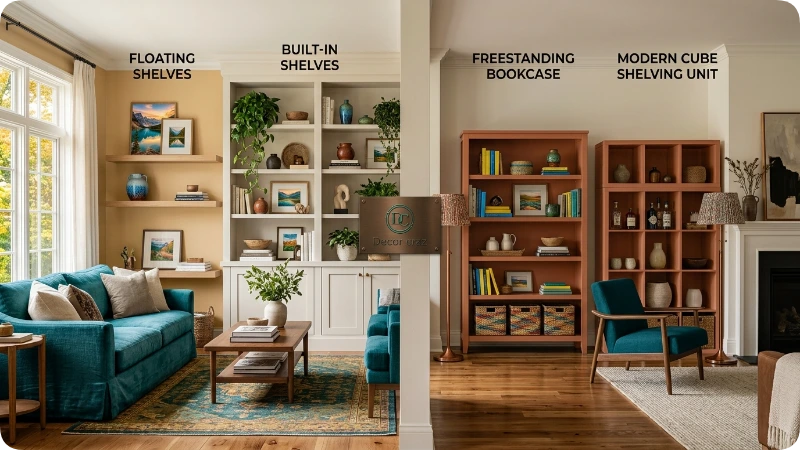
Floating Shelves
Keep the arrangement relatively light because floating shelves often have less visual mass than a full bookcase.
Try a framed print, a few books, and one sculptural or organic object.
Avoid covering the entire shelf from end to end.
Built In Shelves
Built ins can handle more variation because their overall structure provides a strong frame.
Use books, baskets, art, greenery, ceramics, and personal objects, but distribute them across the whole unit rather than repeating the same combination in every opening.
Freestanding Bookcases
Give the lower shelves more functional weight and keep fragile decorative pieces higher where appropriate.
Books can dominate some sections while baskets or boxes handle storage in others.
If the bookcase is tall or potentially unstable, anchoring matters more than styling. The U.S. Consumer Product Safety Commission recommends securing furniture such as bookcases to the wall in homes where children live or visit.
Cube Shelves
Cube shelving naturally creates separate visual compartments.
Avoid making every cube identical. One cube can hold books, another a basket, another a plant, and another a small artwork or collection.
Leaving a few areas simpler can prevent the entire unit from looking repetitive.
Choose Shelf Decor by Your Real Living Room Needs
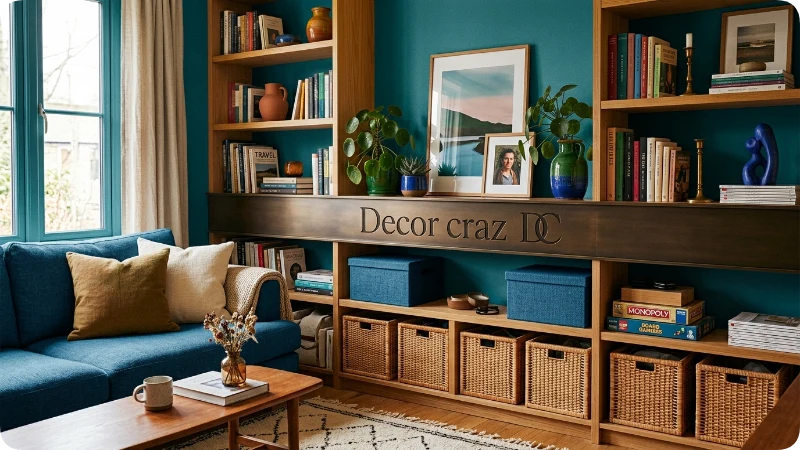
If You Need Storage
Prioritize baskets, boxes, and books.
Decoration should fit around the storage rather than reducing useful capacity.
If You Want a Minimal Look
Use fewer objects and allow more of the shelf surface to remain visible.
Choose pieces with clear silhouettes rather than many small decorative items.
If You Want a Collected Look
Mix books, personal objects, artwork, ceramics, and pieces with different ages or materials.
The common thread can be color, material, or simply the overall feeling of the room.
If You Rent
Focus on styling the shelves you already have.
Books, baskets, frames, plants, and removable decorative objects can change the appearance without requiring permanent wall modifications.
If the Room Is Small
Scale down the quantity before scaling down everything else.
A few appropriately sized pieces generally make more sense than filling a small shelf with numerous miniature decorations.
Shelf Styling Mistakes to Avoid
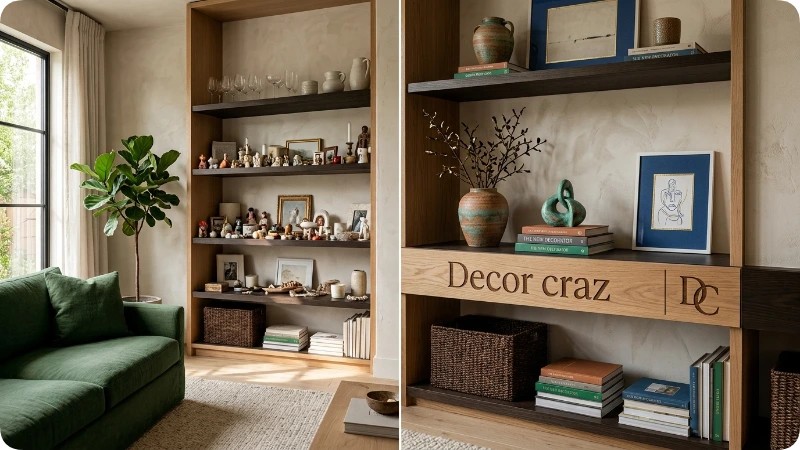
Filling Every Shelf to the Edge
More objects do not automatically make a shelf look more finished.
Fix: Remove pieces until the strongest objects have room around them.
Using Only Small Decor
Several tiny objects can create more visual noise than one substantial piece.
Fix: Establish an anchor before adding accents.
Making Every Shelf Identical
Repeating the exact same vase book plant combination on every level can make a large shelving unit feel mechanical.
Fix: Repeat colors or materials instead of repeating complete arrangements.
Ignoring Function
A beautiful basket is not helpful if you need to move it every time you reach something important.
Fix: Put frequently used storage where it is easiest to access.
Forgetting Shelf Depth
Deep shelves need objects with enough scale to remain visible. Shallow shelves need more restrained layering.
Fix: Choose the arrangement according to the physical dimensions of the shelf.
Putting Heavy or Attractive to Children Items in Unsafe Places
Freestanding bookcases and shelving can present tip over risks. The CPSC recommends anchoring furniture such as bookcases and keeping tempting items away from places where children might climb to reach them.
A Simple Shelf Styling Reset You Can Do With What You Own
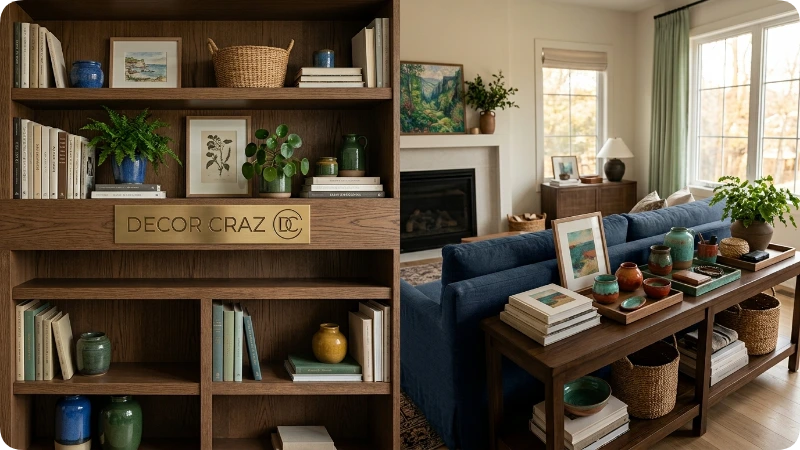
If your shelves already contain too many random pieces, do not start by shopping.
Take everything off.
Create separate groups for:
- Books
- Frames and artwork
- Plants and greenery
- Baskets and boxes
- Ceramics and vessels
- Personal objects
- Items that belong somewhere else
Now choose the largest pieces first.
Place them across the shelving unit, leaving visible gaps between them. Add books next, using both upright and horizontal arrangements where the shelf depth allows it.
Add greenery or textured pieces where the arrangement feels too hard or repetitive.
Finally, bring back only the small objects that genuinely improve the composition.
If you still have too many pieces, store them and rotate them later rather than forcing everything onto the shelf.
How to Know Which Shelf Decor Idea Fits Your Space

The right approach depends mainly on shelf type, function, available space, and the visual weight already present in the room.
If the shelf is mainly decorative, prioritize art, books, greenery, and a few strong objects.
If it is doing double duty as storage, let baskets, boxes, and books carry part of the visual load.
If the shelf is deep, use layers.
If it is shallow, simplify.
If the room is small, edit harder.
And if the shelf is a tall freestanding unit, deal with stability before adding decorative weight.
The best living room shelf is not necessarily the one with the most decor. It is the one where every visible piece has a reason to be there.
Frequently Asked Questions
How do you decorate a living room shelf without clutter?
Start with a few larger anchor pieces, add objects of different heights and shapes, and leave visible empty space. Removing one unnecessary item is often more effective than adding another decorative piece.
What looks good on living room shelves?
Books, framed artwork, plants, baskets, ceramics, bowls, sculptural objects, and meaningful personal pieces can all work. The best combination depends on if your shelf is mainly for display, storage, or both.
Should every shelf have the same decor?
No. Repeating a color, material, or shape can create cohesion without making every shelf identical. Varying the arrangement keeps a larger shelving unit from looking overly repetitive.
How do you make deep living room shelves look less empty?
Use larger objects and controlled layering. A framed piece at the back, books or a vessel in front, and one smaller accent can create depth without filling the entire shelf.
How can I style living room shelves on a budget?
Start with what you already own. Rearrange books, frames, plants, baskets, and meaningful objects before buying anything. A full reset often reveals that the problem is arrangement rather than a lack of decor.
Conclusion
Good shelf decor is less about adding more and more about choosing what belongs. Start with your shelf’s size and purpose, use larger pieces as anchors, mix heights and textures, and leave enough open space to keep the arrangement clear.
Books can add structure, baskets can solve storage needs, greenery can soften hard lines, and personal objects can make the display feel like your home. Most importantly, do not force the same formula onto every shelf.
A shallow floating shelf needs a lighter approach than a deep built in, while a family bookcase may need more storage than decoration. Work with the shelf you actually have, edit as you go, and let useful pieces do double duty whenever possible.

I am Claudia Winkle, a passionate Name Researcher and Content Writer at decorcraz.com. I enjoy exploring the meanings, origins, history, and cultural significance behind names from around the world. Through carefully researched and engaging articles, I help readers discover unique names, understand their stories, and find meaningful naming inspiration for every occasion. My goal is to make name research simple, interesting, and useful for readers looking for the perfect name.