A beach house should feel fresh, comfortable, and connected to the coast without looking like a souvenir shop.
If you’re decorating a seaside cottage, updating a vacation rental, or bringing coastal style to your everyday home, the right colors, textures, and furniture can create a relaxed atmosphere.
The best beach house decor ideas start with a simple foundation. Warm white walls, sandy neutrals, natural wood, and soft blue accents create a coastal look without overwhelming the space.
Comfortable furniture and carefully chosen accessories make the home feel welcoming while keeping it practical for everyday use.
You don’t need to replace everything to achieve this style. A few thoughtful changes to your living room, bedroom, kitchen, or outdoor space can make a noticeable difference.
Choose a Coastal Color Palette

Color is one of the easiest ways to establish a beach inspired interior. Instead of using every shade associated with the ocean, choose a small palette that works with your existing furniture and flooring.
Warm white and ivory create a bright foundation, while beige and sandy tones add warmth. Soft blue, sea glass green, and muted aqua introduce coastal color without making the room feel overly themed. Pale oak and natural wood finishes provide contrast.
For example, combine warm white walls with a beige sofa, a muted blue rug, and pale wood furniture. This arrangement creates a clear coastal identity while keeping the room versatile.
If your room receives limited daylight, consider lighter wall colors and simple window treatments. In rooms with strong sunlight, warmer neutrals can help balance the brightness.
Create a Relaxed Beach House Living Room
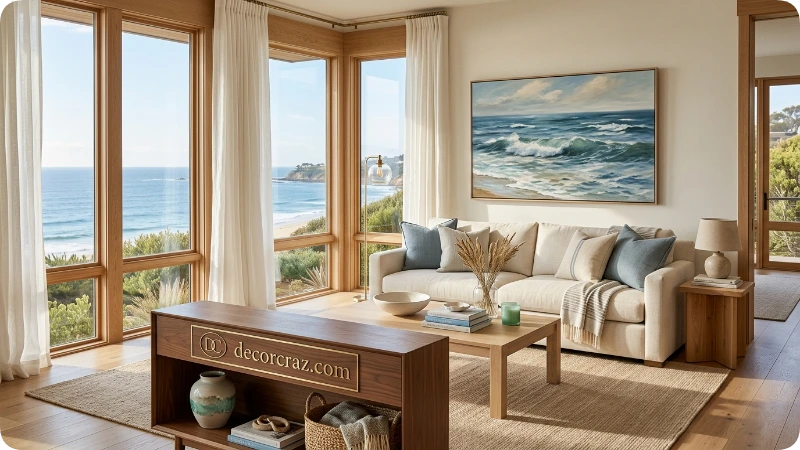
The living room is often the best place to establish your decorating style. Start with the furniture arrangement, then introduce coastal colors and accessories.
Choose a comfortable sofa in ivory, beige, or muted blue. A light wood coffee table adds warmth, while a textured rug helps define the seating area. Linen look curtains and a few coordinating cushions can complete the arrangement.
Keep enough space between furniture pieces for comfortable movement. In a smaller living room, consider a round coffee table or compact side tables to make the layout easier to navigate.
Coastal artwork can provide a focal point above the sofa. A large ocean landscape or an abstract painting in blue and sand tones can connect the room to the seaside without requiring additional themed accessories.
If the living room already has a beautiful ocean view, keep the decorations relatively simple so the scenery remains the main attraction.
Add Natural Materials and Textures
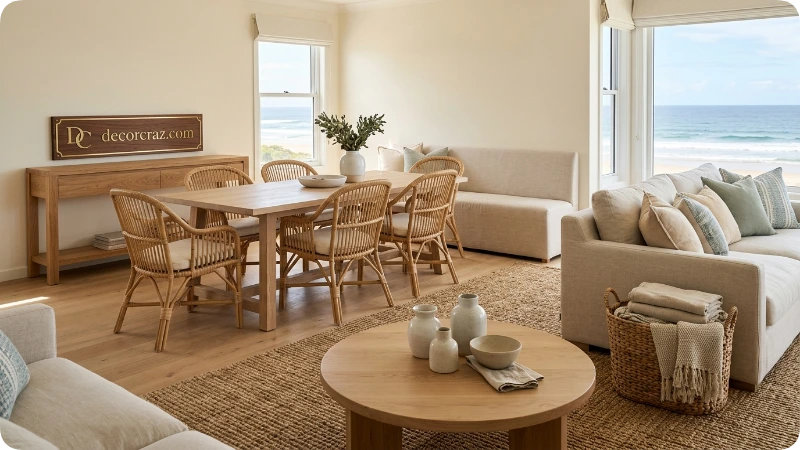
Natural materials help prevent a coastal interior from feeling plain or overly white. Wood, linen, cotton, rattan, jute, and ceramic finishes introduce variation without requiring bright colors.
A pale wood dining table can complement woven dining chairs. A linen sofa can balance a smooth wooden coffee table, while a ceramic vase adds contrast to a textured console.
The key is to use materials according to their purpose. Woven baskets can organize blankets or towels, cotton fabrics are useful for everyday comfort, and wooden furniture adds visual warmth.
Avoid using too many similar textures in one small room. If you already have a woven rug and rattan chairs, smoother finishes may provide better balance.
For areas exposed to sand or moisture, choose materials that are easy to maintain. Natural fibers can require extra care, so washable or outdoor rated alternatives may be more practical in busy spaces.
Decorate the Bedroom With Coastal Bedding
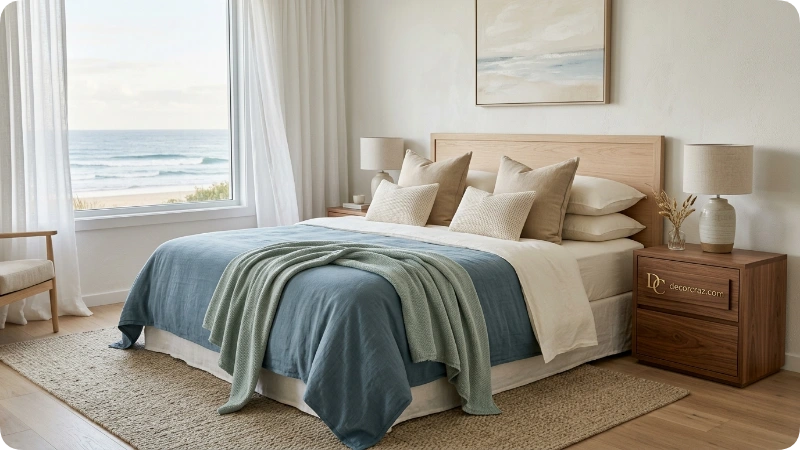
A beach inspired bedroom should feel restful rather than heavily decorated. Bedding provides a simple starting point because it occupies a large part of the room.
Choose white or ivory sheets, then introduce muted blue, sandy beige, or soft green through a quilt or throw. A pale wood headboard and simple bedside tables can reinforce the coastal style.
If your bedding has stripes or a noticeable pattern, keep the surrounding fabrics relatively plain. Alternatively, use solid colored bedding and introduce a patterned cushion or curtain.
For small bedrooms, choose furniture that leaves enough room to walk around the bed. Wall mounted lights and compact bedside tables can help free up limited surface space.
Window treatments should suit the room’s needs. Light curtains create an airy appearance, but lined curtains or blinds may be necessary when privacy and darkness are important.
Give the Kitchen a Fresh Coastal Look
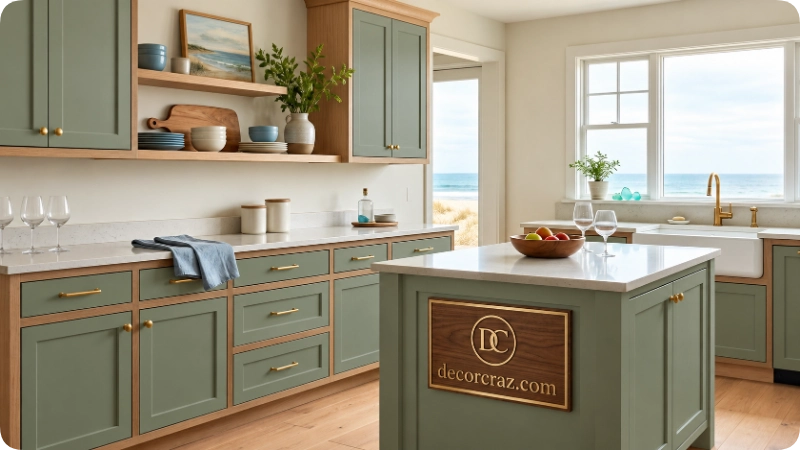
You don’t need a complete kitchen renovation to introduce beach house style. Small updates to colors, textiles, lighting, and accessories can connect the kitchen to the rest of the home.
White cabinets and pale wood finishes provide a versatile foundation. Muted blue dish towels, simple ceramic containers, or a small framed coastal print can add color without overcrowding the countertops.
If you have open shelving, display a few useful pieces rather than filling every shelf with decorations. Everyday dishes, simple glassware, and a small collection of ceramics can create a more organized appearance.
For a larger renovation, consider blue backsplash tiles, pale wood cabinet fronts, or updated lighting. Choose materials according to cleaning requirements and exposure to water, heat, and food splashes.
The most successful coastal kitchens combine a relaxed appearance with practical storage and easy to clean surfaces.
Use Coastal Wall Art to Add Character
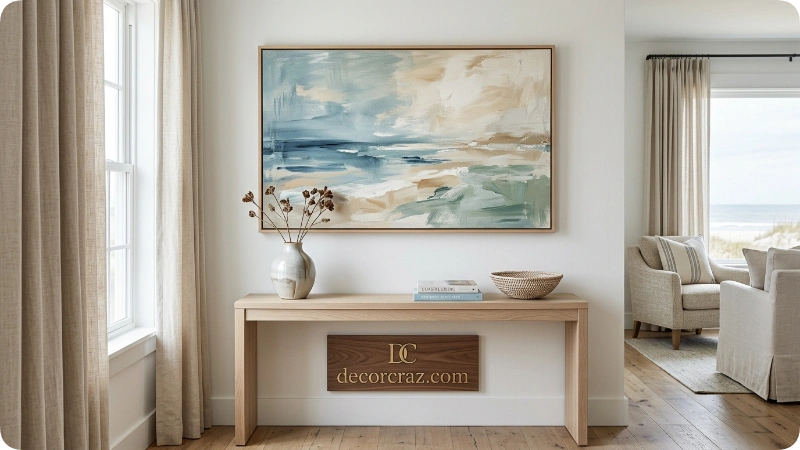
Wall art can establish a beach inspired atmosphere without changing the furniture or architecture.
Ocean photography, abstract seascapes, coastal landscapes, and understated botanical prints are useful options. Choose artwork that complements the colors already present in the room.
A large horizontal painting can work well above a sofa or bed, while smaller framed prints may suit a hallway or narrow wall. As a general design guideline, the artwork should relate visually to the furniture beneath it rather than appearing too small or disconnected.
For a modern coastal interior, consider abstract artwork in muted blue, cream, and sand tones. For a traditional beach cottage, shoreline photography or vintage nautical prints may be more appropriate.
Avoid repeating the same motif throughout the entire home. One distinctive coastal artwork can have more impact than multiple decorations competing for attention.
Renters can use suitable removable picture hanging solutions, provided they support the artwork’s weight and are compatible with the wall surface.
Style the Bathroom With Simple Coastal Details

A bathroom can feel connected to the coast through a restrained color palette and a few practical accessories.
White towels, a blue bath mat, a simple round mirror, and pale wood look details can create a fresh appearance. A striped shower curtain can introduce a coastal pattern without requiring permanent changes.
Storage should remain a priority. Use containers that tolerate humid conditions and avoid leaving moisture sensitive accessories in areas where they remain wet.
If you’re updating the vanity or tiles, consider the entire room together. Lighting, ventilation, finishes, and storage all contribute to a bathroom that looks good and functions well.
For a rental or temporary refresh, start with towels, a shower curtain, and coordinated accessories before considering more expensive changes.
Make Small Beach House Rooms Feel More Spacious
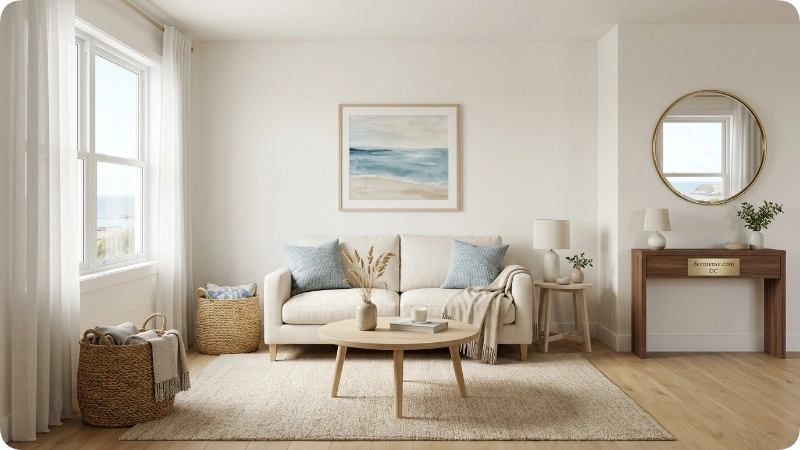
Small beach houses benefit from thoughtful furniture choices and uncluttered surfaces. Light colors can make a room feel visually open, but the arrangement of furniture is equally important.
Choose compact seating, a coffee table that suits the available floor space, and furniture that doesn’t block natural walking paths. Open legged furniture can make more of the floor visible, while mirrors may help reflect available light.
Use accessories that serve a purpose. A woven basket can store blankets, a mirror can provide a useful finishing touch, and one framed coastal print can establish the room’s style.
Keep window treatments simple when possible, but retain the privacy and light control you need.
Avoid filling every corner with decorative objects. Leaving some surfaces clear makes the room easier to maintain and helps the most important pieces stand out.
Choose Outdoor Decor for Coastal Conditions

A porch, deck, or patio can extend the beach house style beyond the interior. Start with comfortable seating, a practical side table, and colors that connect the outdoor space to the rooms inside.
Wood look furniture, neutral outdoor cushions, and a few blue accents can create a coordinated appearance. A small outdoor rug may help define a seating area when the product is suitable for the location.
Choose materials according to their exposure to sunlight, rain, humidity, and salt air. Outdoor rated fabrics and corrosion resistant finishes are useful considerations in coastal environments.
For a covered porch, cushioned chairs and a small table may be enough. An open deck may require more weather resistant furniture and secure storage for lightweight accessories.
If space is limited, choose compact chairs and a narrow table rather than trying to fit a complete outdoor lounge arrangement.
Add Beach Inspired Accessories Without Overdoing Them
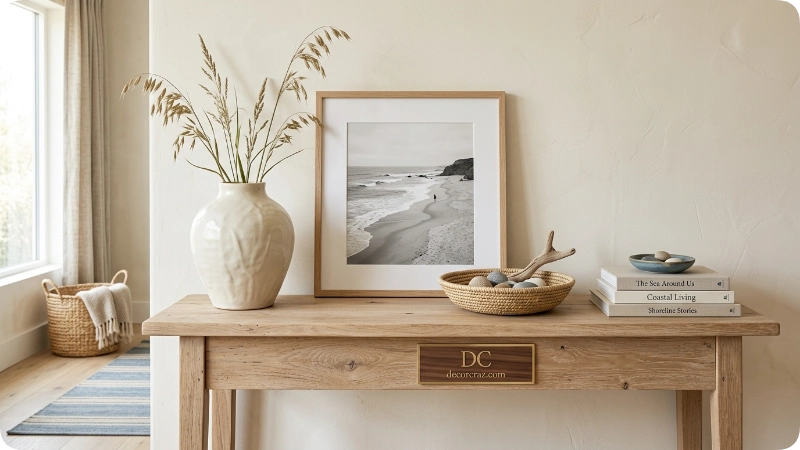
Accessories give a beach house its personality, but every surface doesn’t need a coastal decoration.
A ceramic vase, framed beach photograph, woven basket, or carefully chosen shell display can provide enough seaside character for a small area. Select pieces that have a clear visual or practical purpose.
On a console table, for example, a vase and framed photograph may be sufficient. On a bookshelf, combine a few personal objects with books and leave space around each group.
If you prefer traditional nautical details, use them selectively. A vintage boat print or a rope inspired accent can work well as a focal point without repeating the same theme in every room.
When collecting natural objects, check local rules before removing shells or other materials from beaches. Avoid taking protected wildlife or items that local regulations prohibit collecting.
Choose Beach House Decor According to Your Budget

A coastal makeover doesn’t have to involve replacing all your furniture. The most useful approach is to identify what currently makes the room feel dark, cluttered, uncomfortable, or visually disconnected.
For a low cost refresh, update cushion covers, towels, framed artwork, or small accessories. These changes introduce color and texture without requiring permanent alterations.
If the furniture arrangement is the main problem, consider a better fitting rug, a compact side table, or a more practical coffee table. These pieces can improve both the appearance and function of the room.
For a larger update, repainting walls, changing cabinet finishes, or replacing unsuitable flooring may be worth considering. Homeowners can evaluate permanent improvements, while renters should check their lease and obtain permission where necessary.
Before spending money, decide which single change would have the greatest impact. This helps prevent unnecessary purchases and keeps the decorating plan focused.
Avoid Common Beach House Decorating Mistakes
Even attractive coastal accessories can make a room feel cluttered when they’re used without a clear plan.
Using too many nautical decorations: Anchors, ropes, shells, and boat motifs can overwhelm a room when repeated everywhere. Choose a few distinctive details instead.
Making every surface white: White provides brightness, but wood, woven textures, and muted colors help add depth.
Ignoring furniture proportions: Oversized sofas and coffee tables can make small rooms difficult to navigate. Measure the available space before purchasing furniture.
Choosing materials without considering maintenance: Pale upholstery and natural fibers may require additional care in busy households. Select finishes that suit your lifestyle.
Decorating every empty surface: Blank wall space and clear tabletops help important objects stand out.
Copying an inspiration photo exactly: Your room may have different lighting, ceiling heights, flooring, or window placement. Adapt the colors and proportions to your actual space.
FAQs
What colors are best for beach house decor?
Warm white, ivory, sand, beige, muted blue, and soft green are useful coastal colors. Pale wood adds warmth and helps balance cooler shades.
How can I decorate a beach house on a budget?
Start with cushion covers, towels, framed artwork, and simple accessories. Reusing existing furniture and changing the arrangement can also refresh a room without major expenses.
How do I make a beach house look modern?
Use a restrained color palette, simple furniture shapes, natural textures, and carefully selected artwork. Avoid excessive nautical decorations and crowded displays.
How can I decorate a small beach house?
Choose furniture that fits the room, keep walking paths clear, use light colors where appropriate, and limit accessories to pieces that provide visual or practical value.
What materials work well for coastal interiors?
Wood, cotton, linen, ceramics, and suitable woven materials can create a relaxed coastal appearance. For outdoor spaces and moisture prone rooms, choose materials specifically suited to those conditions.
Conclusion
Beach house decor ideas are about creating a home that feels relaxed, comfortable, and connected to the coast.
Start with warm whites, sandy neutrals, natural textures, and subtle blue accents. Then choose furniture, artwork, and accessories that suit each room’s size and purpose.
You don’t need a complete renovation to achieve the look. Small changes to bedding, lighting, textiles, and wall art can make a meaningful difference.
Consider your budget, maintenance needs, and if you’re decorating a rental or a permanent home before making larger changes.
By balancing coastal details with practical design choices, you can create a welcoming space that feels personal rather than overly themed.

I am Claudia Winkle, a passionate Name Researcher and Content Writer at decorcraz.com. I enjoy exploring the meanings, origins, history, and cultural significance behind names from around the world. Through carefully researched and engaging articles, I help readers discover unique names, understand their stories, and find meaningful naming inspiration for every occasion. My goal is to make name research simple, interesting, and useful for readers looking for the perfect name.