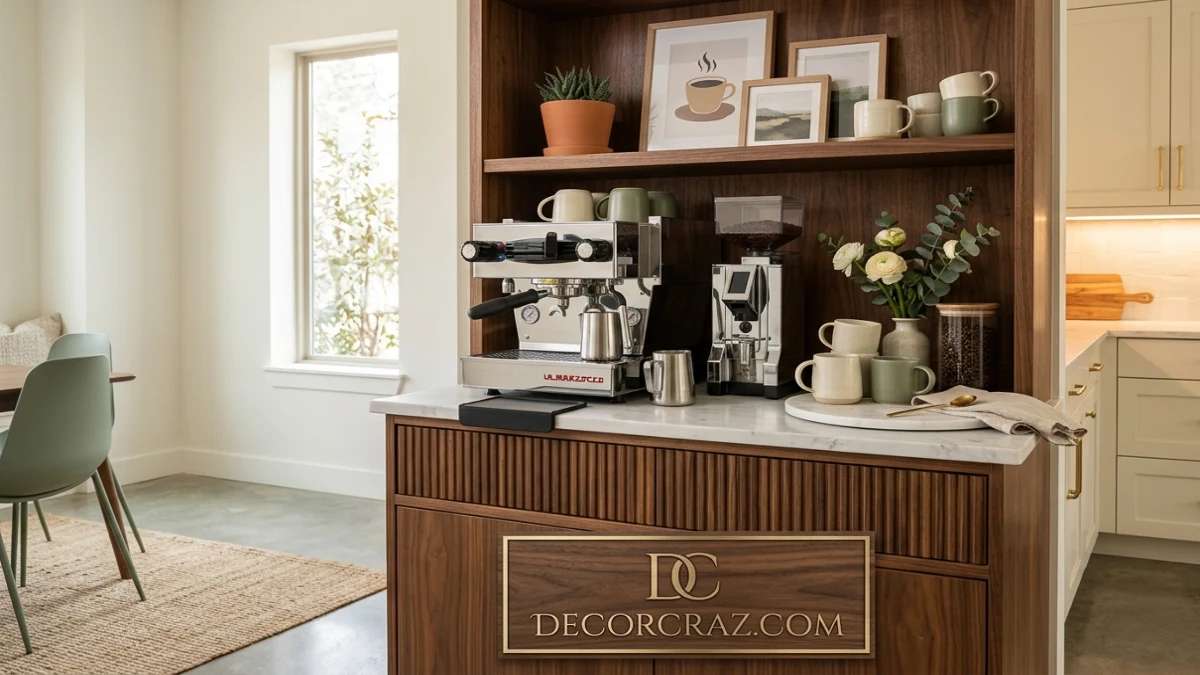
A coffee maker beside the toaster, mugs tucked into a cabinet, and coffee supplies scattered across the counter can make a daily routine feel disorganized. With a few thoughtful changes, that same space can become a dedicated coffee corner that looks attractive and works for everyday use.
The best coffee bar decor ideas start with the space you already have. A kitchen countertop may need only a tray and coordinated mugs, while an empty wall could suit a narrow console with shelves.
If you have a larger area, a sideboard or cabinet can provide room for equipment, supplies, and decorative details.
The goal is to make coffee preparation convenient without turning the station into another cluttered surface. Choose a suitable location, keep frequently used items within reach, and use a consistent combination of colors and materials to make the arrangement feel intentional.
Start With a Simple, Organized Coffee Station
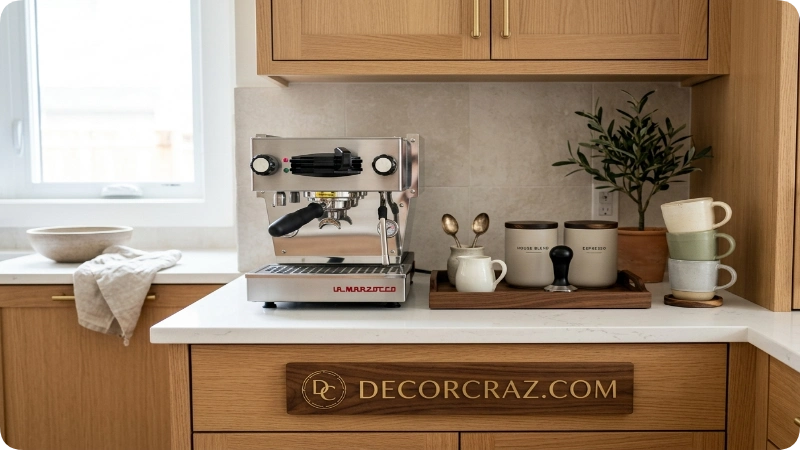
A well organized coffee station is the foundation of good decor. Before adding artwork or accessories, decide where the coffee maker, mugs, beans, filters, and other daily essentials will go.
A simple arrangement works well for most homes:
- Main appliance: Place the coffee maker where it is easy to reach and operate.
- Everyday supplies: Keep beans, grounds, pods, or filters nearby in suitable containers.
- Mugs: Store frequently used mugs on a small stand or shelf.
- Small accessories: Use a tray or shallow container for spoons, sweeteners, and other loose items.
- Decorative accent: Add one small piece, such as framed artwork or a compact plant, if space allows.
The reason this layout works is that each item has a clear purpose. Grouping related supplies creates a visual boundary, while leaving some counter space empty prevents the station from feeling crowded.
If you use the counter for food preparation, keep the coffee setup compact enough to move or clean around easily.
Use a Tray to Make a Small Coffee Bar Look Intentional

A tray is one of the simplest ways to define a coffee station without adding furniture or making permanent changes. It visually groups the coffee maker’s smaller accessories and helps the arrangement feel deliberate rather than scattered.
Choose a tray according to the surface and the objects it needs to hold.
- Wood: Works well with white cabinets, neutral ceramics, and natural textures.
- Marble or stone look: Creates contrast against darker appliances and plain countertops.
- Metal: Suits contemporary, industrial, or polished kitchen styles.
- Woven material: Adds texture to a relaxed, rustic coffee corner, provided it stays away from splashes and damp areas.
Keep the coffee maker stable on a suitable, level surface. Use the tray for compatible accessories rather than placing an appliance on a surface that could interfere with its ventilation, stability, or safe operation.
A tray that is too small will make the setup look cramped. One that is too large will occupy useful counter space. Measure the available area before choosing one.
Add Floating Shelves for Vertical Storage
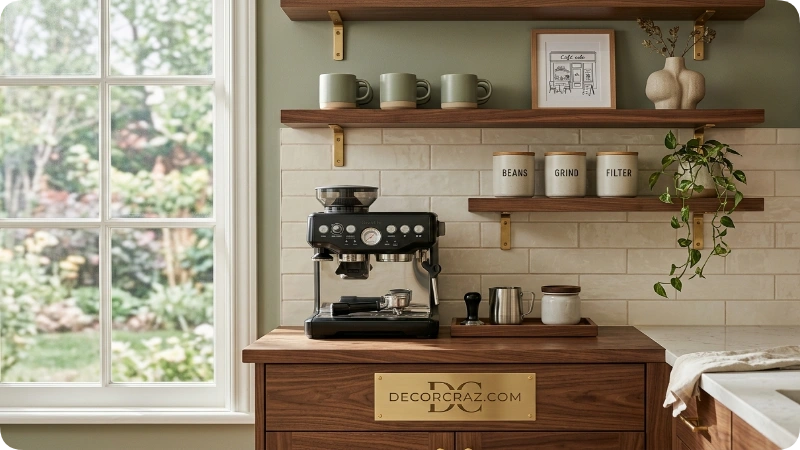
When counter space is limited, use the wall above the coffee station for storage. Floating shelves provide a place for mugs, small canisters, and decorative pieces without requiring a wider countertop.
For a balanced arrangement, place the items used most often on the lower shelf. Use the upper shelf for less frequently needed cups or a small decorative accent. Leaving gaps between objects makes the display easier to maintain and prevents it from looking overcrowded.
The wall itself can contribute to the design. Natural wood adds warmth to a white kitchen, while dark shelves create contrast against a light wall. If the kitchen already has several finishes, matching the shelves to an existing cabinet or table can help the station feel connected to the room.
Before installing shelves, check the wall construction, use appropriate mounting hardware, and confirm that the shelves can support the intended load. Keep them clear of appliance heat, steam, and any area where falling objects could create a hazard.
If drilling is not an option, a countertop shelf riser can provide a similar layered look without permanent installation.
Display Your Mugs as Part of the Decor

Mugs can become the main decorative feature of a coffee bar because they are both useful and visually distinctive. Instead of filling every shelf with ornaments, let a small collection of everyday cups supply much of the color and character.
There are several ways to arrange them:
- By color: Group similar shades together for a coordinated display.
- By material: Combine ceramic, stoneware, or glass while keeping the overall palette connected.
- By shape: Display a few distinctive silhouettes among simpler cups.
- On a mug tree: Keep several cups accessible without mounting hooks or shelves.
A collection does not need to match perfectly. For example, cream and sand colored mugs can work together even when their shapes differ. A few blue or terracotta pieces can add contrast without making the display feel disjointed.
Avoid displaying every mug you own if the collection overwhelms the available space. Store overflow elsewhere and keep the cups you use most often within easy reach.
Choose a Color Palette That Connects the Station

A coffee station looks more cohesive when its main colors relate to one another. You do not need matching appliances, identical containers, or a complete kitchen makeover. Repeating a few colors across existing objects is often enough.
Warm Neutrals
Cream, beige, oak, and soft brown create a quiet background. This combination works particularly well when the kitchen already contains wood or warm colored flooring.
Black and White
Black appliances and hardware stand out against white shelves or a pale backsplash. Add a wood accessory if the contrast feels too stark.
Muted Greens and Natural Wood
Sage, olive, cream, and wood bring color into the station without requiring every item to be decorative. Repeat the green in a mug, framed print, or nearby accessory.
Colorful and Eclectic
Choose one prominent color and repeat it in two or three small details. Keep the larger surfaces relatively simple so the collection remains the focal point.
The key is repetition, not uniformity. When a color appears in the mugs, storage containers, and artwork, the pieces feel related even if they come from different places.
Create a Coffee Bar With a Console Table or Cart
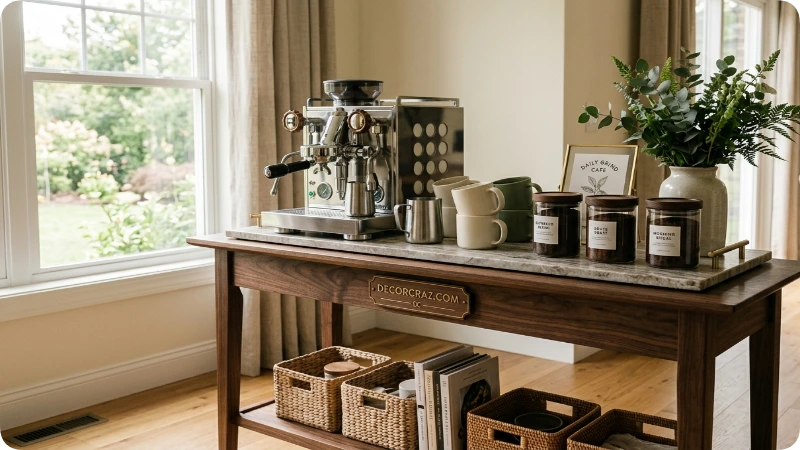
A separate table or rolling cart is useful when the kitchen counter is already occupied or when you want a coffee station outside the kitchen.
Choose a console table if you have a suitable wall and want a defined, furniture like station. Drawers or a lower shelf can hold spare filters, napkins, and other supplies.
Choose a rolling cart if you need flexibility. It can move to a different corner when the room layout changes, and its tiers provide storage without the footprint of a large cabinet.
Choose a sideboard if you need concealed storage for equipment, extra mugs, or bulk supplies. Its wider top also gives you more room to arrange the machine and a small serving area.
Before bringing in furniture, measure the intended location, including door swings and walking routes. Check the furniture’s weight capacity, stability, and suitability for the appliance. The coffee maker should sit on a level, secure surface near an appropriate power outlet.
Avoid running electrical cords across a walkway or using an extension cord in a way that conflicts with the appliance manufacturer’s instructions.
Add Coffee Themed Artwork Without Overdecorating
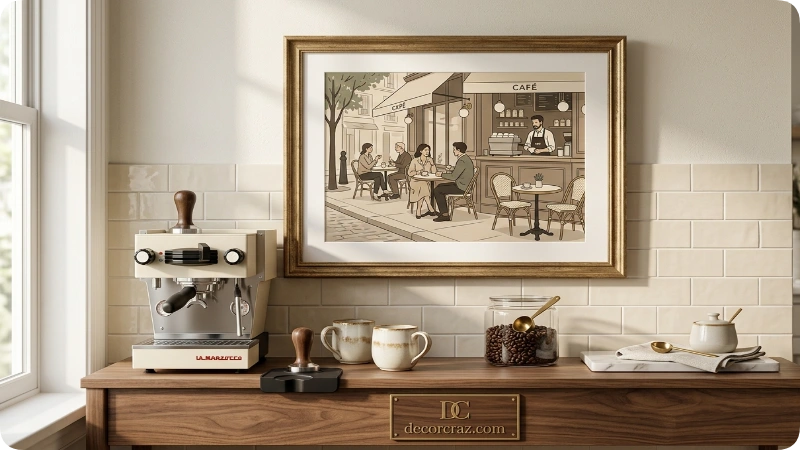
Artwork helps distinguish a coffee station from an ordinary kitchen counter. A framed coffee illustration, a vintage café print, a handwritten menu, or a simple abstract piece can establish the theme without taking up valuable work space.
Choose artwork based on the character of the room:
- Vintage kitchens: Try an old café illustration, muted typography, or a simple retro print.
- Modern kitchens: Use abstract artwork, clean line drawings, or a minimal black and white design.
- Rustic spaces: Choose botanical prints, natural wood frames, or understated lettering.
- Colorful kitchens: Repeat one shade from the mugs or accessories in the artwork.
A single larger piece can make a narrow station feel organized. Several small frames can work on a wider wall, but they should have enough space around them to remain visually distinct.
Keep frames away from direct splashes and heat. If leaning artwork against a backsplash, secure it against slipping and avoid placing it where the coffee maker’s steam could damage the frame or print.
Use Canisters and Storage Containers That Look Good

Coffee supplies often come in packaging that introduces many colors and shapes to a small space. Coordinated storage containers can make the station look more organized while keeping everyday essentials accessible.
Use containers according to what they need to store:
- Coffee beans or grounds: Choose an appropriately sealed container that protects them from air, moisture, heat, and excessive light.
- Sugar and dry additions: Use clean, dry containers with secure lids.
- Coffee pods: A small basket or dedicated organizer makes different varieties easy to find.
- Filters and spare accessories: Keep them in a drawer, cabinet, or lidded box rather than displaying their packaging.
Clear glass is useful when you want to see the contents, but opaque containers can protect coffee from light. The best choice depends on where the station sits and how quickly you use the supplies.
Keep the number of containers proportionate to the station. Two or three useful vessels can look more considered than a full row of jars that rarely get used.
Improve the Lighting Around Your Coffee Corner
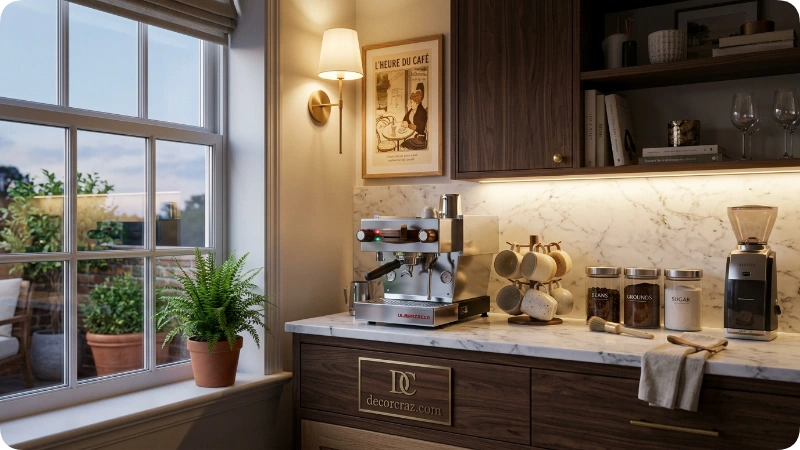
Lighting can help a coffee station feel like a distinct part of the kitchen, especially when it sits beneath cabinets or in a darker corner.
If the station already receives good daylight, keep the window area relatively clear. For a darker location, suitable under cabinet lighting can illuminate the work surface and make small tools easier to see.
A few options include:
- Under cabinet lights: Useful for illuminating the preparation area without taking up counter space.
- A nearby wall light: Adds visual focus to a dedicated coffee nook when properly installed.
- A small lamp on separate furniture: Can provide ambient light when positioned safely away from water, steam, and appliance heat.
Match the lighting to the way the station is used. Decorative light should not create glare, obstruct shelves, or leave the actual preparation area difficult to see.
Any electrical lighting near a coffee maker should be suitable for its location and installed according to the manufacturer’s instructions. Keep cords and connections away from spills.
Personalize the Coffee Bar With One or Two Finishing Details
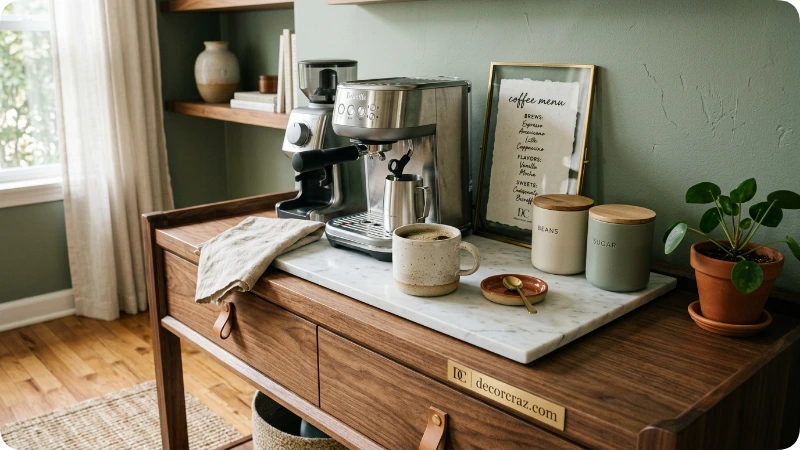
Once the essential equipment and storage are in place, choose a small number of details that make the station feel personal.
A ceramic spoon rest gives stirring spoons a designated place. A folded linen towel provides a practical finishing touch. A small framed menu can list the drinks your household enjoys, while a favorite handmade mug can add character without requiring additional decor.
The important distinction is between useful finishing touches and objects that simply occupy space.
A decorative plant may soften a display, but it should be positioned away from heat, spills, and food preparation areas. A candle may look attractive in a photograph, but an open flame near coffee equipment, paper goods, or hanging textiles is not a suitable choice. Use safer decorative alternatives instead.
Keep enough room to place a mug, handle the machine, and wipe the surface after brewing. If an accessory makes the routine more difficult, remove it.
Coffee Bar Decor Ideas for Renters and Small Apartments
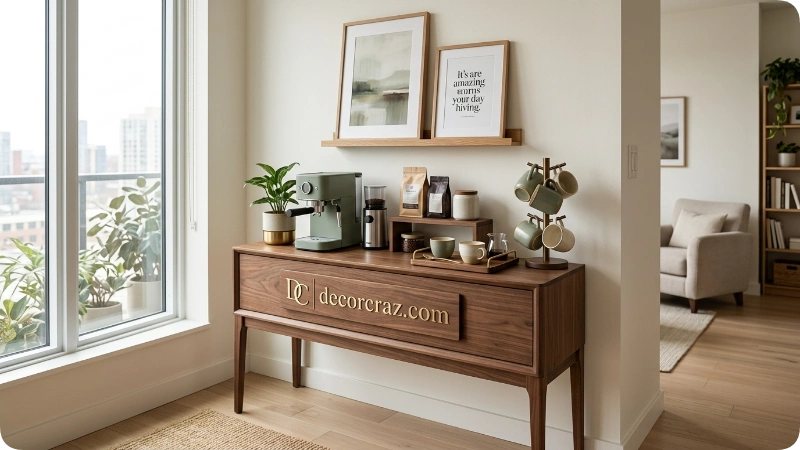
A coffee bar does not need built in cabinets or permanent shelves. In a rental, freestanding furniture and removable accessories offer a practical way to create a defined coffee corner without committing to a renovation.
Consider these options:
- Use an existing side table: Repurpose furniture you already own rather than buying a dedicated coffee cabinet.
- Try a countertop riser: Create a second level for lightweight accessories while keeping the main surface available for brewing.
- Choose a freestanding mug stand: Keep cups accessible without drilling into the wall.
- Use removable artwork: Lean a secured frame on a stable surface or use removable hanging products according to their instructions.
- Store extras in a basket: Keep backup supplies out of sight while leaving daily essentials accessible.
The best option depends on the room. A rolling cart suits a flexible layout, while a tray works better when only a small part of the kitchen counter is available.
Before using adhesive hooks or removable wall coverings, check surface compatibility and weight limits. Removable products can still damage paint or finishes, so test them carefully and follow the manufacturer’s instructions.
Give a Coffee Bar a Vintage or Farmhouse Look
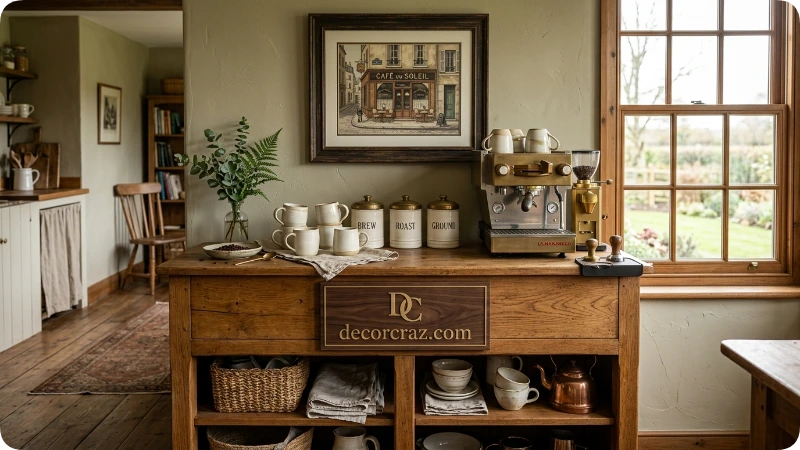
A vintage inspired coffee bar can work well in a kitchen with natural wood, traditional cabinets, or collected decorative pieces. The look comes from the relationship between materials and objects, not from filling the space with distressed signs and themed accessories.
Start with a wooden console, an existing hutch, or a simple countertop. Display a few ceramic mugs, add a framed café illustration, and choose storage containers that complement the furniture.
For a farmhouse interpretation, combine pale ceramics with natural wood and restrained black details. For a more vintage look, consider warmer wood tones, mixed ceramic patterns, or an older piece of furniture with useful drawers.
One distinctive object is often enough to establish the style. An antique looking coffee tin or an interesting frame can give the station character without competing with the equipment.
If the kitchen is already visually busy, keep the coffee bar simpler. A restrained palette allows the vintage furniture to stand out without making the whole area feel crowded.
Make a Modern Coffee Bar With Clean Lines
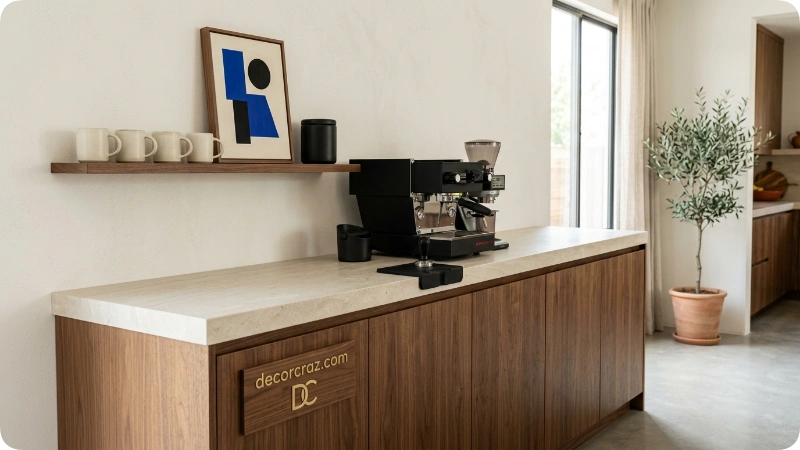
Modern coffee bar decor works best when the layout is clear and the objects have room around them. Rather than displaying numerous accessories, focus on a few well chosen materials and shapes.
A simple combination might include a black coffee maker, pale stone or laminate, a walnut shelf, and plain ceramic mugs. Repeat the darker finish in a frame or small storage container to connect the pieces.
Closed storage is particularly useful for this style. Spare filters, packaging, and less attractive accessories can remain accessible without becoming part of the display.
The same approach can work in a compact kitchen. A narrow tray, one storage jar, and a single artwork piece may be all the decoration the space needs.
Modern does not have to mean completely neutral. A blue mug, an unusual ceramic vessel, or a colorful artwork can provide a focal point while preserving the uncluttered arrangement.
Refresh the Coffee Bar With Affordable DIY Updates

A coffee station can look different without replacing the furniture or purchasing a new coffee maker. Start by rearranging what you own, then decide if a small DIY project would solve a specific problem.
Useful low commitment updates include:
- Rearrange the mugs: Group them by color or move your favorite cups to an accessible shelf.
- Reuse a serving tray: Give scattered accessories a defined place.
- Frame an existing print: Use artwork you already have to establish a visual focus.
- Repurpose a small cabinet: Turn an unused piece of furniture into a dedicated coffee station.
- Update the backdrop: If permitted, use suitable removable wall decor to distinguish the coffee area from the rest of the kitchen.
A larger DIY project, such as painting furniture or installing a shelf, makes more sense when the existing setup has a genuine functional limitation. For a renter, reversible changes are generally the simpler starting point.
Before making changes, identify what you want to improve. If the problem is clutter, better storage may help more than new paint. If the station looks disconnected from the room, repeating an existing color may be enough.
Choose the Right Coffee Bar Setup for Your Space
The most suitable coffee bar depends on available space, storage needs, and if you can make permanent changes.
| Setup | Best suited for | Main consideration |
| Countertop tray | Small kitchens and quick updates | Limits the station to essential items |
| Floating shelves | Walls with usable vertical space | Requires secure installation |
| Rolling cart | Rentals and flexible layouts | Needs a stable, accessible parking spot |
| Console table | An empty wall or spare corner | Uses floor space |
| Sideboard or hutch | Larger collections and extra supplies | Requires more room |
| Cabinet coffee station | Homes where equipment can be stored behind doors | Needs appropriate appliance clearance and power access |
Use the table to narrow down your options before buying anything. Measure the available surface, account for the appliance’s operating requirements, and leave enough room to prepare and serve a drink comfortably.
For most people, a small countertop setup is a sensible place to begin. You can add furniture or shelving later if the daily routine genuinely requires more space.
Common Coffee Bar Decorating Mistakes to Avoid
A coffee station can look attractive in a photograph but become frustrating to use if the styling ignores everyday needs.
- Crowding the counter: Too many jars, signs, and decorative objects leave little room to prepare drinks. Remove anything that does not serve a purpose or contribute meaningfully to the design.
- Choosing storage before measuring: A large tray or oversized cart may occupy more room than expected. Measure first and check the dimensions of your coffee maker.
- Ignoring the existing kitchen style: A collection of unrelated colors and finishes can make the station feel disconnected. Repeat one or two materials already present in the room.
- Putting frequently used supplies out of reach: Store daily essentials close to the machine and less frequently used items elsewhere.
- Blocking appliance ventilation: Follow the manufacturer’s clearance and operating instructions rather than fitting the machine tightly between decorative objects.
- Ignoring spills and cleaning: Keep surfaces easy to wipe and avoid materials that are unsuitable for damp or frequently splashed areas.
- Overlooking electrical access: Choose a location with an appropriate outlet and keep plugs, cords, and connections away from water.
The best decoration is the kind that remains practical after the initial excitement of setting up the station has passed.
Frequently Asked Questions
What should you put on a home coffee bar?
Start with a coffee maker, mugs, coffee supplies, and a convenient place for small accessories. Add a tray, suitable storage containers, or artwork only when they improve organization or the appearance of the space.
How do you decorate a coffee bar in a small kitchen?
Use one compact surface, group small accessories on a tray, and consider a countertop riser or vertical storage where appropriate. Keep the preparation area clear and choose a coffee maker that fits the available space.
How can you decorate a coffee bar in a rental?
Use freestanding furniture, removable artwork, a countertop tray, or a mug stand. Check product instructions and your rental agreement before making wall changes, since removable fixtures can still damage some surfaces.
How do you make a coffee bar look cohesive?
Repeat a small selection of colors and materials across the mugs, storage containers, shelves, and artwork. Keep the main equipment accessible and leave some open space so the arrangement does not look crowded.
Conclusion
Creating a beautiful coffee station doesn’t require a large kitchen, expensive furniture, or a complete home makeover. The best coffee bar decor ideas focus on combining everyday functionality with a style that suits your space.
If you prefer a simple countertop setup, floating shelves, a vintage coffee corner, or a modern console table, small changes can make a noticeable difference. Start by organizing your coffee essentials, choosing a complementary color palette, and adding practical storage for mugs, beans, and accessories.
If you’re working with a small kitchen or rental home, consider budget friendly options that don’t require permanent changes. Remember to keep the counter uncluttered and leave enough room for safe, comfortable coffee preparation.

I am Claudia Winkle, a passionate Name Researcher and Content Writer at decorcraz.com. I enjoy exploring the meanings, origins, history, and cultural significance behind names from around the world. Through carefully researched and engaging articles, I help readers discover unique names, understand their stories, and find meaningful naming inspiration for every occasion. My goal is to make name research simple, interesting, and useful for readers looking for the perfect name.