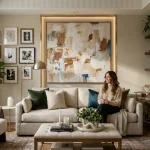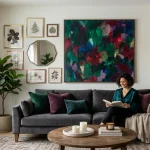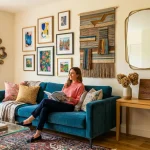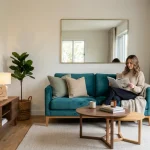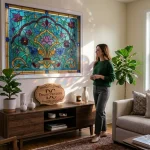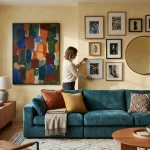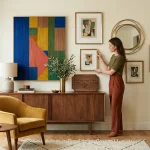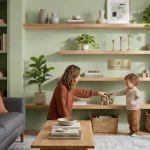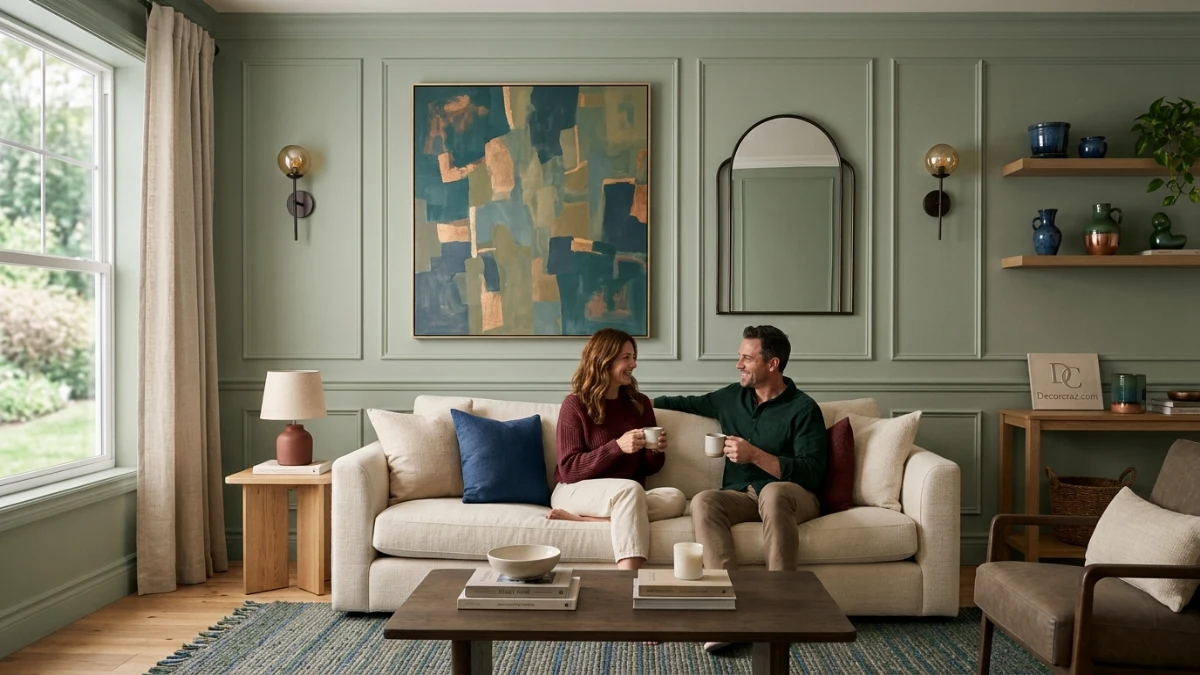
Elegant living room wall decor ideas can make a room feel thoughtfully designed without requiring expensive furniture or a complete renovation. The key is choosing wall decorations that complement your sofa, reflect your personal style, and suit the room’s proportions.
For a refined look, start with one main feature: a large painting above the sofa, a carefully arranged gallery wall, a decorative mirror, or a textured accent wall. Then add smaller details only where they improve the overall composition.
The best choice depends on your living room’s size, natural light, existing furniture, and how much change you want to make.
Renters can achieve an elegant result with framed prints, leaning artwork, and removable decor, while homeowners have more freedom to explore wall molding, built in shelving, and permanent finishes.
Create a Focal Point With Oversized Wall Art
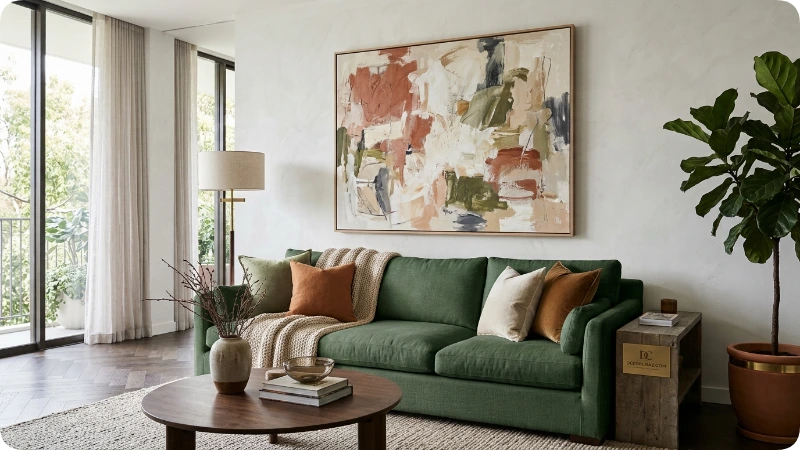
A single oversized artwork can make a living room feel more organized and sophisticated. Instead of filling a large wall with numerous small decorations, one substantial painting creates a clear focal point and gives the surrounding space room to breathe.
Choose artwork that relates to the room’s existing colors without matching every cushion, rug, or accessory. A muted abstract painting suits a calm, neutral interior, while expressive botanical artwork or a colorful contemporary canvas can introduce personality into a simple room.
How to style it:
- Center the artwork over the sofa or another prominent piece of furniture.
- Use the furniture’s width to guide the artwork’s proportions.
- Consider a frame that complements nearby finishes, such as natural oak, brushed brass, or matte black.
- Hang the piece at a comfortable viewing height rather than pushing it toward the ceiling.
As a starting guideline, artwork or a grouped arrangement can span roughly two thirds of the furniture beneath it. Adjust this proportion to suit unusually tall walls, oversized sofas, or asymmetrical layouts.
Avoid choosing a small canvas simply because you love its design. On a wide wall, it may appear disconnected from the furniture below. If a large original painting exceeds your budget, consider an affordable print in a substantial frame.
Design a Balanced Gallery Wall
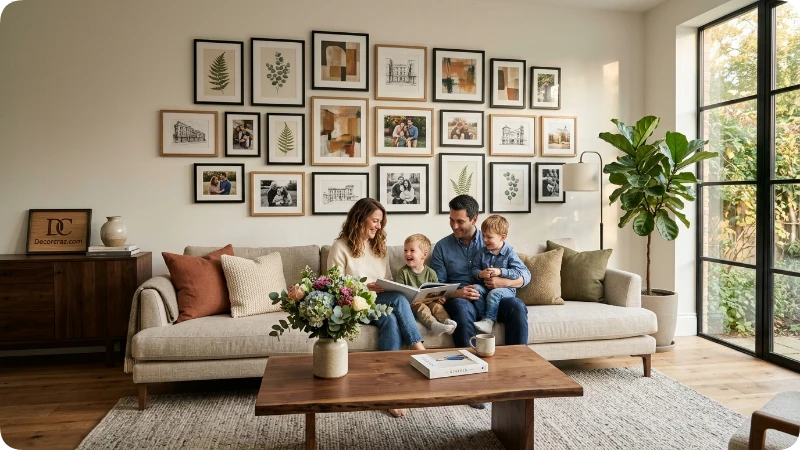
A gallery wall is ideal for displaying artwork, photographs, illustrations, and meaningful keepsakes together. Its elegance comes from a deliberate arrangement rather than the number of frames.
For a polished result, establish a visual connection between the pieces. You might use black frames throughout, choose artwork with similar earthy colors, or combine different subjects with consistent matting. A more eclectic arrangement can work too, provided the spacing and overall silhouette feel intentional.
Before hanging anything, arrange the frames on the floor or make paper templates. This lets you experiment with spacing and alignment without repeatedly putting holes in the wall.
Three arrangements worth considering:
- Symmetrical grid: Matching frames in evenly spaced rows create a formal, orderly appearance.
- Organic gallery: Different frame sizes and artwork styles produce a more personal, collected look.
- Horizontal arrangement: A wide grouping works particularly well above a long sofa or console.
Leave enough space between the gallery and nearby doors, windows, shelves, and light fixtures. A carefully edited collection often looks more refined than a wall filled with pieces competing for attention.
For renters, removable hanging hardware may work for suitable lightweight frames, but always check the wall finish and the manufacturer’s weight limits. Use properly rated mechanical fixings when the arrangement is too heavy for adhesive products.
Use Decorative Mirrors to Brighten the Room
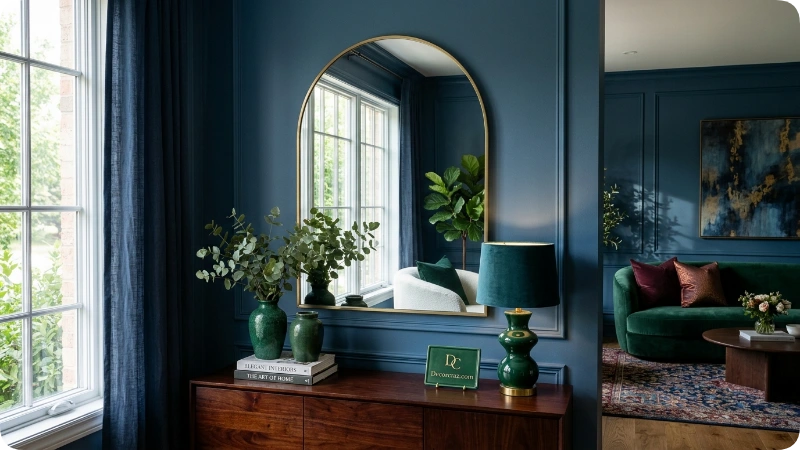
Decorative mirrors offer both visual interest and a practical way to redirect available light. They are especially useful in living rooms with limited daylight or areas that feel enclosed by dark furniture.
A large round mirror can soften a room dominated by rectangular furniture. An arched mirror introduces a graceful curve, while a slim rectangular design works well in a more structured interior.
Placement matters more than the mirror’s shape alone. Position it where it reflects a window, an attractive view, or an appealing part of the room. A mirror facing a cluttered corner may simply draw attention to the clutter.
Consider these options:
- Above a console: Creates a defined entry like vignette within an open plan living room.
- Above a fireplace: Adds height and emphasizes an existing architectural focal point.
- Beside a window: Can help distribute daylight visually through the space.
- Leaning against a wall: Offers a relaxed look without immediately committing to a hanging position.
Large mirrors can be heavy, so use fixings suited to the mirror’s weight and wall construction. If you prefer a leaning mirror, secure it against tipping, especially in homes with children or pets.
Add Wall Molding for Architectural Elegance
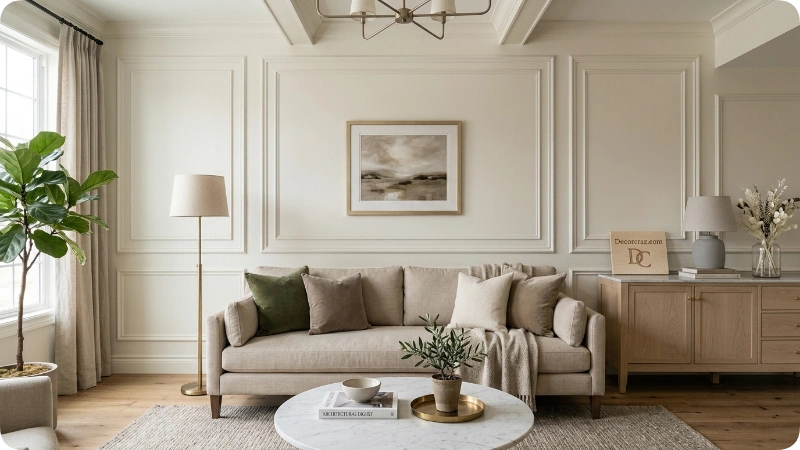
Wall molding creates visual structure even when the room contains relatively little artwork. Decorative box molding, narrow trim, and traditional paneling can give plain walls a more architectural appearance.
This approach is particularly effective when the wall feels empty but a gallery arrangement would look too busy. The molding itself becomes part of the decoration, defining the space through lines, depth, and shadow.
For a subtle effect, paint the molding the same color as the wall. This emphasizes the texture without introducing another strong color. Contrasting trim creates a more pronounced look, but it needs to work with the room’s other finishes.
Before installing molding:
- Measure the wall and map out the panel layout.
- Account for the sofa, outlets, switches, windows, and existing trim.
- Keep the panel sizes proportionate to the wall and furniture.
- Decide if artwork will sit inside the panels or if the molding should remain the main feature.
Molding can be permanent and labor intensive, particularly when walls are uneven or existing architectural details need to be accommodated. Renters can explore lightweight removable trim, subject to the product’s limitations and their lease.
Avoid squeezing too many narrow panels onto a small wall. A simpler layout generally gives the architectural details more impact.
Style Floating Shelves With Art and Collectibles
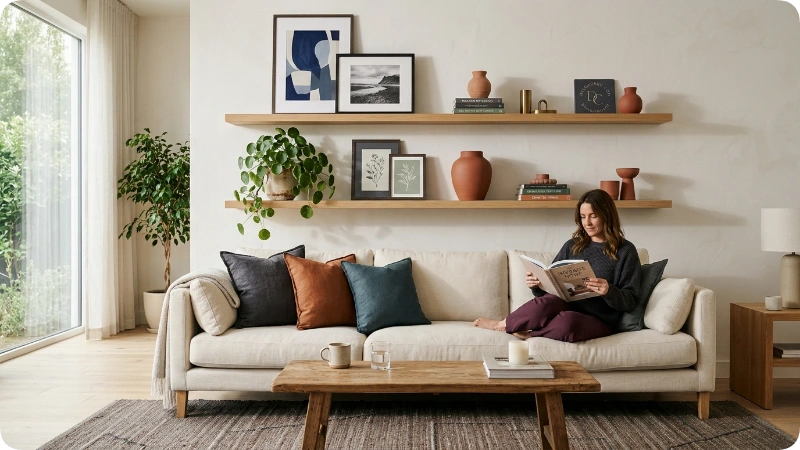
Floating shelves provide a flexible alternative to hanging every decorative object directly on the wall. They allow artwork, ceramics, books, and small personal collections to become part of a changing display.
The most effective arrangements combine objects of different heights without filling every available inch. Lean a framed print against the wall, place a small sculptural object beside it, and leave some open space so the display remains easy to read.
Choose shelf materials that relate to the room. Natural wood introduces warmth, painted shelves blend into the wall, and dark metal brackets suit interiors with stronger industrial details.
Shelves are especially useful when you enjoy changing your decor throughout the year. You can replace a framed print, rearrange books, or introduce a seasonal object without redesigning the entire wall.
However, shelves require more planning than lightweight artwork. Their fixing method must suit the wall construction and the weight of the shelf and its contents. Heavy books and ceramics should not be placed on inadequately supported shelves.
If you want a similar look without drilling, consider a freestanding bookcase positioned against the wall. It offers display space with less commitment to the wall itself.
Introduce Texture With a Feature Wall
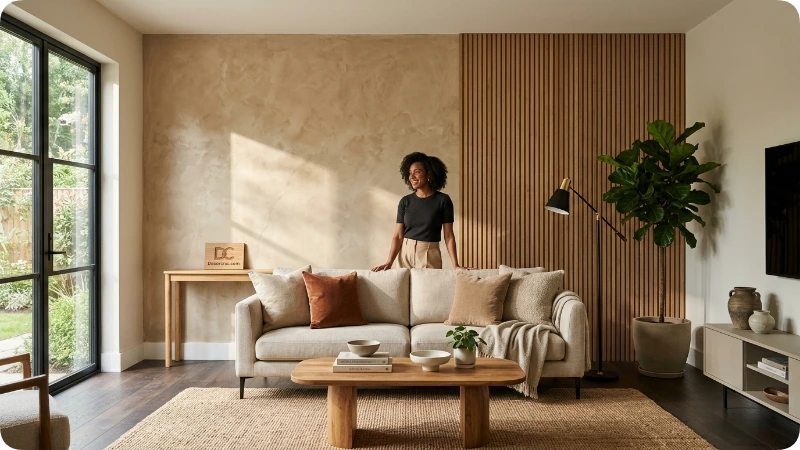
A textured feature wall can add depth without relying on lots of decorative objects. Limewash style finishes, subtle wallpaper, wood slats, and tactile wall panels create different effects as daylight and artificial lighting move across the surface.
The right finish depends on the rest of the room. A soft plaster like texture suits a restrained, natural palette, while vertical wood slats introduce rhythm and can visually emphasize ceiling height. Patterned wallpaper is useful when the room needs more color or a stronger decorative identity.
Keep the feature wall connected to the furnishings. Warm wall finishes work naturally with wood, linen, and earthy colors; cooler finishes can complement charcoal upholstery, glass, and polished metal.
Before committing to a finish, consider the room’s lighting. A textured surface may look subtle in daylight but produce stronger shadows under directional lamps. Test a sample on the actual wall if possible.
Permanent paneling, wallpaper, and specialty paint may require more preparation and expense than framed art. For a lower commitment alternative, use a large textured textile or a removable wall covering suitable for the existing paint.
Create a Refined Look With Wall Sconces
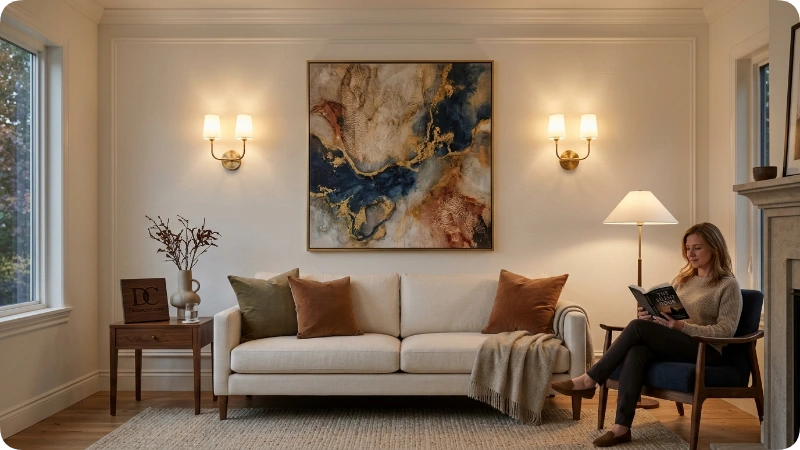
Wall sconces add another layer to living room wall decor by combining illumination with decorative form. They can frame a painting, highlight architectural molding, or establish a comfortable atmosphere around a reading area.
Choose the fixture according to the room’s existing style. Brass or bronze finishes can complement warm wood and traditional details, while simple black fixtures work well with crisp contemporary interiors.
Placement should follow the feature being illuminated. A pair of sconces can frame centered artwork, but a single adjustable fixture may be more useful beside a reading chair. Avoid positioning a light where it produces distracting glare on glass framed art or a television.
For the most cohesive result, coordinate the fixture’s finish with one or two existing details rather than matching every metal object in the room.
If new wiring is impractical, plug in or battery operated sconces may offer alternatives. Check their mounting requirements, cord routing, light output, and suitability for the wall. Hardwired fixtures should be installed by a qualified electrician where required.
Display Sculptural and Three Dimensional Wall Decor
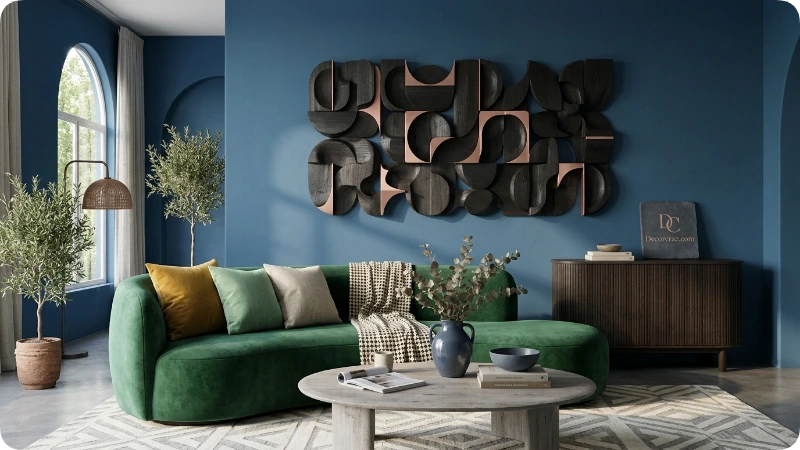
Wall decor does not have to be flat. Sculptural pieces made from wood, ceramic, metal, or woven fibers introduce depth and create shadows that change with the light.
This option works particularly well when the room already has framed art elsewhere and needs a different visual element. A carved wood panel can bring warmth to a minimal interior, while an abstract metal sculpture can contrast with soft upholstery and rounded furniture.
Choose the scale carefully. A large sculptural piece can anchor an otherwise plain wall, while several smaller objects can work as a coordinated arrangement. Leave enough space around projecting pieces so they do not interfere with movement or feel crowded by nearby furniture.
Consider the material’s weight before installation. Ceramic reliefs and substantial metal sculptures may require secure mechanical fixings, and the wall must be able to support them.
For a lighter, more flexible approach, consider woven wall hangings or lightweight decorative reliefs. These introduce texture without the same visual or physical weight as a substantial sculpture.
Bring Warmth With Textile Wall Hangings
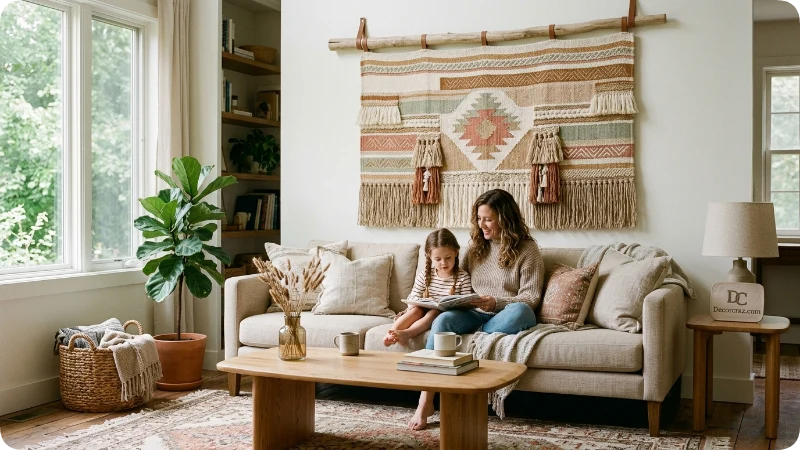
Textile wall decor introduces softness to rooms dominated by hard surfaces, glass, stone, or smooth painted walls. Woven hangings, framed fabric, and carefully selected tapestries can also bring pattern and color into a neutral interior.
A large textile works well above a sofa when you want a relaxed alternative to conventional framed artwork. Choose a piece whose width relates to the furniture beneath it, and let its texture contrast with the upholstery rather than compete with it.
For a contemporary look, try a restrained woven design in natural fibers. For a more expressive room, a patterned tapestry can become the central decorative feature.
Textiles may also be useful when you want to change the room’s appearance without painting or installing permanent wall treatments. A hanging can be removed or replaced more easily than built in paneling, depending on the mounting method.
Consider maintenance before choosing a material. Dust can collect in textured fibers, and delicate textiles may require careful cleaning. Keep fabric away from heat sources and open flames, and use suitable fixings for the hanging rod and textile’s weight.
Choose a Sophisticated Color Palette for Wall Decor
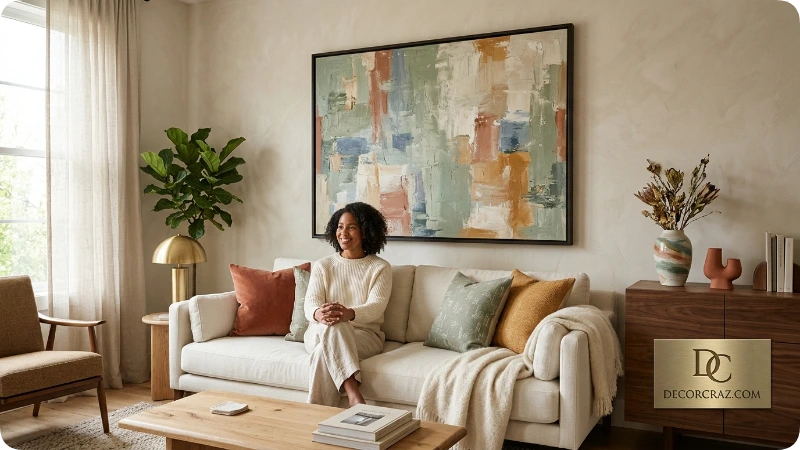
Color can connect wall decor to the rest of the living room without making every element identical. A restrained palette helps different materials and artwork styles feel related, while a carefully placed contrasting color can give the room character.
Start by identifying the colors already present in your sofa, rug, curtains, and flooring. Then choose artwork or wall accessories that repeat one or two of those colors. The connection can be subtle: a small blue detail in a painting might relate to a cushion, while a warm ochre print can complement a wood finish.
Consider these approaches:
- Soft neutrals: Cream, sand, taupe, and warm white create a quiet background for textured artwork.
- Nature inspired colors: Sage, olive, muted blue, and terracotta bring color without requiring a highly saturated scheme.
- High contrast: Black frames against a pale wall or colorful artwork against a deeper background creates a more graphic focal point.
- Tone on tone styling: Artwork and wall treatments in related shades emphasize texture and shape instead of strong color differences.
The goal is not to eliminate contrast. A room in which every surface has exactly the same color can feel flat. Use differences in texture, brightness, and material to create separation where needed.
If you are unsure about a bold color, introduce it through removable artwork first. You can live with the arrangement before committing to paint or wallpaper.
How to Choose the Right Wall Decor for Your Living Room
The best wall decoration is the one that solves the room’s actual problem. Before buying anything, consider four factors: wall size, furniture placement, available light, and how permanent the change can be.
| Your living room | A suitable starting point | Why it works |
| Small or narrow | One large artwork or a well placed mirror | Creates a focal point without filling the wall with small objects |
| Large wall behind a sofa | Oversized art or a planned gallery | Connects the wall visually to the main furniture |
| Minimalist interior | Sculptural decor or subtle texture | Adds interest without introducing excessive detail |
| Traditional interior | Wall molding, framed art, or a decorative mirror | Reinforces architectural lines and classic proportions |
| Rental home | Leaning art, lightweight frames, or removable decor | Allows changes with less permanent alteration |
| Dark living room | A mirror reflecting daylight and lighter artwork | Helps the space feel visually brighter when placed thoughtfully |
Get the proportions right
Measure the wall and the furniture before selecting your decor. As a practical starting point, artwork above a sofa often looks balanced when its total width is around two thirds of the sofa’s width. The arrangement can be a single piece or a group of frames treated as one visual unit.
Also consider vertical placement. Artwork hung too high can feel disconnected from the seating below. Keep it visually associated with the furniture, while leaving enough clearance for people to sit comfortably and avoiding interference with lamps or other fixtures.
Decide how much commitment you want
A refined living room does not require permanent renovations. Framed artwork, textile hangings, and carefully positioned mirrors can change a wall’s appearance with relatively little work.
Paint, wallpaper, and decorative molding offer a more integrated result but require more preparation. Built in shelving and custom wall treatments involve still greater planning, cost, and installation.
Choose the least permanent solution that achieves the look you want. You can always make a larger change later.
Common Mistakes to Avoid With Elegant Wall Decor
Even attractive individual pieces can look out of place when their scale or positioning does not suit the room.
- Choosing undersized artwork: Small pieces can disappear above a wide sofa. Group them into a deliberate arrangement or choose a larger focal piece.
- Hanging everything too high: Keep wall decor visually connected to the furniture below it.
- Filling every empty space: Blank wall areas help important pieces stand out. Not every wall needs decoration.
- Mixing too many competing finishes: Different materials can work together, but repeat a few colors or shapes to create a visual connection.
- Ignoring natural light: Mirrors and glossy surfaces can create unwanted glare if they reflect windows, lamps, or a television.
- Using unsuitable fixings: Select mounting hardware according to the item’s weight, wall construction, and manufacturer instructions.
- Renovating before testing the design: Try paper templates, temporary arrangements, or sample finishes before committing to permanent work.
The most useful test is if each piece improves the room’s balance, function, or personality. If it does none of these, leaving the wall empty may be the better choice.
Frequently Asked Questions
How wide should wall art be above a sofa?
A useful starting point is around two thirds of the sofa’s width, if you use one artwork or a grouped arrangement. Adjust the size to the wall’s proportions and the surrounding furniture rather than treating the measurement as a strict rule.
How can I decorate living room walls without drilling holes?
Try leaning framed artwork on a stable console, using lightweight decor with compatible removable hanging strips, or choosing freestanding shelving. Check weight limits and wall surface compatibility before using adhesive products, and secure tall or heavy items against tipping.
Should every living room wall have decorations?
No. Focus on the walls that benefit most from a focal point, such as the area behind the sofa or above a fireplace. Leaving other walls relatively open can prevent visual clutter and make the main feature more noticeable.
Conclusion
Elegant living room wall decor ideas can transform an ordinary space into a beautifully balanced and welcoming home. If you choose oversized artwork, a gallery wall, decorative mirrors, wall molding, or textured finishes, focus on options that complement your furniture and reflect your personal style.
Consider your wall size, natural lighting, color palette, and budget before making a decision. If you rent your home, framed prints, lightweight decorations, and removable wall accessories offer flexible ways to refresh your space.
You don’t need to decorate every wall or spend a fortune to achieve an elegant look. Choose meaningful pieces, maintain balanced proportions, and let your favorite decorations create a living room that feels uniquely yours.

I am Claudia Winkle, a passionate Name Researcher and Content Writer at decorcraz.com. I enjoy exploring the meanings, origins, history, and cultural significance behind names from around the world. Through carefully researched and engaging articles, I help readers discover unique names, understand their stories, and find meaningful naming inspiration for every occasion. My goal is to make name research simple, interesting, and useful for readers looking for the perfect name.