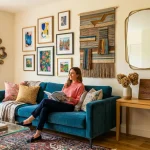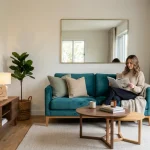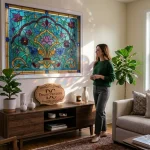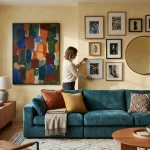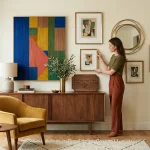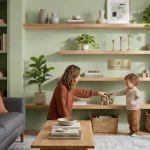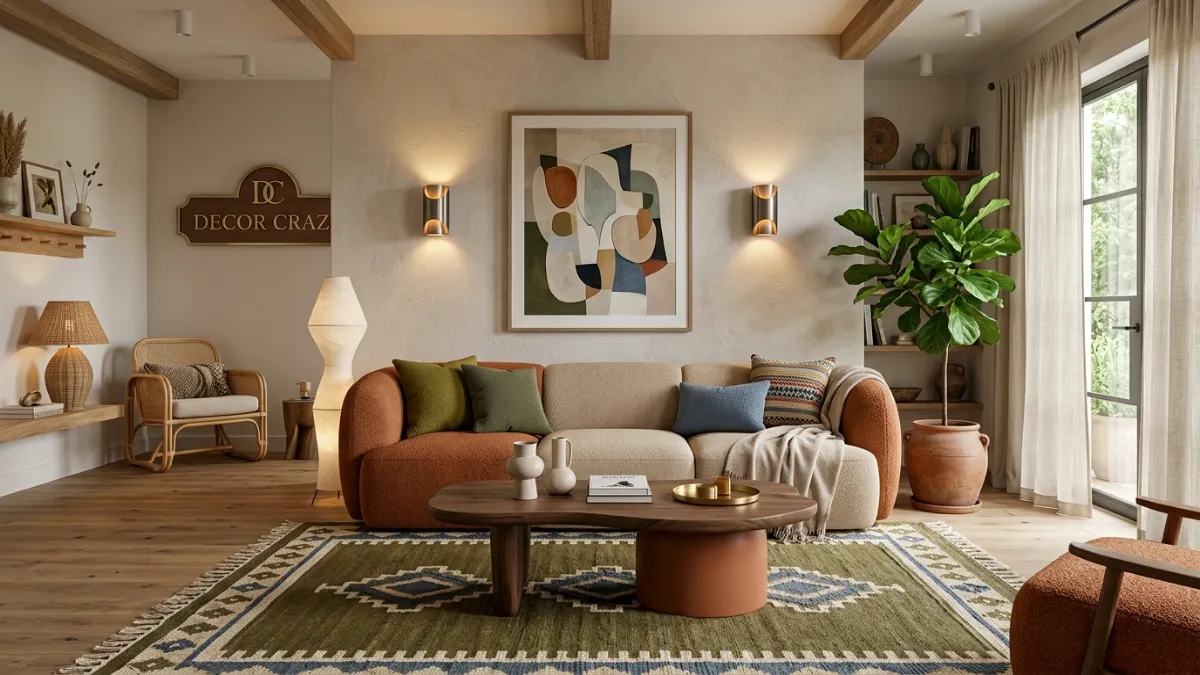
The most useful living room decor ideas for 2026 are less about copying one look and more about making the room work better for everyday life.
Current design coverage points toward warmer palettes, more tactile materials, relaxed furniture shapes, mixed styles, layered lighting, and rooms that feel personal rather than perfectly matched.
That does not mean you need to replace your entire living room. A better approach is to identify what is actually missing better layout, stronger color, softer lighting, more storage, a focal point, or simply less visual clutter and make the change that solves that problem.
Here are practical living room decor ideas for 2026 that work across different sizes, budgets, and decorating styles.
Looking for living room ideas for 2026? The latest living room decor inspiration focuses on warm color palettes, comfortable furniture, layered lighting, natural textures, and personal decorative touches.
If you want a simple refresh or a complete makeover, these living room ideas can help you create a stylish, functional space that suits your home, budget, and everyday needs.
Start With a Warmer, More Layered Color Palette
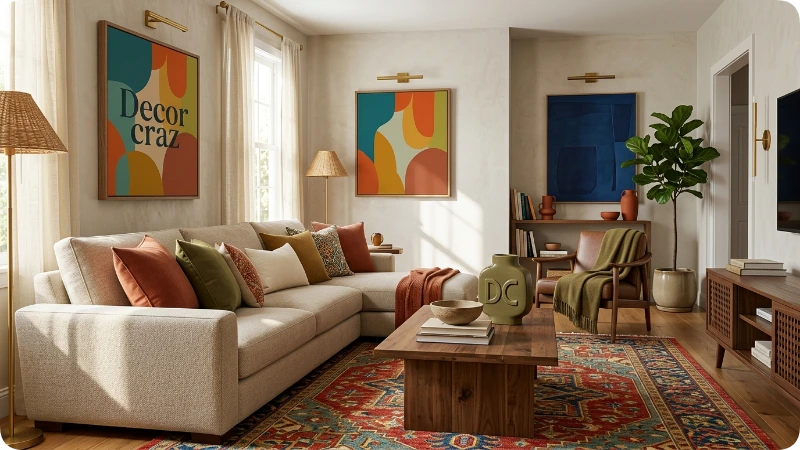
Cool gray and stark all white rooms are giving way to warmer combinations with more depth. Current 2026 design coverage frequently highlights warm neutrals, earthy shades, richer colors, and combinations that feel more collected than coordinated.
Build the palette around one anchor
Instead of choosing a different color for every object, start with one major element:
- A cream or oatmeal sofa
- A warm wood floor
- An earthy rug
- A muted green wall
- A terracotta accent chair
- A deep blue piece of artwork
Then repeat related tones in smaller quantities.
For example, a warm beige sofa can work with an olive rug, walnut furniture, cream curtains, and a few rust colored accessories. The colors do not need to match exactly. Their undertones simply need to make sense together.
Why this works
Warm colors can make a large room feel less empty, while carefully placed darker accents give a small room definition. If the room already receives limited daylight, test paint and large fabric colors at different times of day before committing.
For renters, keep the permanent elements neutral and introduce stronger color through removable pieces such as rugs, curtains, cushions, artwork, and lamps.
Choose Comfortable Furniture With Softer Shapes
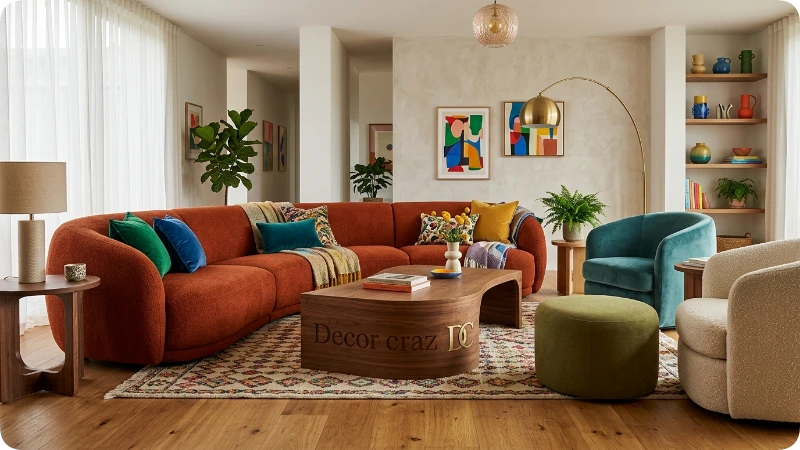
Furniture is becoming an important part of the decorative language of the room, rather than something selected separately from decor. 2026 trend coverage highlights deep seating, relaxed silhouettes, curved forms, and furniture designed around comfort.
Use curves where the room needs softness
A curved sofa, rounded coffee table, circular ottoman, or softly shaped accent chair can break up a room dominated by straight lines.
You do not need several curved pieces. One strong rounded element can be enough.
For example, pair a straight sofa with a round coffee table. The contrast creates variation without making the room feel overly themed.
Consider the walking path first
A beautiful sofa is still the wrong choice if it blocks circulation. Before buying furniture, measure the available floor area and mark the proposed footprint with painter’s tape.
This is particularly important in small living rooms. A compact sofa with separate chairs may provide more usable flexibility than a large sectional that consumes the entire room.
For a large open plan room, consider arranging seating into zones instead of pushing every piece against the walls.
Make the Rug Part of the Room’s Foundation
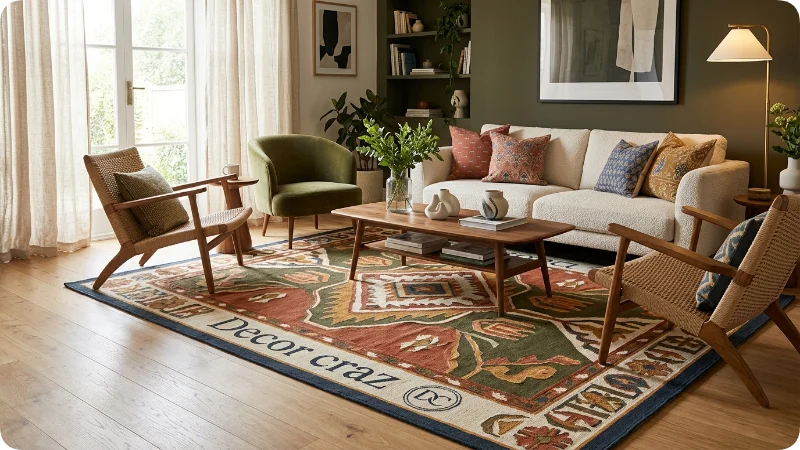
A rug should connect the furniture rather than look like a small island floating in the middle of the floor.
One current decorating approach is to use the rug as an organizing element for the seating arrangement.
Place furniture in relation to the rug
A useful design approach is to have at least the front portions of major seating pieces sit on the rug. In a larger room, placing the sofa and chairs more fully on the rug can create a stronger unified seating area.
If a rug is too small, the furniture can appear disconnected. If the room is already visually busy, a quieter rug can prevent the floor from competing with artwork, furniture, or architectural details.
Use the rug to introduce color
A neutral sofa gives you more freedom to choose a patterned or colorful rug. Conversely, if the sofa is already colorful, a quieter rug can provide visual breathing room.
Think of the rug as the bridge between your furniture, walls, and smaller accessories rather than simply a decorative layer.
Layer Lighting Instead of Depending on One Ceiling Fixture
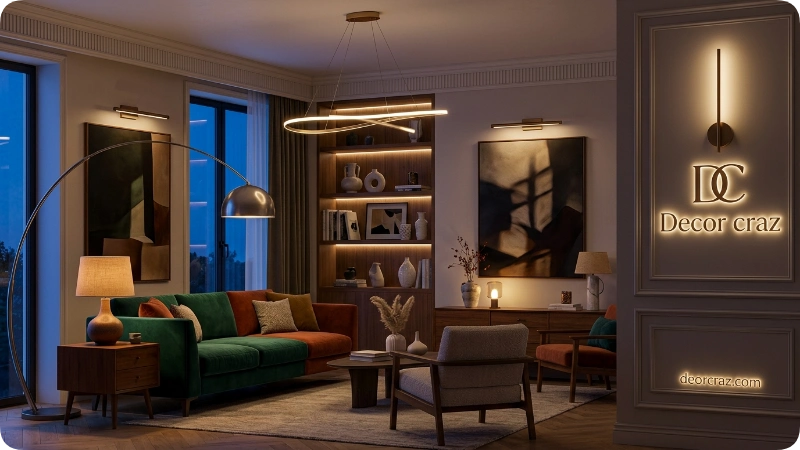
Lighting can completely change how a living room looks after sunset. Rather than depending on one overhead fixture, create several light sources at different heights.
A layered arrangement can include:
- Ceiling lighting for general illumination
- A floor lamp beside seating
- A table lamp on a console or side table
- Wall lighting near artwork
- Accent lighting for shelving or architectural details
Current 2026 design coverage also emphasizes more intentional lighting and the use of lighting to highlight decorative elements.
Match lighting to how the room is used
A reading corner needs focused light. A television area needs lighting that does not create distracting reflections. A conversation area benefits from softer illumination around the seating rather than one bright source overhead.
For evening comfort, warmer light can be preferable to very cool, bright illumination. If you use LED bulbs, choose the color temperature according to the mood and task rather than treating one temperature as suitable for every fixture.
The goal is not simply more light. It is better distributed light.
Mix Wood, Stone, Metal, and Textiles for Texture

A living room can have a simple color palette and still feel visually rich when the materials vary.
Try combining:
- Warm wood
- Linen or cotton
- Wool or woven textiles
- Ceramic
- Stone
- Glass
- Matte or brushed metal
Current living room trend reporting points toward tactile materials, natural finishes, wood, stone, ceramics, and layered textures.
Keep the materials connected
The objective is not to put every material into one room.
If you have a wooden coffee table, consider repeating the wood tone through a cabinet or picture frame. Then contrast it with a softer textile such as linen curtains or a woven rug.
A room with only hard, glossy surfaces can feel visually cold. A room with only soft materials can lack structure. Mixing surface qualities creates contrast.
A renter friendly version
You can create the same effect without renovation by changing movable pieces: a woven rug, ceramic lamp, wood side table, textured cushions, and framed artwork can provide plenty of material variation.
Create a Focal Point Instead of Decorating Every Surface
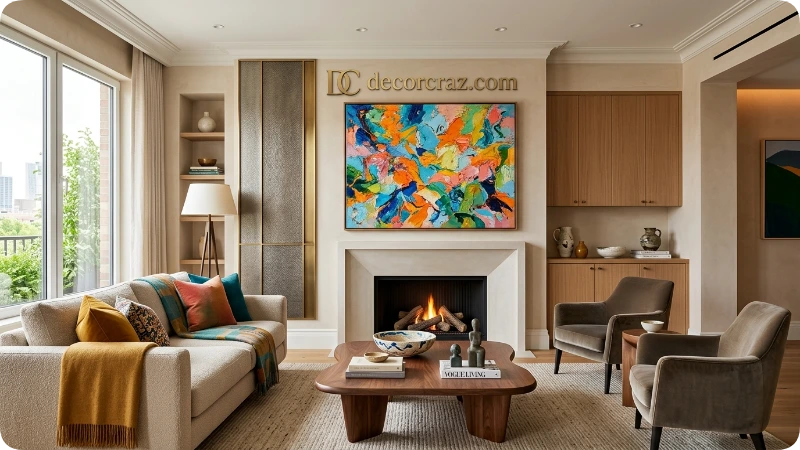
One of the easiest ways to make a living room feel more intentional is to decide what should attract attention first.
The focal point might be:
- A fireplace
- A large artwork
- A statement mirror
- A colorful sofa
- A distinctive coffee table
- A built in bookshelf
- A strong architectural feature
The important part is hierarchy. Not everything should compete for the same visual attention.
Build the rest of the room around it
If your artwork is the focal point, keep nearby accessories relatively quiet. If the sofa has a strong color or shape, use simpler pieces around it.
This approach is also useful for television centered rooms. Rather than pretending the TV does not exist, incorporate it deliberately. Current design advice includes integrating screens into gallery walls, cabinetry, wallpapered backgrounds, or other visual arrangements while keeping the television practical to use.
A focal point should organize the room not make the room difficult to live in.
Mix Modern Pieces With Vintage or Personal Finds
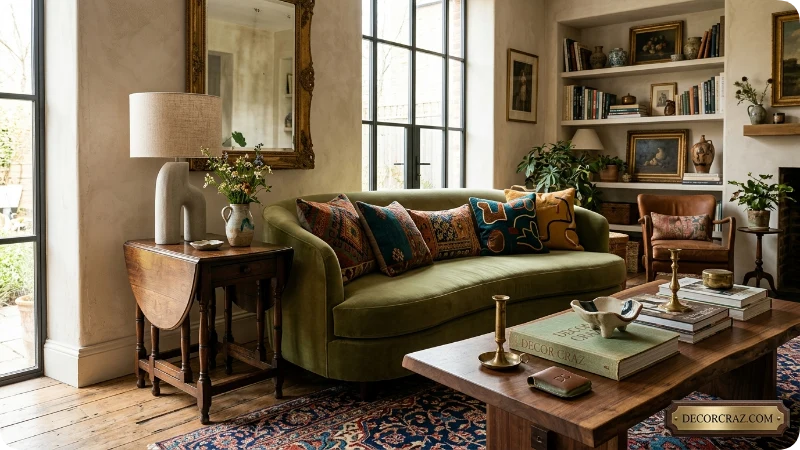
A living room does not have to come from one furniture collection.
Current 2026 design coverage is placing more emphasis on personality, collected interiors, nostalgia, pattern, and combinations of old and new.
Try the old and new contrast
A contemporary sofa can sit beside an older wooden side table. Modern lighting can work with traditional artwork. A streamlined media console can be balanced by a vintage mirror or handmade ceramic piece.
The contrast gives each object more definition.
Avoid turning the room into a theme
If every piece looks vintage, the room may feel intentionally themed rather than naturally collected. If everything is brand new and perfectly matched, it can feel overly uniform.
Choose a few objects with history, craftsmanship, unusual shape, or personal meaning and give them enough empty space to be noticed.
This is especially useful when decorating on a budget because secondhand furniture and inherited pieces can become the most distinctive elements in the room.
Use the Walls for More Than Just Artwork
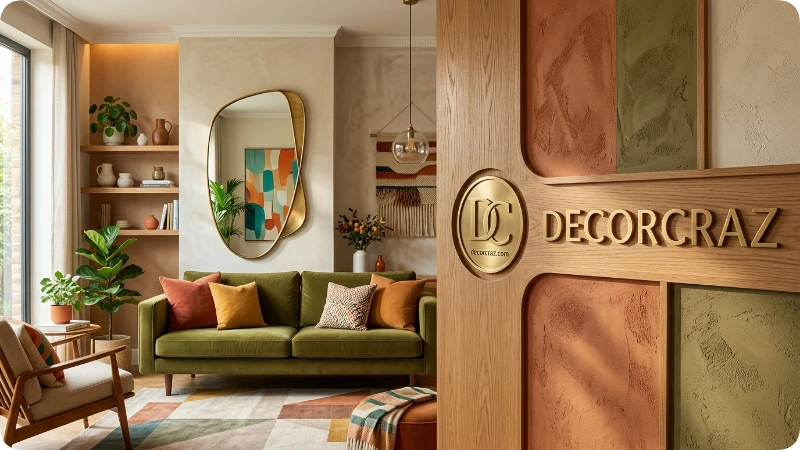
Blank walls can make an otherwise furnished living room feel unfinished, but adding random decorations is not the answer.
Instead, choose a wall treatment based on what the wall actually needs.
For a simple change
Try:
- One oversized artwork
- A carefully arranged gallery wall
- A large mirror
- Floating shelves
- Textile or woven wall art
For a stronger architectural change
Consider:
- Wood paneling
- Textured wallpaper
- Decorative molding
- Painted architectural details
- Tile or plaster style surfaces
Current 2026 wall design coverage specifically highlights tactile treatments such as sculptural plaster, textured wallpaper, tile, and wood paneling.
The key is scale. A tiny picture on a very large wall may look accidental, while too many small pieces can create visual noise.
For renters, prioritize removable or easily reversible options such as framed art, leaning mirrors, freestanding shelving, and renter friendly wall treatments.
Design Small Living Rooms Around Open Floor Space
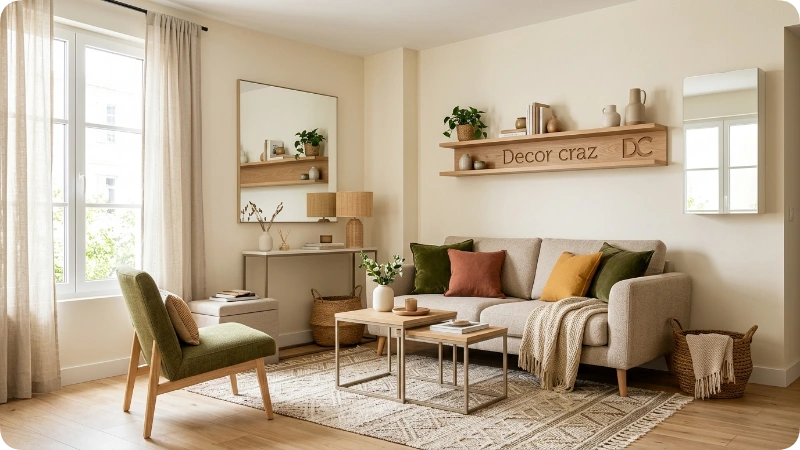
A small living room does not need to be packed with small furniture. Too many pieces can make the room harder to use and visually smaller.
Give each piece a clear job
Choose furniture that provides comfort or storage without unnecessary bulk.
Useful options include:
- A compact sofa
- An ottoman that doubles as seating
- A nesting coffee table
- A narrow console
- A wall mounted shelf
- A storage bench
- A lightweight accent chair
Keep the central walking route as open as practical.
Use visual lightness
Furniture with visible legs can leave more floor visible than heavy pieces that extend completely to the floor. Mirrors can also reflect light and the room itself, while lighter curtains can help preserve available daylight.
But do not automatically choose the smallest furniture. A tiny sofa surrounded by too many accessories can look less balanced than one appropriately scaled sofa with fewer pieces.
The right goal is usable space, not simply making every object physically small.
Make the Room Personal Without Making It Cluttered
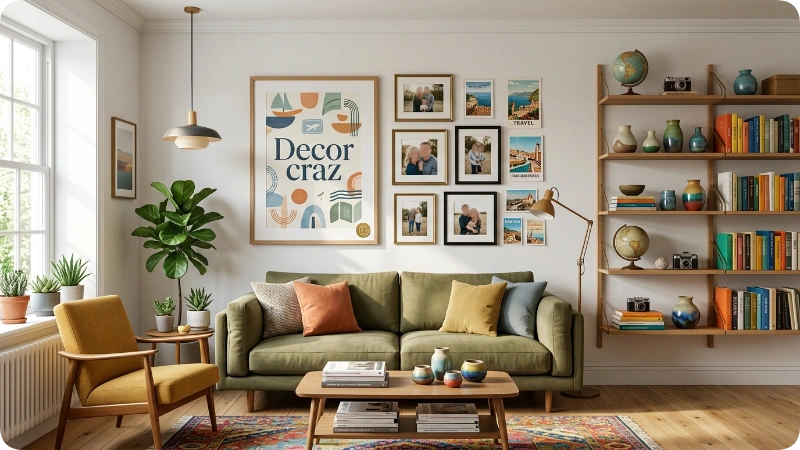
The strongest living rooms usually contain something that tells you who uses the space.
That might be:
- Family photographs
- Travel artwork
- Books
- Handmade ceramics
- A meaningful vintage piece
- Collected objects
- Favorite colors
- Plants or natural elements
Personal styling does not require filling every shelf.
Current design coverage is also addressing visual clutter as a problem of competing focal points, exposed cords, excessive objects, and poorly organized furnishings not simply a lack of cleaning.
Edit before adding more
Look around the room and ask:
- What do I notice first?
- What looks unnecessary?
- Which pieces are actually used?
- Is there enough empty space around important objects?
- Does every decorative group have a clear visual purpose?
Removing one unnecessary object can sometimes improve the room more than adding another accessory.
A useful 2026 living room does not need to look empty. It needs to look intentional and livable.
How to Put These Living Room Ideas Together
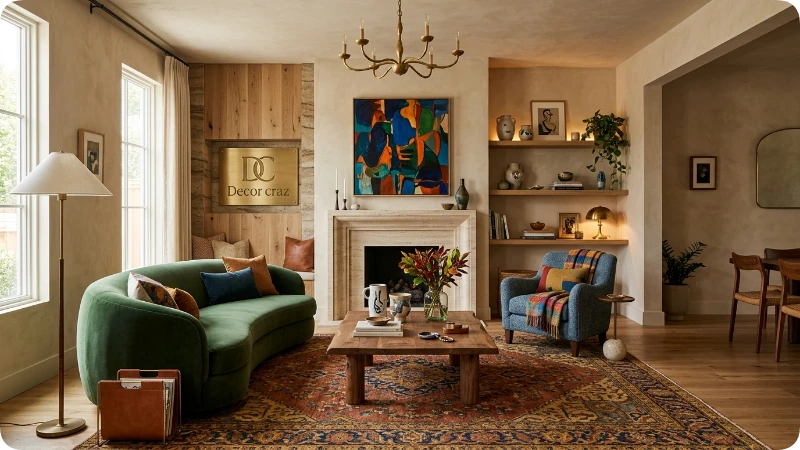
You do not need to use all 10 ideas at once.
Start with the element that creates the biggest problem.
If the room feels cold, begin with warmer colors, wood, textiles, and softer lighting.
If it feels crowded, remove unnecessary furniture and protect the main walking routes.
If it feels unfinished, establish a focal point and address the largest empty wall.
If it feels flat, introduce contrast through texture, material, color, and lighting.
If it feels generic, replace matching pieces with a few personal, vintage, handmade, or distinctive objects.
If you are decorating on a limited budget, concentrate on movable changes first: lighting, rug, curtains, artwork, cushions, and one strong accent piece.
If you own the home and want a larger transformation, architectural changes such as built ins, wall treatments, or improved lighting can create a more permanent result.
The best combination depends on what the room is currently missing not on how many trends you can fit into it.
What Is the 2/3 Rule for a Living Room?

The 2/3 rule is a commonly discussed proportion guideline used to help relate furniture or decorative elements to the size of the room or another major object. It should be treated as a design rule of thumb, not a universal measurement.
For example, when choosing a coffee table in relation to a sofa, proportional relationships can help prevent the table from looking either lost or oversized. The same principle can be applied when considering artwork, rugs, or other major visual elements.
The exact proportion should change according to circulation, furniture shape, room dimensions, and how the space is used. A room should remain functional rather than forcing every item into a mathematical formula.
Frequently Asked Questions
What are the biggest living room decor trends for 2026?
Living room decor in 2026 leans toward warmer colors, natural materials, comfortable furniture, layered lighting, curved shapes, mixed vintage and modern pieces, and more personal styling. The goal is to create a room that feels practical and individual rather than overly coordinated.
How can I update my living room without replacing all the furniture?
Start with smaller changes that have a visible impact. A new area rug, curtains, artwork, lighting, cushions, or a statement accent piece can change the room without requiring new major furniture. Rearranging the existing furniture can also improve the layout before you spend money.
How do I make a small living room look more spacious?
Keep walking paths open, avoid unnecessary furniture, and choose pieces that fit the room rather than simply choosing the smallest available items. Furniture with visible legs, lighter colors, mirrors, and appropriately scaled rugs can also help maintain a sense of openness.
How do I make a living room feel less cluttered?
Begin by removing items that do not serve a practical or decorative purpose. Give important pieces enough empty space around them, organize exposed storage, and limit the number of competing focal points. A few larger, intentional pieces can often work better than many small accessories.
Conclusion
The best living room decor ideas for 2026 focus on creating a space that feels comfortable, personal, and practical rather than simply following every new trend. Start by improving the layout and identifying what your room actually needs, if that means warmer color, better lighting, more texture, a stronger focal point, or less clutter.
Then introduce changes that suit your budget and the level of commitment you want. Simple updates such as a rug, artwork, lamps, curtains, or accessories can make a noticeable difference, while furniture changes and architectural treatments offer a larger transformation.
By combining thoughtful proportions, useful materials, comfortable furnishings, and personal details, you can create a living room that looks current while still working naturally for everyday life.

I am Claudia Winkle, a passionate Name Researcher and Content Writer at decorcraz.com. I enjoy exploring the meanings, origins, history, and cultural significance behind names from around the world. Through carefully researched and engaging articles, I help readers discover unique names, understand their stories, and find meaningful naming inspiration for every occasion. My goal is to make name research simple, interesting, and useful for readers looking for the perfect name.