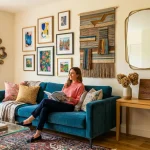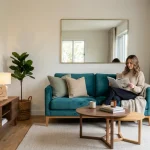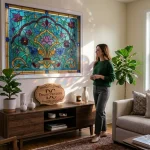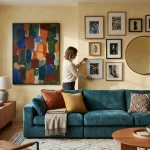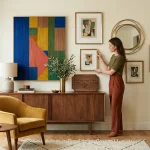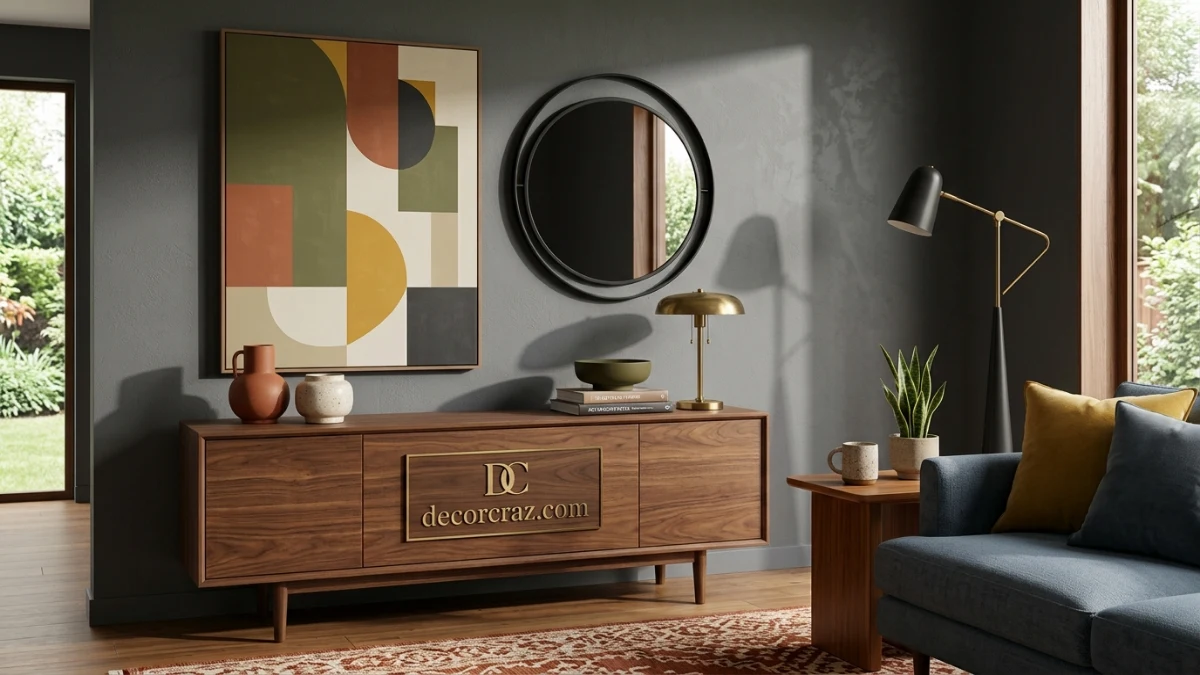
Mid century modern wall decor can transform a blank wall into a stylish focal point without making your room feel crowded or overly decorated. if you are updating a living room, styling an entryway, or decorating a small apartment, the right wall decor can bring warmth, balance, and personality to your space.
From large abstract artwork and clean gallery walls to round mirrors, floating shelves, and geometric wood accents, there are plenty of ways to achieve this timeless look. The key is choosing pieces that complement your furniture, suit your wall size, and connect with your existing colors and materials.
In this guide, you’ll discover practical mid century modern wall decor ideas for different spaces, along with tips on artwork scale, frame finishes, renter friendly options, and common styling mistakes to avoid.
Looking for mid century modern wall ideas to refresh your space? From abstract artwork and geometric wood accents to round mirrors, clean gallery walls, and floating shelves, these mid century modern wall decor ideas can help you create a stylish, balanced interior.
Choose pieces that complement your furniture, warm wood finishes, and available wall space without making the room feel cluttered.
The Best Mid Century Modern Wall Decor Starts With the Wall
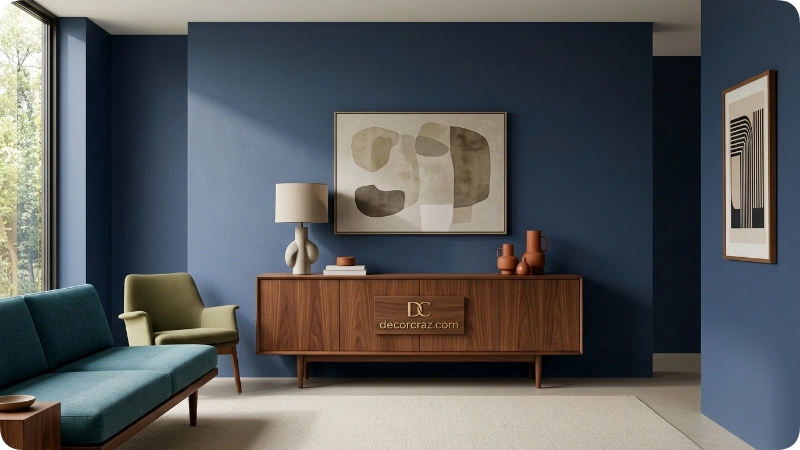
For most rooms, begin with the furniture or architectural feature that the wall decor needs to relate to.
- Wide furniture: Try one large horizontal artwork, a wide gallery arrangement, or a long shelf.
- Narrow wall: Use vertical artwork, a slim mirror, or a stacked arrangement.
- Large blank wall: Use a substantial focal piece or a carefully spaced grouping rather than several tiny objects.
- Small wall: Choose one clearly scaled piece instead of filling every inch.
- Rental wall: Favor lightweight art, leaning pieces, or removable solutions.
- Wall that already has strong furniture: Keep the decor simpler so the room does not become visually crowded.
The goal is not to make every wall decorative. The goal is to give important walls enough visual structure to connect with the rest of the room.
What Makes Wall Decor Feel Mid Century Modern?
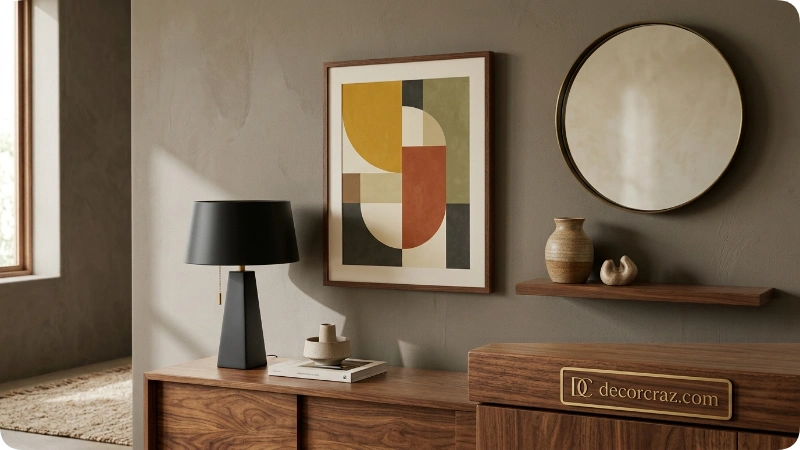
Mid century modern wall decor usually works through shape, proportion, material, and restraint rather than through a large collection of obviously retro objects.
Look for combinations such as:
- Warm wood with black or muted metal
- Geometric shapes with softer organic curves
- Abstract or graphic artwork
- Simple frames
- Round, oval, or sunburst inspired forms
- Restrained colors with one stronger accent
- Clean arrangements with visible breathing room
You do not need every characteristic at once. In fact, using too many recognizable mid century motifs can make a room feel themed rather than considered.
A walnut frame beside a simple abstract print may communicate the style more effectively than a wall covered with atomic stars, clocks, geometric signs, and vintage posters.
10 Mid Century Modern Wall Decor Ideas That Solve Different Problems
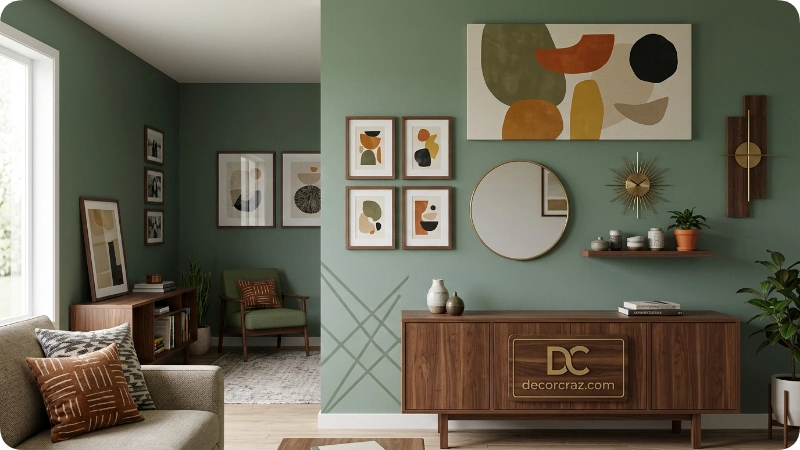
1. One Large Abstract Artwork Above a Sofa
If your sofa creates a wide horizontal anchor, one substantial artwork can balance it without creating visual clutter.
Choose an abstract print with geometric forms, organic shapes, or a limited palette. A walnut, natural wood, black, or similarly restrained frame can connect the artwork to the furniture.
Why it works: One large shape gives the wall a clear focal point.
Best for: Living rooms with a wide sofa and relatively open wall.
Avoid it when: The wall is narrow or already contains strong architectural details.
Lower commitment alternative: Use a lightweight framed print or canvas rather than a heavier statement piece.
2. A Clean Grid Gallery Wall
A gallery wall does not have to look eclectic. A clean grid can give you the variety of several artworks while preserving the order associated with modern interiors.
Use artwork that shares at least one visual connection, such as similar frame finishes, colors, subject matter, or proportions.
A grid works particularly well when the furniture underneath has strong horizontal and vertical lines.
Why it works: Repetition creates structure, while multiple pieces add variety.
Best for: A large rectangular wall above a console, sofa, or dining sideboard.
Trade off: More pieces mean more measuring and installation.
Rental alternative: Use lightweight frames or a removable hanging system appropriate for the wall surface and product instructions.
3. A Round or Oval Mirror
A mirror can introduce a curved shape into a room dominated by rectangular furniture and artwork.
For a mid century modern setting, consider a simple round or oval frame in wood, black, brass, or another finish that already appears elsewhere in the room.
Place it where the reflection is useful rather than simply putting it on the largest empty wall.
Why it works: The curved outline interrupts a room full of straight edges and can also reflect light or an attractive part of the room.
Best for: Entryways, dining areas, bedrooms, and smaller rooms.
Trade off: A mirror becomes visually ineffective if it reflects clutter, an unattractive wall, or an awkward view.
4. A Mid Century Inspired Wall Clock
A wall clock can function as both decoration and a practical object.
A simple round clock or sculptural sunburst inspired design can reinforce the style without requiring a full gallery wall.
Keep the surrounding area relatively quiet so the clock has enough space to read as a deliberate focal point.
Why it works: It combines function with a recognizable mid century visual language.
Best for: Kitchens, dining rooms, offices, and open living areas.
Avoid it when: You already have several competing circular or starburst shapes nearby.
5. Floating Shelves With Carefully Chosen Objects
A floating shelf can be more useful than flat artwork when you want to display a small collection.
Try a warm wood shelf with a few carefully selected objects: a small framed print, ceramic piece, plant, or sculpture.
The important part is editing. A shelf covered edge to edge with objects can lose the clean appearance you want.
Why it works: The shelf adds depth and lets you change the display without replacing wall mounted artwork.
Best for: Offices, dining rooms, living rooms, and narrow areas that need some dimension.
Trade off: Shelves require more attention to object arrangement and dusting than flat art.
6. A Pair of Matching Prints
Two related prints can create a balanced arrangement without the complexity of a large gallery wall.
They can be identical in size or simply share the same frame and color family.
Hang them together above a console, sideboard, bed, or smaller sofa.
Why it works: Repetition creates visual order while the two images provide enough variation to keep the wall interesting.
Best for: Symmetrical furniture arrangements.
Lower commitment alternative: Use two lightweight prints that can be rearranged later.
7. Geometric Wood Wall Art
Wood can reinforce the warmth of a mid century palette while giving the wall more texture than a standard paper print.
Choose a simple geometric composition rather than a highly complicated arrangement.
The wood should relate to other wood tones in the room. It does not need to match perfectly, but introducing many unrelated wood finishes can make the wall feel disconnected.
Why it works: It connects the wall to furniture and introduces natural texture.
Best for: Rooms that already use wood prominently.
Trade off: Too much wood on both the furniture and walls can make the room feel heavy. Balance it with painted walls, textiles, glass, or metal.
8. A Narrow Vertical Art Arrangement
A narrow wall beside a doorway, between windows, or at the end of a hallway needs a different approach from a wide wall above a sofa.
Stack two or three pieces vertically, or choose one tall artwork.
Keep the arrangement aligned rather than spreading small objects horizontally across the available space.
Why it works: The vertical composition follows the shape of the wall instead of fighting it.
Best for: Hallways, narrow wall sections, and spaces beside tall furniture.
Avoid it when: The wall is so narrow that even a small grouping would feel crowded.
9. A Leaning Artwork Display
If you want flexibility, lean a framed print against a console, dresser, shelf, or other stable surface rather than mounting it.
This approach works particularly well for renters or anyone who changes artwork frequently.
Keep the artwork large enough to be intentional. A tiny frame disappearing behind several objects will not have the same effect.
Why it works: It provides visual impact without requiring permanent wall installation.
Best for: Bedrooms, rental homes, offices, and low furniture.
Safety note: For anything heavy or placed where it could fall onto someone, use an appropriate secure mounting method instead of relying on leaning.
10. A Simple Graphic Accent Wall
If the wall itself needs to become the main visual feature, consider a restrained geometric pattern, painted shapes, or another surface treatment.
Keep the pattern simple enough that furniture and artwork can still be seen clearly.
For renters, removable wall treatments may be an option, but always check the product instructions and if the material is suitable for the specific wall surface.
Why it works: The wall becomes the backdrop rather than requiring multiple decorative objects.
Best for: A single accent wall where you want stronger visual character.
Trade off: A patterned wall is a larger commitment than changing one piece of art.
11. Mid Century Modern Wall Art and Wall Design Ideas
Mid century modern wall art ideas combine clean geometric shapes, abstract artwork, warm wood finishes, and simple decorative accents to create a balanced interior. Whether you are planning a complete mid century wall design or looking for simple wall decoration, choose pieces that complement your furniture, wall size, and existing color palette.
For a bold focal point, try one large abstract artwork above a sofa. If you prefer a more structured look, create a clean grid gallery wall with coordinated frames. Round mirrors, geometric wood art, and simple graphic accent walls are also effective ways to bring mid century modern character into your space. Keep the arrangement intentional and leave enough empty space to prevent the wall from feeling crowded.
How to Choose the Right Option for Your Space
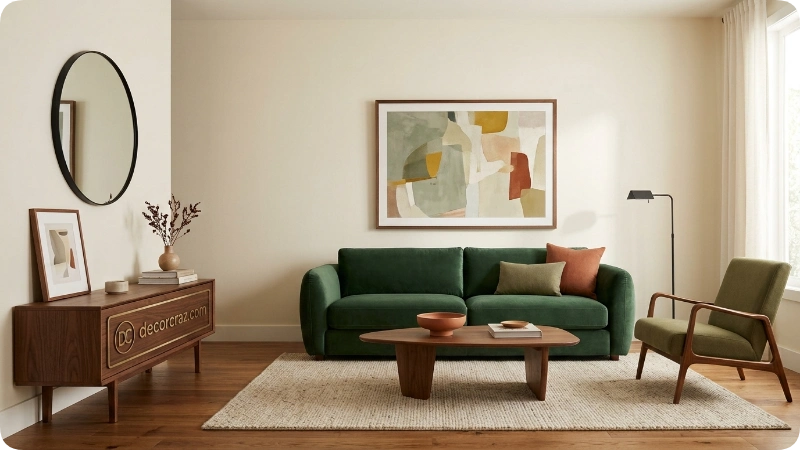
The most useful decision is not “Which decor looks most mid century?” It is “What does this wall need?”
If the wall is wide
Start with one large horizontal piece or a broad arrangement.
Small artwork scattered across a large wall can look accidental because the visual weight does not match the available space.
If the wall is narrow
Use vertical artwork, a tall mirror, or a stacked arrangement.
Do not force a wide gallery wall onto a narrow surface simply because you like the individual pieces.
If the furniture below is visually heavy
Keep the wall arrangement relatively simple.
For example, a substantial walnut sideboard may need one strong artwork rather than a crowded collection of small frames.
If the furniture is minimal
The wall can carry more of the visual interest.
A larger artwork, sculptural mirror, or carefully arranged gallery wall can prevent the room from feeling too empty.
If you rent
Prioritize options that can be removed or repositioned without creating unacceptable wall damage.
Leaning art, lightweight frames, removable wall treatments, and carefully selected hanging systems can provide flexibility. Always follow the manufacturer’s installation limits rather than assuming a product is safe for every wall.
Mid Century Wall Design Ideas for a Stylish, Balanced Room

Mid century wall design works best when the wall connects naturally with your furniture, colors, and overall interior style. Instead of relying on decorative objects alone, combine simple shapes, warm materials, and carefully planned artwork to create a wall that feels intentional.
1. Create a Geometric Accent Wall
Use simple painted shapes, subtle geometric patterns, or restrained wood details to introduce visual interest. Keep the design balanced so it complements your furniture instead of competing with it.
2. Combine Wall Art With Warm Wood Accents
Pair an abstract print with a walnut frame, wooden wall sculpture, or floating shelf. This combination adds texture and warmth while maintaining the clean appearance associated with mid century modern interiors.
3. Design a Minimalist Gallery Wall
Arrange two to five complementary prints in a neat grid or carefully spaced grouping. Choose artwork with related colors, geometric forms, or consistent frame finishes to make the arrangement feel connected.
4. Use a Round Mirror as a Focal Point
A round or oval mirror introduces a softer shape against rectangular furniture and artwork. Choose a wood, black, or muted metal frame that relates to other finishes in the room.
5. Keep the Design Simple in Small Rooms
For smaller living rooms, apartments, or narrow hallways, choose one medium-sized artwork, a slim mirror, or a small vertical arrangement. Leaving some wall space empty helps the design feel open rather than crowded.
The best mid century wall design does not require every element to look vintage. Focus on proportion, warm materials, clean lines, and a limited color palette to create a wall that feels modern, functional, and visually balanced.
The Most Useful Scale Rule for Wall Art
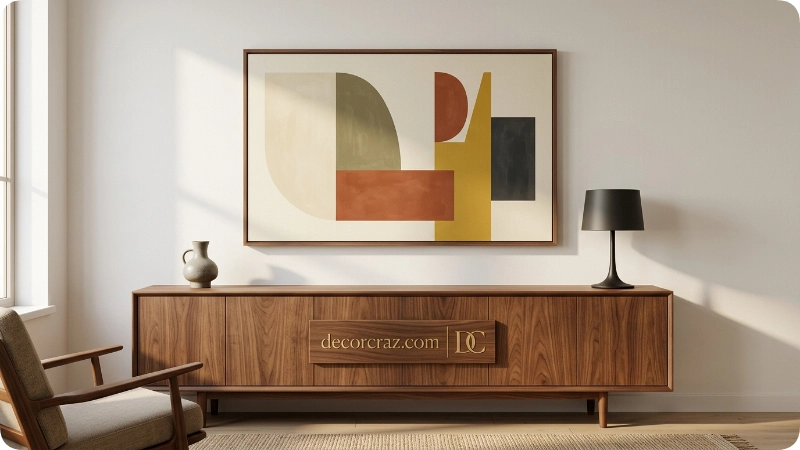
One commonly used design guideline is to make artwork or a grouping relate proportionally to the furniture beneath it rather than treating the wall as an isolated rectangle.
For example, artwork above a sofa generally looks more connected when its overall width is visibly related to the sofa’s width.
You do not need to measure everything to the exact inch. Start by looking at the relationship:
Furniture width → artwork/grouping width → surrounding empty space
If the artwork looks tiny compared with the furniture, increase its scale or use a grouping. If it nearly overwhelms the furniture, reduce the size or simplify the arrangement.
The exact choice depends on the room, furniture shape, ceiling height, and amount of surrounding space.
Frame Finishes That Work With Mid Century Modern Decor
The frame can matter almost as much as the artwork.
Walnut and warm wood
Warm wood is an easy choice when the room already contains walnut or similar brown wood tones.
Use it when you want the wall to feel connected to wooden furniture.
Black
Black frames provide stronger contrast and work well when the room already contains black accents.
They can make colorful artwork look more defined without adding another color.
Brass or muted metal
Metal can introduce a lighter decorative accent, particularly when similar hardware or lighting details appear elsewhere.
Use it selectively. Too many unrelated metallic finishes can make the room visually fragmented.
White
White frames can work when you want the artwork to feel lighter against a colorful or darker wall.
They are less visually heavy than dark wood or black.
How to Build a Mid Century Modern Gallery Wall
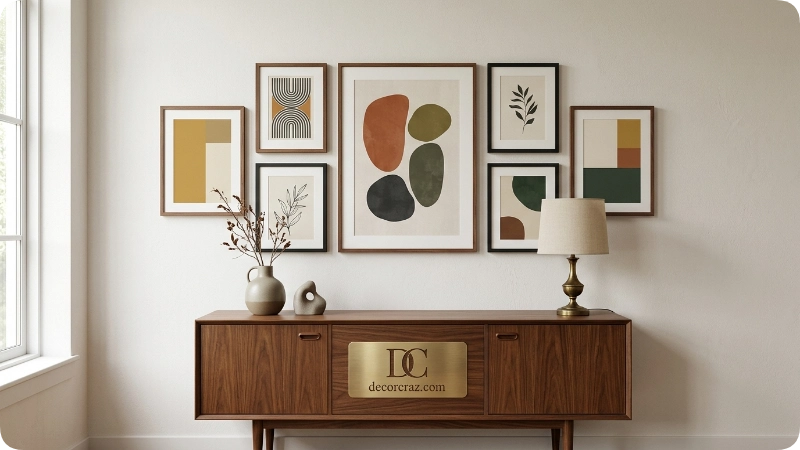
Start with the largest piece rather than placing every frame randomly.
- Choose a focal artwork.
- Add smaller pieces that support its colors or shapes.
- Select a limited group of frame finishes.
- Arrange everything on the floor first.
- Check the overall width and height against the furniture.
- Keep spacing consistent where the arrangement is intentionally geometric.
- Step back before making final installation decisions.
A gallery wall does not have to contain only vintage artwork. Contemporary abstract prints can work when their proportions, colors, and framing support the room.
The key is visual relationship, not if every piece came from the same era.
Mid Century Modern Wall Decor for Small Spaces
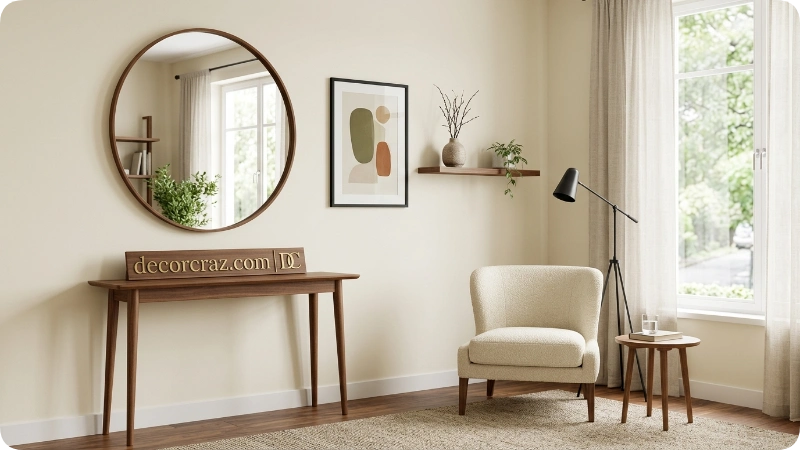
Small rooms benefit from editing more than from adding more.
A round mirror can break up straight furniture lines while keeping the wall visually open. A single medium sized artwork may work better than six small pieces. A narrow shelf can add display space without consuming floor area.
For a small apartment, consider using the wall above an existing functional piece such as a desk, dresser, or console as the main decorative zone.
Avoid filling every available wall simply because the room is small. Empty space can help the decor you do choose remain visible.
Mid Century Modern Wall Decor for Renters
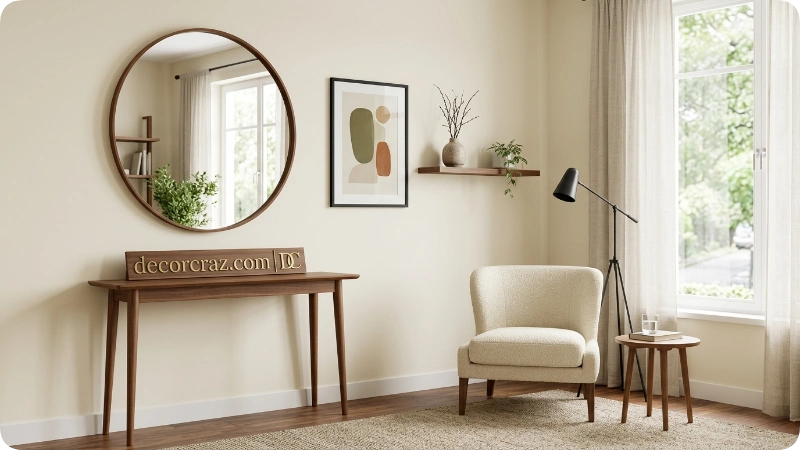
Renters do not need to give up the style.
Start with pieces that can move with you:
- Lightweight framed prints
- Leaning artwork
- Removable wall treatments designed for the surface
- Freestanding shelving
- Small mirrors with appropriate removable installation solutions
- Flexible gallery arrangements
The important distinction is between renter friendly and guaranteed damage free. Installation performance depends on the wall surface, product, weight, humidity, and application method, so follow the manufacturer’s instructions.
Common Mistakes to Avoid
Using too many retro motifs
One clock, geometric print, or sculptural piece can establish the direction. Several competing motifs can make the room feel like a theme set.
Choosing artwork that is too small
Tiny artwork on a large wall often creates more visual gaps than it solves.
Group smaller pieces when they need more collective weight.
Ignoring the furniture underneath
Wall decor should usually relate to the object below it. A beautiful print can still look misplaced if its scale does not correspond with the furniture.
Mixing too many frame finishes
A room can handle mixed materials, but the mix should feel intentional. Repeat finishes rather than introducing a different frame color for every artwork.
Filling every wall
Mid century modern rooms benefit from visual breathing room. A wall does not need decoration simply because it is empty.
Treating “vintage” and “mid century modern” as the same thing
Vintage describes age or a style associated with an earlier period; mid century modern refers to a particular design language. A vintage object is not automatically mid century modern, and a contemporary reproduction can still fit the style.
Which Wall Decor Should You Choose?
Use this quick decision guide:
| Your situation | Best starting point |
| Wide sofa or console | Large horizontal artwork |
| Narrow wall | Vertical art or stacked frames |
| Need more light/reflection | Round or oval mirror |
| Want functional decor | Wall clock |
| Need display space | Floating shelf |
| Want several artworks | Clean grid gallery wall |
| Rental or temporary home | Lightweight or removable options |
| Large empty wall | Oversized art or substantial grouping |
| Minimal furniture | Strong focal artwork or sculptural piece |
| Heavy wood furniture | Simpler wall treatment |
The strongest choice is the one that solves the wall’s actual problem without creating a second one.
How to Make Mid Century Modern Wall Decor Feel Collected, Not Themed
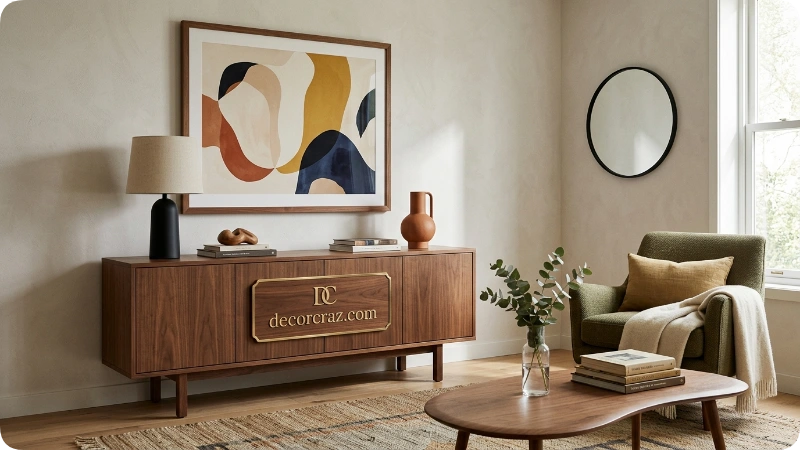
Choose a visual thread and repeat it.
That thread might be warm wood, black framing, a particular accent color, curved shapes, or geometric artwork. You do not need every item to match.
For example, a walnut framed abstract print can sit beside a black metal lamp and a round mirror. The pieces are different, but their materials and shapes can relate to one another.
This approach gives you more freedom than buying a matching set.
It also makes it easier to combine newer decor with vintage or secondhand pieces without requiring the entire room to look like a historical reproduction.
Final Takeaway
Mid century modern wall decor works best when it responds to the wall, furniture, and amount of visual space available. Start with scale, choose one clear focal direction, then add only pieces that support it. A large abstract print, simple gallery grid, curved mirror, wood accent, or functional clock can all work the right choice depends on what your room actually needs.
FAQs
How do you decorate a wall in a mid century modern style?
Start with clean shapes, restrained framing, warm wood or simple metal finishes, and artwork with graphic or organic forms. Choose the scale based on the furniture and wall rather than filling the surface with small decorative objects.
What type of art looks good in a mid century modern room?
Abstract, geometric, graphic, botanical, and simple line based artwork can work well. The frame, colors, proportions, and relationship to surrounding furniture matter as much as the subject.
How large should wall art be above a sofa?
Use the sofa as the visual reference rather than choosing artwork by wall size alone. A grouping can also be treated as one visual unit. The exact proportion depends on the sofa, wall width, ceiling height, and surrounding space.
How can renters use mid century modern wall decor?
Choose lightweight artwork, leaning displays, removable wall treatments, or other installation methods specifically suited to the wall and product. Always check weight limits and manufacturer instructions before installation.
Can modern artwork work with mid century modern furniture?
Yes. Artwork does not have to be historically mid century to fit the style. Contemporary pieces can work when their shapes, colors, framing, and scale reinforce the room’s existing design.
Conclusion
Mid century modern wall decor works best when every piece has a clear relationship with the room around it. Instead of filling an empty wall with random decorations, start by considering the wall’s size, the furniture beneath it, and the amount of visual weight the space can handle.
A large abstract artwork can anchor a living room, while a round mirror, simple gallery wall, floating shelf, or wood accent may work better in another area. Keep frames, colors, shapes, and materials connected without making everything match.
If you rent, choose flexible options that suit your walls and installation limits. Most importantly, leave enough breathing room for each piece to be noticed. With thoughtful scale and simple, intentional choices, you can create a mid century modern wall that feels balanced, functional, and personal.

I am Claudia Winkle, a passionate Name Researcher and Content Writer at decorcraz.com. I enjoy exploring the meanings, origins, history, and cultural significance behind names from around the world. Through carefully researched and engaging articles, I help readers discover unique names, understand their stories, and find meaningful naming inspiration for every occasion. My goal is to make name research simple, interesting, and useful for readers looking for the perfect name.