Modern above bed wall decor can change how your bedroom looks without requiring new furniture or a complete renovation.
The right wall treatment gives the bed a clear focal point, adds visual interest, and connects the colors and materials throughout the room.
For a clean, contemporary bedroom, oversized artwork or a pair of framed prints can be enough. If you want more architectural detail, consider wood slats, decorative wall molding, or upholstered panels.
Paint is another practical option when you want to change the appearance of the room without hanging heavy objects.
Your choice should depend on the size of your bed, the available wall space, your preferred style, and if you can make permanent changes. Here are ten modern ideas, along with practical advice for choosing and arranging them.
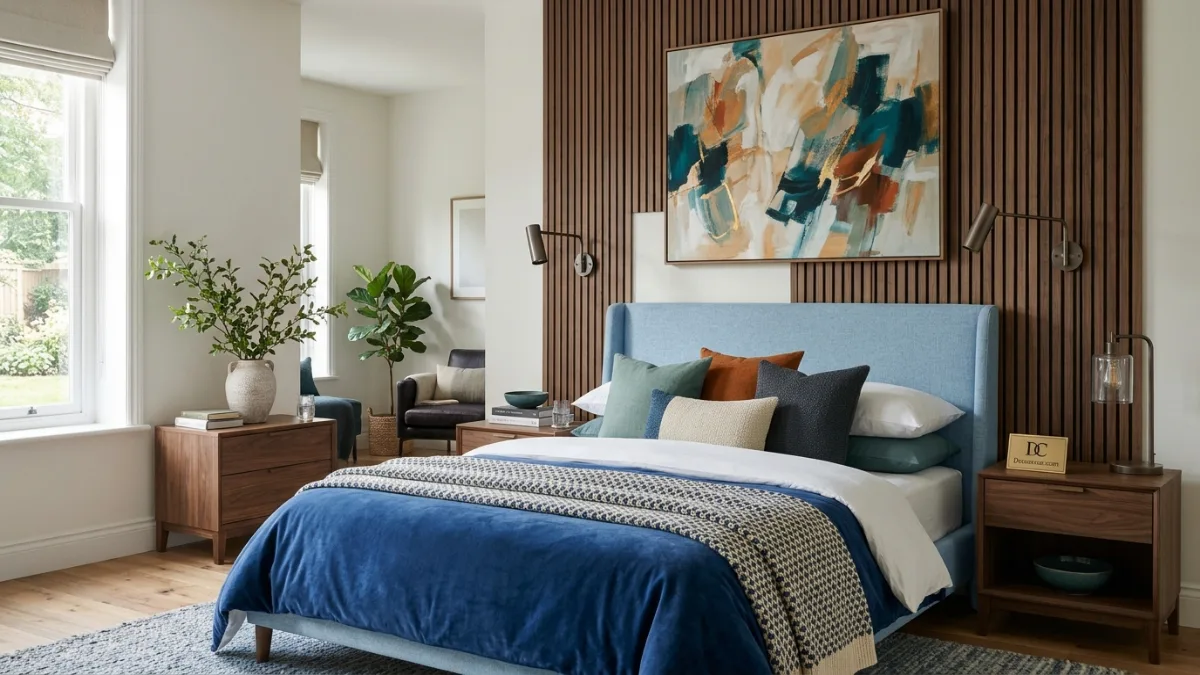
Hang Oversized Abstract Artwork
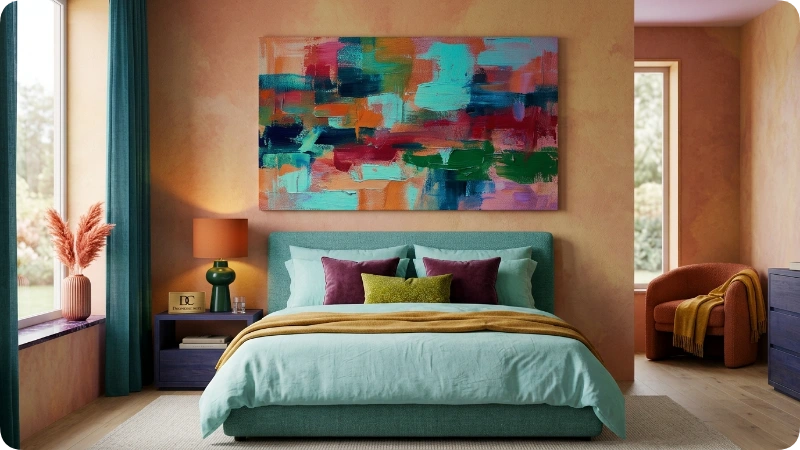
Oversized abstract artwork creates a focal point above the bed without requiring multiple decorative pieces. It works particularly well in modern bedrooms with simple furniture, plain bedding, and uncluttered walls.
Choose artwork that includes colors already present in the room. For example, a canvas with warm beige, charcoal, and terracotta can connect neutral bedding with darker bedside furniture. Blue and green artwork can introduce contrast in a bedroom dominated by white or cream.
The shape matters, too. A horizontal canvas generally complements a wide headboard because its proportions follow the width of the bed.
How to style it:
- Choose artwork approximately two thirds of the headboard’s width as a starting point.
- Leave a modest gap between the headboard and the bottom of the frame.
- Use a slim frame for a minimalist appearance or a frameless canvas for a softer edge.
- Keep nearby wall decorations limited so the artwork remains the main attraction.
If your bedroom is small, a single substantial piece often looks more organized than several unrelated frames. In a larger room, you can choose a wider artwork or a pair of coordinated canvases.
Create a Warm Backdrop With Wood Slat Panels

Wood slat panels add architectural detail to the wall behind a bed. Their vertical lines draw attention upward, while the natural wood finish introduces warmth into a room with smooth painted walls and simple bedding.
Walnut creates a deeper, richer appearance, while pale oak suits bedrooms that need a lighter finish. Both can work with neutral upholstery, black bedside lighting, and understated furniture.
You can install slats across the entire wall or use a narrower section directly behind the headboard. A full width arrangement creates a continuous backdrop, while a centered panel makes the bed the obvious focal point.
Before choosing the panel size, consider the width of the headboard and the position of nearby furniture. A panel that is too narrow may appear disconnected from the bed, whereas an unnecessarily wide installation can overwhelm a compact room.
If you rent your home, consider a freestanding wooden headboard or a removable decorative treatment instead of permanent wall construction. Check the installation requirements before covering outlets, switches, or other fixtures.
Arrange Two Matching Prints Above the Bed

Two matching or coordinated prints provide symmetry without the complexity of a gallery wall. This arrangement is particularly suitable for bedrooms with centered beds, matching nightstands, and balanced lighting.
The artwork can feature botanical illustrations, abstract shapes, architectural photography, or simple line drawings. The images do not need to be identical, but similar colors and frame finishes help them feel connected.
For a contemporary appearance, choose thin black frames against a pale wall. Natural wood frames create a softer look, especially when paired with oak furniture and beige bedding.
Measure the combined width of the two frames and the space between them before hanging anything. The arrangement should relate to the headboard rather than the entire wall, unless the bed is positioned centrally within a larger architectural feature.
This option is also convenient if you like refreshing your bedroom occasionally. You can replace one print without changing the complete arrangement.
Add Texture With a Neutral Wall Hanging
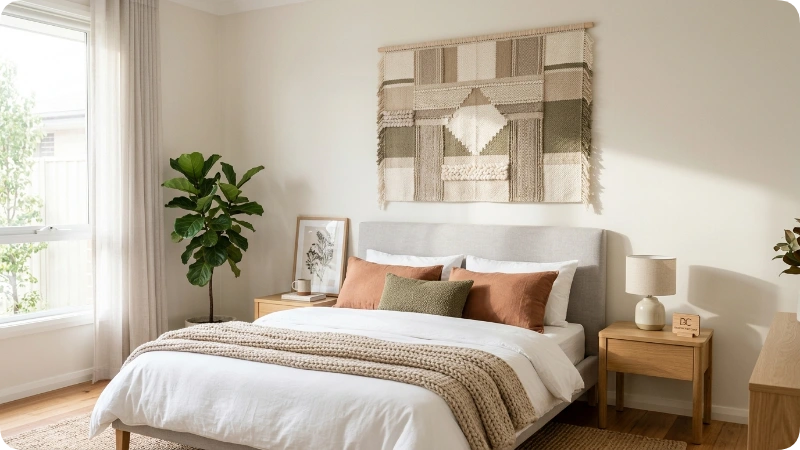
A woven wall hanging introduces softness and texture without the rigid outline of framed artwork. It can be a useful choice in a bedroom that already contains smooth surfaces, such as painted walls, wooden furniture, and plain cotton bedding.
Choose a piece made from cotton, linen, or another suitable textile. Ivory, sand, taupe, and muted olive work well with restrained palettes, while rust or ochre adds more contrast.
The size should relate to the headboard. A wide, relatively shallow hanging can fill the wall horizontally without making a small bedroom feel crowded. A very long textile may draw attention away from the bed or interfere with nearby fixtures.
Texture is especially useful when you want a room to feel visually interesting without introducing several colors or patterns. You can pair a woven piece with plain bedding and simple furniture, allowing the material itself to provide the detail.
Make sure the hanging is securely mounted. Avoid loose decorative elements that could become tangled with nearby lighting or other fixtures.
Use Geometric Wall Molding
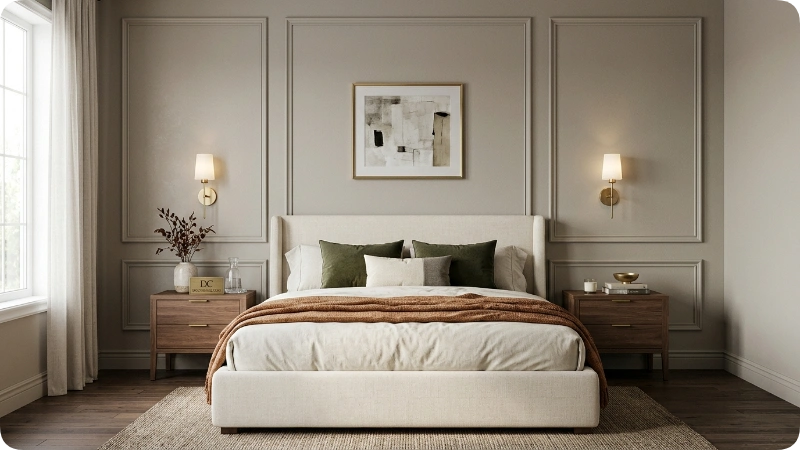
Geometric wall molding creates a structured backdrop through raised lines and recessed shapes. Instead of adding a separate decorative object, this approach makes the wall itself part of the bedroom design.
Large rectangular panels are often a good starting point for modern interiors because their clean lines work with conventional headboards and bedside furniture. Small, complicated patterns can feel busy when combined with patterned bedding or ornate furniture.
For a subtle result, paint the molding the same color as the wall. This allows shadows and depth to define the pattern. If you want the wall to stand out more clearly, use a contrasting shade behind the bed.
Consider the position of the headboard, bedside lamps, outlets, and switches before finalizing the layout. A carefully planned arrangement looks intentional, while awkwardly interrupted lines can make the wall appear unbalanced.
Wall molding is most useful when you want a more permanent architectural feature. If you prefer a low commitment option, a painted rectangular shape can create a similar visual frame without installing raised panels.
Install a Slim Picture Ledge
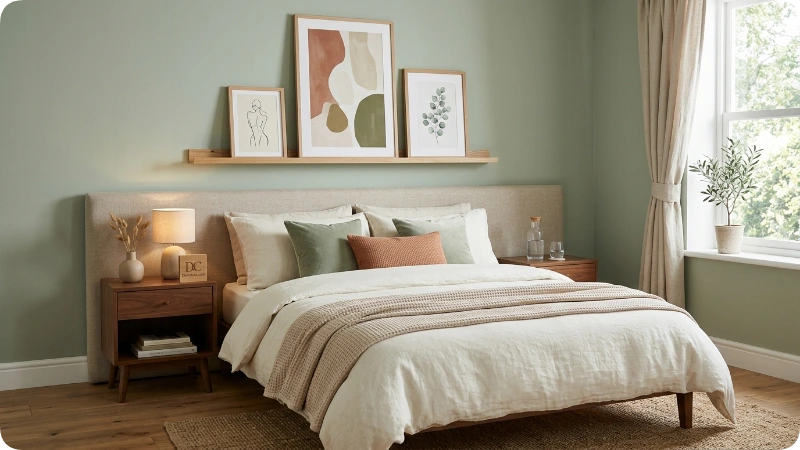
A picture ledge gives you a flexible way to display artwork above the bed. Rather than committing to a fixed arrangement of frames, you can lean a few lightweight prints against the wall and change them when you want a different look.
Choose a ledge that relates to your other finishes. Oak works with natural wood furniture, while black creates a more defined outline against a light wall.
Keep the display simple. One large print, one smaller supporting piece, and perhaps a small decorative object can be sufficient. Filling the ledge with numerous frames and accessories may create clutter and distract from the bed.
Safety is particularly important with this option because the ledge is positioned above a sleeping area. Use mounting hardware suitable for the wall construction and the combined weight of the ledge and its contents. Avoid heavy, fragile objects above the pillows.
If you do not want to drill into the wall, a taller freestanding headboard or another stable display arrangement may be a better solution.
Choose a Round or Sculptural Wall Accent

A round or sculptural accent introduces curved shapes into a bedroom dominated by rectangular furniture. This contrast can make the arrangement above the bed feel more distinctive without requiring a large collection of decorative objects.
Consider a circular wooden piece, a shallow textured relief, or an organic shaped wall sculpture. Matte finishes work particularly well when you want the shape and texture to remain the focus.
The wall surrounding the accent should provide enough visual space for its outline to remain clear. A single large piece often works better than several competing sculptures, especially in a small bedroom.
You can use color to connect the accent with the rest of the room. A pale sculptural piece against a darker wall creates contrast, while a tone on tone design emphasizes its shape through shadows.
Check the item’s weight and mounting requirements before installation. If the piece is heavy, fragile, or difficult to secure, choose a lighter alternative for the wall directly above the bed.
Frame the Bed With Modern Wall Sconces
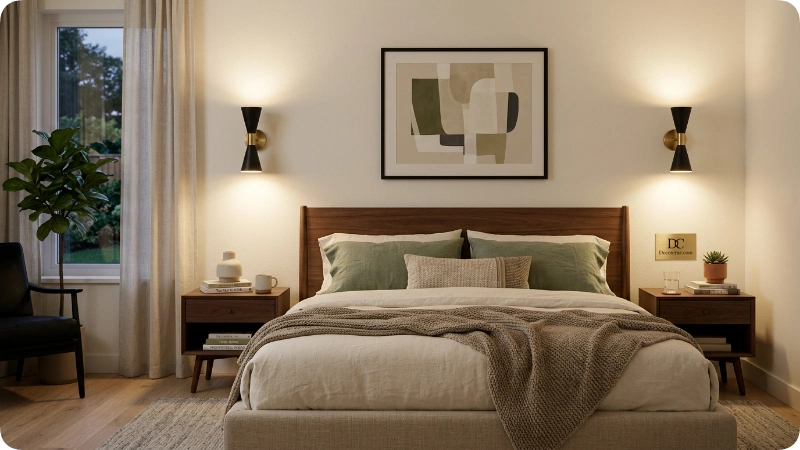
Wall sconces can combine decoration with practical bedside lighting. A pair positioned on either side of a central artwork creates a balanced arrangement and can reduce the need for large table lamps.
Choose fixtures according to how you use the bedroom. Adjustable sconces are useful for reading, while shaded fixtures can provide softer ambient light. Matte black adds contrast, brass introduces warmth, and white fixtures can blend into a pale wall.
For the most coordinated result, align the sconces with the overall bed arrangement rather than positioning them independently. Their relationship to the artwork, headboard, and bedside tables matters more than if every element matches exactly.
Consider the direction and brightness of the light before installing the fixtures. Reading lights should be comfortable to use without shining directly into another person’s eyes.
Hardwired fixtures may require professional electrical work. Plug in sconces can be an alternative when you want to avoid permanent electrical changes, provided their cords can be managed safely.
Paint a Two Tone Accent Wall
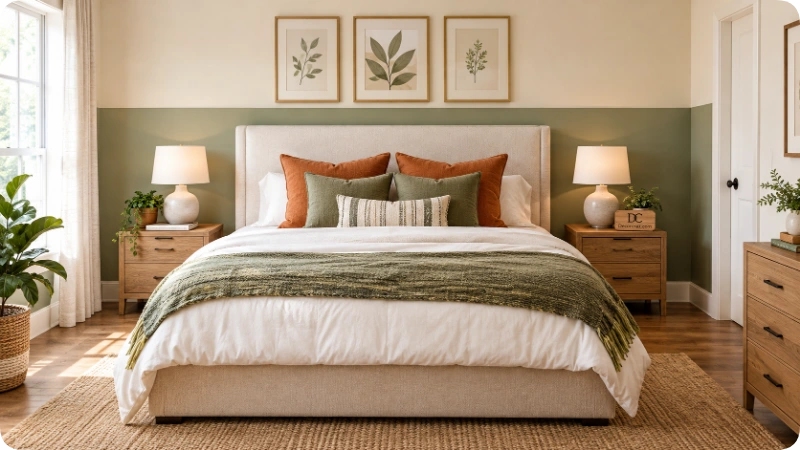
A two tone painted wall adds definition without requiring heavy frames or decorative panels. It is one of the more flexible choices when you want to change the appearance of the bed wall without purchasing several accessories.
For a modern bedroom, try muted sage with warm white, dusty blue with pale gray, or mushroom beige with creamy ivory. You can divide the wall horizontally, create a large painted arch, or paint a broad rectangular area behind the headboard.
The shape should relate to the bed’s proportions. A wide horizontal block can complement a wide headboard, while a taller arch can provide a visual frame for a smaller bed.
Before painting, mark the proposed shape with removable tape and assess it from different parts of the room. This helps you judge if the design looks balanced alongside the furniture and ceiling height.
If you rent, check ifpainting is permitted. Where permanent changes are not allowed, removable wall treatments may provide a similar effect, depending on the wall’s condition and the product’s limitations.
Add Upholstered Wall Panels
Upholstered wall panels create a soft backdrop that contrasts with the hard surfaces of wood furniture, painted walls, and metal lighting. They are particularly suitable for bedrooms where fabric and tactile finishes play a central role in the design.
Choose a fabric that works with your bedding and is practical to maintain. Oatmeal, beige, taupe, and soft gray are adaptable options, while a deeper color can make the bed wall more prominent.
You can install panels only behind the headboard or extend them across a larger section of the wall. A narrow arrangement emphasizes the bed itself, while a wider treatment creates a more continuous architectural feature.
If you want a similar effect without modifying the wall, consider a tall upholstered headboard. It provides a substantial visual backdrop with less permanent work.
Before installing upholstered panels, check their mounting requirements and ensure they do not obstruct outlets, switches, or other fixtures.
How to Choose the Right Size for Above Bed Decor
The most attractive wall decoration can look out of place if it is too small, too large, or positioned too high. Measuring the bed and the available wall space before purchasing anything helps prevent these problems.
For a single artwork, approximately two thirds of the headboard’s width is a useful starting point. A larger statement piece or a different arrangement may suit the room better, depending on the wall dimensions and the surrounding furniture.
Use the following table as a practical planning guide.
| Bed size | Decor approach to consider |
| Single or twin | One compact artwork or a small sculptural accent |
| Full or double | One medium horizontal canvas or two coordinated prints |
| Queen | A wide canvas, a pair of prints, or a centered panel |
| King | Oversized artwork, a wider composition, or a full width wall treatment |
These are starting suggestions rather than fixed sizing rules. The headboard’s actual width and the available wall space should guide the final decision.
Also consider the distance between the headboard and the artwork. Leaving a modest gap helps the two elements feel connected without appearing cramped. If you have no headboard, use the width and position of the bed as your reference.
How to Decorate Above a Bed Safely
Decorations above a bed need secure mounting because an item that falls could injure someone. The appropriate hardware depends on the object’s weight, the wall material, and the mounting system.
Keep these considerations in mind:
- Check the total weight. Include the frame, glass, mounting hardware, and any additional objects.
- Use appropriate fixings. Drywall, plaster, and masonry may require different anchors or installation methods.
- Secure shelves carefully. Follow the manufacturer’s instructions and avoid placing heavy or breakable items above pillows.
- Be cautious with mirrors. Consider lighter or shatter resistant alternatives when appropriate.
- Follow adhesive product limits. Removable strips are not suitable for every surface, item, or weight.
- Consider alternatives to heavy decor. Paint, lightweight textiles, and tall headboards can provide visual interest with fewer objects mounted above the bed.
If you are uncertain about mounting a heavy piece, seek appropriate installation advice rather than relying on unsuitable adhesive strips or improvised hardware.
Frequently Asked Questions
What is the best modern decor for a bed?
Oversized abstract artwork, coordinated prints, wood slat panels, and painted accent walls are useful options. The best choice depends on the bed’s proportions, the existing decor, and if you want a simple decorative change or a more permanent feature.
How can I decorate a bed without drilling holes?
Consider painting the wall, using a tall freestanding headboard, or choosing a suitable removable wall treatment. Adhesive hanging products may work for some lightweight items, but always check the manufacturer’s instructions and the condition of the wall.
Should the above bed decor match the headboard?
It does not need to match exactly. Repeating a color, material, or shape from the headboard creates a visual connection, while a contrasting finish can make the wall more distinctive.
Conclusion
Modern above bed wall decor is an easy way to transform your bedroom into a stylish, comfortable, and visually balanced space. If you prefer oversized abstract artwork, elegant wood slat panels, geometric wall molding, or a simple painted accent wall, the right design can make your bed the focal point of the room.
Choose colors, textures, and decorative pieces that complement your headboard, bedding, and existing furniture. For smaller bedrooms, keep the arrangement simple to avoid visual clutter, while larger spaces can accommodate wider artwork or more detailed wall treatments.
Always consider the size of your wall and secure decorations properly, especially when placing items above the bed. With thoughtful planning and a few well chosen details, you can create modern above bed wall decor that reflects your personal style without requiring a complete bedroom makeover.

I am Claudia Winkle, a passionate Name Researcher and Content Writer at decorcraz.com. I enjoy exploring the meanings, origins, history, and cultural significance behind names from around the world. Through carefully researched and engaging articles, I help readers discover unique names, understand their stories, and find meaningful naming inspiration for every occasion. My goal is to make name research simple, interesting, and useful for readers looking for the perfect name.