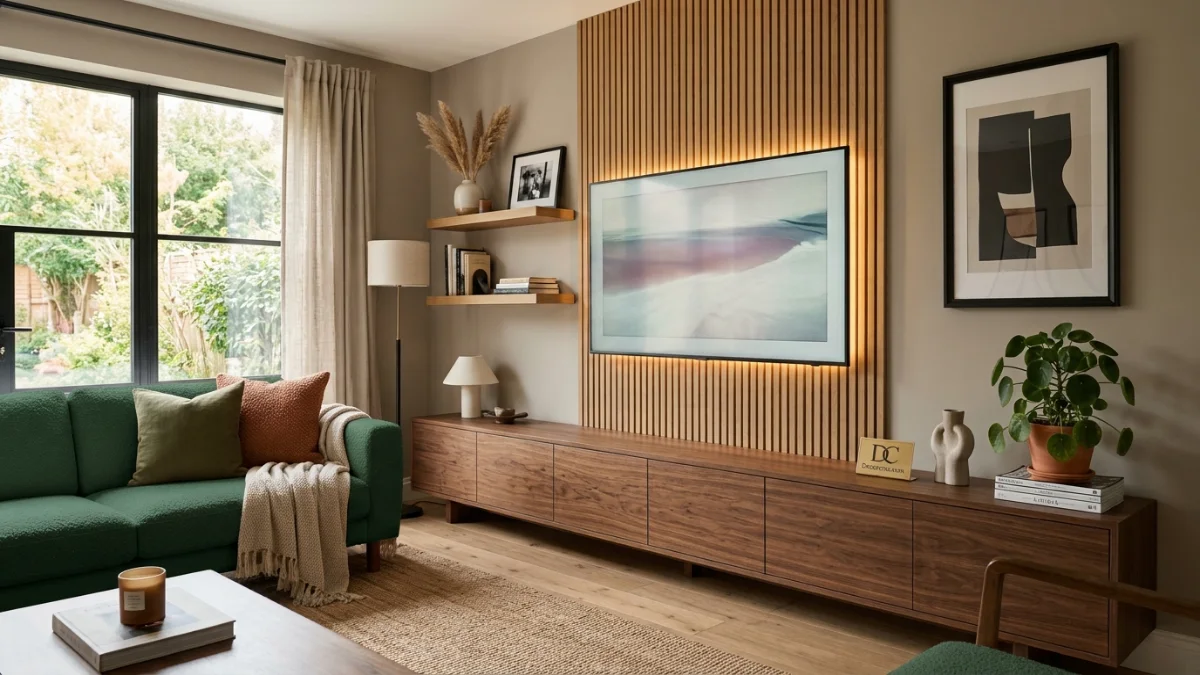
The best TV wall decor ideas start with the television itself: its size, position, the furniture underneath it, and the amount of wall space around it.
Once those basics work, a painted backdrop, textured wood panel, carefully arranged artwork, or streamlined media console can make the entire living room feel more complete.
You do not need a custom entertainment unit or a wall full of accessories to achieve a polished look. A small apartment may need only a slim console and concealed cables, while a larger living room might benefit from full width cabinetry or a gallery wall that balances the screen.
The key is to choose one main treatment, then add only the elements that improve the wall’s proportions, storage, lighting, or everyday function.
Create a Wood Slat TV Accent Wall
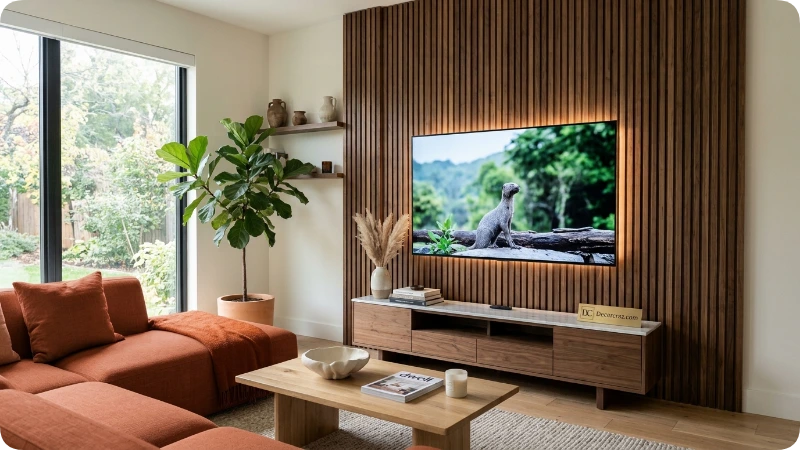
Wood slats add texture and architectural interest without requiring multiple decorative objects. Walnut creates depth and contrast, while pale oak keeps the room brighter and works well with neutral furniture and light flooring.
You can cover the entire wall or install a narrower panel behind the television. A panel that extends beyond both sides of the screen creates a deliberate focal point without making a small room feel enclosed.
How to make it work:
- Match the wood tone to the media console, flooring, or another substantial piece of furniture.
- Use vertical slats to emphasize ceiling height; horizontal panels can make a wall feel wider.
- Keep the console relatively simple so its grain does not compete with the wall.
- Plan cable routes, mounting support, and access to electrical outlets before installing permanent panels.
Wood slats require more planning than paint, especially when electrical outlets or wall mounted equipment need to be accommodated. For a lower commitment option, use a wood look panel or introduce the same finish through a console instead.
Paint the TV Wall a Contrasting Color

A contrasting wall is one of the simplest ways to make a television look intentional. Deep olive, charcoal, muted navy, and warm brown create a darker background that reduces the visual contrast between a black screen and a bright wall.
If the room receives limited daylight, a dark color can make the wall feel heavier. Warm greige, muted sage, or a medium earthy tone offers definition without creating as strong a visual contrast.
For a cohesive result, repeat the wall color in a small detail elsewhere in the room, such as a cushion, artwork, or lampshade. A matte or low sheen finish is worth considering if reflections from windows and lamps are distracting.
Best for: Homeowners who want a noticeable change without installing architectural features.
Budget friendly alternative: Paint a smaller area behind the television or consider removable wallpaper. Test the finish first if you rent.
Frame the TV With a Gallery Wall
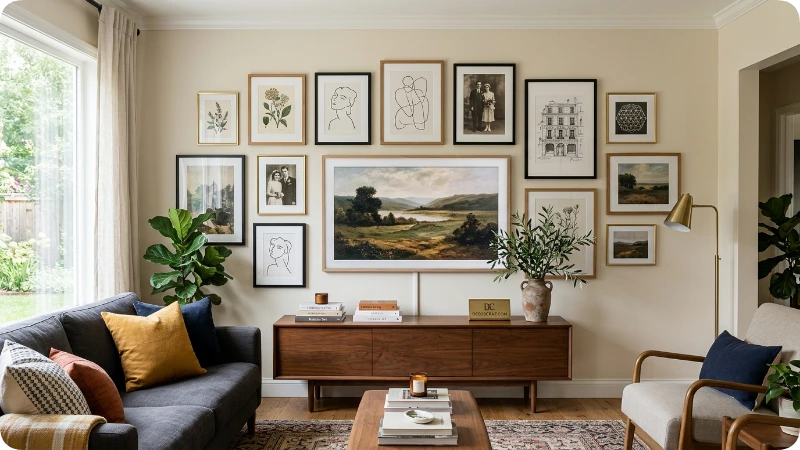
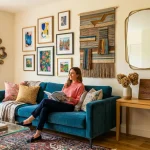
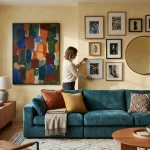
A gallery wall can help a television feel like part of a larger collection rather than an isolated black rectangle. This approach works particularly well when the screen occupies a large section of an otherwise empty wall.
The arrangement needs a clear visual structure. A loose grid with coordinated frames looks orderly, while a more varied collection suits eclectic interiors. In either case, the artwork should have enough scale to balance the screen.
Try these approaches:
- Balanced grid: Use similar frame sizes and consistent spacing for a structured appearance.
- Mixed frame collection: Combine photographs, illustrations, and small prints while maintaining a shared color palette.
- Extended composition: Place artwork on both sides of the television, with the overall grouping visually centered over the console.
Avoid filling every gap with tiny frames. Too many small pieces can make the wall feel crowded, particularly when the television is switched on.
Arrange paper templates on the wall before drilling. Leave sufficient clearance around the screen, remote sensors, and any equipment that needs access.
Install Floating Shelves Around the Television

Floating shelves add display space without the bulk of a full entertainment center. They are useful when the television sits on a broad wall but the room does not need floor to ceiling storage.
Shelves placed beside the screen create a balanced frame. A single shelf below the television can also connect the screen visually to a low console or provide space for a few carefully selected objects.
Keep the arrangement practical:
- Choose shelf depths appropriate for the objects you intend to display.
- Mix a few books with low profile decorative pieces, leaving some sections empty.
- Keep tall objects away from the screen’s edges and remote control sensors.
- Check wall construction and load ratings before mounting shelves.
If the room already has patterned wallpaper, busy upholstery, or a textured feature wall, fewer shelves will usually produce a cleaner result.
For a rental, a freestanding bookcase can provide similar display space without permanent wall installation.
Choose a Long, Low Media Console

The furniture beneath a television helps determine if the entire wall feels balanced. A console that is noticeably narrower than the screen can make a large television look top heavy, while an appropriately proportioned unit gives the composition a stable base.
A low, wide cabinet is a useful starting point for many living rooms. Choose closed doors if you need to store gaming equipment, remotes, routers, and cables. Open compartments work better for equipment that requires ventilation or easy access.
The console does not have to match the wall panel exactly. Light oak against a darker wall adds contrast, while walnut against warm neutral paint creates a more continuous look.
Before buying or building a console, measure the wall, television, and available walking clearance. If the unit will be wall mounted, verify that the wall and fixings can support the load.
A freestanding console is often easier to reposition when the room layout changes.
Add Wallpaper or a Textured Wall Finish

Wallpaper introduces pattern or texture without the construction involved in a built in entertainment wall. It is particularly useful when paint alone feels too plain but you want to preserve the existing layout.
Choose the finish according to the rest of the room. A small scale geometric pattern adds definition without dominating the television, while linen effect wallpaper introduces texture with little visual movement. Botanical prints can work in traditional or eclectic rooms when they do not compete with nearby artwork.
Other options include:
- Plaster look finishes for a subtle, architectural backdrop.
- Board and batten detailing for a structured appearance.
- Stone look panels for a more substantial feature wall.
- Removable wallpaper for a less permanent decorating approach.
Before committing, position a sample behind the television and view it during daylight and evening lighting. Highly reflective finishes may create distracting highlights, while large, high contrast patterns can compete with the picture.
If you rent, check the wallpaper manufacturer’s surface requirements and test a discreet area first.
Use Soft Lighting Behind and Beside the TV
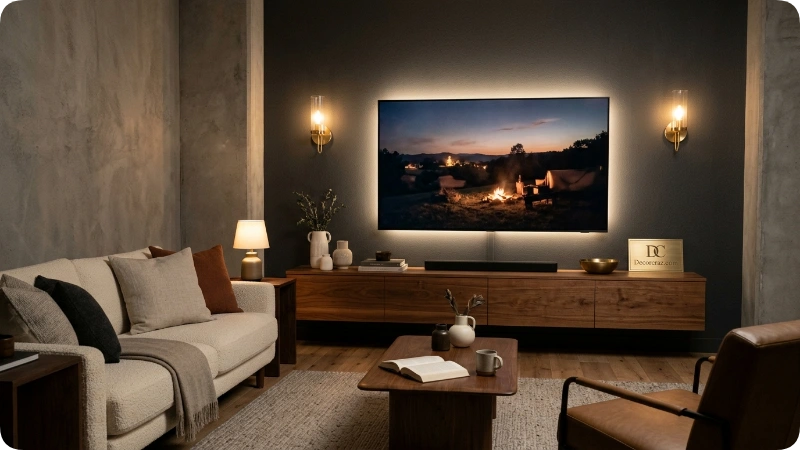
Lighting changes how a television wall looks after sunset. A dark screen surrounded by an unlit wall can appear disconnected from the room, while soft indirect illumination helps the entire area feel more integrated.
Several lighting options work well.
Backlighting: A dimmable LED strip behind the television creates a gentle glow on the wall. It is a useful choice when you want a subtle effect without adding visible fixtures.
Wall sconces: Fixtures positioned to the sides introduce vertical balance and complement paneling or artwork.
Console lighting: A table lamp beside the screen adds a separate pool of light without requiring electrical work inside the wall.
Choose adjustable lighting so you can reduce brightness while watching television. Position lamps and sconces outside the screen’s direct reflection path, and avoid exposed bulbs or bright fixtures that shine into viewers’ eyes.
For a custom media wall, plan concealed lighting channels during installation. For an existing setup, a properly rated plug in light strip is easier to add or remove.
Build a TV Wall With Built In Cabinets

Built in cabinets suit homeowners who need substantial storage and want the television to become part of the room’s architecture. Instead of treating the screen as a separate object, the cabinetry creates a unified wall with designated places for equipment, books, and display pieces.
A practical layout usually combines closed storage below the television with limited open shelving at the sides. This keeps everyday clutter out of sight while preserving a few places for personal objects.
For a wide wall, cabinetry on both sides can establish visual balance. In a compact room, a single lower cabinet and a narrow back panel may be enough. Floor to ceiling construction is not automatically better.
Plan the internal layout before choosing the exterior finish. Allow access to power connections, provide ventilation for heat producing equipment, and ensure doors or decorative panels do not block remote signals.
Built ins require more planning and investment than paint or freestanding furniture. If your storage needs are modest, a ready made cabinet with a coordinated wall panel can deliver a similar visual effect with greater flexibility.
Make a Small Living Room TV Wall Feel Open

In a small living room, the goal is to make the television wall feel organized without using up valuable floor space. A shallow console, a restrained backdrop, and a clear walking route usually matter more than elaborate decoration.
A floating cabinet exposes the floor beneath it and can make the wall appear less crowded. If you need more storage, a compact freestanding unit with closed doors may be more useful than several open shelves.
Use these principles to plan the arrangement:
- Keep the backdrop simple. One paint color or a narrow textured panel can define the TV area without visually dividing the room.
- Choose furniture for the actual footprint. Measure cabinet depth and nearby passageways, not just wall width.
- Limit upper wall decoration. A single artwork or a pair of small sconces may be enough when the television already occupies much of the wall.
- Manage cables. A paintable surface mounted cable channel can keep wiring tidy when in wall routing is impractical.
Renters can rely on freestanding furniture, removable wall finishes, and cable covers suitable for the wall surface.
If you mount the television, confirm that the wall and mounting hardware are suitable, obtain permission where required, and secure the screen properly.
Create a TV Wall With Art and Natural Accents

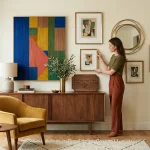
Artwork and natural materials are useful when you want a television wall to feel personal rather than overly technical. The important distinction is to give each object a purpose instead of filling every empty surface.
A large framed print beside the television can balance the screen’s rectangular shape. A tall floor plant can soften an empty corner, while a ceramic object or a short stack of books can add detail to the console without obstructing equipment.
Choose accents that relate to the room’s existing finishes. Natural wood, textured ceramics, and muted artwork work well against warm neutral walls. Stronger colors can connect the television area to a more expressive interior.
Keep living plants away from electronics where watering could cause spills. Avoid placing tall objects directly in front of ventilation openings, sensors, or speakers.
If the television is already surrounded by shelves, paneling, or a gallery wall, leave the console relatively uncluttered. A few well positioned accents are easier to maintain and allow the screen to remain functional.
How to Choose the Right TV Wall Decor
The best design depends on what your current wall lacks. Use this guide to narrow down your options before buying materials or furniture.
| Your situation | Best starting point | Main consideration |
| Plain wall with a prominent black screen | Contrasting paint or a textured panel | Consider the room’s natural light |
| Large, empty wall | Gallery arrangement or built in shelving | Match the composition to the wall’s scale |
| Small apartment | Slim console and minimal decoration | Preserve floor space and walking clearance |
| Rental property | Freestanding furniture and removable finishes | Check mounting permissions and surface compatibility |
| Too many visible accessories | Closed storage and simpler styling | Prioritize function over extra decoration |
| Screen dominates the room at night | Dimmable indirect lighting | Prevent reflections and excessive brightness |
| Need more household storage | Media console or built in cabinets | Plan equipment ventilation and cable access |
Before installing anything, check the viewing position from your usual seat. The screen should be comfortable to watch, centered appropriately for the seating arrangement, and positioned to minimize distracting reflections. The exact mounting height depends on the screen size, seating, and viewing posture rather than a single universal measurement.
Also decide how the cables will reach their power and signal connections. Purpose made cable channels can work for surface routing; in wall installations require suitable components and compliance with local electrical requirements. When in doubt, consult a qualified electrician.
Conclusion
The right TV wall decor can transform your living room by making the television feel like a natural part of the overall design. If you prefer wood slat panels, contrasting paint, floating shelves, a gallery wall, or built in cabinets, choose an option that suits your room size, budget, and storage needs.
In smaller spaces, a slim media console and simple wall treatment can keep the room feeling open, while larger living rooms can accommodate more detailed designs and additional storage. Pay attention to furniture proportions, lighting, cable management, and viewing comfort before committing to any installation.
You do not need an elaborate setup to create a beautiful result. Start with one feature that improves the wall, then add only the accessories that serve a purpose and complement your existing decor.

I am Claudia Winkle, a passionate Name Researcher and Content Writer at decorcraz.com. I enjoy exploring the meanings, origins, history, and cultural significance behind names from around the world. Through carefully researched and engaging articles, I help readers discover unique names, understand their stories, and find meaningful naming inspiration for every occasion. My goal is to make name research simple, interesting, and useful for readers looking for the perfect name.